Chargesheet automation refers to the use of software and digital tools to reduce the manual effort involved in assembling, drafting, and validating a chargesheet, the formal document police file to bring a case to prosecution. It ranges from basic digital record-keeping to AI-assisted drafting that cross-checks evidence and suggests legal sections. It is not one single technology. It’s a category, and where a police department sits on that spectrum matters a great deal.
Key Takeaways
- A chargesheet is the document that formally presents evidence and legal grounds for prosecution to the court.
- Chargesheet automation spans a spectrum: digital records, structured document assembly, cross-referencing tools, and AI-assisted drafting.
- India’s police forces are staffed well below sanctioned strength, which is a direct, practical reason chargesheet preparation needs automation support.
- BNSS’s fixed 60- and 90-day filing windows leave little room for the delays manual chargesheet assembly creates.
- Automation supports the investigating officer’s work, it doesn’t replace their judgment or their accountability for what gets filed.
What is a Chargesheet, Exactly?
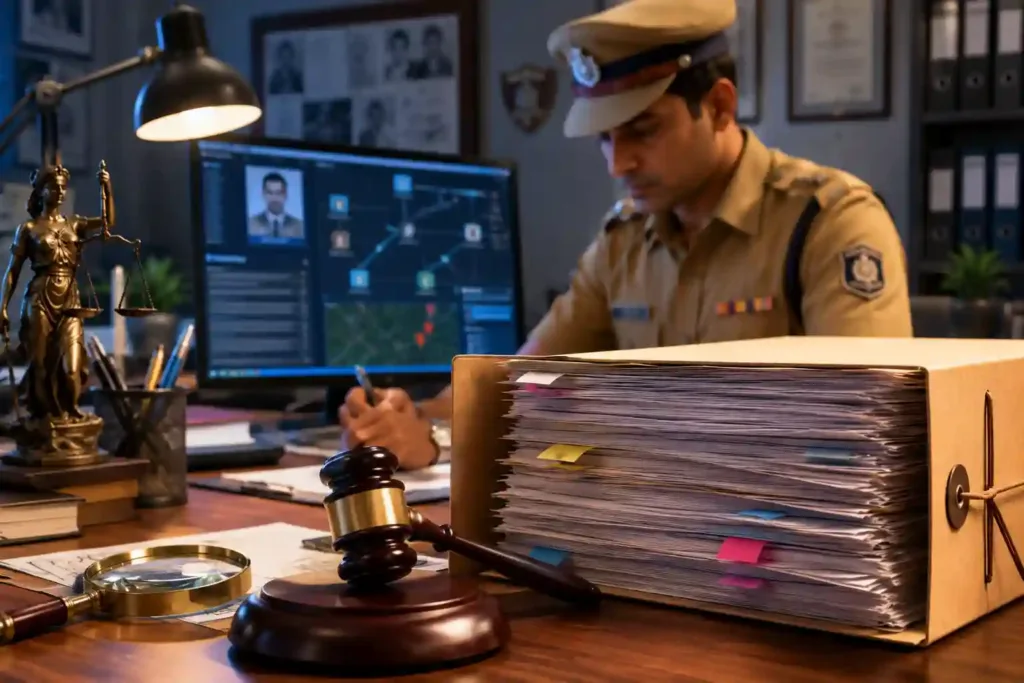
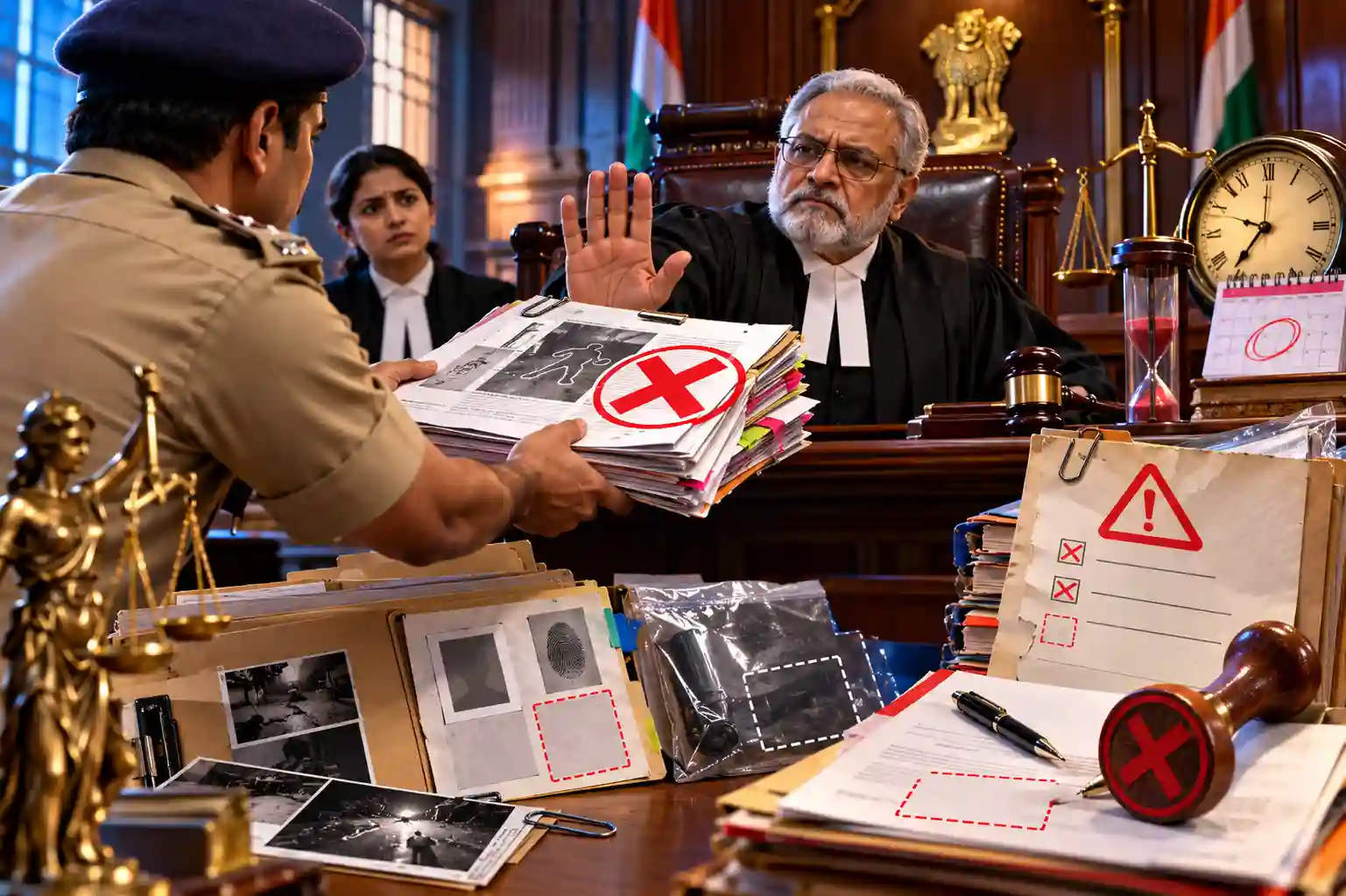
Before automation, it’s worth being clear on what’s actually being automated. A chargesheet is the formal document an investigating officer files under the Bharatiya Nagarik Suraksha Sanhita (BNSS), the law that replaced the CrPC, presenting the evidence gathered during an investigation and the legal sections that evidence supports. It’s what turns an investigation into a prosecution. Courts, prosecutors, and the accused’s own legal team all scrutinize this single document to decide how a case proceeds.
What is Chargesheet Automation?
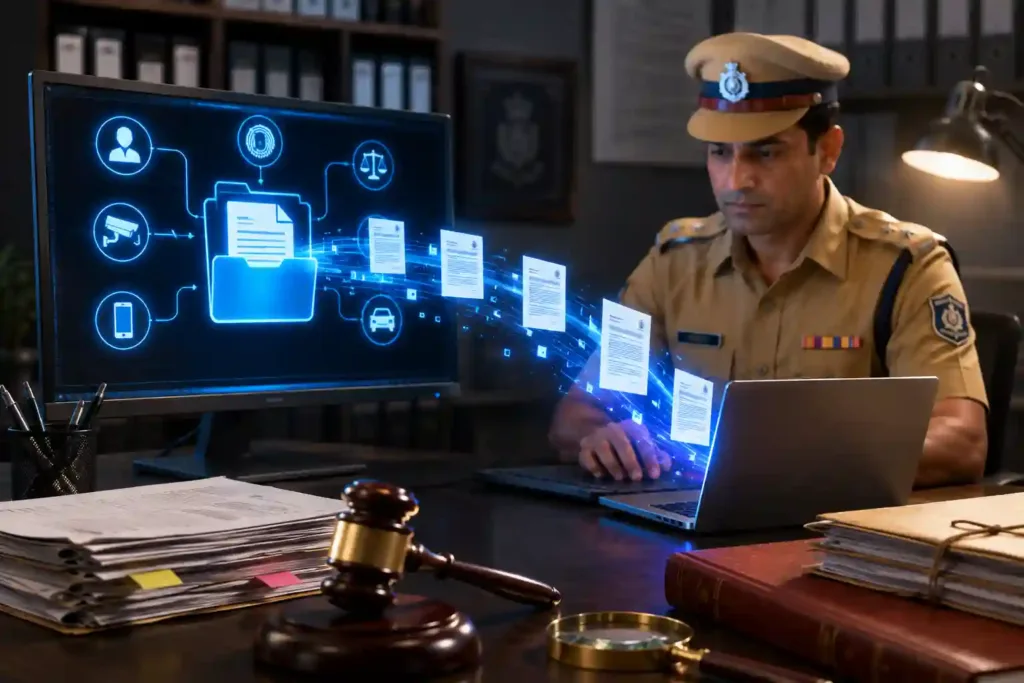
Chargesheet automation is the application of software to any part of the process that currently depends on an officer manually gathering, formatting, cross-checking, or drafting this document. That’s a broad definition on purpose, because the term covers genuinely different levels of capability, and conflating them causes real confusion when departments evaluate what to actually adopt.
The Spectrum of Automation, From Basic to Advanced
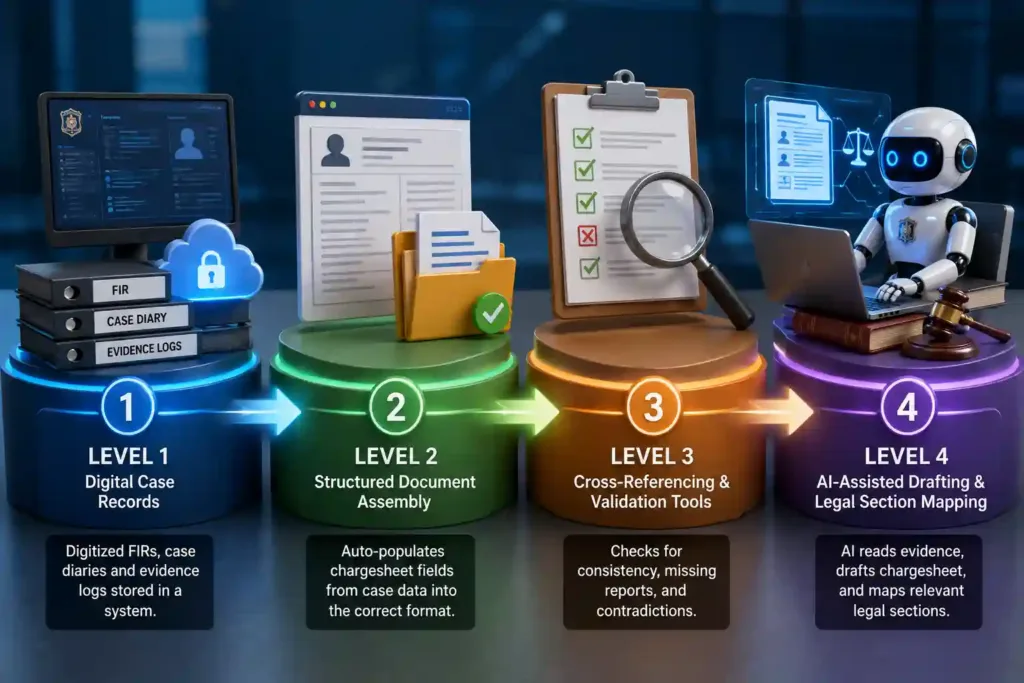
It helps to think of this as four distinct levels rather than one technology.
Level 1: Digital case records
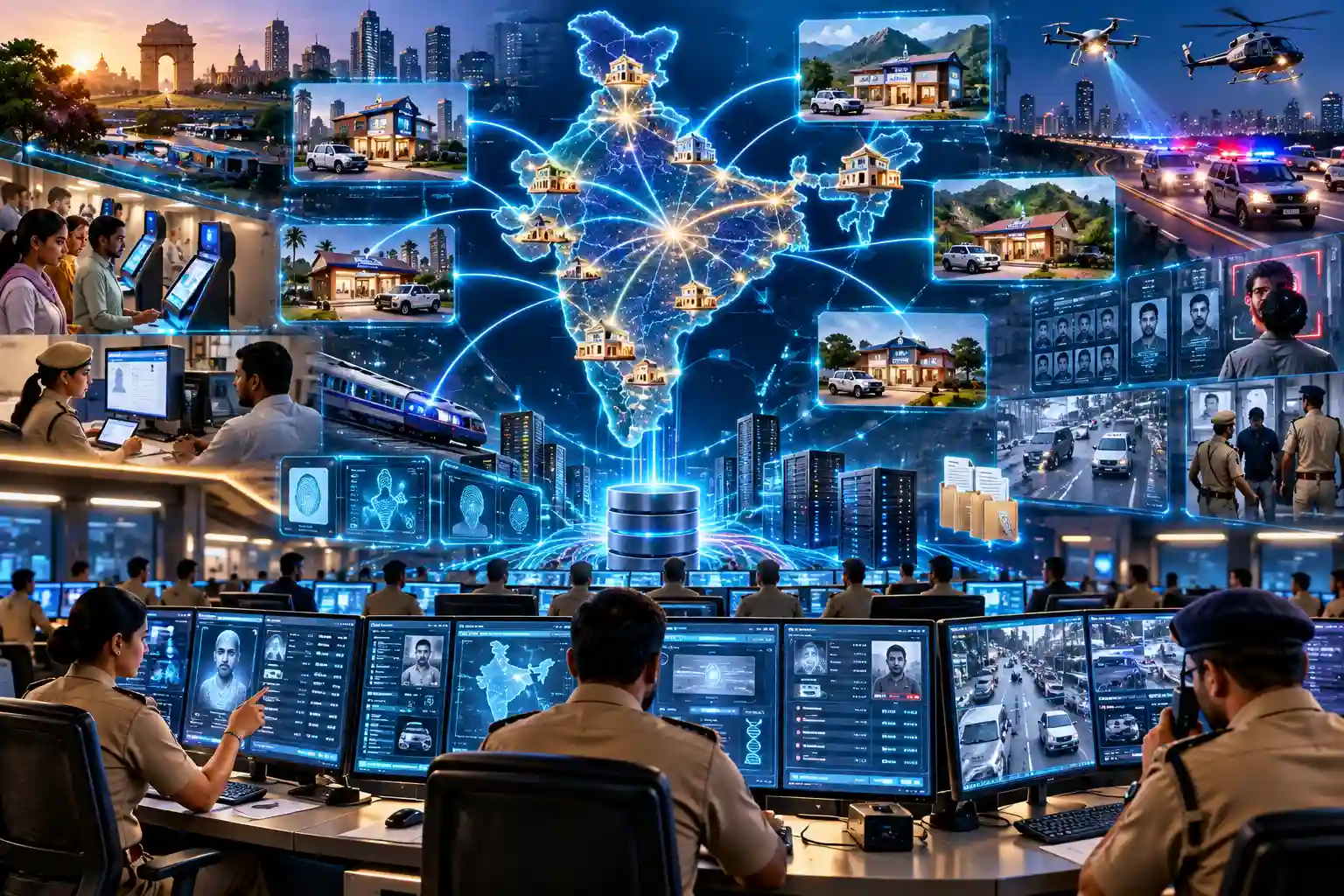
This is the foundation most departments already have some version of, digitized FIRs, case diaries, and evidence logs stored in a system like CCTNS instead of paper files. It doesn’t draft anything. It just means the underlying data exists digitally instead of scattered across physical files.
Level 2: Structured document assembly
Software that auto-populates chargesheet fields from the case management data already on file, pulling in accused details, sections invoked, and evidence references into the correct procedural format, instead of an officer retyping the same information across multiple documents.
Level 3: Cross-referencing and validation tools
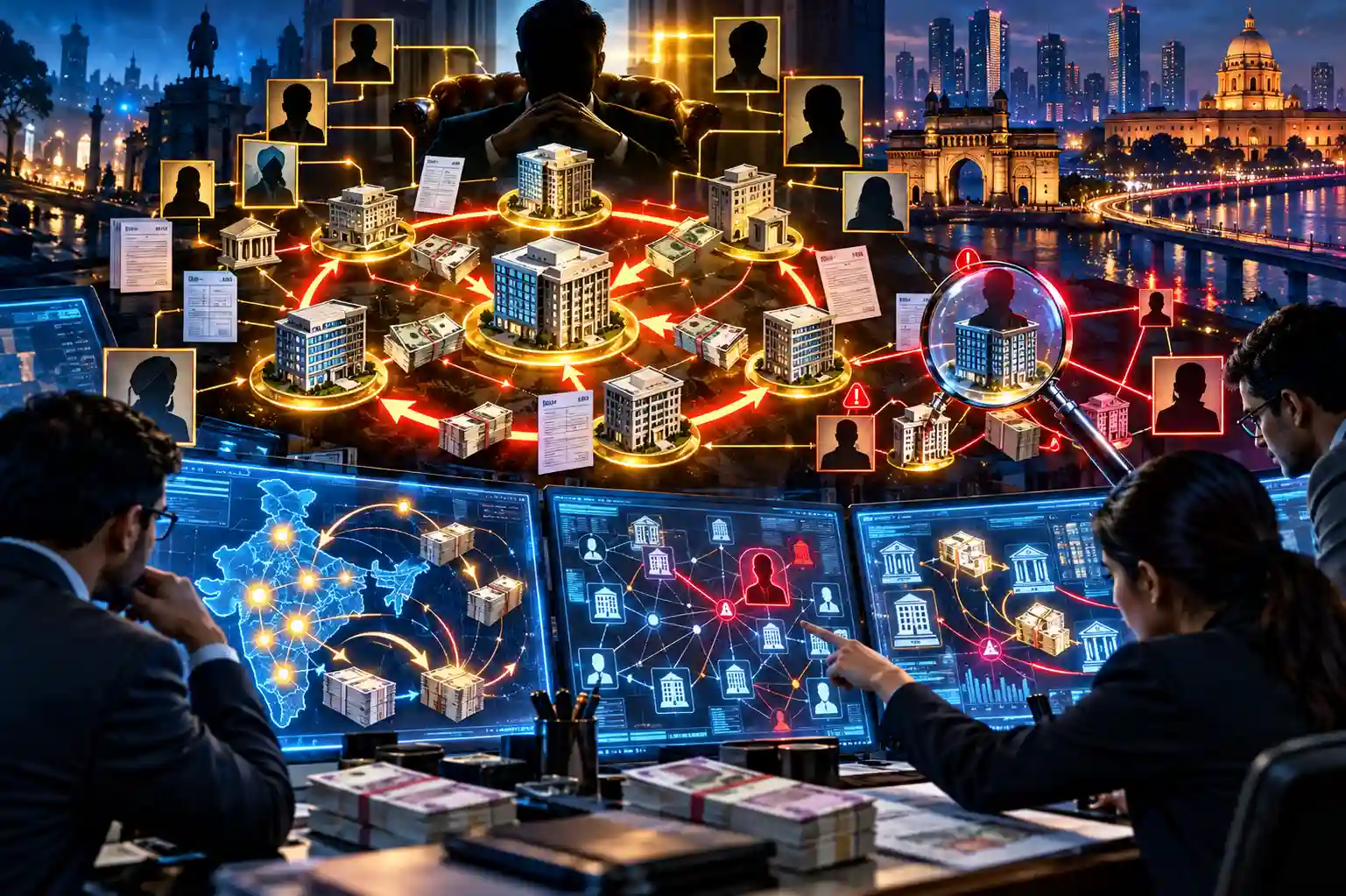
Software that checks whether the pieces of a case are internally consistent, whether a witness statement contradicts another, whether a forensic report is missing for a section that requires one, before the document is finalized.
Level 4: AI-assisted drafting and legal section mapping
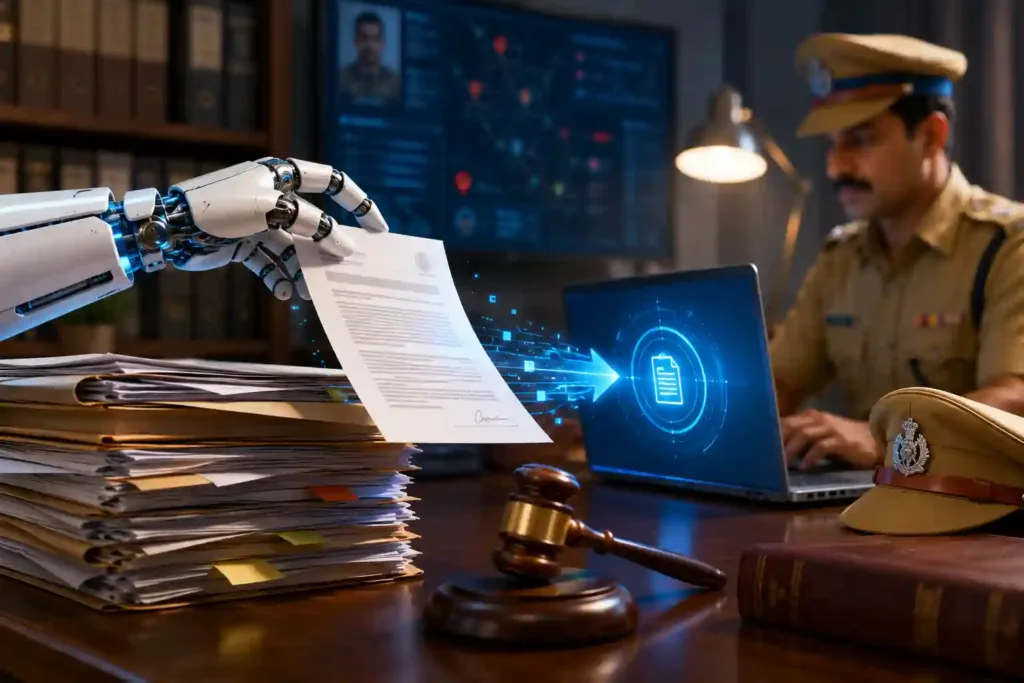
The most advanced layer, where AI reads across all the evidence, drafts a structured chargesheet, and flags where the evidence may not fully support a legal section being applied. This is the layer getting the most attention right now, and the one we’ve written about in more depth separately, covering the full evidence-to-draft workflow in how AI can transform chargesheet preparation and the specific problem of documentation gaps in how AI can reduce chargesheet rejection rates.
Most Indian police departments today sit somewhere between Level 1 and Level 2. Level 3 and 4 are where the real time and quality gains are and where the technology has only recently become genuinely deployable.
Why Police Departments Need It, Beyond the Obvious
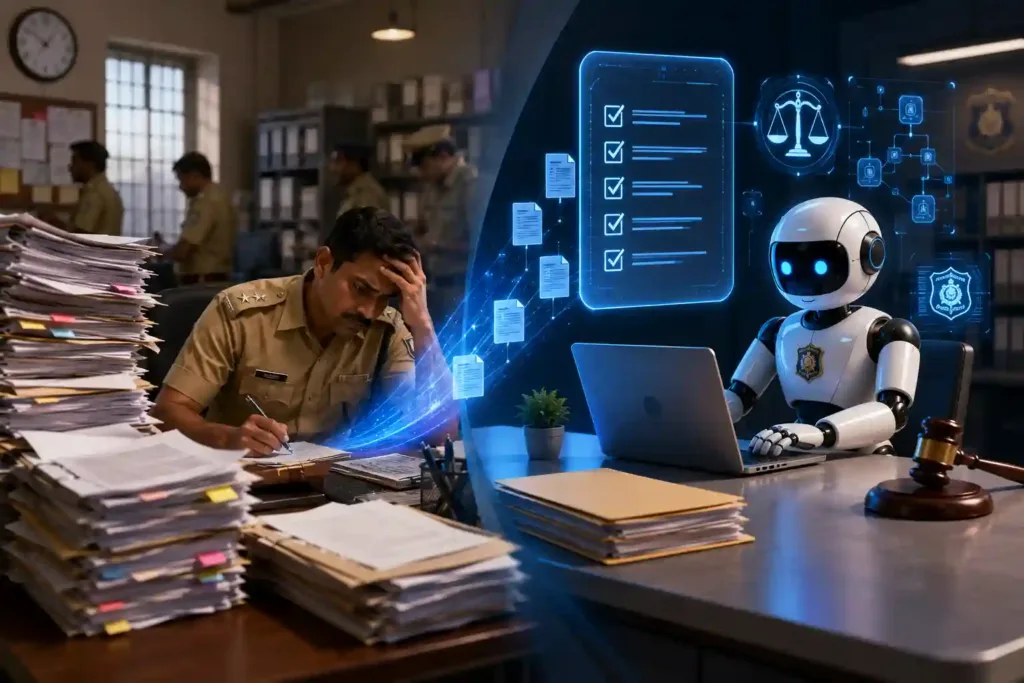
The case for automation usually gets made on legal grounds, faster filings, fewer rejected chargesheets, better conviction outcomes. That case is real. But there’s a more basic operational reason that gets less attention: Indian police departments are chronically understaffed, and chargesheet drafting competes directly with active investigation work for the same limited hours.
Bureau of Police Research and Development data shows a vacancy rate that has hovered around 20 to 24 percent for over a decade. India’s actual police strength works out to well below the United Nations’ recommended benchmark of 222 police personnel per lakh population.
That gap doesn’t show up on the chargesheet itself. It shows up in how much time an investigating officer has left to write one properly after covering an already-stretched caseload. Automation isn’t a nice-to-have layered on top of adequate staffing. For a lot of departments, it’s a direct response to not having it.
BNSS adds a second pressure on top of this. Chargesheets must be filed within 60 days when the accused is in custody, extendable to 90 with a magistrate’s approval. That clock runs regardless of how many other cases an officer is handling. Software that compresses the document assembly and cross-checking work from days to hours doesn’t just save effort, it’s often the difference between filing within the window and missing it.
What Police Case Management Software Typically Includes
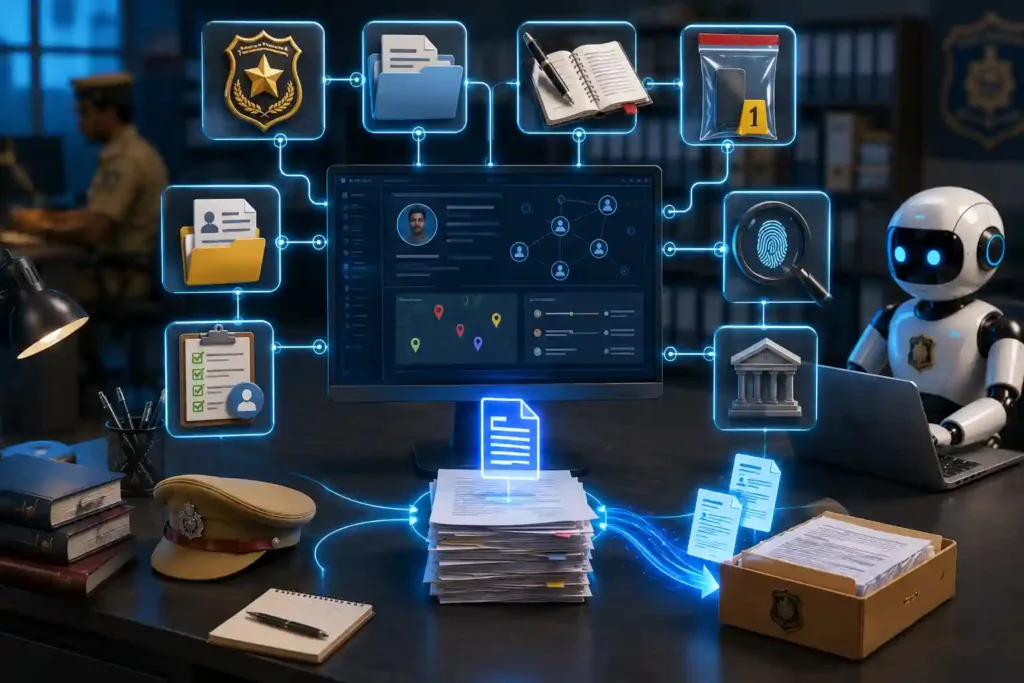
This term gets used loosely too, so it’s worth separating it from chargesheet automation specifically. Police case management software is the broader system a department runs on day to day: FIR registration, case diary maintenance, evidence and exhibit tracking, officer case assignment, and status tracking across the life of an investigation, often integrated with national systems like CCTNS and the Inter-operable Criminal Justice System (ICJS).
Chargesheet automation typically sits on top of this layer rather than replacing it. Good case management software is what makes higher levels of chargesheet automation possible in the first place, since structured document assembly and cross-referencing tools need clean, structured case data to work with. A department with poor underlying case management data will get limited value from chargesheet-specific automation layered on top of it.
What “Automated Legal Documentation” Means in This Context
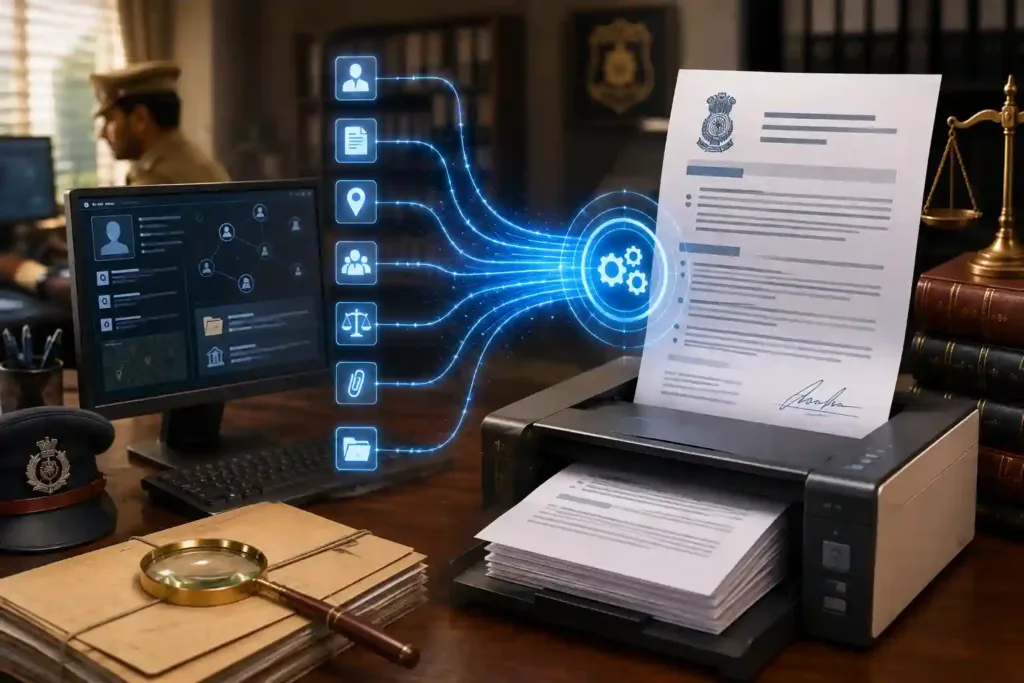
Automated legal documentation isn’t unique to policing, law firms, compliance teams, and courts all use versions of it, generally meaning software that generates or assembles legal documents from structured inputs rather than a person typing them from scratch each time. In the chargesheet context specifically, this means the document is built from the case’s actual evidentiary data, auto-populated where the format allows it, and checked against the procedural requirements BNSS sets for what a chargesheet needs to contain.
The distinction that matters here: automated document generation is not the same as automated decision-making. The software assembles and checks. It doesn’t decide what the case is or isn’t.
What Automation Doesn’t Change
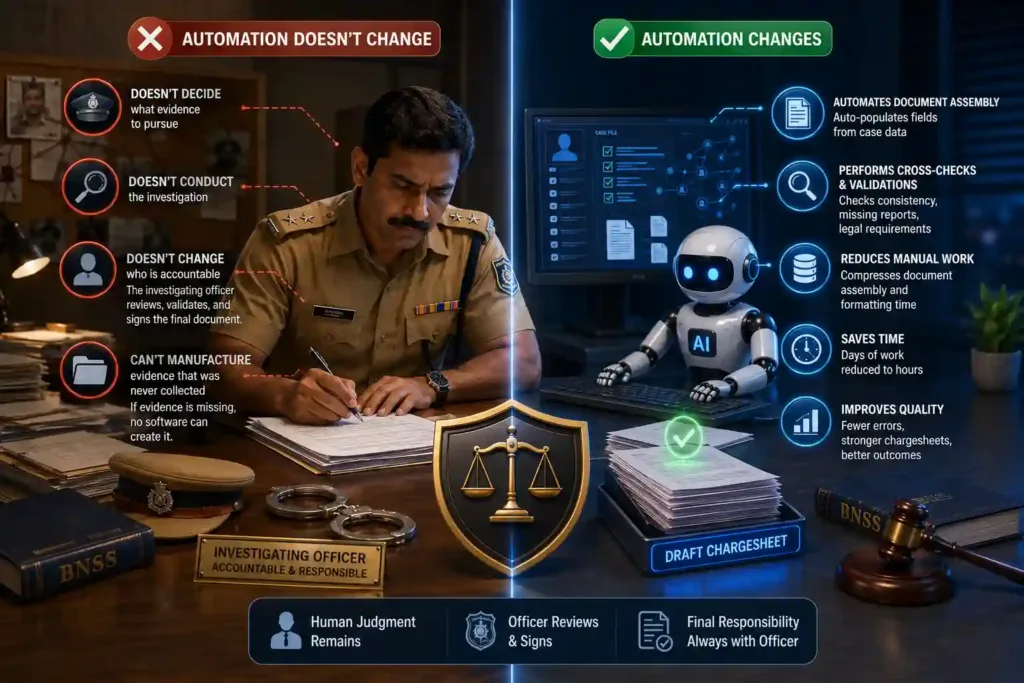
Automation doesn’t decide what evidence to pursue, doesn’t conduct the investigation, and doesn’t change who is accountable for what gets filed, that remains the investigating officer, who reviews, validates, and signs the final document. It also can’t manufacture evidence that was never collected in the field. If a forensic report was never requested or a witness was never interviewed, no amount of software fixes that gap after the fact. What automation changes is how much of the mechanical, repetitive, cross-checking work an officer has to do manually before they get to apply that judgment.
FAQs
1. Is chargesheet automation the same as AI?
No. Automation is the broader category, it includes basic digital record-keeping and structured document assembly that involve no AI at all. AI-assisted drafting and legal section mapping is the most advanced layer of automation, not the whole of it.
2. What is CCTNS, and how does it relate to chargesheet automation?
CCTNS (Crime and Criminal Tracking Network and Systems) is the Indian government’s national database linking police stations across the country for case and criminal record data. It’s foundational infrastructure, the digital case data that higher levels of chargesheet automation, like structured drafting or cross-referencing tools, depend on.
3. Do Indian police departments currently use chargesheet drafting software?
Most departments have some form of digital case record-keeping through CCTNS. Structured drafting tools and AI-assisted chargesheet preparation are newer capabilities, still in early adoption across Indian law enforcement rather than standard practice.
4. Does chargesheet automation replace the investigating officer?
No. It reduces the manual effort in assembling and cross-checking the document. The investigating officer still directs the investigation, evaluates the evidence, and is accountable for the chargesheet that gets filed and signed.
5. Why is chargesheet automation urgent now specifically?
Two pressures are converging: BNSS’s fixed 60- and 90-day filing windows leave little room for delay, and Indian police departments are operating with vacancy rates near 20 to 24 percent, leaving less officer time available for the document-heavy parts of the job.