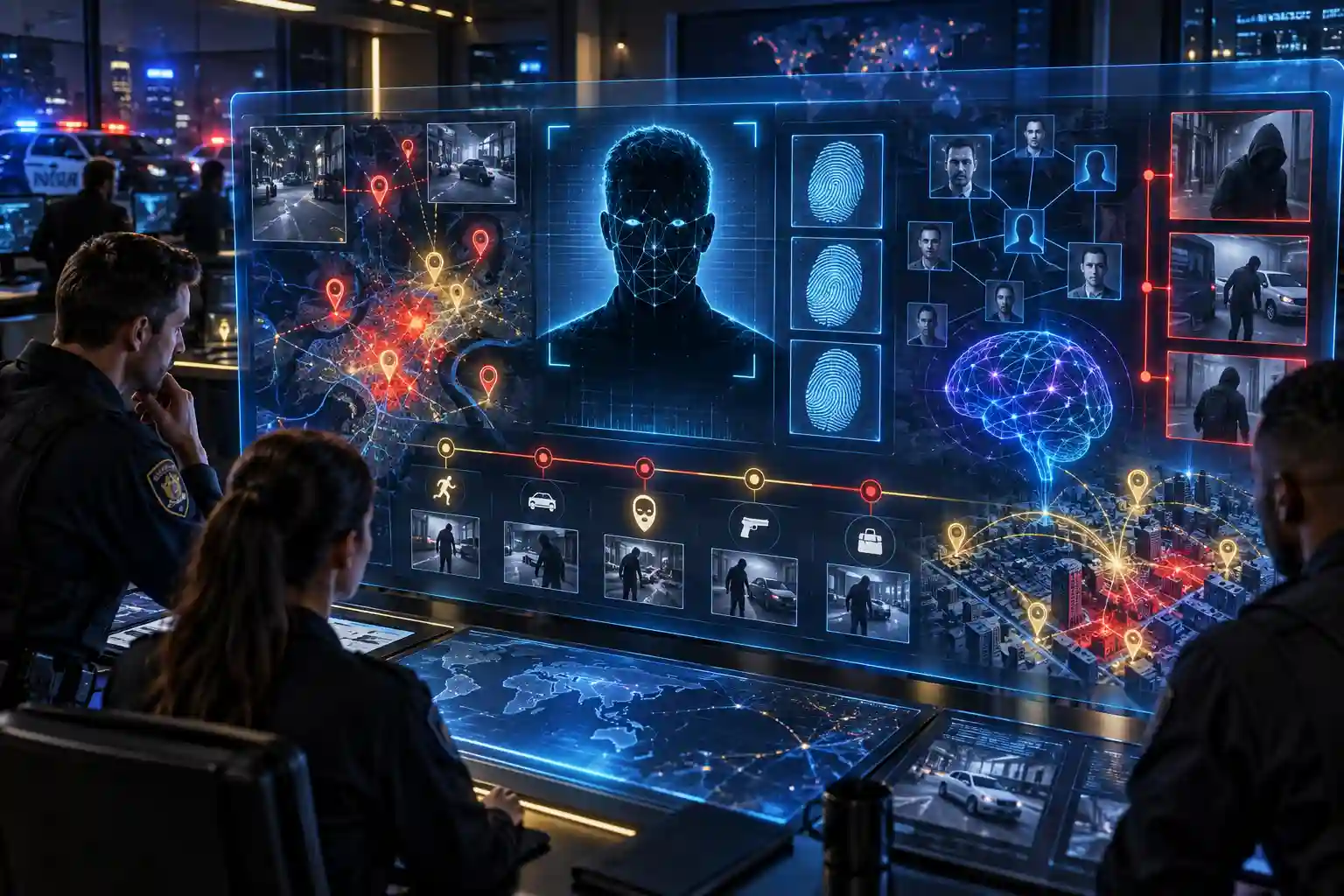
The chargesheet is, in many ways, the single most consequential document in India’s criminal justice system.
It is the bridge between an investigation and a prosecution. It must do several things simultaneously: correlate evidence from multiple sources into a coherent factual narrative, apply the correct legal sections with precision, meet strict procedural requirements, and hold up under the scrutiny of a magistrate, a prosecutor, and an experienced defence counsel, all within a fixed statutory deadline.
India currently has 55.8 million cases pending across its courts as of March 2026, with over 76% of the country’s prison inmates classified as undertrials, people awaiting trial, not yet convicted. Behind every undertrial is a case file. Behind every case file is a chargesheet. The quality, completeness, and legal accuracy of that document determines how long justice takes and whether it arrives at all.
This is why the question of how AI can assist in chargesheet preparation is not a technology question. It is a justice question.
What Chargesheet Preparation Actually Involves
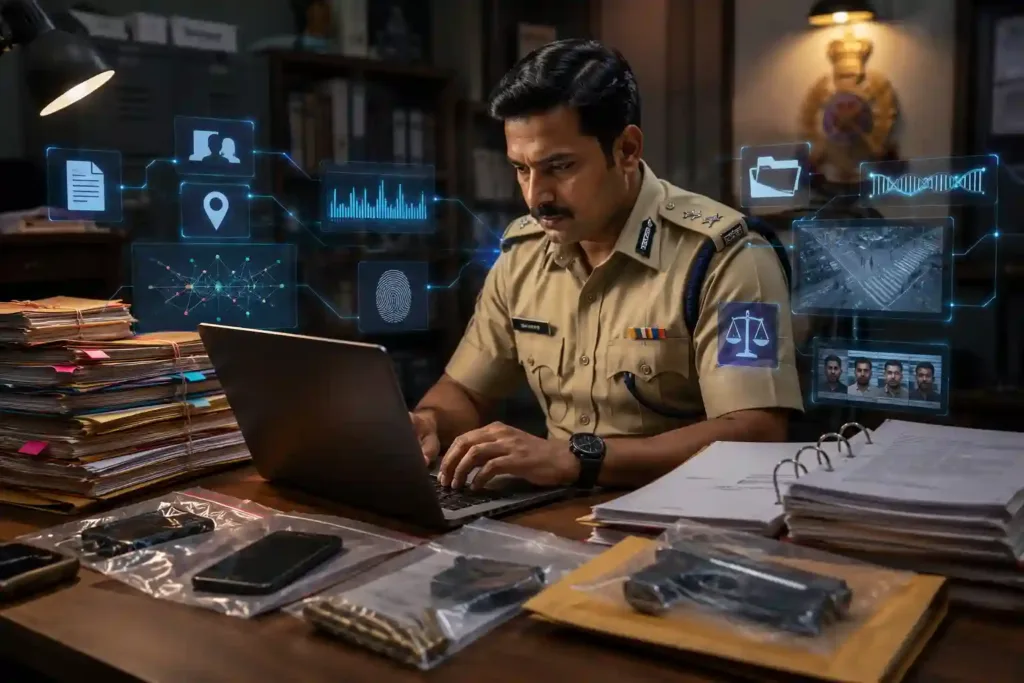
Most conversations about AI in policing focus on detection, finding criminals, predicting crime, identifying suspects. The preparation workflow that converts a completed investigation into a court-ready legal document receives far less attention, despite being one of the most knowledge-intensive, multi-source, time-pressured tasks in the entire law enforcement process.
A complete chargesheet must draw from and coherently integrate:
- FIRs and case diaries: The documented record of the investigation from inception.
- Witness statements: Each one cross-referenced against the others for consistency.
- Call Data Records: Communication patterns that corroborate or establish location, contact, and coordination.
- Forensic reports: Physical, digital, and biological evidence from labs that operate independently.
- Seized materials: Documented chain of custody for every piece of physical evidence.
- Accused history: Prior records, bail status, known associates from CCTNS and other databases.
- Legal section mapping: The precise application of BNS provisions to the established facts.
Each of these comes from a different source, in a different format, maintained by a different team. Bringing them together into a single, internally consistent, legally accurate document, manually, is a demanding process that takes time even for experienced investigating officers.
BNSS has added to this complexity significantly.
Higher Stakes Under BNSS
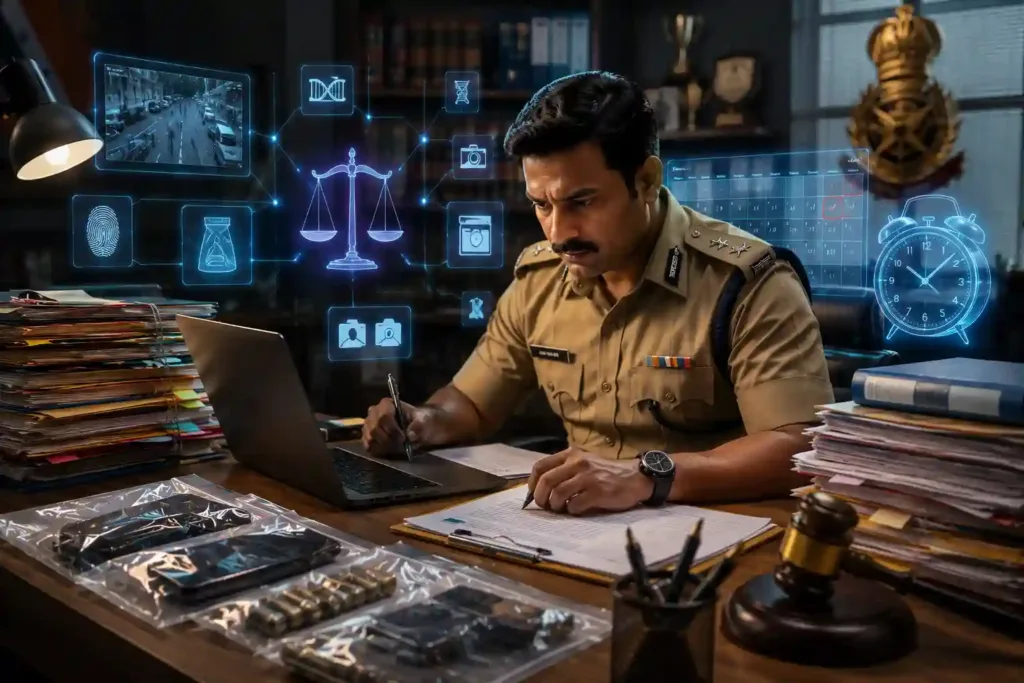
The new criminal laws that came into effect on 1 July 2024 raised the evidentiary standard for prosecution in meaningful ways. BNSS mandates forensic investigation for any offence punishable with seven years’ imprisonment or more, with forensic experts required to visit the crime scene and document the process electronically. This means a wider category of cases now requires forensic documentation to be collected, recorded, and correctly integrated into the chargesheet.
The new laws prompted 23 functional modifications to the CCTNS application, reflecting how significantly the procedural landscape has shifted. BNSS sets a 60-day window for filing chargesheets in cases where the accused is in custody, extendable to 90 days, timelines that exist to protect the rights of the accused and that investing officers must meet without exception.
More evidence types required. The same time windows. The same need for legal precision. This is the environment in which AI-assisted chargesheet preparation has gone from a forward-looking idea to a genuinely timely capability.
Five Stages Where AI Can Transform the Workflow
Stage 1: Evidence Ingestion Across All Source Types
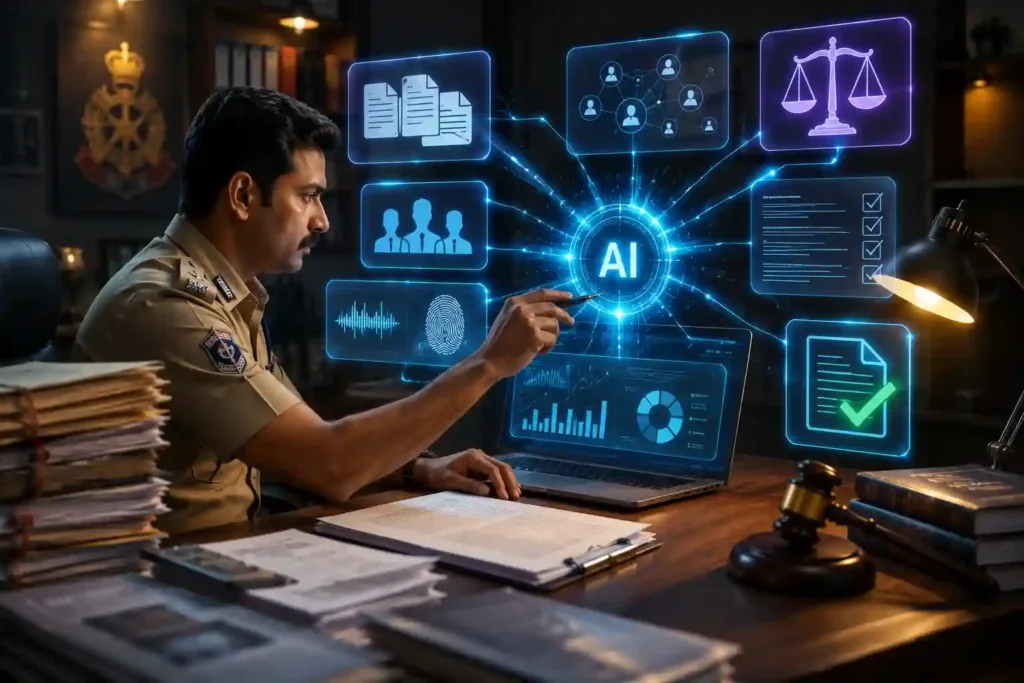
The first task in chargesheet preparation is assembling everything that exists, FIRs, statements, CDRs, forensic reports, device data, and court records, into a single working environment.
AI can ingest all of these simultaneously, regardless of format. Printed forensic reports, scanned witness statements, structured database records, multilingual documents, OCR, translation, and structured data extraction convert them all into a unified, searchable corpus. The investigating officer begins with a complete picture rather than spending time manually gathering and formatting inputs.
Stage 2: Automatic Cross-Referencing and Inconsistency Detection
With all evidence in one environment, an AI agent can cross-reference across sources automatically, checking whether witness statements are consistent with each other, whether CDR location data aligns with the stated timeline, and whether forensic findings match the factual narrative in the FIR.
Inconsistencies are flagged for the investigating officer’s review before the document is assembled. This is the stage where a missing chemical analyst report, a contradictory witness statement, or a timeline gap surfaces, while there is still time to address it.
Stage 3: Legal Section Mapping
Applying the correct BNS provisions to the established facts of a case is skilled legal work. It requires familiarity with the provisions, with how courts have interpreted them, and with how the specific evidence in the case maps to each element of the relevant sections.
AI trained on legal provisions and precedent can assist investigating officers in identifying the applicable sections for the established facts, flagging where the evidence supports a specific provision, where it may fall short of required elements, and where additional corroboration may strengthen the legal framing. This is support for a skilled officer’s judgement, not a replacement of it.
Stage 4: Structured Document Generation
Once evidence is correlated and legal sections are mapped, an AI agent can generate a structured draft chargesheet, pulling from the assembled evidence, applying the required procedural format, and producing a document that reflects the complete investigation in the correct legal structure.
This draft is the starting point for the investigating officer’s review, not the finished product. The officer reads, validates, and amends. But the draft is produced from the full evidentiary corpus, not reconstructed manually from memory and notes.
Stage 5: Pre-Filing Quality Review
The final stage before filing is the most important from a prosecution-strength perspective and the one most often compressed under deadline pressure.
The Architecture That Changes the Game: Multiple Agents, One Chargesheet
This is where the thought leadership in AI-assisted chargesheet preparation becomes most concrete.
A single AI agent building a chargesheet makes the preparation process faster and more comprehensive. A multi-agent architecture, with one agent that builds and one agent that stress-tests, makes it stronger.
Here is how it works:
Agent One correlates the evidence, maps the legal sections, and generates the structured chargesheet draft.
Agent Two is assigned a different role entirely: defence counsel. This agent independently reviews the draft, looking for exactly what a defence lawyer will look for. Unsupported factual claims. Contradictions between evidence sources that weren’t caught in Stage 2. Legal sections where the evidence is thin. Chain of custody gaps. Procedural non-compliance.

Agent Two produces a structured critique of Agent One’s draft before the investigating officer ever sees the final document. The officer reviews both, the chargesheet and the critique, and resolves the flagged issues before filing.
The result is a chargesheet that has already survived the scrutiny it would otherwise face for the first time in a courtroom.
This multi-agent architecture is the centrepiece of Sarvagata AI’s approach to investigative workflow automation. It reflects a specific design philosophy: in high-stakes document preparation, the most valuable second opinion is one specifically instructed to find what’s wrong. Building that adversarial review into the workflow, before filing, not after, is what separates AI-assisted preparation from AI-accelerated preparation. Speed is useful. Quality is what matters in court.
What This Could Mean at Scale
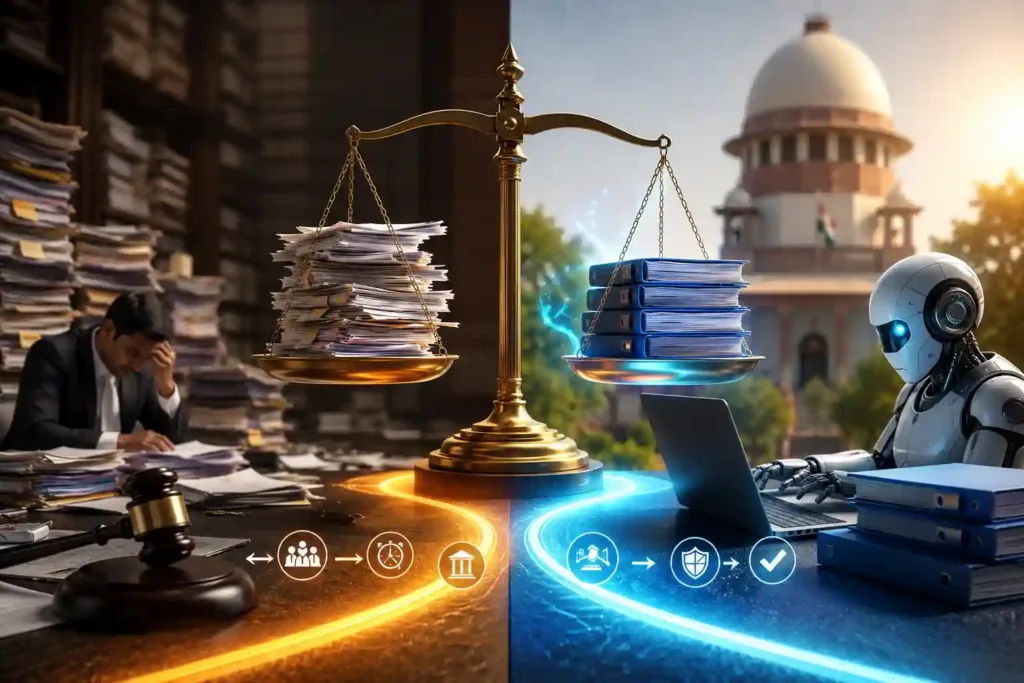
India’s courts currently hold millions of pending cases, with new filings consistently outpacing disposals. Behind that number is a complex web of causes, judicial vacancies, procedural adjournments, and investigation timelines, but the quality and completeness of chargesheets at the point of filing is a meaningful variable in how quickly cases move through the system.
If AI-assisted preparation raises the completeness and legal accuracy of chargesheets, systematically, across thousands of cases, the downstream effect compounds. More cases that reach trial with coherent, complete evidentiary packages. Fewer discharge applications granted on documentation grounds. Faster resolution for victims and undertrials alike.
This is the scale argument for AI in chargesheet preparation. Not one better case. A structurally stronger prosecution pipeline.
The government’s stated intent under the BNSS framework is to resolve criminal cases within three years. That is an ambitious target. Achieving it requires every stage of the process, investigation, documentation, and prosecution, to operate at higher quality and lower latency than the current framework produces. AI-assisted chargesheet preparation is one specific, high-leverage intervention toward that goal.
The Bottom Line
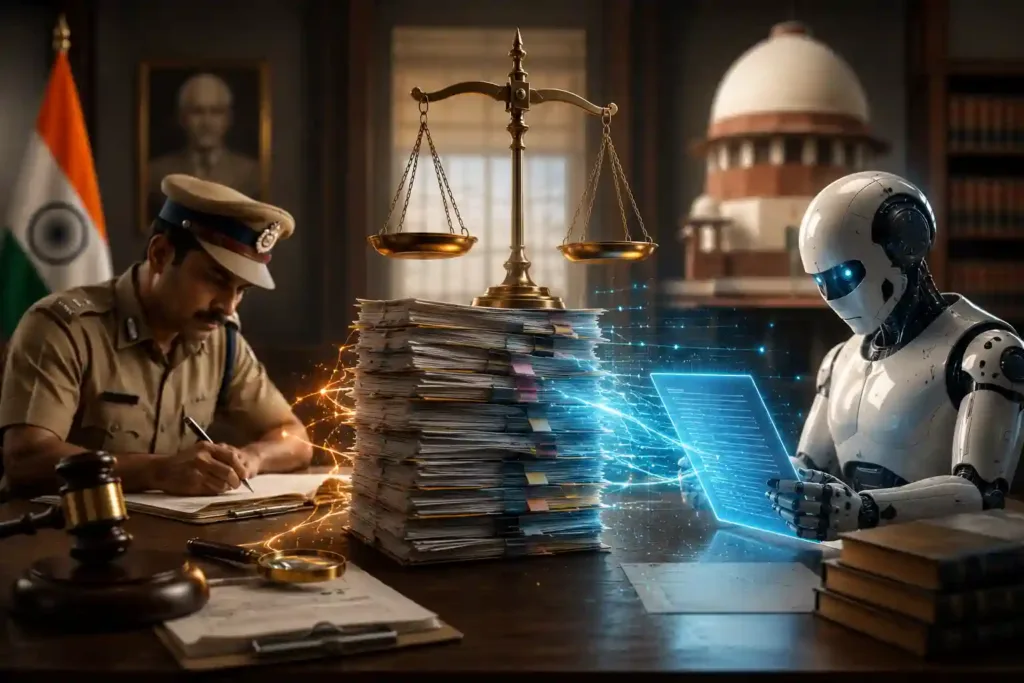
The chargesheet is where investigations meet the justice system. It is the document that determines whether months of fieldwork, forensic analysis, and evidence gathering translates into a prosecution that holds, or one that doesn’t.
AI cannot conduct the investigation. It cannot replace the officer who builds the case. What it can do is ensure that what was found in the field is fully and accurately reflected in the document that reaches court, correlated completely, mapped correctly to the law, and stress-tested for weaknesses before a magistrate or defence counsel finds them first.
With 55.8 million cases pending and 76% of prison inmates awaiting trial, India’s justice system needs every structural improvement it can get. AI-assisted chargesheet preparation is one that sits at the upstream end of the problem, before the cases pile up, before the acquittals, and before the undertrials wait years for a resolution.
That is where the leverage is. And that is where the technology now exists to apply it.
Learn more: Sarvagata AI by Innefu Labs
Frequently Asked Questions
1. What is chargesheet preparation, and why does it matter for conviction rates?
A chargesheet is the formal document filed by an investigating officer that presents the evidence and legal grounds for prosecution against an accused person. It must accurately correlate all available evidence, apply the correct legal provisions, and meet procedural standards. Its completeness and accuracy directly affects whether a case proceeds to trial, whether an accused receives bail by default, and ultimately whether a conviction is secured. India’s conviction rate of 53.3% overall, and significantly lower for serious crimes, reflects, in part, the quality of the documentation that reaches court.
2. How can AI assist in chargesheet preparation without replacing the investigating officer?
AI assists in the data-intensive, cross-referencing stages of chargesheet preparation, ingesting evidence from multiple sources, identifying inconsistencies between them, suggesting applicable legal sections, and generating a structured draft for officer review. The investigating officer retains full responsibility for the investigation itself, for the accuracy of the evidence presented, and for the final document filed. AI reduces the time spent assembling and formatting inputs, so the officer’s expertise is applied to validation and judgement rather than data gathering.
3. What is the BNSS forensic mandate, and how does it affect chargesheet preparation?
The Bhartiya Nagarik Suraksha Sanhita (BNSS) mandates forensic investigation for all offences punishable with seven years’ imprisonment or more, requiring forensic experts to visit crime scenes and document the process electronically. This increases the volume of forensic documentation that must be collected, recorded, and integrated into chargesheets. AI-assisted preparation is particularly valuable in this context because it automates the correlation between forensic reports and other evidentiary sources, reducing the risk of a forensic element being missed or mismatched in the final document.
4. What is a two-agent AI architecture for chargesheet preparation?
A two-agent architecture deploys two AI agents sequentially on the same document: the first builds the chargesheet from the available evidence and legal mapping; the second independently reviews the draft from the perspective of a defence counsel, looking for evidentiary gaps, inconsistencies, and legal weaknesses. The result is a chargesheet that has been stress-tested for the scrutiny it will face in court before it is filed. This dual-validation approach is specifically designed for high-stakes document preparation where quality matters more than speed alone.
5. What are the BNSS timelines for filing chargesheets, and how does AI help meet them?
BNSS requires chargesheets to be filed within 60 days when the accused is in custody, extendable to 90 days with a magistrate’s approval. Missing this deadline entitles the accused to default bail. AI-assisted preparation compresses the most time-consuming stages, evidence ingestion, cross-referencing, and document structuring significantly, giving investigating officers more time for the quality review that makes the difference between a strong and a weak filing.
6. Does AI-assisted chargesheet preparation require internet connectivity or external data sharing?
No, and for law enforcement applications, this is a non-negotiable requirement. Chargesheet preparation involves some of the most sensitive case data an investigating agency holds. Any AI system handling this data must operate entirely on-premise, within the agency’s own secure infrastructure, with no data routed through external servers. Sarvagata AI by Innefu Labs is built for exactly this architecture: fully air-gapped, no external data calls, and complete data sovereignty maintained throughout the preparation workflow.