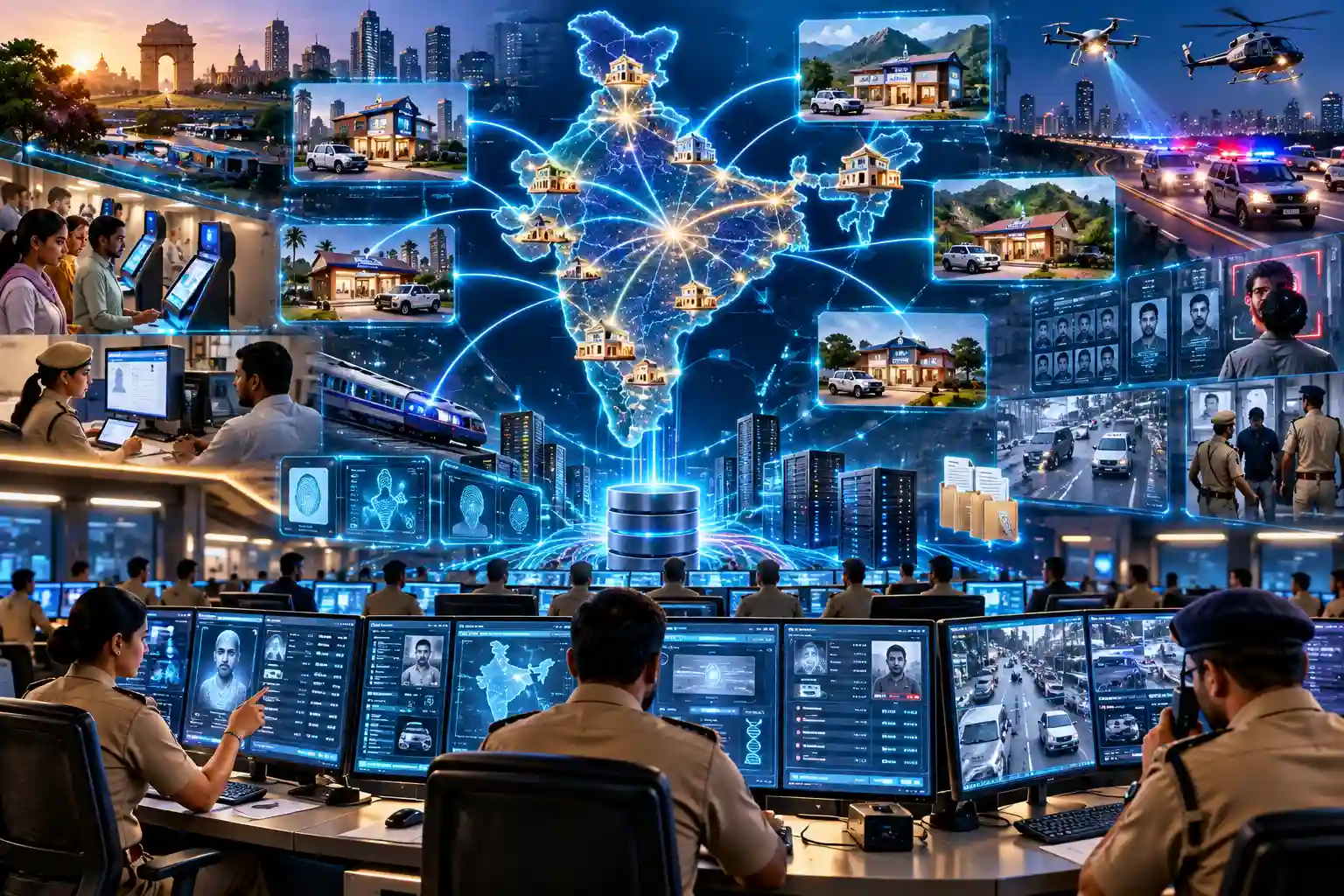
In the past, wars were won by whoever had the largest armies or the most powerful weapons. Today, they’re won by whoever sees more — and sees it sooner.
Whether it’s tracking the silent rise of radar activity across a border, detecting the construction of covert infrastructure, or intercepting communications that hint at movement, modern warfare is powered by intelligence, not just firepower.
But the real strength doesn’t lie in collecting data from one source — it lies in connecting multiple streams of intelligence to build a complete picture. That’s where multi-source intelligence becomes mission-critical.
From intercepted electronic signals and satellite imagery to human reports and even public social media posts, today’s defence systems must process a wide array of inputs — each offering a different lens into adversary behavior.
In this article, we’ll break down the major types of military intelligence that form the backbone of defence operations:
- ELINT – Electronic Intelligence
- IMINT – Imagery Intelligence
- COMINT – Communications Intelligence
- HUMINT – Human Intelligence
- OSINT – Open-Source Intelligence
By the end, you’ll not only understand what each stream does — but also why their fusion is what turns raw data into real strategy.
What is Multi-Source Intelligence?
At its simplest, multi-source intelligence is the practice of combining information from different intelligence disciplines to produce a clearer, more reliable understanding of a situation. Each source — whether it’s an intercepted communication, a satellite image, or a human report — offers a unique angle. But no single source tells the whole story.
In real-world defence scenarios, decisions are rarely based on one piece of data. A spike in radar signals might suggest mobilization, but without visual confirmation, it’s inconclusive. A human source might report a weapons cache, but without location data, it’s unverifiable. Only by correlating intelligence from multiple streams can defence agencies move from suspicion to certainty.
This correlation isn’t just helpful — it’s essential. Especially in a landscape where threats are dispersed, hybrid, and often hidden in plain sight.
Multi-source intelligence is the foundation behind the most effective command decisions because it enables:
- Contextual awareness: Understanding not just what is happening, but why and where.
- Cross-verification: Confirming one source’s findings with another to reduce misinformation.
- Operational confidence: Empowering leaders to act on intelligence, not assumptions.

In advanced platforms like Prophecy Guardian, this concept is built into the system’s DNA — integrating electronic signals, visuals, field intelligence, and open-source data into a unified operational view. The result: intelligence that is not only faster, but far more accurate.
Next, we’ll explore each of these intelligence types in detail — starting with ELINT.
ELINT (Electronic Intelligence)
ELINT, or Electronic Intelligence, is one of the most technical and precise forms of intelligence gathering. It refers to the interception and analysis of electromagnetic signals that are not part of standard voice or textual communications — primarily those emitted by radar systems, missile guidance, and other electronic equipment.
In simpler terms, ELINT is about listening to the electronics of your adversary.
What Does ELINT Detect?
- Radar emissions (air defence systems, surveillance radars)
- Guidance signals from missiles or drones
- Electronic countermeasure systems (like jamming)
- Test patterns of adversary equipment before deployment
Why ELINT Matters
ELINT offers early warning and insight into adversary capabilities — not just what they’re saying, but what systems they’re activating. For example:
- A sudden surge in radar activity in a region could indicate upcoming aircraft movement or missile deployment.
- Tracking the frequency and type of emissions helps analysts identify the kind of system in use, its range, and its potential targets.
What makes ELINT powerful is that it often reveals intentions before actions. An adversary preparing a surface-to-air missile system might emit detectable signals well before any physical movement is observed.
IMINT (Imagery Intelligence)
IMINT, or Imagery Intelligence, is perhaps the most visually compelling form of military intelligence. It involves collecting and analyzing visual data — typically from satellites, drones, aerial reconnaissance, or surveillance systems — to gain a geographic and spatial understanding of adversary activity.
If ELINT helps us listen to a battlefield, IMINT helps us see it.
What Does IMINT Capture?
- Troop movements and formations
- Construction of military infrastructure
- Vehicle or equipment deployments
- Terrain mapping for operational planning
- Damage assessments after strikes or incursions
High-resolution imagery, combined with time-stamped comparisons, allows analysts to track developments as they unfold — from a single tent appearing in a desert to a full airbase materializing over weeks.
Why IMINT Is Invaluable
- Provides visual confirmation of what other sources suggest (e.g., radar activity backed by new installations)
- Offers geospatial context: where something is happening, how large the operation is, and how it’s evolving
- Assists in targeting decisions, mission planning, and risk assessment
IMINT is particularly useful in operations where deniability is high — such as cross-border buildups or covert infrastructure projects. A picture may not speak, but it can’t lie.
COMINT (Communications Intelligence)
COMINT, or Communications Intelligence, is the branch of signals intelligence (SIGINT) focused on intercepting and analyzing voice or textual communication between adversaries. This includes everything from battlefield radio chatter and satellite phone calls to encrypted digital transmissions.
Where ELINT tells you what systems are active, COMINT tells you what people are thinking, planning, or hiding.
What COMINT Listens To:
- Military radio transmissions
- Satellite and mobile phone calls
- Encrypted emails or messages
- Tactical command communications
- Emergency signals or coded alerts
COMINT systems don’t just record messages — they attempt to decode, translate, and analyze the metadata, such as the location, frequency, duration, and regularity of communications.
Why COMINT is Critical
- Reveals intent: Unlike radar signals, speech and text can indicate goals, concerns, or emotional states.
- Supports psychological analysis: Word choice, tone, and timing can suggest morale or stress levels.
- Links networks: By analyzing who is talking to whom, COMINT uncovers hierarchies, relationships, and coordination between units.
For example, a spike in encrypted voice traffic near a border, combined with keywords like “movement” or “drop,” could signal an impending operation.
COMINT in the Fusion Chain
COMINT becomes exponentially more powerful when paired with:
- IMINT: Communication near a new facility? Could suggest operational readiness.
- ELINT: COMINT before radar activation? Could indicate imminent deployment.
- HUMINT: If a human source mentions a name or phrase, COMINT can track its usage across regions.
HUMINT (Human Intelligence)
HUMINT, or Human Intelligence, is perhaps the oldest form of intelligence gathering — and still one of the most vital. It involves collecting information directly from people: field agents, informants, defectors, or even casual conversations during interviews or patrols.
Unlike technical sources, HUMINT offers insight into intentions, motivations, and context that no sensor or algorithm can capture.
What Does HUMINT Include?
- Debriefings of captured personnel
- Reports from undercover agents
- Interrogation of suspects or witnesses
- Field observations by patrol units
- Voluntary information from civilians or defectors
HUMINT can come from formal operations or unstructured interactions — anything that involves a human conveying what they’ve seen, heard, or believe.
Why HUMINT Still Matters
- Access to internal thinking: While IMINT might show construction, a human source can reveal what’s being built — and why.
- Cultural nuance: Local actors understand motivations, alliances, and behavioral cues better than any system.
- Validation and contradiction: HUMINT can confirm, challenge, or explain what other sources suggest.
In environments where technical surveillance is limited — such as mountainous terrain or urban areas — human networks often provide the only window into activity.
OSINT (Open-Source Intelligence)
In a world where information moves faster than bullets, OSINT, or Open-Source Intelligence, has become an indispensable part of modern defence strategy. It refers to intelligence collected from publicly available sources — including the surface web, social media, news outlets, academic papers, and even forums or messaging apps.
Once considered supplementary, OSINT is now a frontline source of insight, especially in asymmetric warfare, hybrid conflict zones, and digital propaganda campaigns.
What Counts as OSINT?
- Social media posts, videos, hashtags
- News reports and international media
- Satellite imagery available on open platforms
- Blogs, forums, and messaging platforms
- Leaked data on the dark web or deep web
- Public government or NGO reports
It’s not just about collecting what’s visible — it’s about connecting what’s publicly said, shown, and shared to extract strategic signals from the noise.
Why OSINT is Gaining Ground
- Early warning system: Civil unrest, protest plans, or hostile sentiment often surfaces online before it plays out on the ground.
- Psychological and narrative warfare: OSINT helps track how adversaries shape public opinion or spread disinformation.
- Identity and movement tracking: With facial recognition and pattern-matching, even brief appearances in videos or photos can aid in identifying individuals.
In some scenarios, OSINT becomes the only available intelligence — especially in regions where formal surveillance or on-ground assets are unavailable.
Why Correlation Matters: Intelligence in Isolation Fails
Each form of intelligence — ELINT, IMINT, COMINT, HUMINT, OSINT — provides a different lens. But relying on a single lens to understand a complex battlefield is like trying to judge a landscape through a keyhole.
Intelligence, in isolation, is incomplete.
From Dots to a Connected Picture
Let’s say:
- ELINT picks up unusual radar activity near a border.
- IMINT shows recent construction in the same zone.
- COMINT intercepts encrypted chatter with references to “deployment” and “forward movement.”
- HUMINT reports a surge in local conscription.
- OSINT reveals rising nationalism and leaked videos from the area.
Individually, these insights are ambiguous. Together, they form a compelling narrative — possibly an imminent military buildup or mobilization. That’s the power of correlation.
Fusion is the Multiplier
Correlating multi-source intelligence:
- Enhances accuracy by validating data across streams
- Reveals hidden patterns that no single source could uncover
- Reduces blind spots by combining technical and human input
- Speeds up decision-making with a full-spectrum view
This is precisely why modern defence platforms — such as Prophecy Guardian — are built not just to collect, but to correlate. They fuse structured and unstructured intelligence into a unified operational picture, turning disconnected signals into actionable foresight.
In the final section, we’ll summarize the strengths of each intelligence type — and reaffirm why true strategic clarity comes not from choosing one, but from using them all together.
Conclusion
In today’s unpredictable and rapidly evolving security environment, intelligence superiority doesn’t come from a single source. It comes from the ability to pull together diverse, often incomplete signals — and see what they mean when viewed as a whole.
- ELINT tells us what systems are active.
- IMINT shows us what’s happening on the ground.
- COMINT reveals the intent behind actions.
- HUMINT adds local knowledge and human nuance.
- OSINT highlights what’s happening in the open, before it’s acted on in the shadows.

Each discipline has its strengths. But only when they are fused together, verified against one another, and contextualized, do they become something greater: true intelligence.
That’s why modern defence strategy increasingly relies on multi-source intelligence frameworks — and platforms like Prophecy Guardian are designed to make that integration seamless, secure, and scalable.
In the end, the question is not which intelligence source is best. It’s how quickly, securely, and accurately you can bring them together and turn insight into advantage.
Frequently Asked Questions
1. What are the main types of military intelligence?
Key types include ELINT (electronic signals), IMINT (imagery), HUMINT (human sources), COMINT (communications), and OSINT (open-source).
2. What’s the difference between ELINT and COMINT?
ELINT deals with non-verbal electronic emissions like radar, while COMINT captures voice or textual communications between parties.
3. Why is OSINT important in military intelligence?
OSINT helps monitor public sentiment, track emerging narratives, and detect digital propaganda — especially in hybrid warfare and internal security operations.
4. What is intelligence fusion?
Fusion is the process of integrating data from multiple sources to create a comprehensive operational picture. It helps identify patterns, threats, and opportunities more effectively.