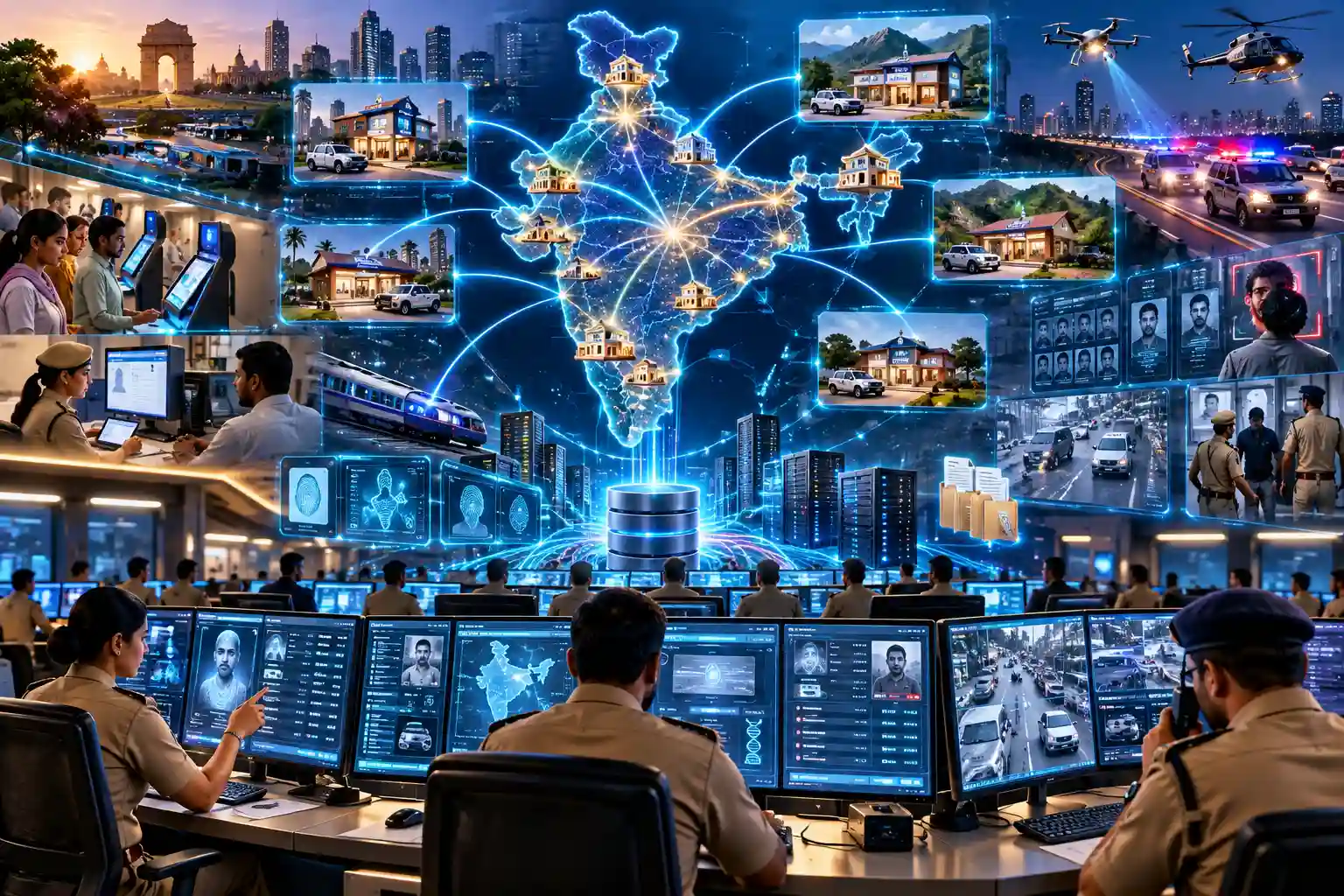
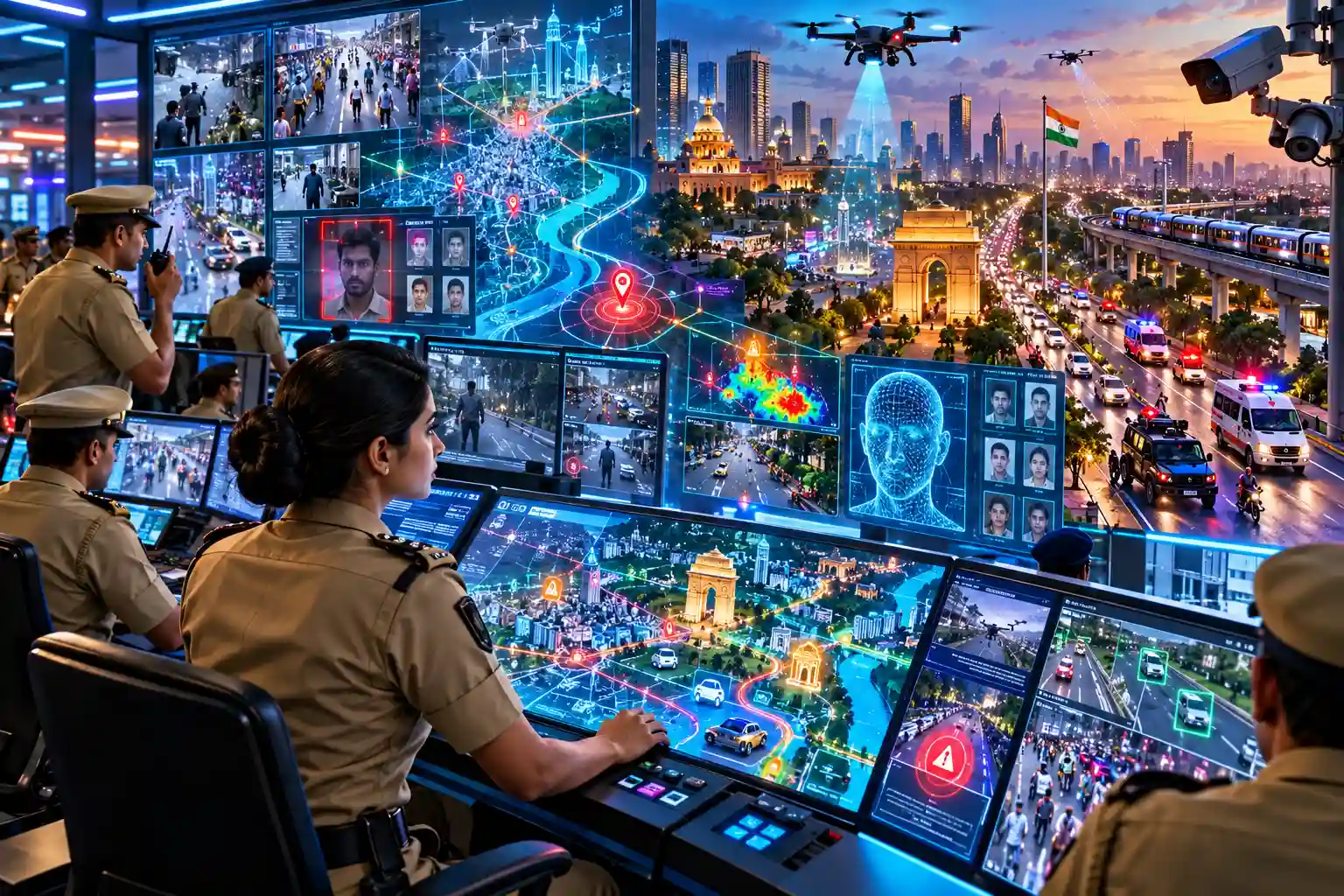
The Shift to Smarter Surveillance
The role of video surveillance has evolved far beyond passive monitoring. In an era where speed, accuracy, and real-time action define effective security, organizations can no longer rely solely on human vigilance and hours of footage review.
The need for intelligent, responsive systems has given rise to AI-powered video analytics, with facial recognition emerging as one of the most transformative tools.
Facial recognition surveillance software now plays a vital role in helping law enforcement agencies, critical infrastructure providers, and financial institutions secure their environments.
By identifying individuals in real time, even in challenging conditions, these systems drastically reduce response times, strengthen perimeter security, and support investigative operations with verifiable data.
This blog explores how facial recognition is integrated into modern video surveillance systems, the core features that define its value, and the strategic advantages it brings to sectors where every second counts.
How Facial Recognition Works in AI Surveillance
Facial recognition in surveillance is more than just matching faces; it’s about applying deep learning to recognize and verify identities across real-time and recorded footage.

Let’s break down how it works within an AI video analytics platform:
1. Face Detection
The system continuously scans video feeds to detect human faces. This is typically the first step, where the algorithm distinguishes facial features from the background, even in crowded or low-light settings.
2. Feature Extraction
Once a face is detected, the system maps distinct facial features, such as the distance between the eyes, jawline shape, and nose bridge, to create a unique facial signature. These measurements are converted into mathematical representations called faceprints.
3. Matching and Verification
The captured faceprint is then compared against a database of stored images. If a match is found, the system triggers a match alert or logs the recognition event. This process can happen within milliseconds, enabling real-time surveillance capabilities.
4. Adaptive Learning for Accuracy
Modern systems like AI Vision employ adaptive learning, which means they continuously improve recognition accuracy by learning from new inputs. This is particularly important for recognizing partially covered or aging faces or detecting repeat offenders across multiple cameras.
Key Features to Look for in Facial Recognition Surveillance Software
Choosing the right facial recognition system for video surveillance requires understanding the core capabilities that determine accuracy, usability, and security. Below are the key features organizations should look for:
1. High Recognition Accuracy
A reliable system should consistently recognize faces under varied conditions, including different lighting, angles, and partial visibility. Accuracy often depends on the quality of training data and the robustness of the algorithm.
While no system is flawless, platforms that show tested performance in real-world scenarios (under benchmark datasets like LFW or MegaFace) tend to offer more dependable outcomes.
2. Real-Time Processing
Real-time recognition enables security personnel to respond immediately to flagged individuals. This requires efficient algorithms that process incoming video streams with minimal latency and integrate smoothly with live CCTV feeds.
3. Database Scalability
The platform should support matching against large facial databases without significant drops in performance. This is especially important for law enforcement or smart city deployments where tens of thousands of records may be stored and referenced.
4. Privacy and Access Controls
Since facial data is sensitive biometric information, it’s essential to ensure proper access control, encryption of stored data, and compliance with data protection guidelines. Good systems offer role-based access, audit trails, and encryption at rest and in transit.
5. Integration with Existing Systems
Facial recognition software should be compatible with current surveillance infrastructure, including analog or IP cameras, video management systems (VMS), and access control solutions. API or SDK availability is often a plus for customization and scaling.
6. Logging and Audit Trails
For forensic analysis and compliance, the system should maintain detailed logs of recognition events, including timestamps, camera sources, match confidence scores, and identity metadata (where applicable).
Benefits of Facial Recognition in Surveillance
Facial recognition technology has transformed how surveillance systems operate, moving from passive video monitoring to intelligent, actionable security. Here are some of the most widely acknowledged and verified benefits:
1. Faster Identification and Response
Facial recognition enables automatic identification of persons of interest from live or recorded video feeds. This significantly reduces the time required for manual review and helps security teams respond more quickly to potential threats or incidents.
2. Enhanced Situational Awareness
By continuously scanning live video for known individuals or unusual activity, facial recognition provides real-time situational insights. Security personnel are alerted instantly when someone on a watchlist enters a monitored zone, enabling proactive decision-making.
3. Support for Investigations
Archived footage indexed by facial recognition can be searched quickly by uploading a reference image or face. This simplifies post-incident investigations and helps trace movements, connections, or interactions without watching hours of video.
4. Strengthened Access Control
In secure environments such as data centers, government offices, or restricted zones, facial recognition can complement or replace traditional access methods (like keycards), reducing identity fraud and unauthorized entry.
5. Reduced Human Error
Manual surveillance is prone to fatigue and oversight. AI-powered facial recognition systems can operate 24/7 without bias or distraction, ensuring critical events aren’t missed.
How Innefu’s AI Vision Delivers These Capabilities
Innefu’s AI Vision platform brings facial recognition into real-world use with precision, speed, and reliability, tailored for law enforcement, defence, and smart city operations. Here’s how the platform stands apart:
1. High-Accuracy Facial Recognition
AI Vision delivers up to 99.7% facial recognition accuracy, even in challenging conditions such as poor lighting or partial occlusion. This enables authorities to identify individuals with confidence, whether from live CCTV feeds or archived footage.
2. Real-Time Monitoring and Alerts
The platform processes video in real time, scanning faces and immediately triggering alerts when a match is detected from predefined watchlists. This reduces response times and helps neutralize threats proactively.
3. Integration with Existing Surveillance Systems
AI Vision can be integrated with existing CCTV networks, body-worn cameras, or drone feeds, enhancing current infrastructure with intelligent capabilities, without the need for full hardware replacement.
4. Scalable Deployment
Whether deployed across a single facility or an entire city, AI Vision scales efficiently. Centralized dashboards allow command centers to monitor multiple video sources simultaneously and manage alerts across jurisdictions.
5. Privacy-first and Policy-aligned
Designed for secure environments, AI Vision adheres to strict access controls, audit trails, and data retention protocols. This ensures that facial recognition capabilities are aligned with organizational, legal, and ethical guidelines.
To Conclude
Facial recognition is no longer a futuristic concept; it’s a vital part of modern surveillance strategies. With platforms like AI Vision, public and private sector organizations can move beyond passive video recording to proactive threat detection, faster investigations, and smarter decision-making.
Ready to transform your surveillance operations?