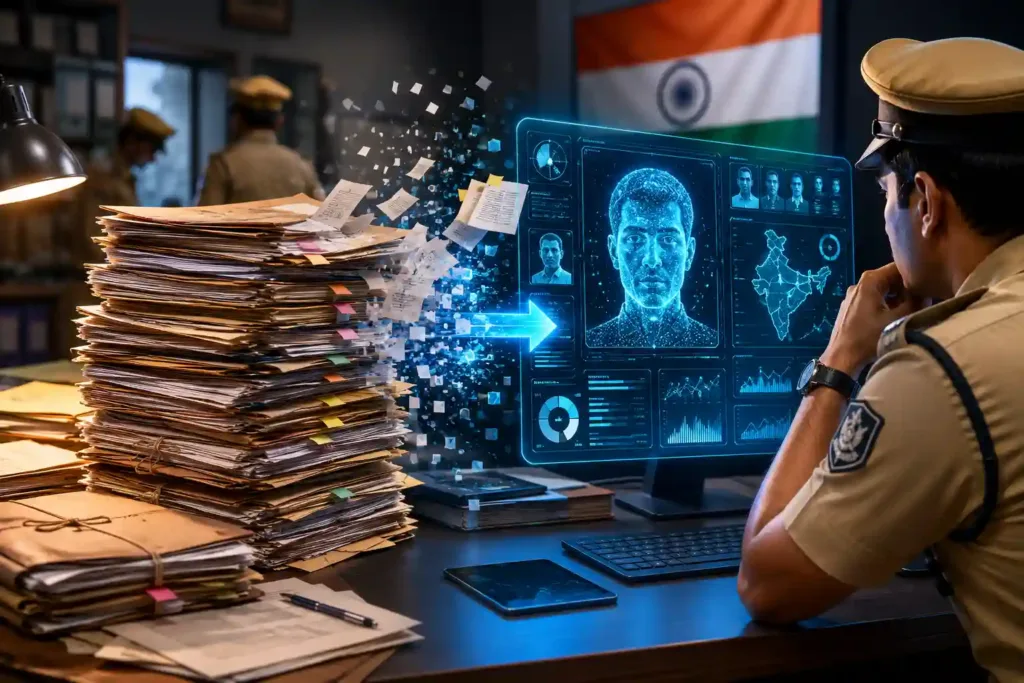
In most Indian police stations, the records room is one of the most important rooms in the building, and one of the least navigable.
Physical dossiers on habitual offenders. Interrogation reports filed in folders by year, by district, sometimes by the personal system of whoever happened to be the most organised officer on duty the week they were filed. FIRs that reference individuals who appear under different spellings across three different files. Case records that were never cross-referenced because nobody had the time and because the system, if it can be called that, was never designed for cross-referencing.
When a known criminal is arrested in a new district, the arresting officer often has no way to know what that individual’s interrogation history looks like, what criminal network they belong to, or what connections they have to open cases in other jurisdictions. That information exists somewhere. It is not accessible at the moment it is needed.
This is the manual dossier management problem. It is not a technology failure. It is an architecture failure, and it costs Indian law enforcement investigative leads, case connections, and criminal network intelligence every single day.
AI-powered dossier management is changing this architecture. Here is what that change looks like in practice.
What a Police Dossier Actually Contains, and Why That Makes Management Hard
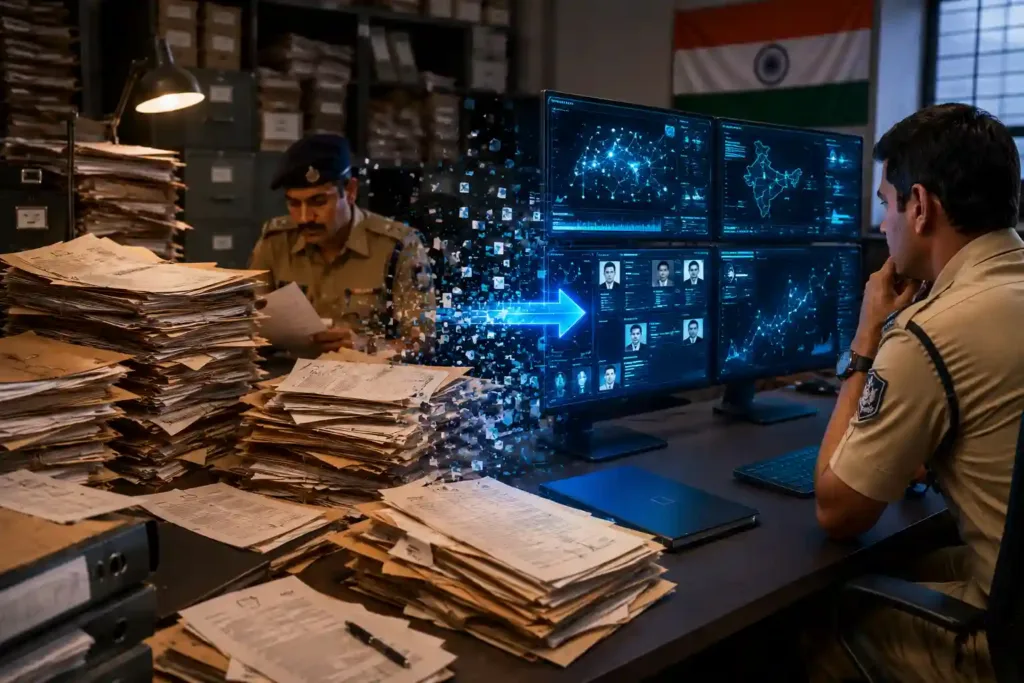
A police dossier is not a single document. It is an accumulation of interrogation reports, arrest records, FIRs, court proceedings, surveillance notes, witness statements, forensic results, associate intelligence, and, in some cases years of follow-up observations, all pertaining to one individual or one case.
The investigative value of a dossier is not in any single record within it. It is in the connections between records, the pattern that emerges when an interrogation from three years ago is read alongside the current case file, when a known associate from one arrest turns up as a witness in another, when the timeline of activities reveals a behavioural pattern that predicts the next move.
Manual management cannot surface those connections reliably. The connections are there, buried in the volume, but finding them depends on an officer personally knowing to look, knowing where to look, and having the time to look. In practice, none of these conditions are consistently true.
The larger the volume of dossiers, the worse this problem becomes. A district with hundreds of dossiers managed manually is a district where the investigative intelligence embedded in those files is largely inaccessible to the officers who need it.
The Five Specific Ways Manual Dossier Management Fails Investigations

1. Cross-district blindness
A criminal arrested in Ludhiana may have an interrogation history in Amritsar, Patiala, and Jalandhar. Unless an officer in Ludhiana specifically knows to call counterparts in those districts, and those counterparts specifically know to look in their own records and respond promptly, the Ludhiana investigation proceeds without that intelligence. Organised crime depends on this gap. Gangs operate across districts precisely because they know the information does not travel automatically.
2. Network invisibility
Gang membership, criminal associations, shared logistics networks, common financial links are visible in aggregate across multiple interrogation records but invisible in any single record. Manual management means each dossier is read in isolation. The network that becomes apparent when fifty dossiers are cross-referenced simultaneously simply does not emerge from sequential file review.
3. Search that depends on memory
In manual systems, finding relevant historical intelligence on an individual requires knowing their name is in a file, knowing which file, and knowing where that file is stored, usually in a physical records room organised by a filing system that exists primarily in the current custodian’s head. When that custodian transfers, the institutional access to the records frequently goes with them.
4. Interrogation intelligence that dies in the folder
The value of an interrogation report is highest immediately after it is filed, when it can inform active investigations, suggest follow-up lines of enquiry, and connect the individual to open cases. In manual systems, it frequently does not circulate beyond the filing officer. By the time a connection is noticed, if it ever is, the investigative window has closed.
5. Personnel change breaks case continuity
A long-running investigation can involve dozens of officers across transfers and reassignments. Each transition carries a risk of lost context, which leads, which associates, which lines of enquiry were pursued and abandoned, and why. Manual dossier management has no mechanism for preserving this case intelligence beyond the notes individual officers choose to write and the memories they carry.
What AI-Powered Dossier Management Actually Does
360-Degree Criminal Profiling at a Query
The foundational capability of an AI-powered dossier management system is the automatic construction of a complete individual profile from all available records simultaneously.
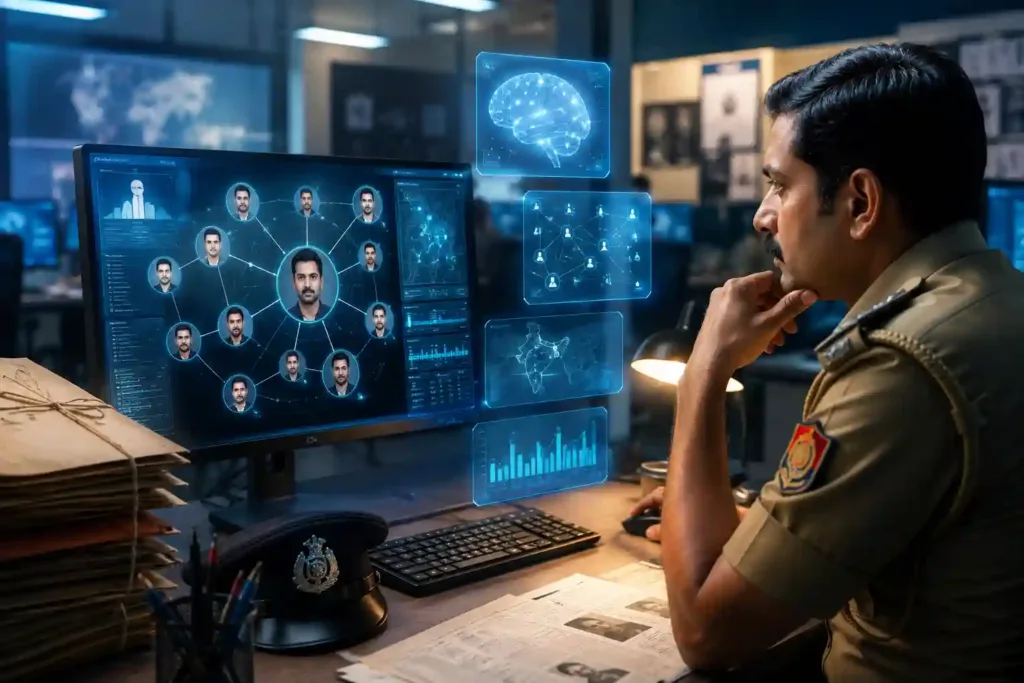
Rather than an officer reading through fifteen separate documents to assemble a picture of a suspect, the system aggregates every available data point, interrogation reports, arrest history, known associates, case links, geographic movements, court records, forensic connections into a single structured profile accessible at a query.
IRMS (Interrogation Report Management System), developed by Innefu Labs, builds 360-degree profiles of individuals by integrating data across multiple interrogation reports, cases, and evidence sources. An officer querying a suspect gets the complete picture not what is in the most recent file, but what is known across every file, in a fraction of the time manual assembly would require.
This matters most in time-sensitive investigations where a new arrest needs to be contextualised quickly. Who is this person? What have they said before? Who are their known associates? What cases are they connected to? These questions, which might take a day to answer manually, take minutes in an AI-powered system.
Link Analysis: From Individual Arrests to Criminal Networks
Every interrogation generates names, associates, contacts, witnesses, and alleged co-conspirators. In manual management, those names are recorded and largely forgotten, buried in a report that nobody systematically cross-references against other reports.
AI-powered link analysis treats those names as nodes in a network graph, automatically connecting every individual who appears across multiple reports, flagging relationships that appear repeatedly, and visualising the network structure that emerges from the aggregate of interrogation data.
IRMS’s link analysis identifies connections between individuals across different dossiers, surfacing gang members, criminal networks, and operational relationships that are invisible in any single report but unmistakable in the cross-referenced whole. An investigator querying one arrested individual can see not just that person’s record but also the entire network they are part of, the connections to others in the system, the strength of those connections, and the cases they collectively appear in.
This is precisely the capability that turns a single arrest into a network-level investigation rather than an isolated case closure.
Timeline Analysis: Reading the Progression of a Case
Criminal behaviour has temporal patterns. Activities cluster around specific times. Movements follow routes. Escalation follows a sequence. These patterns are visible in dossier data, but only if that data can be read chronologically across multiple records simultaneously.
IRMS’s timeline analysis visualises the chronological sequence of events across a case or across an individual’s history, allowing investigators to read the progression rather than the snapshot. This serves two investigative functions: it reveals the pattern that explains past behaviour, and it provides a basis for anticipating what comes next.
Conversational Querying: Asking the Data a Question
One of the most practically significant capabilities in modern AI-powered dossier management is natural language interaction, the ability to query a system in plain language rather than through formal database syntax or precise keyword search.
An officer who needs to find all dossiers referencing a specific area, a specific criminal method, or a specific associate network can simply ask. The system interprets the query, searches across the entire dossier database, and returns relevant results, including results that would not have appeared in a keyword search because they use different terminology for the same concept.
IRMS allows officers to converse with their dossier data directly, uncovering insights without technical complexity. For a constable or junior officer who is not a trained data analyst, this removes the technical barrier between them and the institutional intelligence their department has accumulated.
Bulk Digitisation with Automatic Error Correction
The transition from manual to AI-powered dossier management requires moving existing physical and digital records into the new system. IRMS supports bulk uploading of multiple dossiers simultaneously, with automatic error detection and correction during the upload process.
This means existing physical records, years or decades of paper-based dossiers, can be digitised, indexed, and made searchable without manual re-entry, and without the data quality degradation that manual data entry at scale inevitably introduces.
The institutional memory that exists in physical form becomes part of the query-able, AI-accessible knowledge base. Historical intelligence that was functionally inaccessible becomes live investigative resource.
What Changes Operationally When AI Takes Over Dossier Management
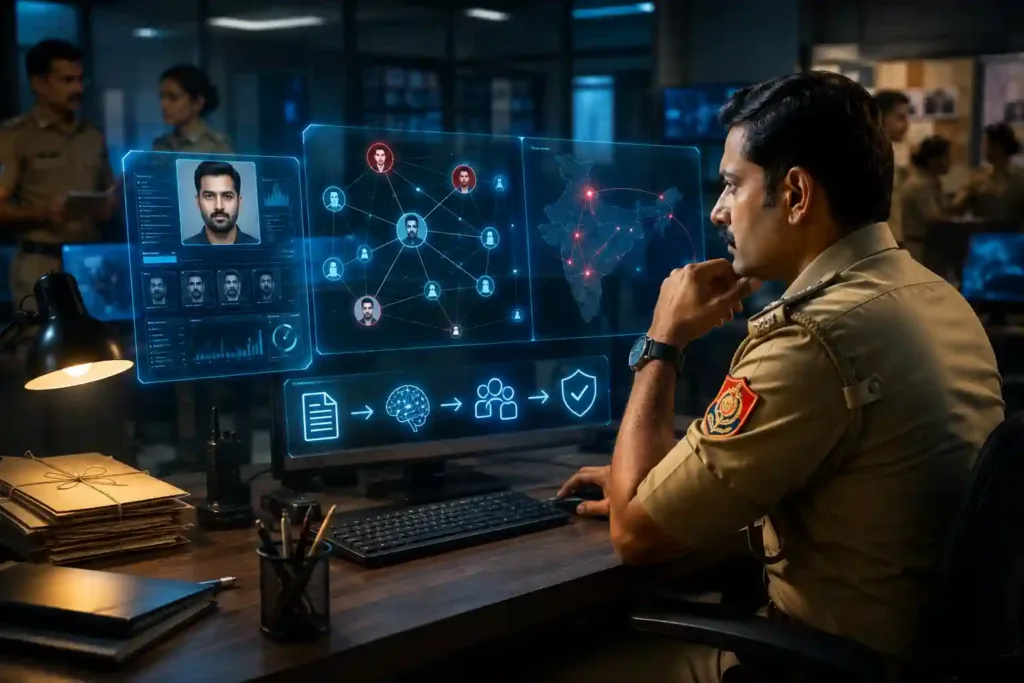
The operational changes are not abstract. Here is what shifts concretely for an investigating officer.
Case intake is faster
When a new arrest is made, the officer can immediately query IRMS for a complete profile of the arrested individual, including all prior interrogation history and known associate connections. Contextualisation that used to require phone calls, record requests, and waiting, often days, takes minutes.
Network investigations become standard rather than exceptional
Currently, building the case that a criminal belongs to a larger network requires significant investigative effort that most individual cases cannot justify. When link analysis is automatic, network membership surfaces as a routine output of the initial case query, making network-level investigation the default rather than the exception.
Inter-district collaboration becomes data-driven
When a suspect’s dossier automatically surfaces connections to cases in other districts, the basis for inter-district coordination is established by the system rather than by informal officer relationships. The right conversations happen because the data creates the prompt.
Personnel transitions do not break investigations
When an officer transfers, the complete case intelligence, all queries, all connections, all profiling data, is preserved in the system and immediately available to the incoming officer. Long-running investigations maintain continuity regardless of how many officer rotations occur across their lifespan.
Frequently Asked Questions
1. What is AI-powered dossier management for police?
AI-powered dossier management is a digital system that stores, indexes, and automatically analyses police interrogation reports and case files using artificial intelligence. Unlike manual filing systems, it automatically builds criminal profiles from multiple records, identifies connections between individuals across different cases and districts, visualises criminal networks through link analysis, and allows officers to query case data in plain language. The system makes the investigative intelligence embedded in accumulated dossiers accessible and actionable in real time, rather than buried in files that require manual retrieval.
2. How does 360-degree criminal profiling work in police investigations?
360-degree criminal profiling aggregates all available data about an individual, interrogation reports, arrest history, known associates, FIR references, forensic connections, geographic activity, and court records, into a single comprehensive profile. Rather than an officer manually reviewing multiple separate documents to build a picture of a suspect, the AI system assembles the complete profile automatically from every available source in the database. The profile is accessible at a query and continuously updated as new information is added to the system.
3. What is link analysis and how does it help police investigations?
Link analysis identifies and maps connections between individuals, cases, and evidence across multiple records simultaneously. In police investigations, it converts interrogation report data into a network graph that shows who is connected to whom, through what cases or incidents, and with what frequency. This makes gang membership, criminal associations, and operational networks visible at a system level rather than requiring officers to manually connect the dots across individual files. IRMS’s link analysis surfaces criminal networks from dossier data automatically, turning individual arrests into network-level investigations.
4. How does AI help with cross-district criminal investigations in India?
Organised criminal networks operate across districts deliberately to exploit the gaps between police jurisdictions. AI-powered dossier management systems cross-reference records across all districts in the database simultaneously, so when a criminal is arrested in one district, their connections to cases and associates in other districts surface automatically. This removes the dependency on manual inter-district communication and informal officer relationships, making cross-district intelligence sharing a standard output of the investigation process rather than an exceptional effort.
5. What happens to case files and dossier intelligence when officers transfer in India?
In manual systems, significant investigative context is lost when officers transfer, the connections they have made personally, the leads they know to be active, the understanding of why certain investigative decisions were taken. AI-powered dossier management systems preserve all case intelligence in the system independent of individual officers. The incoming officer can query the full case history, see all connections and profiles that have been built, and understand the investigative context immediately, rather than rebuilding it from scratch.
6. How long does it take to migrate existing paper dossiers to an AI-powered system?
The migration timeline depends on the volume of existing records and the current state of digitisation. IRMS supports bulk uploading with automatic error correction, which means large volumes of existing digital records can be ingested efficiently. Physical paper records require digitisation through OCR before ingestion. For most police departments, a phased migration approach is used, digitising and ingesting active and recent case files first, then progressively bringing historical records into the system. The historical records that are ingested immediately become searchable and analytically accessible.