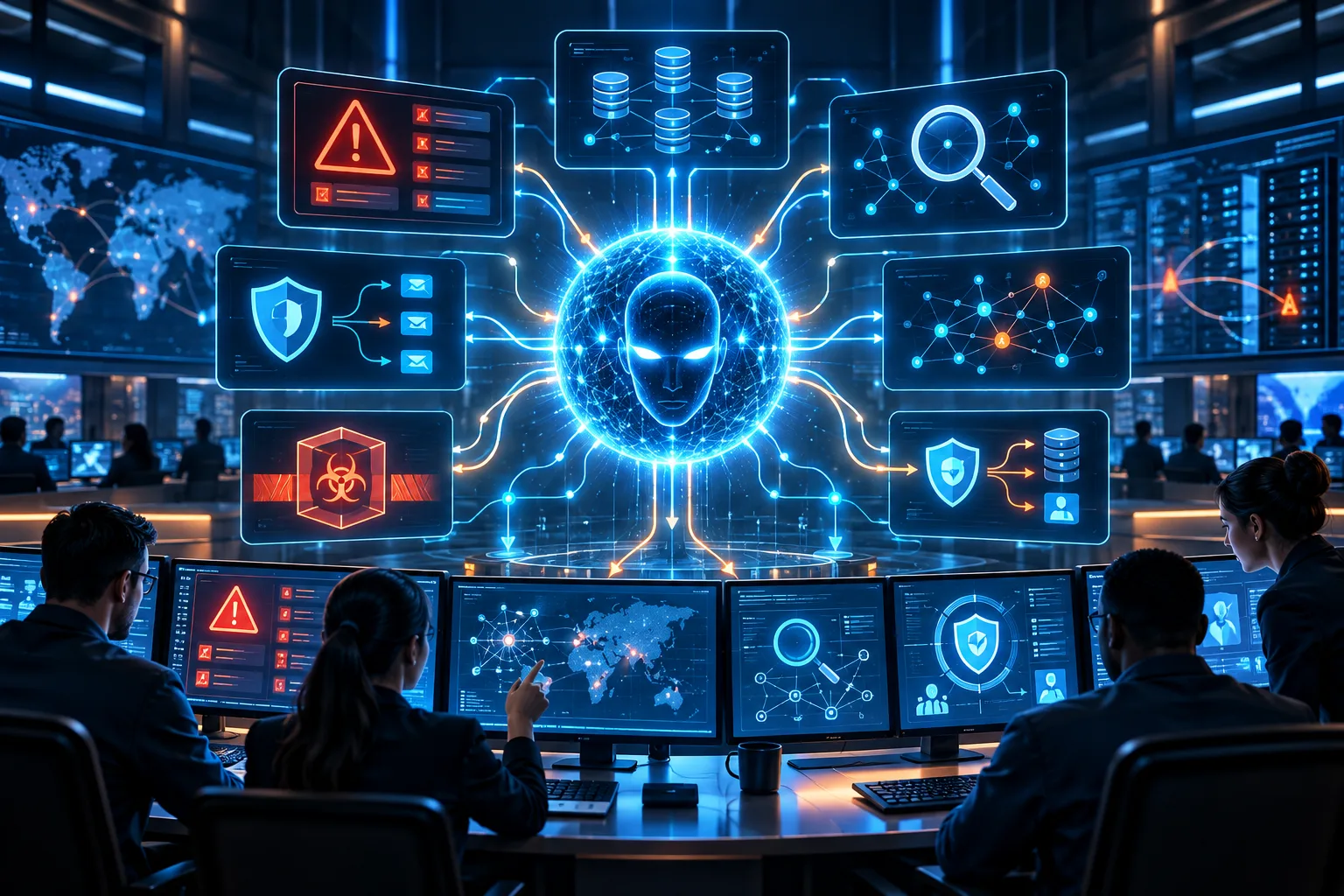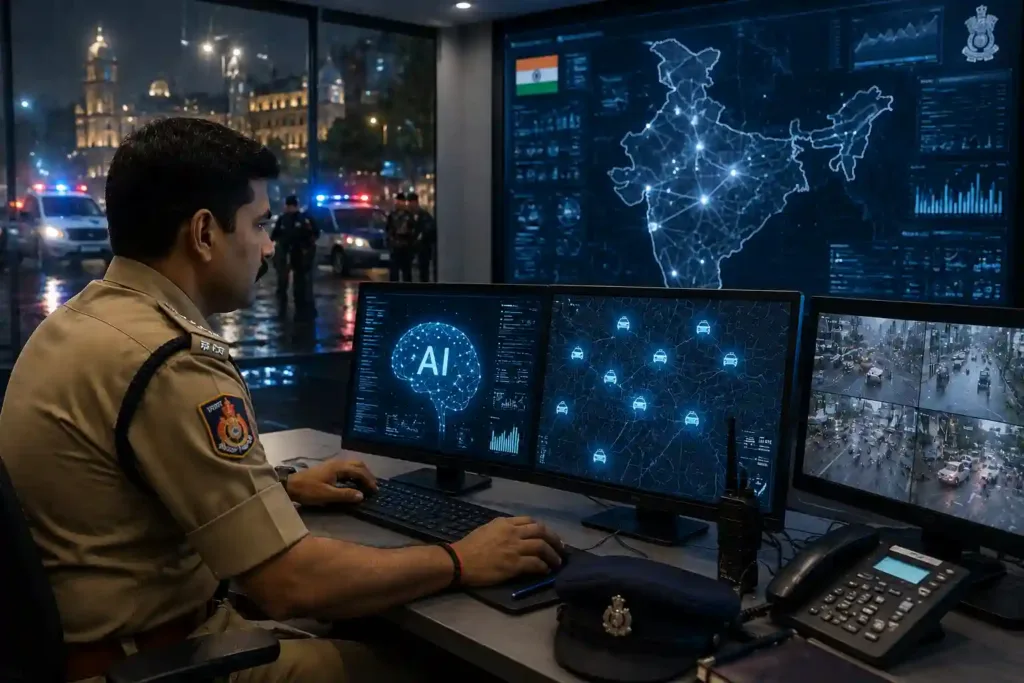
For most of the past two decades, the bottleneck in Indian criminal investigations was not the willingness of officers or the absence of evidence, it was the time taken to process, correlate, and act on the evidence that already existed. CDRs came in weeks. Forensics labs returned results in months. CCTV footage sat on hard drives waiting for someone to watch it manually. Cross-district information was shared by phone call or email, if it was shared at all.
The promise of AI in policing is not that it solves crimes automatically. It is far more specific than that: AI compresses timelines. The evidence that used to take 14 days to process takes 14 minutes. The criminal profile that required three officers and two weeks to compile is available in a single query. The cross-district connection that nobody would have noticed until the next arrest surfaces automatically, before the next arrest happens.
This is what “days to hours” means in practice, and it is already operational across multiple Indian state police departments.
Where Was All the Time Going?
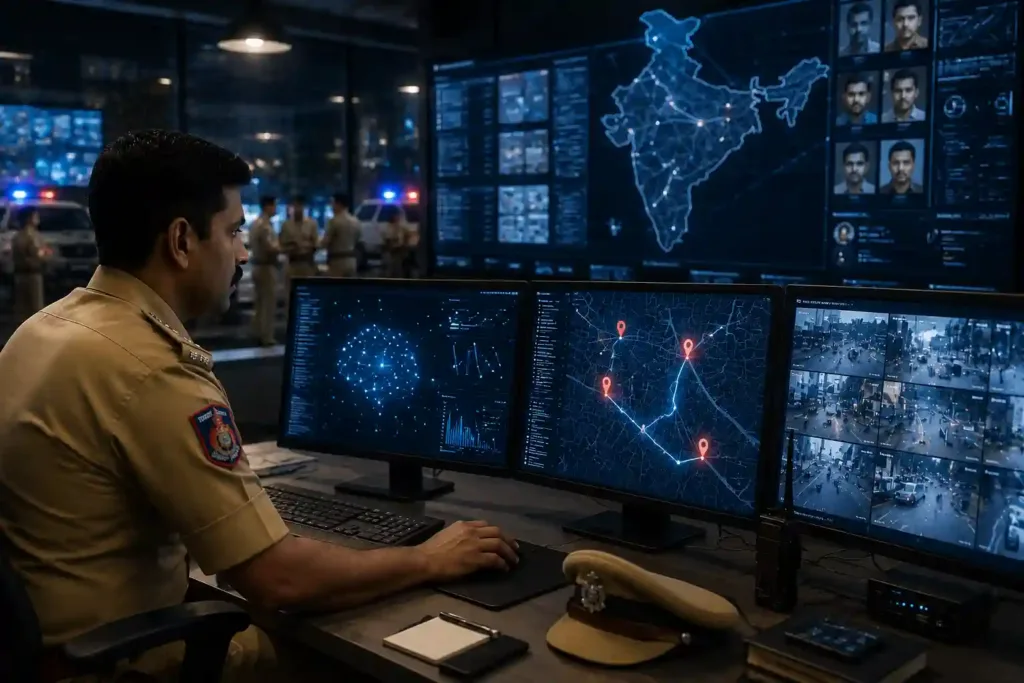
Before examining where AI creates speed, it is worth being precise about where time was actually being lost. There were five primary chokepoints in the traditional investigation workflow.
The CDR bottleneck
Call Detail Records are often the single most important piece of evidence in organised crime, kidnapping, and terror investigations. Requesting CDRs from telecom providers, waiting for legal compliance, receiving data in bulk, this cycle routinely took 7 to 15 days. By the time investigators had the data, suspects had moved, phones had been discarded, and networks had reorganised.
Read more about CDR Analysis in Major Criminal Investigations
Manual CCTV review
A bank robbery at a busy intersection might generate footage from 12 to 15 cameras. Reviewing that footage manually, deciding which cameras are relevant, downloading footage, watching it frame by frame, consumed investigator time that could not be spent on other leads. Finding a single face across multiple cameras could take two to three days.
Siloed forensics data
DNA results, fingerprint matches, digital device evidence, each generated by a different lab, in a different format, managed by a different team. The synthesis that turned individual forensic findings into a coordinated investigative picture happened slowly, if it happened at all.
Criminal profiling from scattered records
Building a profile of a suspect, prior FIRs, court records, known associates, vehicle registrations, address history, required querying multiple systems, calling multiple departments, and physically pulling files. A complete profile might take days even for a known offender.
Cross-district coordination
Organised crime is explicitly designed to cross jurisdictions. But the systems that Indian police departments used were not. Sharing intelligence between districts, let alone between states, was slow, informal, and dependent on personal relationships between officers.
AI addresses each of these chokepoints specifically. Here is how.
Stage by Stage: Where AI is Compressing the Timeline
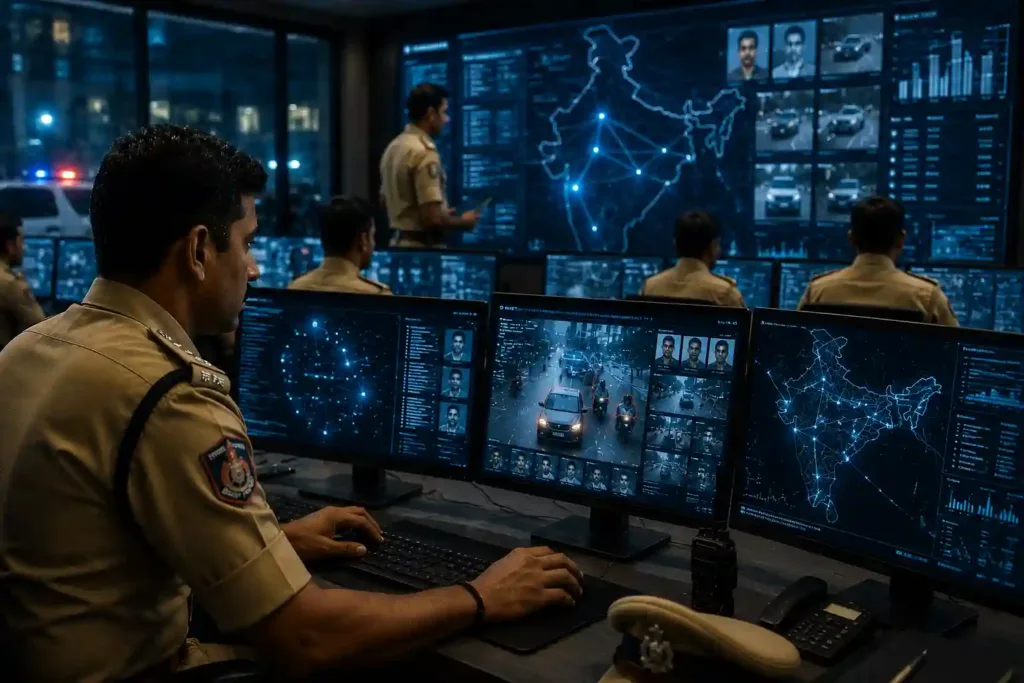
From the Emergency Call to the First Actionable Intelligence
Every criminal incident begins with a signal, a call to Dial 112, a complaint at a station, a social media post, an alert from a surveillance camera. The time between that signal and the first actionable intelligence used to be measured in hours.
AI-powered platforms integrate emergency call systems with surveillance feeds and criminal databases in real time. When a distress call comes in from a specific location, the system can immediately cross-reference that location with recent crime patterns, flag nearby surveillance cameras, and, if a vehicle or individual is mentioned, pull associated records within seconds.
Innefu Labs’ Prophecy Alethia platform, deployed across state police departments including Gujarat Police, does this integration at the data source level. Rather than officers manually switching between Dial 112 data, CCTNS records, and VAAHAN vehicle databases, the platform presents a unified operational picture from the moment an incident is logged.
Speech-to-text AI further accelerates this stage by automatically transcribing and tagging emergency calls for keywords, threats, locations, vehicle numbers, names, converting audio intelligence into searchable, structured data that feeds the same analytical system.
CDR Analysis: From 11 Days to Under an Hour
Call Detail Record analysis is where AI has made arguably its most dramatic operational difference for Indian law enforcement.
The traditional process required investigators to file a formal legal request, wait for telecom provider compliance, receive raw CDR data in bulk (often thousands of rows in a spreadsheet), and then manually identify patterns, frequent contacts, location pings, call timing around the incident.
AI-powered CDR analysis platforms eliminate almost every step of this process for records that are already within a department’s legal possession. Innefu’s Intelelinx platform, used by CBI, state CIDs, and multiple LEAs, processes call records and identifies the key network graph, who called whom, from where, on what frequency, in minutes. It visualises the criminal network automatically, surfaces the strongest connections, and flags numbers that appear across multiple cases.
A murder investigation that might have required three weeks of manual CDR analysis has been reduced to an hours-long process. More importantly, the quality of analysis improves: an AI engine processing 200,000 call records will not miss a connection that a fatigued analyst might.
CCTV and Facial Recognition: From Days to Minutes
Reviewing surveillance footage manually is one of the most labour-intensive tasks in modern policing. AI video analytics changes this entirely.
Rather than officers watching footage, the system watches the footage and surfaces what matters. It can scan all available camera feeds simultaneously for a specific face, a specific vehicle registration, a specific piece of clothing, or a specific location. What once took a team of officers three days can now be completed in under an hour.
Innefu Labs’ AI Vision platform, deployed by Delhi Police, Chandigarh Police, and several other departments, demonstrated this capability in one of the most documented cases of AI impact in Indian policing. The same platform is used for real-time criminal identification at large public events.
More broadly, departments with AI Vision integrated into their Intelligence Fusion Centre can run a facial recognition query across all connected cameras and return a result before the debrief of a field team has even finished.
Forensics Integration: Removing the Lab Queue Bottleneck
AI-powered forensic platforms like Argus, developed by Innefu Labs, are built to ingest, index, and correlate large forensics datasets, including data recovered from digital devices, financial records, communication logs, and physical evidence, and cross-reference them automatically against existing criminal records and case files.
A forensics dataset that would take a team weeks to process can be loaded, analysed, and cross-referenced in hours. More critically, the system surfaces connections that manual analysis would likely miss, a phone number from a seized device that also appears in a CDR from a case filed two years ago in a different district, for example.
Cross-District Intelligence: From Phone Calls to Automated Alerts
Organised crime survives on jurisdictional gaps. A trafficking network distributes across five states precisely because state police units do not share intelligence in real time.
Unified intelligence fusion platforms eliminate this advantage by design. When an arrest is made, an FIR is filed, or forensics data is processed, the relevant intelligence is automatically available to authorised users across jurisdictions, not after a formal request, not after a phone call to someone who happens to know someone, but immediately.
This is the capability that transforms isolated arrests into network-level operations. The Gujarat Police deployment of Prophecy Alethia demonstrated this in narcotic interdiction cases, where evidence from one arrest automatically surfaced related intelligence from previous cases filed in other districts, enabling investigators to pursue the network rather than just the individual.
The Bottom Line
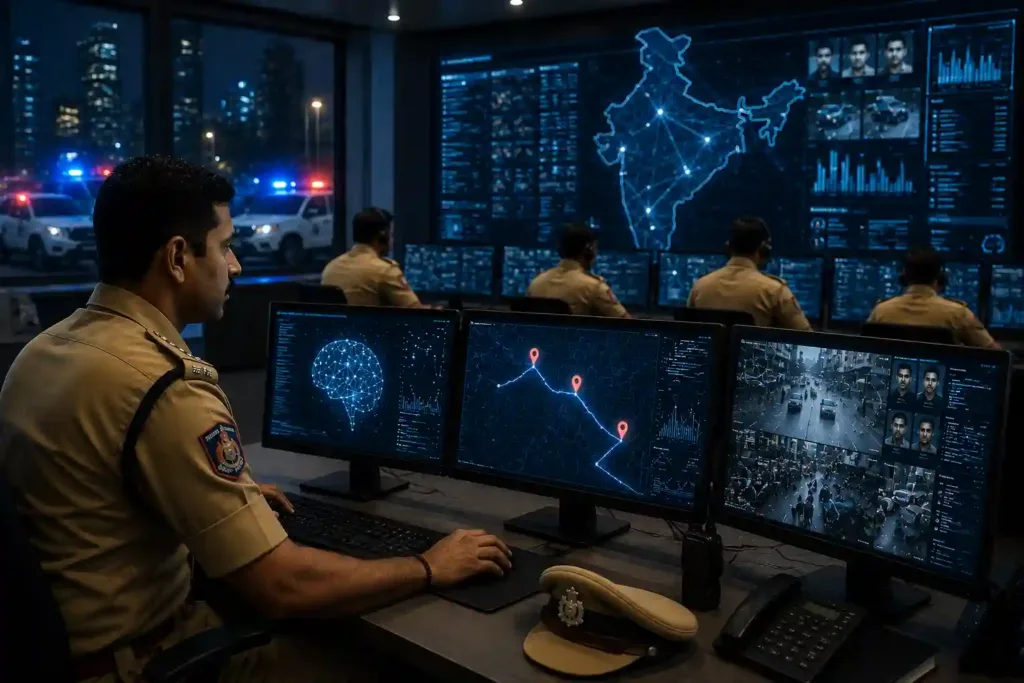
India’s policing challenge is not going to be solved by adding more officers. The math does not work. But the time loss embedded in the current investigation workflow, between evidence and analysis, between arrest and intelligence, between districts that should be coordinating, is recoverable.
The state police departments that have deployed AI-powered investigation platforms are not reporting marginal improvements. They are reporting qualitative shifts: from reactive to anticipatory, from siloed to integrated, from days to hours.
The question for departments still evaluating this is less whether to move and more how to move without the pitfalls, and the roadmap for that is now well-established from the departments that have already made the transition.
Frequently Asked Questions
1. How does AI reduce crime response time for police departments?
AI reduces crime response time by automating the most time-consuming stages of criminal investigation: CDR analysis, CCTV review, criminal profiling, and cross-database correlation. Processes that required manual effort over days, such as building a suspect’s network from call records or identifying a face across multiple surveillance cameras, can now be completed in minutes. The overall effect is that investigators spend their time on judgement-driven tasks rather than data-gathering tasks.
2. What AI tools are Indian police departments currently using?
Indian state police departments and central agencies are deploying several categories of AI tools: intelligence fusion platforms that integrate crime records, emergency data, and forensics into a unified system; CDR analysis platforms that map criminal communication networks; AI video analytics for surveillance and facial recognition; forensic AI platforms for processing digital and physical evidence; and predictive policing tools that forecast crime patterns using historical and real-time data. Platforms like Prophecy Alethia, AI Vision, and Intelelinx from Innefu Labs are currently deployed across multiple state departments and central agencies.
3. How does CDR analysis software work for police investigations?
CDR (Call Detail Record) analysis software processes large volumes of communication data, call logs, SMS records, location data from tower pings, to map the network of contacts associated with a person or phone number. AI-powered CDR tools automatically identify the most significant relationships in a network, flag numbers appearing across multiple cases, reconstruct movement patterns from tower data, and visualise the criminal network as a graph. This replaces weeks of manual spreadsheet analysis with an automated process that takes minutes and produces more comprehensive results.
4. What is the role of facial recognition in speeding up criminal investigations?
Facial recognition allows investigators to search for a specific individual across all connected surveillance cameras simultaneously, rather than reviewing footage manually. When integrated with criminal databases, it can also generate a list of individuals matching a description from CCTV footage and cross-reference them against known offenders. In Indian deployments, AI-powered facial recognition has been used to identify missing persons at scale, monitor sensitive locations in real time, and verify identities during high-security events.
5. What does the Bhartiya Nyaya Samhita mean for forensics processing time in India?
The BNS mandates forensic investigation for all serious crimes, which significantly increases the volume of forensic data that police departments must process. Without AI, this creates a bottleneck that slows investigations. AI-powered forensics platforms address this by automatically ingesting, indexing, and cross-referencing large forensics datasets, digital device evidence, biometric data, financial records, against existing case files. This compression of forensics processing time is one of the most important operational changes the BNS has created demand for.
6. Can AI be used to coordinate investigations across state police departments?
Yes. Unified intelligence fusion platforms share relevant intelligence across jurisdictions automatically, based on permissions and data-sharing frameworks. When evidence from one department’s case matches records in another jurisdiction, a shared phone number, a matching fingerprint, a vehicle appearing in both datasets, the system flags the connection automatically. This is particularly significant for organised crime and trafficking cases where criminal networks are deliberately structured across state lines to exploit jurisdictional gaps.