There is a specific kind of operational vulnerability that intelligence organizations rarely discuss openly, not because it is classified, but because acknowledging it feels uncomfortable. It goes like this:
An officer spends four years in a posting. In that time, they build a complete mental map of the threat environment in their jurisdiction, source networks cultivated over years, the behavioural patterns of persons of interest, the significance of events that appear unrelated to anyone who was not there, the historical context that makes current intelligence readable. They know which informant to trust, which report to discount, and where the gaps in the official record are.
Then they get transferred.
The next officer arrives. The files are technically there. The reports are technically accessible. But the interpretive layer, the meaning behind the data, the institutional judgement built across thousands of hours of operational experience, does not transfer with the files. The new officer spends their first year catching up. By the time they are fully operational, the cycle begins again.
This is the institutional memory problem. It is structural, it is chronic, and in intelligence work, where the cost of a missed connection is measured not in productivity but in lives and national security outcomes, it is one of the most significant and least-addressed vulnerabilities in how organisations operate.
AI is beginning to change this. Here is how.
Why Intelligence Organizations Are Uniquely Vulnerable to This Problem

Every large organisation loses knowledge when people leave. But intelligence organisations face this problem with a severity that has no equivalent in the corporate world, for three reasons.
Rotation is by design
Intelligence organisations rotate officers. It means that knowledge loss is not an accident to be prevented. It is a structural feature of how these organisations are built, one that needs to be managed, not eliminated.
The knowledge that matters most is the hardest to document
Official intelligence reports capture conclusions. They rarely capture the analytical reasoning that produced the conclusions, the competing interpretations that were considered and rejected, or the pattern of small signals that built into a larger assessment over time. The experienced analyst does not just know what the file says, they know what the file means in context, and that context lives in their head.
The stakes of continuity failures are asymmetric
In most organisations, a knowledge gap creates delay and inefficiency. In intelligence work, a knowledge gap can mean a connection goes unrecognised, a historical pattern is not seen in a current event, or a source network is mishandled because the incoming officer does not understand its history. The consequences of these failures are not recoverable in the normal sense.
Why the Existing Solutions Do Not Actually Work
When organisations acknowledge this problem, they typically reach for one of three solutions. None of them work reliably.
Handover notes and debriefs
The outgoing officer writes a summary document and meets with their replacement. This captures what the outgoing officer chooses to document and remembers to mention at a moment when they are managing a transition. It does not capture four years of accumulated context. More importantly, it cannot be queried, a handover note is a one-time transfer, not a living institutional resource.
File-based record systems
Reports are filed, stored, and theoretically retrievable. In practice, retrieval depends on keyword search against documents that were written without retrieval in mind. The person who knows how to find the relevant file is the person who filed it. A new officer searching for historical intelligence on a specific area, individual, or incident needs to know what they are looking for before they can find it, which is precisely the knowledge they do not yet have.
Paper records
A significant portion of intelligence that has been generated over decades in Indian organisations exists on paper. Paper is not searchable. Paper deteriorates. Paper-based institutional memory is, in practice, institutional memory that is available only to the people who personally handled the paper, and only as long as they remember it.
The honest assessment of the current state is this: most intelligence organisations have archives, not institutional memory. An archive is static storage. Institutional memory is the ability to ask a question about the past and get a useful, contextual answer in time to act on it.
The Four Specific Things That Are Lost When an Officer Rotates
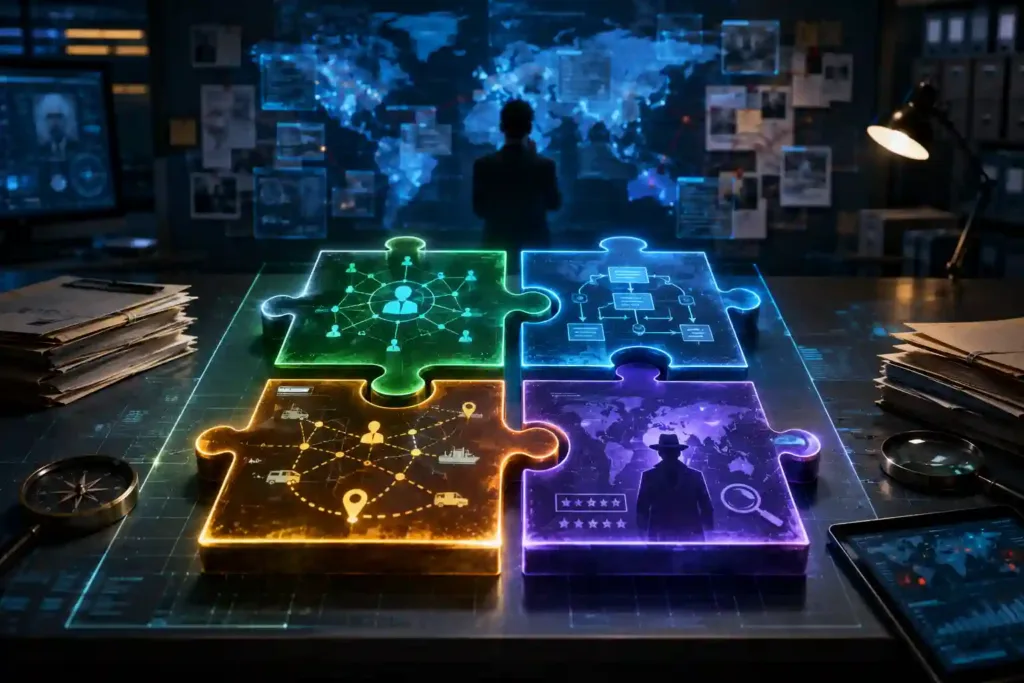
To understand what AI needs to solve, it helps to be precise about what exactly disappears when an experienced intelligence officer transfers out.
1. Source and entity context
The significance of a specific individual or network in the current intelligence picture is often incomprehensible without the historical thread that explains how they came to be persons of interest. Who first flagged them. What the early indicators looked like. How their behaviour has evolved. An incoming officer seeing this entity in a report sees a name; the outgoing officer saw a pattern.
2. Analytical reasoning chains
Intelligence assessments are built from chains of inference, this signal combined with that historical precedent combined with this source’s reliability rating produces this conclusion. The conclusion survives in the file. The chain does not. When the assessment needs to be updated, the new analyst cannot tell why the previous assessment said what it said.
3. Cross-incident pattern recognition
An experienced officer knows that the incident in 2019, the personnel movement in 2021, and the infrastructure activity in 2023 are related, because they were there for all three and they built the pattern across time. A new officer sees three separate events in three separate files.
4. Operational calibration
Which sources are reliable under what conditions. Which reporting lines introduce specific biases. Which geographic areas require contextual knowledge to interpret correctly. This is the most tacit and the least documentable form of institutional knowledge, and it is among the most valuable.
How AI is Rebuilding Institutional Memory
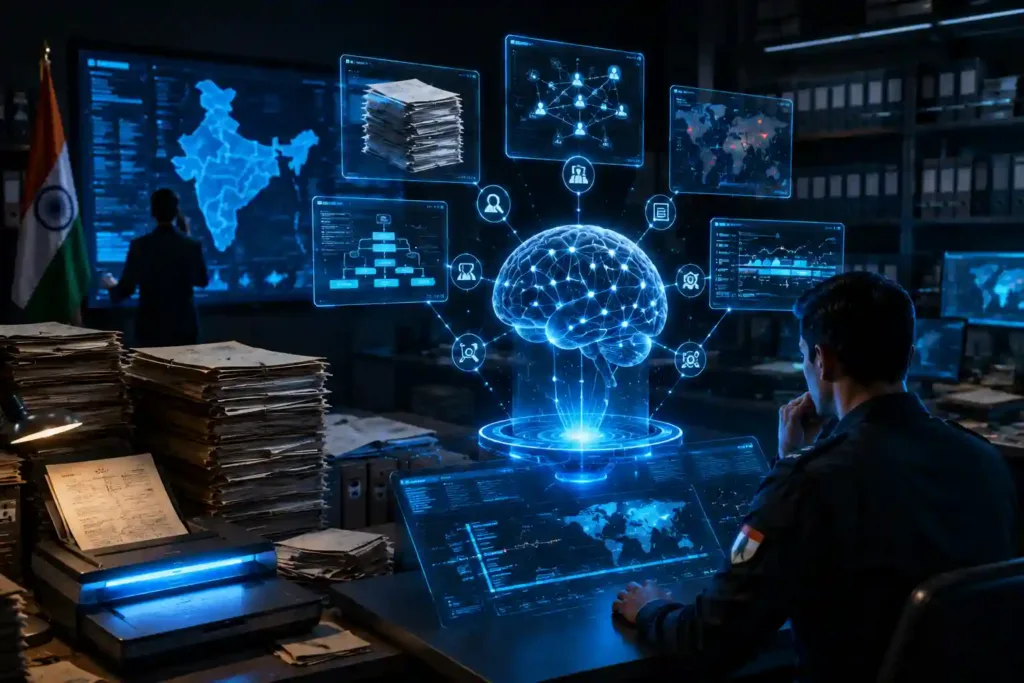
The application of AI to this problem is not theoretical. It is operational, and it works through a specific technical architecture that addresses each of the four dimensions above.
A Sovereign LLM That Knows Your Internal Data
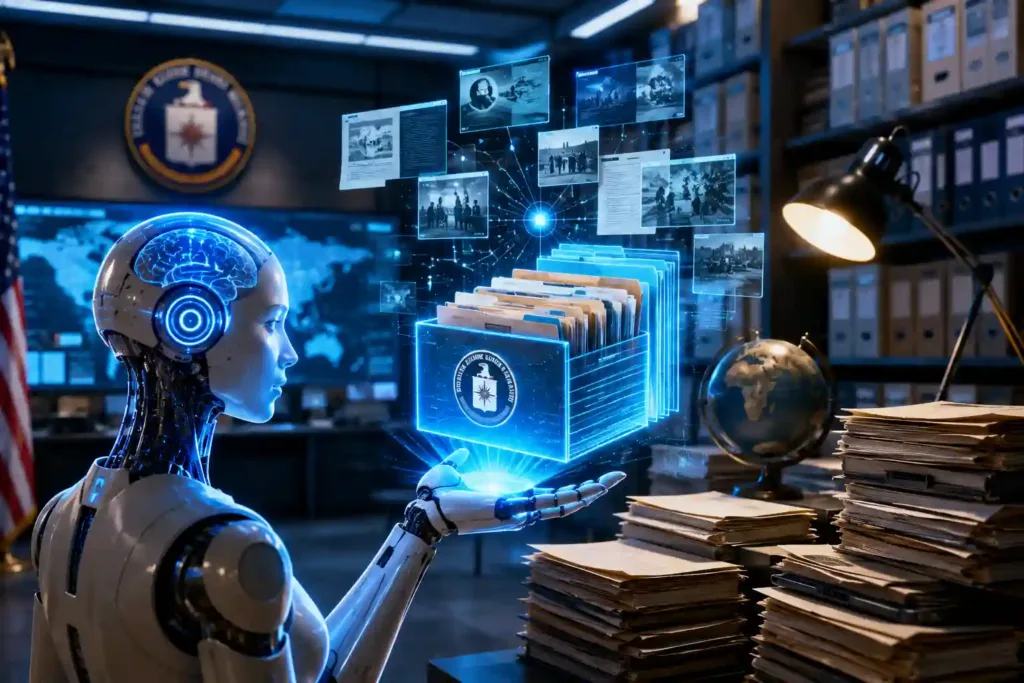
The core technology is a large language model, similar in capability to ChatGPT or Claude, that operates entirely within the organisation’s secure perimeter, with no connection to the internet, trained and operating exclusively on the organisation’s own documents, reports, assessments, and records.
This is the critical distinction. A commercial AI tool has no knowledge of your organisation’s history. A sovereign LLM, deployed on your internal infrastructure and ingested with your institutional knowledge, can be asked a question in plain language, What intelligence has been gathered on this network in the past three years? What were the key assessments around this geographic area in 2021? What sources have historically reported on this type of activity?, and return a contextual, sourced answer drawn from your actual institutional record.
Prophecy GPT, the AI engine at the core of Innefu Labs’ Prophecy Guardian intelligence fusion platform, is built specifically for this purpose. It is India’s first LLM tuned for intelligence and national security operations. It operates fully offline, within the organisation’s own infrastructure, with no data ever leaving the secure environment. The capability it delivers is precisely this: the accumulated institutional knowledge of the organisation, made query-able and conversational, available to any authorised analyst regardless of how long they have been in post.
OCR and Digitisation: Making Paper Memory Searchable
A significant part of the institutional memory problem in Indian intelligence organisations is physical, decades of reports, assessments, and source documentation that exist only on paper. AI-powered OCR (Optical Character Recognition) converts these physical documents into searchable, indexed digital records that can be ingested into the same analytical environment as modern digital intelligence.
This means a report filed in 1998 becomes as query-able as one filed last week. Historical patterns that were invisible because the records were inaccessible become visible. The institutional memory of the organisation extends backward as far as its records go, not just as far back as the oldest officer who can remember where the relevant file is stored.
Cross-Incident Pattern Recognition at Scale
The intelligence fusion architecture of Prophecy Guardian automatically connects related events, entities, and intelligence threads across time, surfacing the cross-incident patterns that an experienced officer builds intuitively but that are invisible to a new arrival reading files in isolation.
When a new analyst asks the system about an entity or area of interest, the system does not return a single report. It returns the full historical thread, every related intelligence input, every assessment, the connections between them, and the analytical context that builds across time. The incoming officer does not start from scratch. They start from where their predecessor left off.
A paramilitary force that deployed Prophecy Guardian faced precisely this challenge: managing vast volumes of intelligence reports, historical incident data, and deployment records across multiple units and years. Post-deployment, the system enabled analysts to identify infiltration routes and predict operational hotspots by surfacing patterns across historical data that manual processes had never connected. The institutional knowledge that had existed only in experienced officers’ heads became a query-able, organisational-level resource.
Temporal and Link Analysis: The Historical Thread Made Visible
The Prophecy Guardian platform includes temporal analysis capability, the ability to trace how a situation, entity, or threat has evolved over a defined period, visualised on a timeline that any analyst can navigate regardless of their personal experience of that period.
When a signals intelligence unit needed to make sense of patterns in satellite phone communications across multiple locations, including in neighbouring countries, the platform’s GIS and temporal analysis tools revealed movement patterns, communication hotspots, and behavioural shifts across time that were not visible in any individual report. The institutional intelligence was always there. The system made it readable.
The Non-Negotiable: Why On-Premise Deployment Is the Only Viable Option
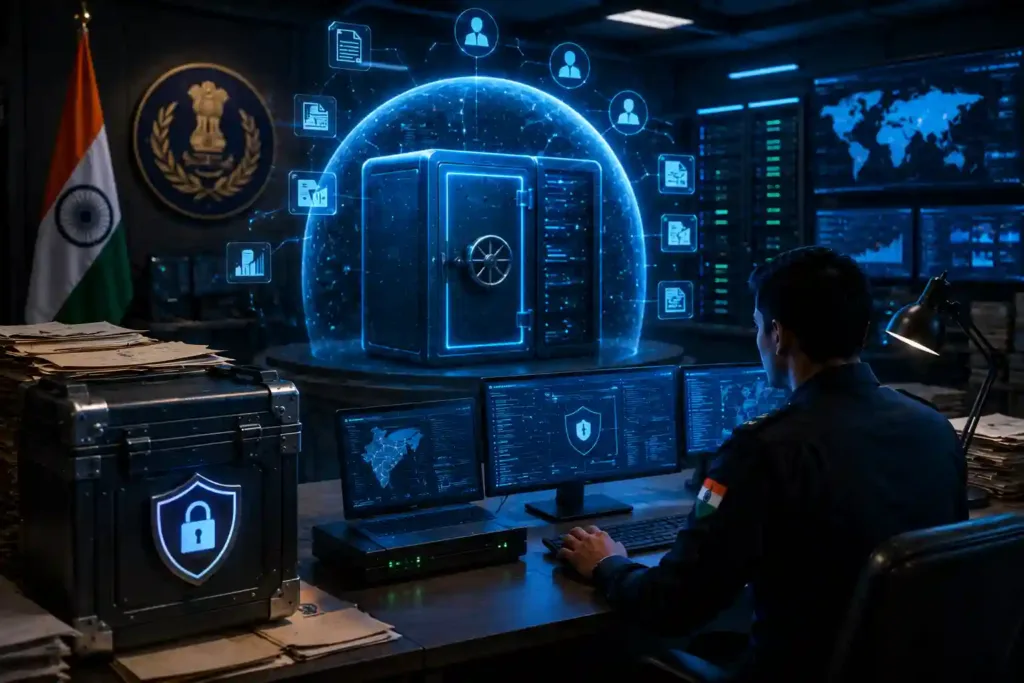
This should be stated plainly: an intelligence organisation’s institutional memory, the accumulated knowledge of its sources, assessments, analytical reasoning, and operational history, cannot be stored in a cloud environment managed by an external vendor.
Not because cloud infrastructure is inherently insecure. Because the data itself is of a classification that puts any external storage arrangement outside the bounds of what is operationally acceptable.
The AI solution to the institutional memory problem is only viable if it operates entirely within the organisation’s own infrastructure, on air-gapped systems if required, with no data leaving the secure perimeter under any circumstances. This is a non-negotiable architectural requirement, and it is the design basis of platforms like Minerva and Prophecy Guardian, which are built from the ground up for deployment in environments where internet connectivity is either absent or operationally prohibited.
The Bottom Line
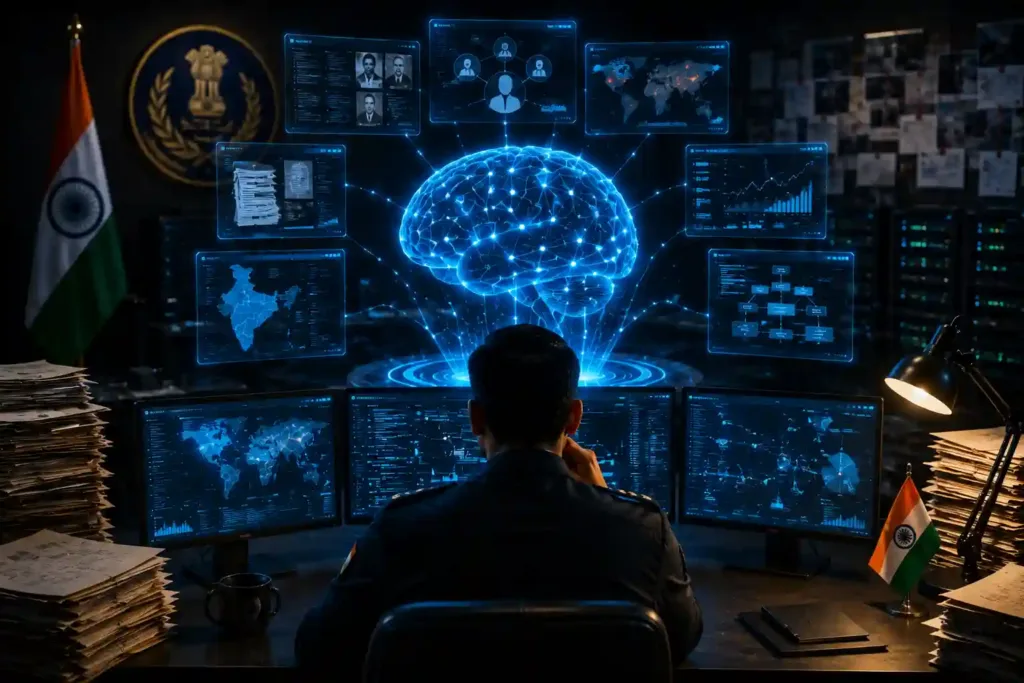
The institutional memory problem in intelligence organisations is not new. What is new is that it now has a viable technical solution, one that does not require officers to document more, debrief longer, or change their operational habits in ways that create friction.
An AI-powered sovereign intelligence platform converts the organisation’s accumulated records into a living, queryable institutional resource. The outgoing officer does not need to perfectly document everything they know. The incoming officer does not need months to build context. The organisation does not lose its analytical depth every time a posting changes.
The intelligence is already there. It has always been there, in reports and files and assessments accumulated over years. What AI provides is the ability to ask it a question, and get an answer that is faster, more comprehensive, and more contextual than any handover note ever could be.
Frequently Asked Questions
1. What is institutional memory and why does it matter for intelligence organizations?
Institutional memory is the accumulated knowledge an organisation holds about its history, operations, sources, and analytical context, knowledge that exists beyond any individual file or report. In intelligence work, it includes the interpretive context that makes intelligence readable: why a specific entity is significant, how a current situation relates to historical precedents, which past assessments were reliable and why. It matters because intelligence analysis is not just about processing current information, it is about understanding current information in the light of everything that has come before. When that context is lost through officer rotation or inadequate documentation, analysis becomes shallower and connections go unrecognised.
2. How does AI help intelligence organizations retain institutional knowledge when officers transfer?
AI-powered intelligence fusion platforms with integrated large language models create a queryable institutional memory that does not depend on any individual officer’s presence. All intelligence reports, assessments, source data, and historical records are ingested into a secure, searchable system that any authorised analyst can query in plain language. When an officer transfers in, they can ask the system directly for context on any entity, area, or historical thread, and receive a comprehensive, sourced answer drawn from the full institutional record. The organisation’s accumulated knowledge does not transfer with the officer; it stays in the system.
3. What is a sovereign LLM and why do intelligence agencies use it instead of commercial AI tools?
A sovereign LLM is a large language model deployed within an organisation’s own secure infrastructure, operating without internet connectivity, trained and operating exclusively on the organisation’s internal data. Intelligence agencies use sovereign LLMs rather than commercial tools like ChatGPT because their institutional data is classified and cannot be exposed to external systems or stored in cloud environments managed by third parties. A sovereign LLM delivers the same conversational query capability as commercial AI tools, but the data never leaves the secure perimeter. Minerva, the LLM integrated into Innefu Labs’ Prophecy Guardian platform, is India’s first LLM built and tuned specifically for intelligence and national security operations.
4. How does AI handle intelligence data that exists on paper rather than in digital systems?
AI-powered intelligence platforms use Optical Character Recognition (OCR) technology to convert physical documents, printed reports, handwritten assessments, paper-based source documentation, into searchable digital records that can be ingested into the same analytical environment as modern digital intelligence. This means historical records that previously existed only as physical files become fully searchable and queryable, extending the organisation’s institutional memory as far back as its physical records go.
5. Can AI really connect intelligence from different time periods and different units?
Yes, this is one of the most operationally significant capabilities of modern intelligence fusion platforms. The system automatically indexes and cross-references intelligence across time periods, source types, and organisational units. When an analyst queries an entity or area of interest, the platform surfaces all related intelligence, from any time period, from any unit that has reported on it, in a single, contextualised view. Cross-incident patterns that were previously visible only to officers who had been present across multiple years become visible to any analyst through the system.
6. What happens to institutional memory when there is no digital infrastructure, in remote or field deployments?
Platforms like Prophecy Guardian are designed to operate offline, in air-gapped environments, without internet connectivity. The full institutional knowledge base is available within the local deployment. This means the institutional memory capability functions in remote postings, field operations, and forward deployments exactly as it does at headquarters, without any dependency on external network connectivity.