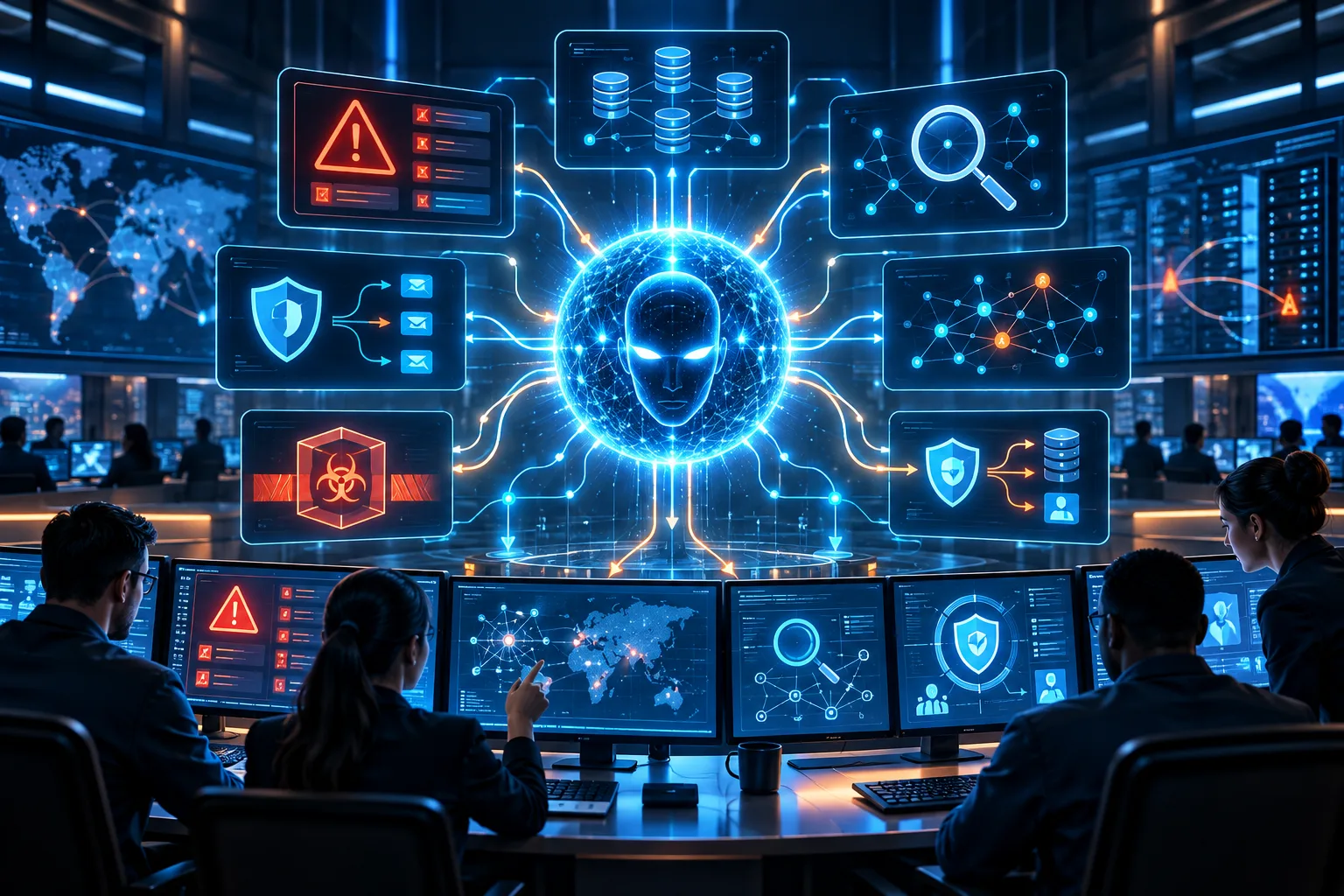
The digital world leaves behind a record of everything, emails, log files, deleted chats, access logs, even seemingly harmless metadata.
Whether you’re tracing the root cause of a data breach, investigating insider activity, or compiling digital evidence for regulatory compliance, your success depends on the tools you use to uncover the truth.
In today’s hybrid environments, spanning cloud servers, mobile devices, endpoints, and dark web chatter, digital forensics platforms must go far beyond basic file recovery or hard disk imaging. They must be intelligent, adaptable, fast, and scalable.
But with dozens of tools available, what separates a robust, future-ready platform from one that can’t keep up?
This blog breaks down the 10 key features that matter most, not just for law enforcement and cybercrime units, but also for financial fraud analysts, corporate compliance teams, and national security investigators.

If you’re exploring or upgrading a digital forensics solution, this guide will help you ask the right questions, benchmark capabilities, and make an informed decision.
1. End-to-End Evidence Lifecycle Management
The integrity of any investigation depends on how evidence is handled; from the moment it is collected to when it is presented in a report. A robust digital forensics platform must offer end-to-end lifecycle management, encompassing:
- Acquisition: Secure and forensically sound methods to collect evidence from devices and cloud sources.
- Chain of Custody: Automated logging of every action taken on the evidence, ensuring it remains legally admissible.
- Processing and Tagging: Tools to process, annotate, and organize evidence as per case relevance.
- Archiving and Reporting: Safe storage and standardized reporting features for use in court or internal review.
Without unified lifecycle management, investigators risk compromising the validity of digital evidence, especially in high-stakes criminal or counter-terrorism cases.
Platforms like Argus by Innefu are built to streamline the entire process, giving investigators full control and visibility while maintaining compliance with global forensic standards.
2. Multi-Source Data Ingestion
Modern investigations don’t originate from a single device or channel. Today’s digital footprints span laptops, smartphones, external drives, cloud applications, CDR logs, messaging platforms, and even social media accounts.
A robust digital forensics platform must be capable of ingesting and parsing data from all these diverse sources, in real time and at scale.
Why it matters:
Evidence is fragmented. A suspect may delete a file from their desktop but forget to remove it from their cloud drive. Conversations might start over email but shift to encrypted chat apps.
Unless your platform can bring all these fragments into a unified investigation environment, critical leads will slip through the cracks.
What to look for:
- Support for heterogeneous data sources: Computers (Windows, macOS, Linux), mobile phones (Android, iOS), USBs, SD cards, surveillance systems, and remote servers.
- Call Data Record (CDR) integration: Parsing and mapping communication patterns across mobile towers and phone numbers.
- Cloud and social media acquisition: Extracting data from platforms like Google Drive, Dropbox, WhatsApp, Telegram, or Facebook with legal compliance.
- Structured + Unstructured data parsing: Ability to extract meaning from spreadsheets, databases, PDFs, emails, and free-form text like chat messages or handwritten notes.
- Chain-of-custody tracking: Ensuring the ingest process maintains evidentiary integrity for legal proceedings.
Bottom line:
Multi-source ingestion isn’t a luxury, it’s foundational. The platform should act as an all-seeing eye across formats, devices, and environments, ensuring that investigators never miss a trail, no matter where it begins.
3. Timeline Reconstruction and Visualization
Once data is ingested, the real challenge is making sense of it. In any digital investigation, be it financial fraud, internal policy breach, cybercrime, or missing person cases, timing is everything.
Knowing what happened, when, and in what sequence can reveal intent, coordination, and causality.
Why it matters:
Without a clear chronology, investigators are left piecing together scattered clues manually. But when digital forensics platforms reconstruct a timeline automatically, it becomes easier to link actions to identities, identify trigger events, and spot deviations from normal behavior.
What to look for:
- Auto-generated activity timelines: Based on metadata, logs, access patterns, file changes, message timestamps, and geolocation data.
- Correlated timelines: Stitching together activities across multiple devices or suspects to show coordinated actions or shared digital moments.
- Interactive visualization tools: Drag-and-zoom interfaces, filters by time ranges or keywords, and event clustering for deeper analysis.
- Custom tagging and annotation: So investigators can mark key moments or anomalies in a collaborative environment.
4. Keyword Search and Content Filtering
In digital investigations, time is critical, and so is relevance. A strong digital forensics platform should empower investigators to quickly search, sort, and sift through vast datasets to find the digital “smoking gun.”
Why it matters:
Modern investigations often involve terabytes of data, emails, chats, documents, images, and more. Manually going through this information is impossible.
With advanced keyword search and filtering tools, investigators can zero in on incriminating evidence or eliminate false leads, fast.
What to look for:
- High-speed keyword search: Search across file names, contents, metadata, chat logs, and even deleted files.
- Boolean and proximity search: Support for complex queries like “contract” AND “payment” NOT “terminated” or finding words that appear near each other in context.
- Language-agnostic capability: Ability to search in multiple languages, including support for local and regional dialects.
- Regex and pattern matching: For identifying structured information like credit card numbers, phone numbers, IP addresses, or email formats.
- Content filtering: Drill down by file type, date range, sender/recipient, application source, or risk scores.
Real-World Use:
Let’s say you’re investigating insider trading. You input a set of watchlist keywords like “shares,” “leak,” “tip,” and the names of relevant companies or traders.
Within seconds, the platform highlights flagged conversations, emails, or documents, even if they were renamed or partially deleted.
5. Metadata Extraction and Analysis
In digital forensics, what you see isn’t always the full story, but metadata often is. Every digital artifact carries hidden information that can provide critical context: when a file was created, who accessed it, where it traveled, and how it was modified.
A robust digital forensics platform must be equipped to automatically extract, analyze, and correlate this metadata at scale.
Why it matters:
Metadata acts as the invisible witness. It helps validate timelines, detect tampering, and connect seemingly unrelated data points.
Whether you’re analyzing emails, images, call records, or documents, metadata is often what turns a lead into solid evidence.
What to look for:
- EXIF Data Extraction: From photos and videos, includes GPS coordinates, camera settings, device ID, and timestamps.
- File System Metadata: Created/modified/accessed times, file ownership, permissions, and system logs.
- Email Headers and Chat Logs: Sender/receiver IDs, IP addresses, time zones, and routing information.
- Call and Communication Graphs: Extracting metadata from CDRs (Call Detail Records) and communication apps to build interaction maps.
- Chain-of-custody tracking: Ensures every digital object’s metadata is preserved during acquisition and analysis.
Example in Action:
In a digital fraud case, an Excel file containing manipulated balance sheets might look ordinary. But metadata could reveal it was last edited by a different user, at 3:00 a.m., from an unauthorized device.
Similarly, EXIF data from a selfie shared online can reveal the exact GPS coordinates, placing a suspect at a critical location.
6. Case Correlation and Entity Linking
Criminal behavior doesn’t exist in silos, and neither should your investigations. A modern digital forensics platform must offer the capability to link data points across different cases, names, faces, keywords, phone numbers, devices, or locations, so investigators can identify patterns and build a bigger picture.
Why it matters:
Repeat offenders, insider threats, and organized crime networks often leave behind fragmented digital trails scattered across multiple investigations.
Without correlation, critical insights remain buried. Entity linking brings everything together, connecting the dots automatically, saving investigators from hours of manual cross-checking.
What to look for:
- Automatic cross-case matching of entities like names, phone numbers, faces, or email IDs.
- Knowledge graph visualizations to map relationships and affiliations between suspects, aliases, contacts, and devices.
- Linkage alerts when a new case contains data that matches a known entity from past investigations.
- Multi-modal entity resolution: Connect the same individual across different data types (e.g., biometric ID, email, device ID).
- Alias and fuzzy matching support to detect variations in names, spellings, or identities.
Real-World Use:
A suspect under investigation for financial fraud appears to be unconnected to a recent smuggling case.
However, entity linking reveals the same burner phone number used in both cases, and facial recognition connects him to surveillance footage from two different locations. A broader pattern of criminal association emerges, supporting deeper prosecution.
7. Cross-Device and Cross-Format Compatibility
In today’s digital landscape, evidence doesn’t reside on just one type of device or operating system.
Investigators routinely encounter smartphones, laptops, tablets, cloud drives, external storage, smartwatches, and IoT devices, all running on a mix of operating systems like Windows, macOS, Linux, Android, and iOS.
A modern digital forensics platform must be able to ingest, analyze, and interpret data across this heterogeneous ecosystem, without bottlenecks or data loss.
Why it matters:
Criminals often operate across multiple platforms to avoid detection. A coordinated fraud operation might involve WhatsApp chats on Android, financial spreadsheets on Windows, and VPN logs on macOS.
If your platform can’t process one of these sources, you’re missing key pieces of the puzzle.
What to look for:
- Full OS compatibility: Seamless support for Windows, Linux, Android, iOS, and macOS file systems and formats.
- Cloud and virtual environments: Ability to ingest and investigate data from services like Google Drive, iCloud, AWS, or virtual machines.
- Multi-format ingestion: Support for structured (e.g., CSV, SQL databases) and unstructured data (e.g., PDFs, DOCX, multimedia, chat dumps).
- Mobile forensics: Extract and decrypt content from call logs, messaging apps (WhatsApp, Signal, Telegram), geolocation data, app metadata, and media files from mobile devices.
- IoT and external device support: Analysis of data from USBs, CCTV DVRs, drones, GPS trackers, etc.
Real-World Use:
Imagine investigating a financial scam involving multiple parties. Evidence may come from an Android phone with call logs and chats, a Linux server hosting fake websites, and an iCloud backup storing incriminating photos.
A capable forensics platform ingests all of these sources, connects the dots, and presents a unified view, dramatically speeding up case resolution.
8. Role-Based Access and Audit Logging
In high-stakes investigations, particularly in sectors like defence, law enforcement, BFSI, and national security, data sensitivity is non-negotiable.
A digital forensics platform must not only analyze evidence efficiently but also maintain strict control over who accesses what, when, and how. This is where role-based access control (RBAC) and comprehensive audit logging become indispensable.
Why it matters:
Investigations often involve multiple stakeholders, field investigators, forensic analysts, legal teams, and supervisors. Unrestricted access can lead to data leaks, evidence tampering, or procedural violations, potentially compromising the case.
Meanwhile, audit trails ensure that every user action is logged, traceable, and compliant with internal policies and external regulations.
What to look for:
- Granular role-based permissions: Define access levels based on roles (e.g., viewer, investigator, admin) to restrict access to sensitive modules or datasets.
- Time-stamped audit logs: Capture every user action, logins, searches, exports, modifications, for accountability and compliance.
- Chain of custody management: Automatically track and log the handling of every digital artifact.
- Custom user roles and approval workflows: Tailor access policies based on the agency’s hierarchy and approval protocols.
- Compliance alignment: Support for regulatory frameworks such as ISO 27001, GDPR, or internal audit standards in government and defence sectors.
Real-World Use:
In a counter-terrorism investigation, multiple teams collaborate across jurisdictions. The forensic platform restricts classified evidence access to specific units while allowing audit reviewers to monitor activity logs in real time.
Every exported file, opened document, or tagged entity is logged, creating an unimpeachable chain of custody.
9. Automated Report Generation
After hours, or even weeks, of digital investigation, presenting your findings clearly and legally is just as important as uncovering the evidence itself. Manual documentation is not only time-consuming but prone to human error, formatting inconsistencies, and omissions that can jeopardize legal admissibility.
That’s why a strong digital forensics platform should offer automated, one-click report generation with embedded evidence, timestamps, and clearly organized timelines.
Why it matters:
Whether you’re preparing for a court proceeding, an internal disciplinary action, or a regulatory audit, investigators need to deliver reports that are complete, tamper-proof, and defensible.
Automated reporting ensures that all findings, from chat logs to file hashes, are accurately compiled and chronologically aligned, reducing the burden on analysts and increasing operational efficiency.
What to look for:
- Customizable templates: Tailor reports for different audiences, legal teams, investigators, or compliance officers.
- Embedded evidence: Include screenshots, metadata, communication logs, and timelines directly within the report.
- Export flexibility: Generate reports in multiple formats (PDF, DOCX, HTML) for easy sharing and archiving.
- Hash integrity and timestamps: Ensure that every file and artifact included is verifiable and court-admissible.
- Automated case summaries: High-level narratives that explain the sequence of events, findings, and relevance of evidence.
Real-World Use:
A law enforcement unit investigating a cyber extortion case uses the platform’s automated reporting to export a detailed case file.
The report includes decrypted WhatsApp chats, timestamps, hash values, and a timeline of digital activity, ready to present in court without needing further formatting or explanation.
10. Scalable Architecture and Cloud Readiness
As cyber threats, criminal activity, and compliance investigations continue to grow in both scale and complexity, digital forensics platforms must be built for long-term adaptability. A static, hard-to-scale system quickly becomes a bottleneck.
Today’s investigative landscape demands platforms that can scale seamlessly, whether you’re managing a single investigation or hundreds simultaneously.
Why it matters:
Organizations, from national intelligence units to BFSI fraud teams, often deal with massive volumes of digital evidence, ranging from hard drives and mobile devices to logs from cloud servers and messaging platforms.
As data volumes and the number of concurrent investigations rise, your platform must be able to keep up, without compromising speed, security, or performance.
This is especially critical for agencies handling investigations across multiple geographies or departments, where case data is distributed and accessed by various teams in real time.
What to look for:
- Horizontal scalability: Ability to handle multiple concurrent investigations across diverse teams and jurisdictions.
- High-throughput data ingestion: Support for parallel processing of large evidence datasets from various sources (cloud, endpoints, encrypted devices).
- Cloud-native or hybrid deployment: Flexibility to deploy on-premise, in private cloud, or in hybrid models to meet data sovereignty and compliance requirements.
- Auto-scaling infrastructure: Elastic compute resources that scale based on workload, ideal for large digital investigations or national-level cyber response.
- Multi-tenancy support: Enable different departments or agencies to run isolated investigations securely on a single platform instance.
Real-World Use:
A central financial regulatory body uses a cloud-ready forensic platform to run simultaneous investigations across several banks flagged for suspicious transaction patterns.
The platform dynamically scales computing resources during evidence parsing and analysis, without any manual provisioning, delivering faster turnaround and maintaining chain of custody across all regions.
To Conclude
Choosing the right digital forensics platform can make or break an investigation. From acquisition to reporting, the features you prioritize, scalability, automation, integration, and analytics, will define how efficiently your team uncovers truth, maintains chain of custody, and withstands legal scrutiny.
As threats evolve, so should your tools.
Looking to upgrade your digital investigation capabilities?
Book a demo with Innefu Labs and explore how our platform, Argus, simplifies complex forensics, from evidence extraction to courtroom-ready reports.
FAQ: Digital Forensics Platforms – What You Need to Know
Q1. What is a digital forensics platform?
A digital forensics platform is a software solution that helps investigators collect, analyze, and report on digital evidence from computers, mobile devices, cloud platforms, and networks in a legally defensible manner.
Q2. How does digital forensics support cyber security?
Digital forensics enables cyber teams to investigate breaches, trace threat actors, and recover compromised data. It plays a critical role in post-incident analysis and compliance reporting.
Q3. Can digital forensics be used outside of law enforcement?
Yes. Digital forensics is widely used in corporate investigations, BFSI fraud analytics, internal HR inquiries, compliance audits, and intellectual property theft cases.
Q4. What makes a digital forensics platform scalable?
A scalable platform supports multiple investigations simultaneously, handles large datasets, and integrates cloud and hybrid deployments for real-time collaboration across locations.
Q5. Why is automation important in digital forensics?
Automation speeds up evidence processing, reduces manual errors, and ensures consistency in case documentation, vital for high-volume investigations or courtroom submissions.
Q6. What is the difference between digital forensics and crime scene forensics?
Digital forensics deals with data extracted from electronic sources like laptops, phones, and servers. Crime scene forensics, on the other hand, involves physical evidence like fingerprints, DNA, and weapons.