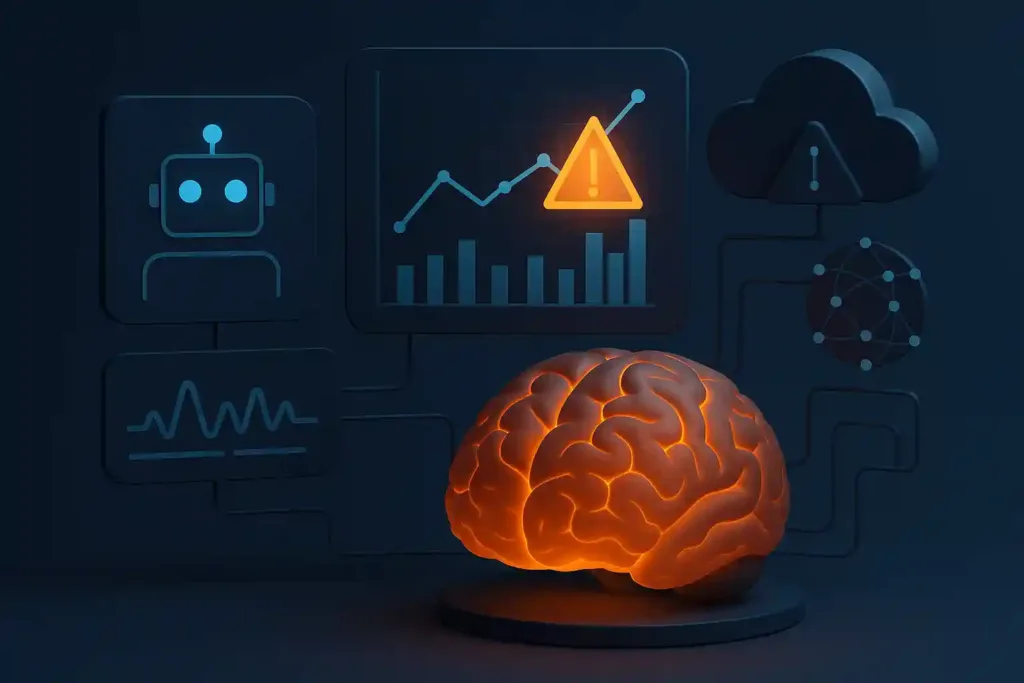
Threats No Longer Announce Themselves
A threat rarely begins with an explosion, a breach, or a visible act of violence. More often, it starts quietly, an unusual conversation in an online forum, a subtle shift in behaviour, or a pattern that doesn’t quite align with historical norms. On their own, these signals appear harmless.
Taken together, they can point to something far more serious unfolding beneath the surface.
Modern threats no longer respect physical borders or traditional timelines. They evolve digitally, spread socially, and operate across jurisdictions. A coordinated influence campaign may take shape online before it manifests on the ground.
An extremist network may reorganise digitally long before any operational movement becomes visible. In this environment, the window for early warning is shrinking rapidly.
At the same time, defence and security agencies are dealing with unprecedented volumes of data: open-source signals, communication metadata, sensor feeds, and historical intelligence; all arriving at speeds no human team can monitor or correlate in real time. Relying solely on manual analysis or isolated indicators is no longer enough.
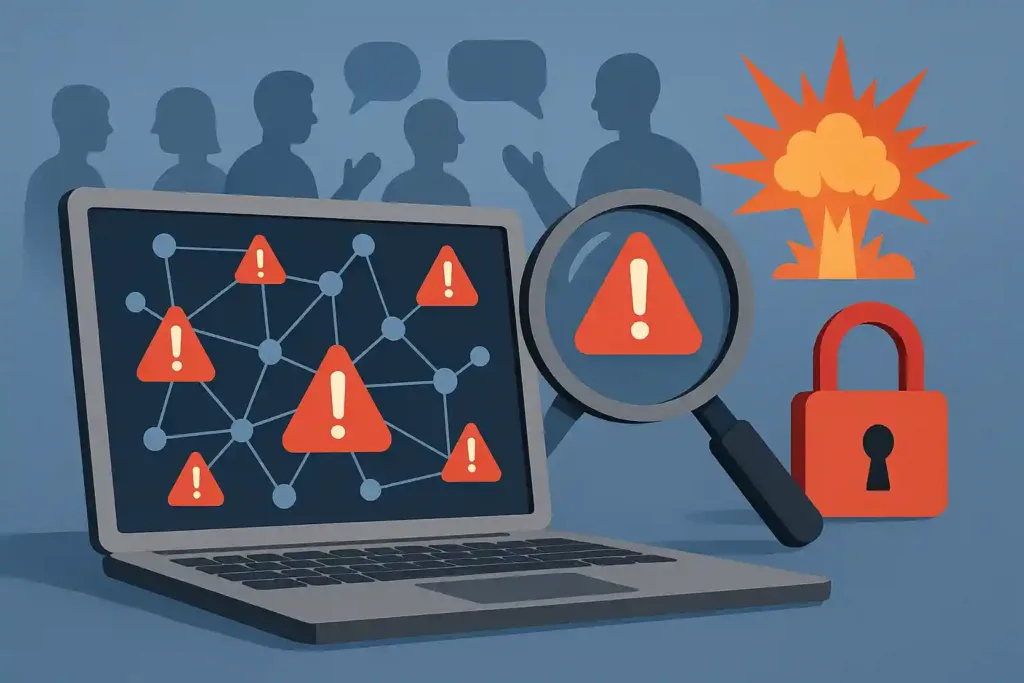
This is where AI-driven analytics has become central to modern threat detection and early warning systems. By continuously analysing patterns, detecting anomalies, and connecting signals across data sources, AI analytics enables agencies to move from reactive responses to anticipatory decision-making, identifying risks before they escalate into crises.
Key Takeaways
- Modern threats develop quietly through behavioural, digital, and network signals long before visible action occurs.
- Traditional early warning models struggle with data volume, fragmentation, and adaptive adversaries.
- AI analytics enables early threat detection by identifying patterns, anomalies, and network behaviour across large data sets.
- Early warning supports human decision-making by providing time, context, and clarity, not automated responses.
- Integrated intelligence platforms are essential to sustain early warning at scale.
- AI-driven analytics is now foundational to proactive security, defence readiness, and strategic foresight.
What “Threat Detection” Really Means Today
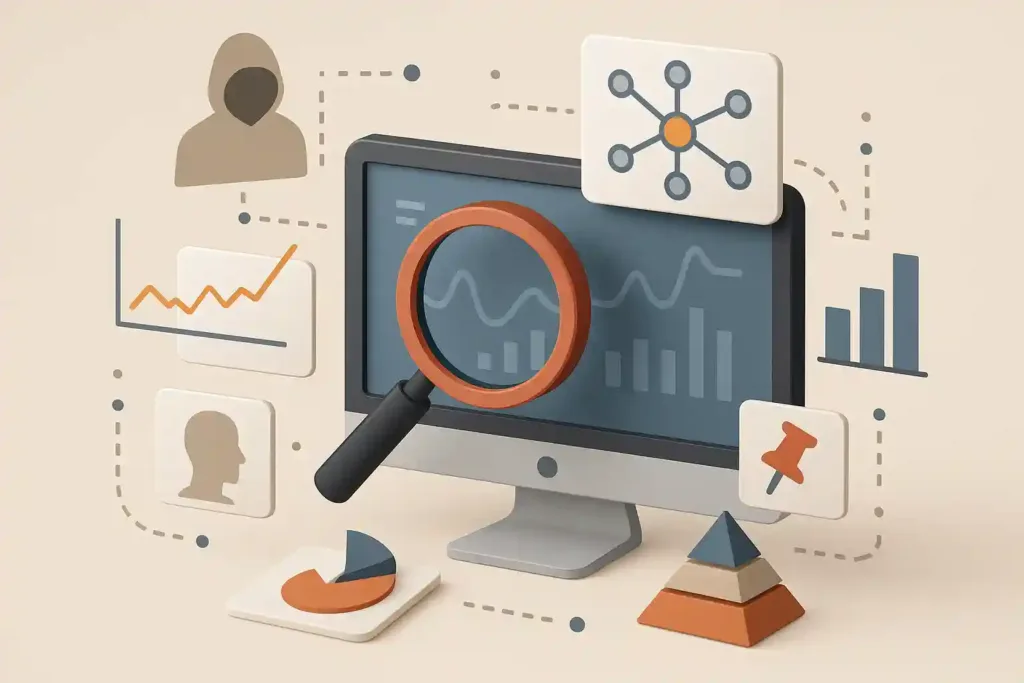
Threat detection today extends far beyond catching attacks or identifying known adversaries. While those outcomes remain critical, modern security environments demand a broader and more nuanced understanding of what constitutes a threat in its earliest form.
In practice, contemporary threat detection focuses on identifying weak signals, early-stage indicators that suggest intent, preparation, or escalation. These may include behavioural deviations, emerging communication patterns, or subtle shifts in networks and narratives. Individually, such signals may seem insignificant. Collectively, they can reveal the early contours of an evolving threat.
Modern threat detection also involves connecting events that appear unrelated on the surface. A change in online rhetoric, a new logistical route, and an unusual movement pattern may each sit in different data systems. Analytics brings them together, allowing analysts to form a coherent threat narrative rather than react to isolated incidents.
This approach applies across multiple layers of risk. Tactical threats involve immediate dangers that require rapid response. Operational threats focus on networks, logistics, and planning activities that support hostile action. Strategic threats unfold over longer periods, shaping destabilisation efforts, influence operations, or sustained adversarial campaigns.
Understanding threat detection in this broader sense explains why analytics matters before anything happens. Early warning is not about predicting the future with certainty, it’s about recognising patterns early enough to prepare, prevent, and respond with clarity and confidence.
Why Traditional Early Warning Models Fall Short
For decades, early warning systems were built around a simple assumption: threats would reveal themselves clearly and early enough for humans to respond. That assumption no longer holds. The nature of modern threats, and the environments in which they develop, has fundamentally changed.
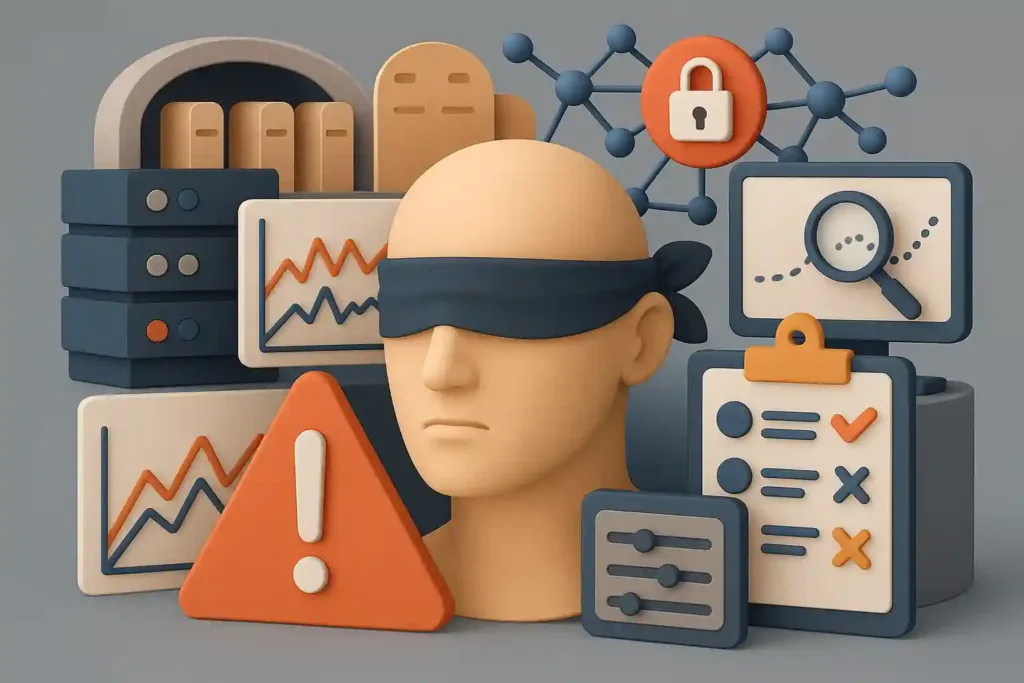
Data Overload is the New Blind Spot
The greatest risk facing modern security operations is no longer a lack of information, but an excess of it.
Defence and security agencies now ingest data from a wide range of sources: sensor feeds, communication metadata, cyber telemetry, open-source information, historical intelligence records, and operational reports. Each source is valuable on its own, yet most are stored, analysed, and acted upon in isolation. Teams specialise. Systems fragment. Context gets lost between silos.
As volumes grow, analysts are increasingly forced to prioritise what they can see rather than what matters most. Signals accumulate faster than they can be reviewed. Patterns that only emerge across multiple datasets: over time, across geography, or between entities, remain hidden simply because no human team can manually correlate them at scale.
In this environment, data overload does not create awareness. It creates blind spots.
Static Rules Can’t Catch Adaptive Threats
Traditional early warning systems rely heavily on predefined rules and thresholds. Alerts trigger when known indicators appear, specific keywords, behavioural signatures, or activity levels that match historical threats. This approach works well against familiar tactics, techniques, and procedures.
However, modern adversaries are adaptive by design. They intentionally alter behaviour to remain below detection thresholds, fragment their activities across platforms, and exploit the gaps between monitoring systems. Static rules struggle in this landscape because they can only detect what has already been defined.
When threats evolve faster than detection logic, rule-based systems become reactive by default. They confirm what has already happened instead of revealing what is forming.
Time Is the Enemy
Even when warning signs are present, time often works against traditional models.
Manual analysis and cross-team coordination take hours or days. Data must be requested, shared, reviewed, and interpreted; often across multiple departments and jurisdictions. Meanwhile, modern threat windows are compressing. Digital coordination can escalate in minutes. Narrative campaigns can spread globally before a formal assessment is completed.
The result is a persistent gap between signal detection and decision-making. Early warning arrives too late to be truly early.
Taken together, these limitations explain why AI is no longer a technology upgrade, it is a capability shift. Without it, early warning systems remain structurally outpaced by the threats they are meant to detect.
How AI Data Analytics Enables Early Threat Detection
AI-driven analytics changes early warning by altering how signals are detected, interpreted, and prioritised, without removing human judgement from the process. Rather than replacing analysts, it enables them to operate at the speed and scale modern environments demand.
Pattern Recognition Across Massive Data Sets
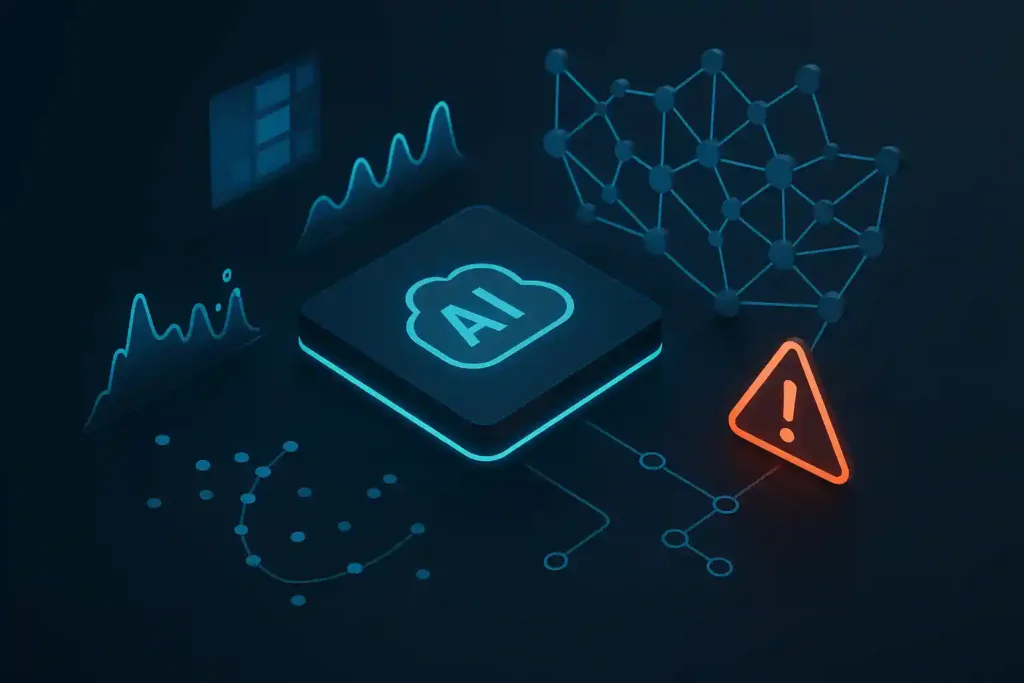
One of AI’s most valuable contributions is its ability to identify patterns across volumes of data that exceed human cognitive limits.
Machine learning models analyse historical and real-time data simultaneously, identifying recurring structures within noisy environments. These may include subtle movement anomalies, unusual communication frequencies, or repeated behavioural signatures that span multiple systems and timeframes.
Individually, these signals may appear insignificant. Together, they form patterns that indicate emerging coordination or intent.
Unlike manual review, AI does not require prior assumptions about which signals matter most. It surfaces correlations based on statistical relevance, frequency, and relational proximity, allowing analysts to investigate patterns they might otherwise never see.
Anomaly Detection as an Early Signal
Early warning does not begin with confirmation; it begins with deviation.
AI-driven anomaly detection establishes behavioural baselines across entities, networks, and environments. When activity deviates from those baselines, whether in communication behaviour, movement patterns, or digital interactions, the system flags it for attention.
Importantly, anomalies are not treated as threats on their own. They are indicators. Human analysts remain responsible for interpreting intent, context, and severity. AI accelerates this process by narrowing the field—highlighting what is unusual so analysts can focus where judgement matters most.
This distinction is critical. Early warning is not about certainty. It is about probability, preparedness, and informed decision-making under uncertainty.
Behavioural and Network Modelling
Modern threats rarely operate in isolation. They emerge from networks: of individuals, digital identities, logistics, narratives, and support structures. AI analytics enables these networks to be modelled dynamically.
By mapping relationships and interactions over time, AI helps identify key influencers, coordinators, and enabling nodes within broader ecosystems. It reveals how groups evolve, how information flows, and how operational roles shift in response to pressure or disruption.
This network-centric view allows agencies to understand not just who is involved, but how threats organise, adapt, and sustain themselves. It transforms early warning from event detection into ecosystem awareness, an essential requirement for intelligence-grade decision-making.
From Detection to Decision: How Early Warning Supports Action

Early warning has value only if it leads to better decisions. Detection alone does not prevent threats, how organisations interpret and act on signals determines outcomes.
AI-driven analytics strengthens this decision layer by compressing time and clarifying context. When early indicators surface sooner, decision-makers gain room to manoeuvre. Preventive deployments can be planned rather than rushed. Resources can be prioritised toward emerging risks instead of reacting to fully formed crises. Inter-agency coordination becomes proactive rather than corrective.
Just as importantly, early warning enables strategic posture adjustments. Commanders and policy leaders can recalibrate readiness levels, adjust monitoring focus, or initiate diplomatic and informational responses before escalation occurs. These actions are often subtle, but they are most effective when taken early.
It is critical to underline that AI does not make these decisions. Early warning systems support human judgement, they do not replace it. Analysts assess context. Leadership weighs intent, consequence, and proportionality. AI accelerates understanding by surfacing relevant signals, but authority remains human.
This distinction keeps early warning both effective and accountable. The goal is not automated response, but informed, timely action.
The Role of Integrated Intelligence Platforms
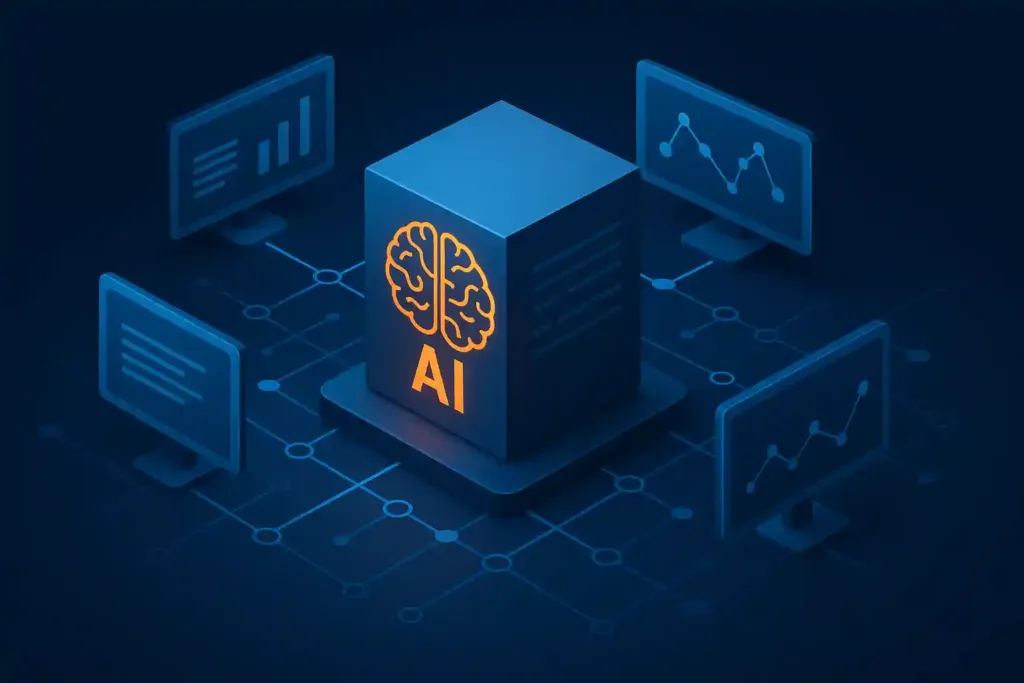
AI analytics delivers its greatest value when it operates within a unified intelligence environment.
Fragmented tools weaken early warning. When data lives in disconnected systems: one for open sources, another for communications, another for operational intelligence, signals remain partial. Context gets lost between platforms. Correlation becomes manual, slow, and error-prone. Early indicators fade before they can be interpreted.
Integrated intelligence platforms address this by bringing data, analytics, and institutional knowledge into a single operational fabric. Multi-source fusion allows patterns to emerge across domains. Institutional memory ensures past intelligence informs present assessments. Secure AI environments allow advanced analytics to operate without compromising sensitive workflows.
This architectural shift is increasingly reflected in modern defence and security systems. Platforms such as Innefu’s Prophecy Guardian exemplify this approach, where AI-driven analytics, data fusion, and long-term intelligence continuity converge to support early warning at scale.
The takeaway is simple: early warning is not a standalone capability. It is the outcome of integrated intelligence, where technology, data, and human judgement operate as one.
To Conclude: Early Warning is the Real Advantage
Modern threats rarely arrive without warning, they leave traces long before they materialise. Subtle behavioural shifts, fragmented signals, and emerging patterns often exist well ahead of visible action. The challenge for defence, intelligence, and security agencies is not a lack of data, but the ability to interpret it in time.
AI data analytics has fundamentally changed this equation. By identifying anomalies, modelling behaviour, and correlating signals across domains, analytics enables earlier understanding of risk. It gives analysts the time and context needed to assess intent, reduce uncertainty, and guide informed decisions.
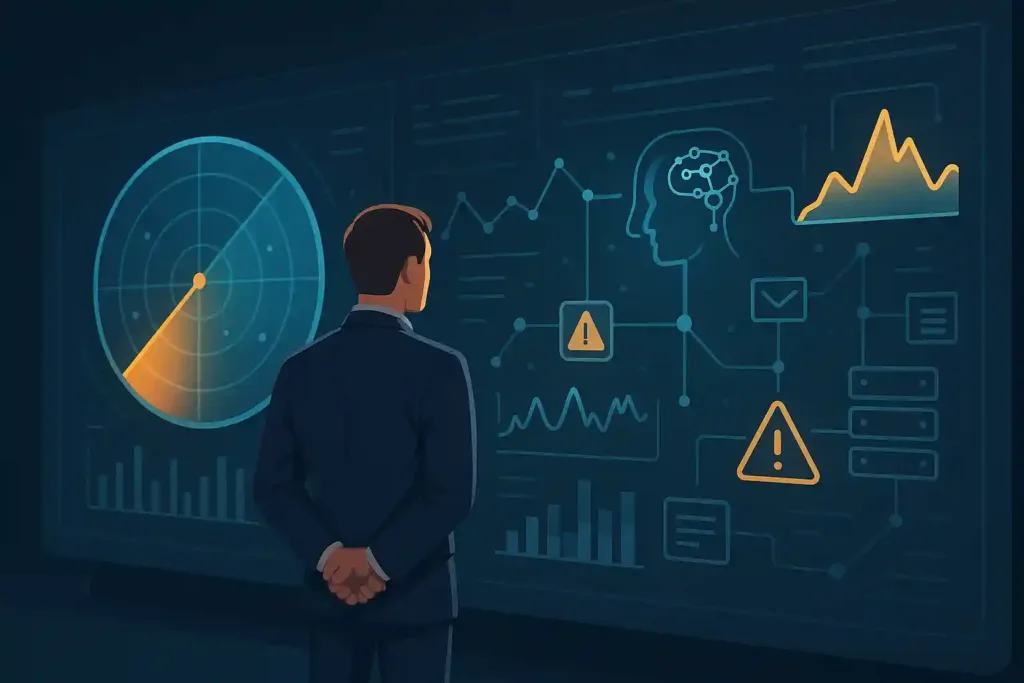
Importantly, early warning is not about predicting the future with certainty. It is about improving preparedness: seeing sooner, understanding faster, and acting with clarity. As threats continue to evolve across digital, physical, and informational domains, AI-enabled analytics is no longer an enhancement. It has become a core pillar of modern threat detection and early warning.
Frequently Asked Questions (FAQs)
What is AI-driven threat detection?
AI-driven threat detection uses machine learning and advanced analytics to identify early indicators of risk by analysing large volumes of structured and unstructured data. It focuses on patterns, anomalies, and behavioural signals rather than only known threats.
How is early warning different from traditional threat monitoring?
Traditional monitoring reacts to predefined alerts or known indicators. Early warning focuses on detecting weak signals, emerging patterns, and deviations from normal behaviour—often before a threat becomes explicit.
Does AI replace human analysts in early warning systems?
No. AI augments analysts by accelerating data processing and highlighting relevant signals. Human expertise remains essential for interpretation, contextual judgement, and decision-making.
What types of threats benefit most from AI-driven early warning?
AI analytics is particularly effective for detecting complex, evolving threats such as coordinated influence operations, extremist network activity, cyber intrusion preparation, and cross-domain security risks.
Why is data integration important for early warning?
Threat signals rarely appear in a single dataset. Integrating open-source data, cyber telemetry, communication patterns, and operational intelligence allows correlations that reveal early risk indicators.
How do intelligence platforms support early warning?
Modern intelligence platforms embed AI analytics within unified environments, enabling data fusion, institutional memory, and secure analysis workflows—ensuring early signals are not lost across fragmented systems.