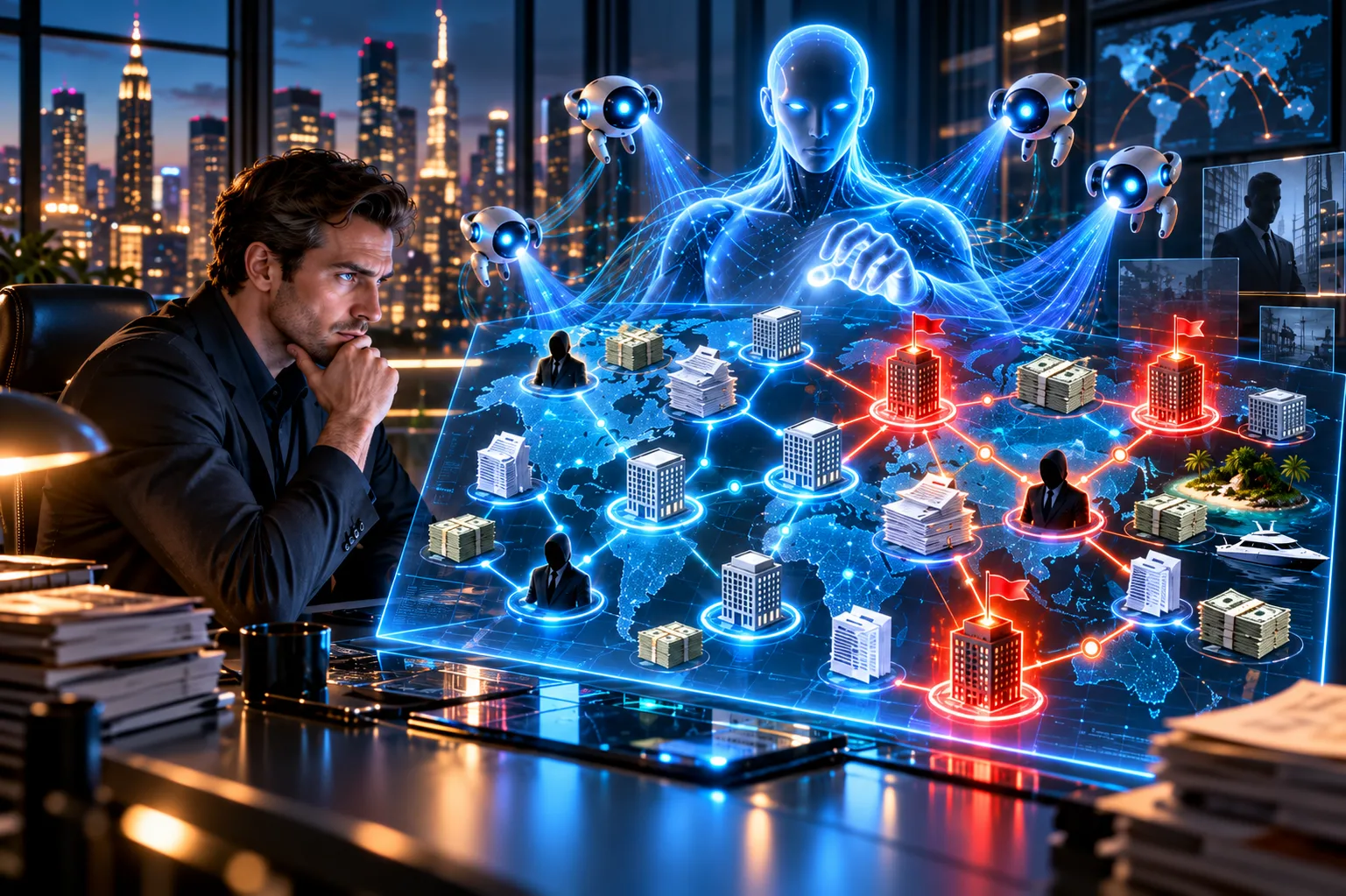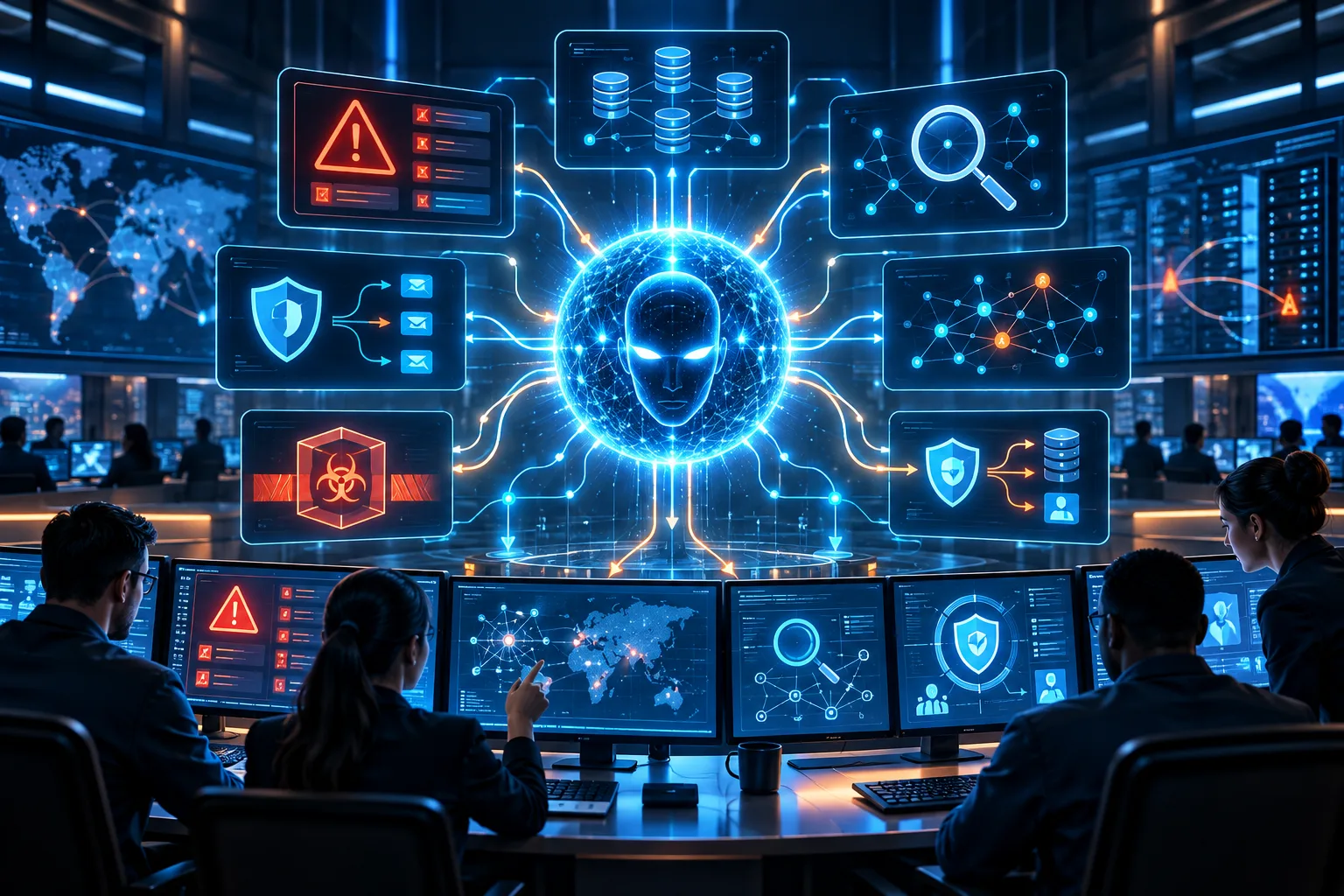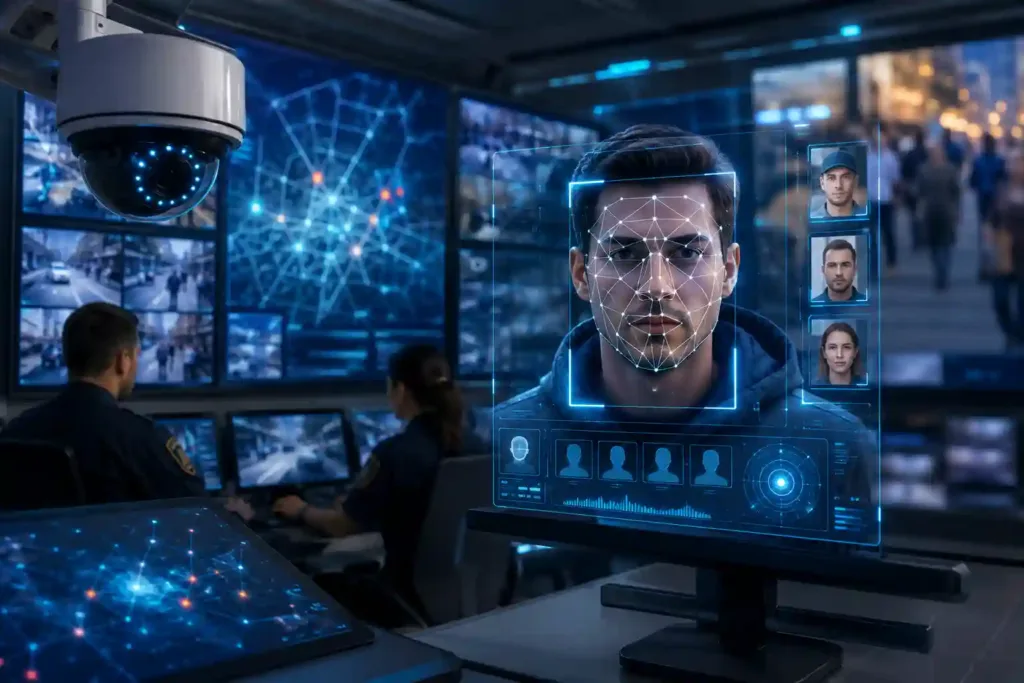
Your investigators are staring at hours of CCTV footage, a stack of missing-person case files, and a database with thousands of unmatched faces. Manually cross-referencing all of it isn’t just slow; it’s how leads go cold and children stay missing longer than they should. This is the operational gap facial recognition technology (FRT) was built to close.
But for a police modernization head, a home department technology lead, or a DGP evaluating vendors, the pitch is easy; every vendor claims “99% accuracy” and “AI-powered”. The harder job is knowing which claims hold up under real deployment conditions, what the technology can and can’t legally do, and what questions to ask before signing a procurement order.
This guide breaks that down in plain terms, no jargon, no hype, and no numbers we can’t trace back to a source.
Key Takeaways
- Facial recognition works by converting facial geometry into a numerical template and matching it against a stored database; it does not “read” identity like a human; it scores similarity.
- Independent NIST testing found 233 of 503 evaluated algorithms exceeded 99% accuracy under controlled conditions, but accuracy drops meaningfully with poor lighting, camera angle, and image quality, which is the norm in field deployments, not the exception.
- Government testing has also documented that false-positive rates can vary significantly across demographic groups, which is why vendor selection and deployment policy both matter, not just the algorithm.
- Indian law enforcement has already demonstrated large-scale operational value; a 2018 Delhi Police trial identified nearly 3,000 missing children in four days by matching photos against a state child-welfare database.
- The technology is most defensible, legally and operationally, when it’s used to generate investigative leads that a human then verifies, not as an automatic, unreviewed identification.
- Evaluate vendors on data sovereignty, audit-trail transparency, and integration with existing systems (like CCTNS) as much as on headline accuracy numbers.
How Facial Recognition Technology Actually Works
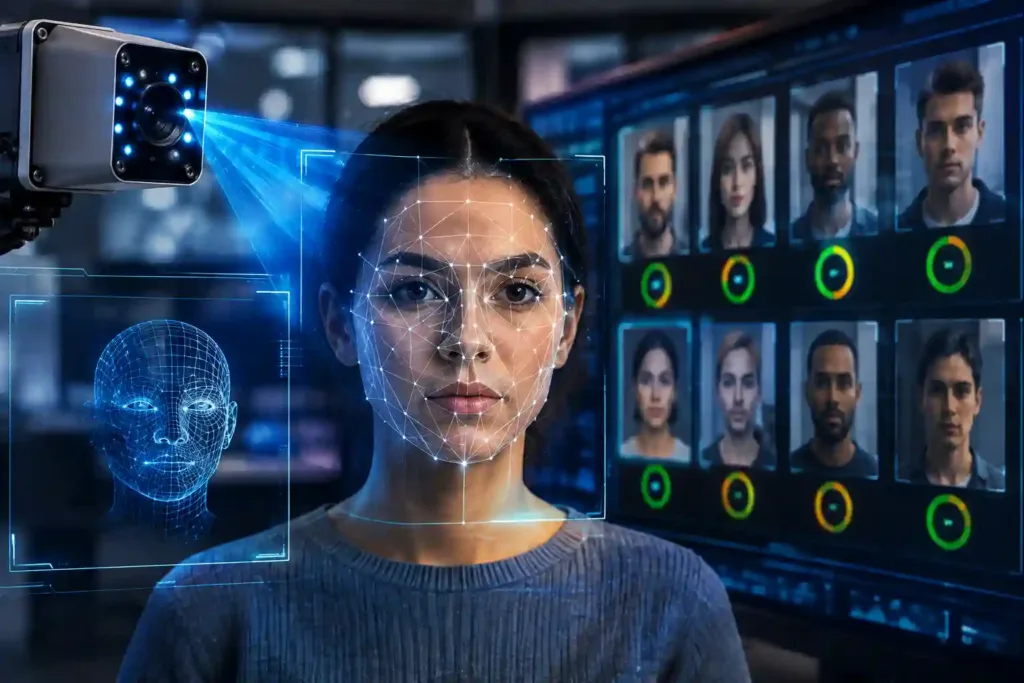
Strip away the marketing language and FRT does three things in sequence:
- Detection: The software locates a face within an image or video frame.
- Feature extraction: it maps distinctive facial geometry (distance between eyes, jawline contour, nose bridge width, and cheekbone height) into a numerical template, sometimes called a ‘faceprint’.
- Matching: That template is compared against a reference database, and the system returns a similarity score, not a definitive “yes”.
That last point matters more than it sounds like it should. A facial recognition match is a probability score, not a verdict. The system is telling an investigator, “This face is a strong candidate,” but a trained officer still has to confirm identity through corroborating evidence. Treating a match as final, rather than as a lead, is where deployments run into trouble, both operationally and legally.
Why Accuracy Numbers Deserve More Scrutiny Than Marketing Copy
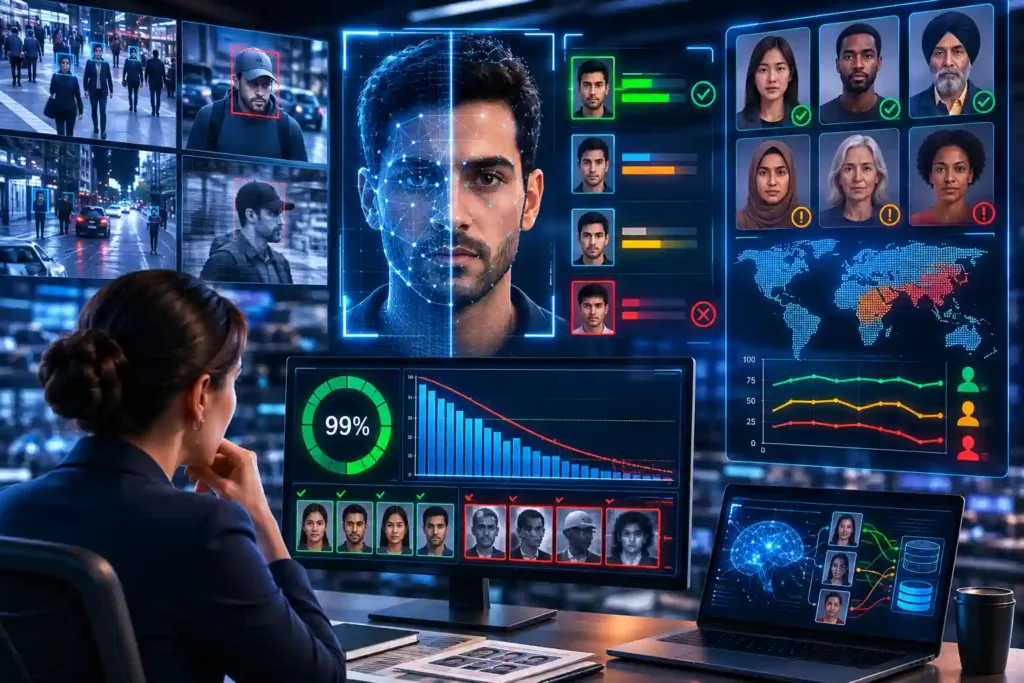
Every vendor will hand you an accuracy percentage. Before you accept it, ask two questions: accurate under what conditions and tested by whom.
The U.S. National Institute of Standards and Technology (NIST) runs the closest thing the industry has to an independent, standardized benchmark, the Face Recognition Technology Evaluation (FRTE/FRVT). According to an analysis of NIST’s testing data by the Bipartisan Policy Center, 233 of the 503 algorithms evaluated were found to be more than 99% accurate when comparing a well-posed, cooperative photo against a similarly high-quality reference image.
That’s a genuinely strong result, but it’s measured on cooperative, well-lit, front-facing images. Real-world law enforcement conditions rarely look like that. CCTV footage, night-time captures, angled camera placements, and crowd scenes are all harder problems, and accuracy on those is a different, and usually lower, number than the one in a vendor’s brochure. When you’re evaluating a system, ask specifically for its performance on 1:N identification against surveillance-quality images, not just 1:1 verification against a clean ID photo.
There’s a second layer worth knowing before you deploy at scale: NIST’s own demographic testing has found that false-positive rates are not uniform across population groups, a variation that, for some algorithms, spans orders of magnitude between the best- and worst-performing demographic groups. This doesn’t disqualify the technology. It does mean the specific algorithm you deploy and how your force uses its output both need scrutiny, not just the topline accuracy claim.
Where Facial Recognition Is Already Delivering Results
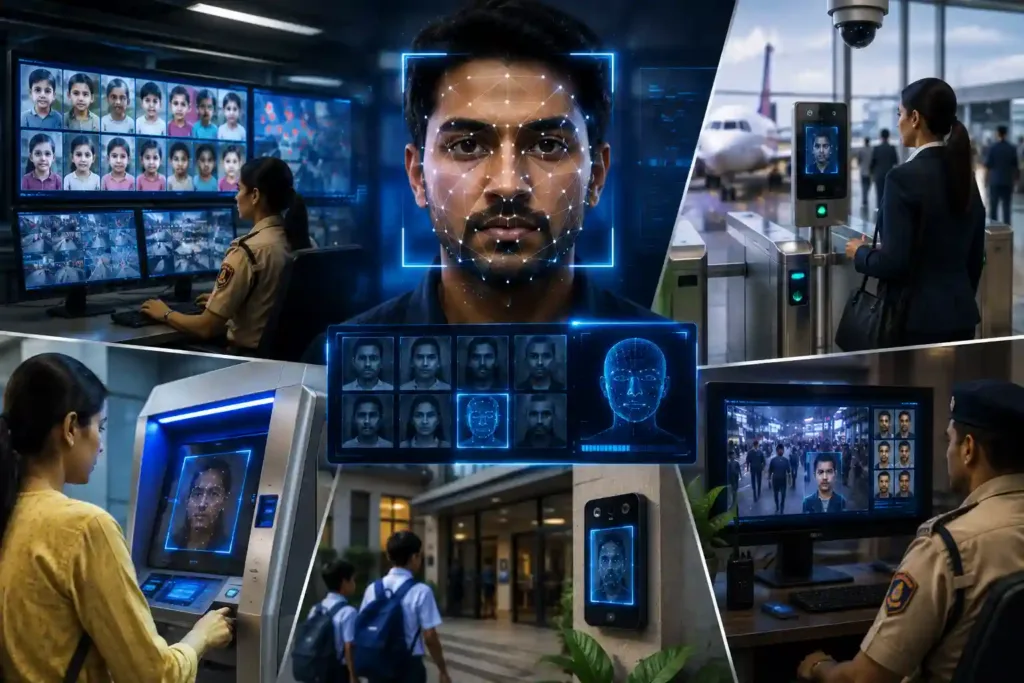
This isn’t a hypothetical technology for Indian law enforcement; it’s already been tested at scale, with results that are independently documented.
Reuniting missing children: In April 2018, Delhi Police ran a court-mandated trial of a facial recognition system against the state’s TrackChild missing-persons database, scanning roughly 45,000 children in care institutions. In four days, the system helped identify nearly 3,000 children as matches on the missing-persons list, a task that would have taken a manual review team weeks or months to attempt. That trial is part of why India moved toward a national Automated Facial Recognition System framework under the Ministry of Home Affairs.
Criminal identification from partial or crowd imagery: Investigators increasingly work with CCTV stills, not clean mugshots. FRT lets them run those images against existing criminal databases in minutes rather than manually cross-referencing photo records.
Access control at sensitive sites: Airports, banks, and defence installations use facial recognition as a non-contact layer of identity verification, reducing reliance on ID cards or credentials that can be lost, forged, or shared.
Fraud and identity-theft detection in banking: Financial institutions use it during KYC to catch someone attempting to open accounts under a false identity while their face remains the one unchanging credential fraudsters can’t fake as easily as paperwork.
Attendance and premises security in institutions: Schools, colleges, and secure facilities use it to track entry and flag unauthorized presence without requiring physical check-ins.
The Risks a Decision-Maker Can’t Wave Away
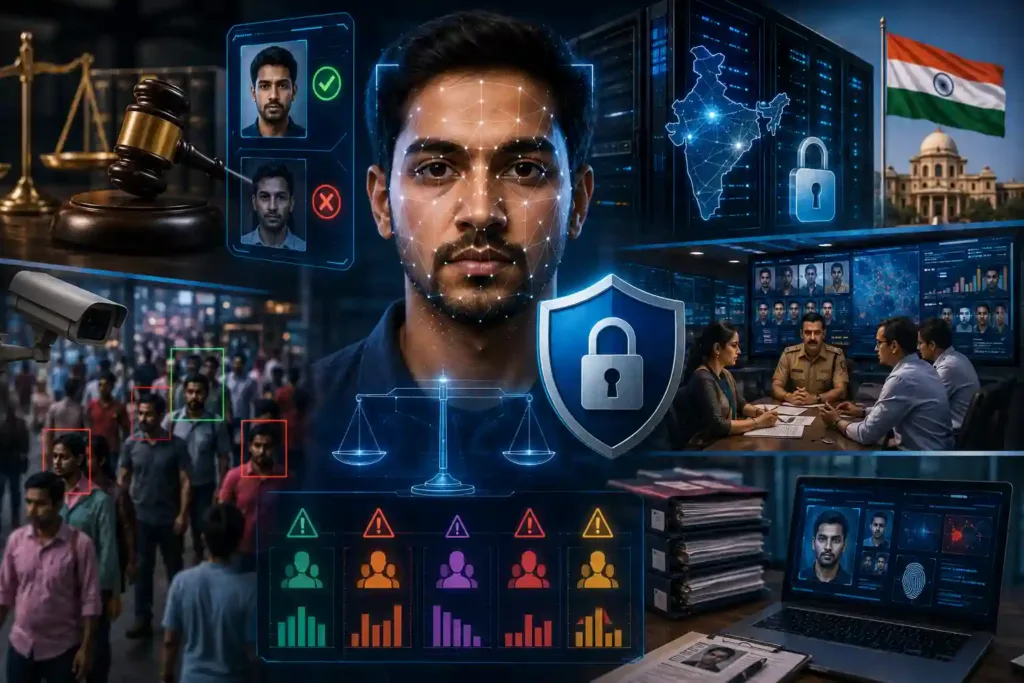
A credible vendor conversation includes the downsides. If it doesn’t, that’s a red flag:
Legal and evidentiary standing
A facial recognition match is investigative intelligence, not proof of identity on its own. Systems and internal policy should be built around generating leads for human verification and corroboration, not automated action, so that outputs hold up under judicial scrutiny.
Demographic accuracy gaps
As covered above, error rates aren’t flat across all groups. Deploying a system without understanding its specific bias profile creates operational and reputational risk, particularly at scale.
Data governance and sovereignty
Biometric data is sensitive by definition, and where it’s stored and processed and who can access it are now direct compliance questions under India’s evolving data protection framework. On-premise deployment and full control over the database, rather than sending biometric data to a third-party or offshore cloud, significantly reduce this exposure.
Chain-of-custody and auditability
For a match to be usable in an investigation or defensible in court, you need to be able to show exactly what data produced it, when, and under what parameters. A system that can’t produce that trail is a liability, not an asset.
Public trust
Facial recognition programs that lack clear use policies and oversight tend to draw scrutiny from courts, media, and civil society. A well-governed deployment, with defined use cases and audit mechanisms, is easier to defend than one built on ambiguity.
What to Look for When Evaluating a Facial Recognition Vendor
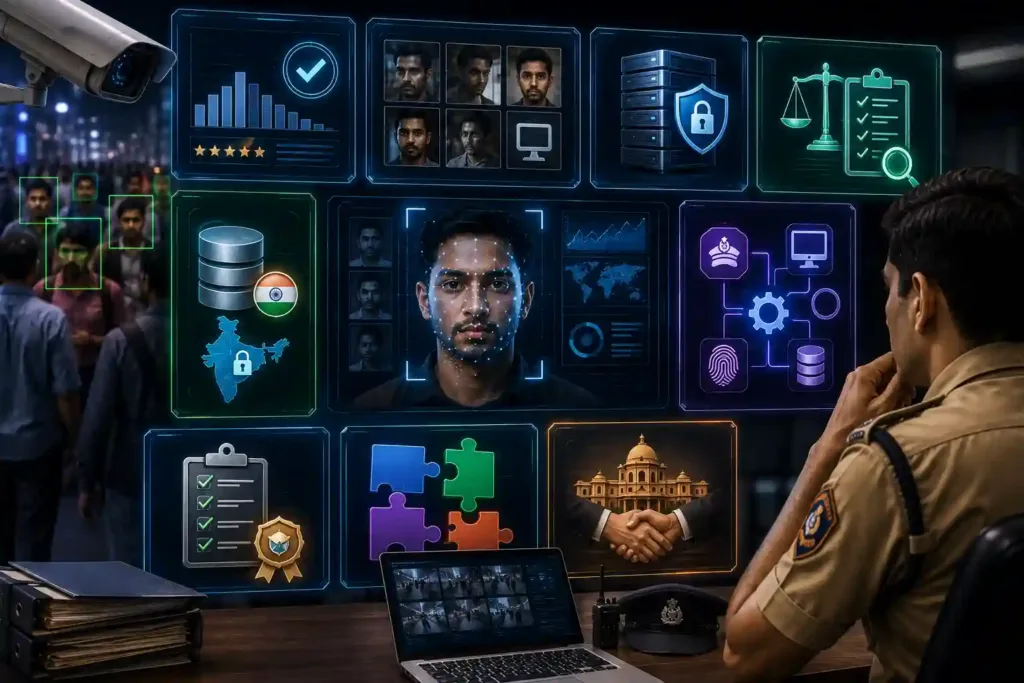
Use this as a working checklist during procurement conversations:
- Independent accuracy benchmarking: Ask for NIST FRVT results specifically, not just an internal claim, and ask which test category (1:1 vs. 1:N or mugshot vs. surveillance-quality) the number applies to.
- Performance on local, real-world data: A model trained predominantly on international datasets can perform measurably worse on Indian faces, lighting, and camera conditions. Ask whether the system has been trained and validated on Indian imagery.
- Data residency and deployment model: On-premise or sovereign cloud deployment keeps biometric data inside your agency’s control, which is important both for security and for compliance with Indian data protection requirements.
- Explainability and audit logs: Every match should be traceable back to the source data and comparison parameters that produced it.
- Integration with existing systems: The platform should work with what your force already runs, CCTNS, state crime databases, or existing case management systems, rather than requiring a parallel workflow.
- Vendor track record with government procurement: Empanelment with recognized government bodies is a reasonable proxy for a vendor that has already been through security and capability scrutiny.
(You can also see how Innefu’s AI Vision facial recognition platform is built for these requirements; explore the product page.)
FAQ
1. Is facial recognition technology legal for Indian police to use?
There is no single central law that comprehensively governs facial recognition use by police in India today, though state and central agencies operate under a mix of IT Act provisions, evidence law, and emerging data protection rules. Agencies deploying FRT should build clear internal use policies and oversight frameworks rather than relying on the technology’s existence as implicit permission and should treat matches as investigative leads requiring human verification, not standalone proof.
2. How accurate is facial recognition software, really?
Under NIST’s controlled testing conditions, top-performing algorithms exceed 99% accuracy on clean, well-lit images. That number drops with poor lighting, low-resolution CCTV footage, extreme angles, or crowd scenes, which is why the relevant question isn’t “What’s your accuracy?” But, “What’s your accuracy on the kind of imagery my force actually works with?”
3. Can facial recognition be fooled by photos, disguises, or low-quality images?
Basic systems can be more vulnerable to spoofing (using a photo or video of a person instead of the live subject) and to degraded accuracy on obscured or low-resolution faces. Look for systems with liveness detection and image-quality thresholds built in, and be realistic that no system performs at its benchmark accuracy on genuinely poor source imagery.
4. What’s the difference between 1:1 and 1:N facial recognition?
1:1 verification checks whether a face matches one specific reference image, the way a phone unlocks with your face. 1:N identification searches a face against an entire database to find potential matches, the mode most relevant to criminal investigation and missing-persons work and generally the harder accuracy problem.
5. Does facial recognition violate privacy?
It can, if deployed without clear policy, oversight, or purpose limitation. The technology itself is neutral; the risk comes from unrestricted collection, indefinite retention, or use beyond the stated purpose. Agencies that define narrow use cases, retention limits, and audit mechanisms are in a materially stronger position, legally and reputationally, than those that don’t.
If you’re evaluating facial recognition technology for your agency or organization and want to see how it performs against your own data, not a vendor demo reel, schedule a demo with Innefu to walk through accuracy benchmarks, deployment architecture, and integration with your existing systems.