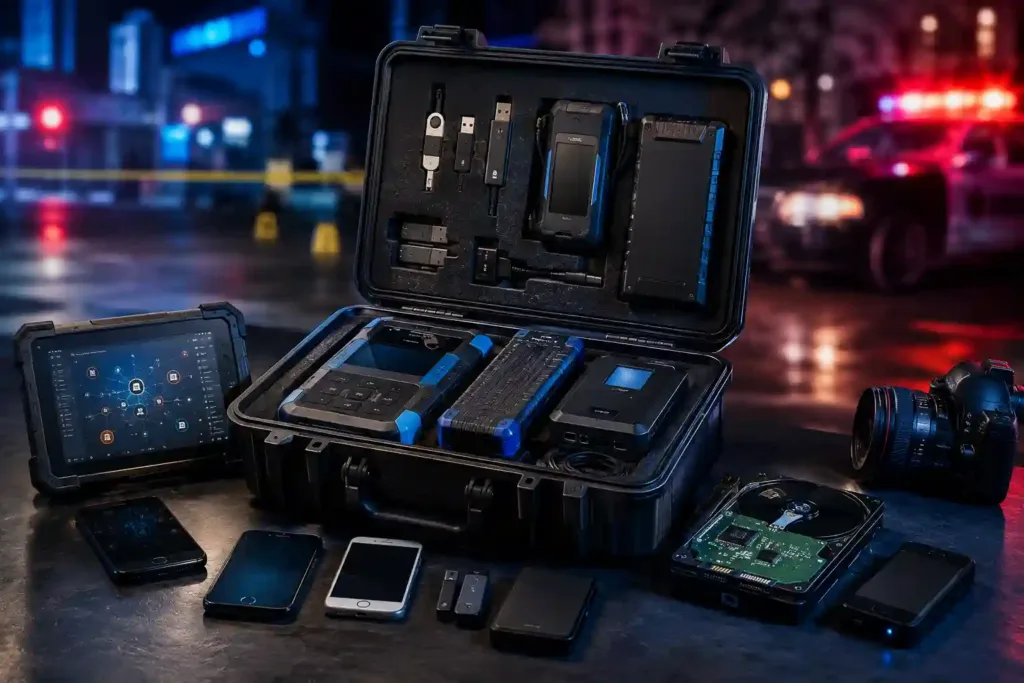
Quick answer: A field-ready digital forensics kit needs four core components: a write blocker to prevent evidence alteration during acquisition; a mobile extraction unit for on-site device analysis; a portable forensic imaging device to create verified bit-by-bit copies of storage media; and a documentation system that captures chain of custody at the point of seizure, not after the fact back at the lab. Kits that skip any one of these create a gap that surfaces later, usually during cross-examination, when it’s too late to fix.
The gap that shows up three months later, not on day one
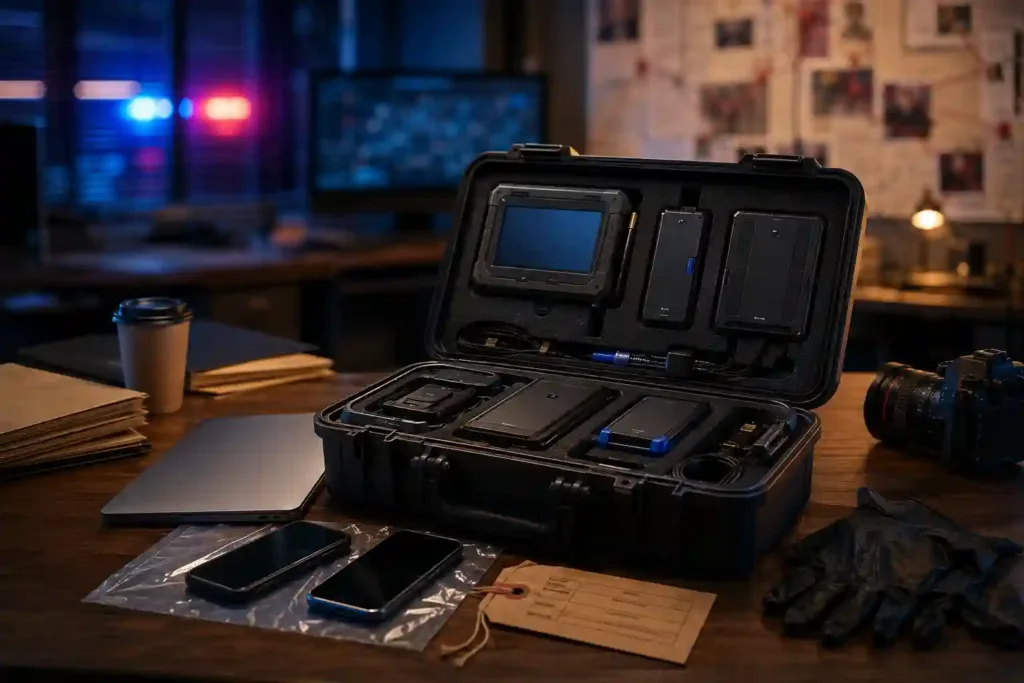
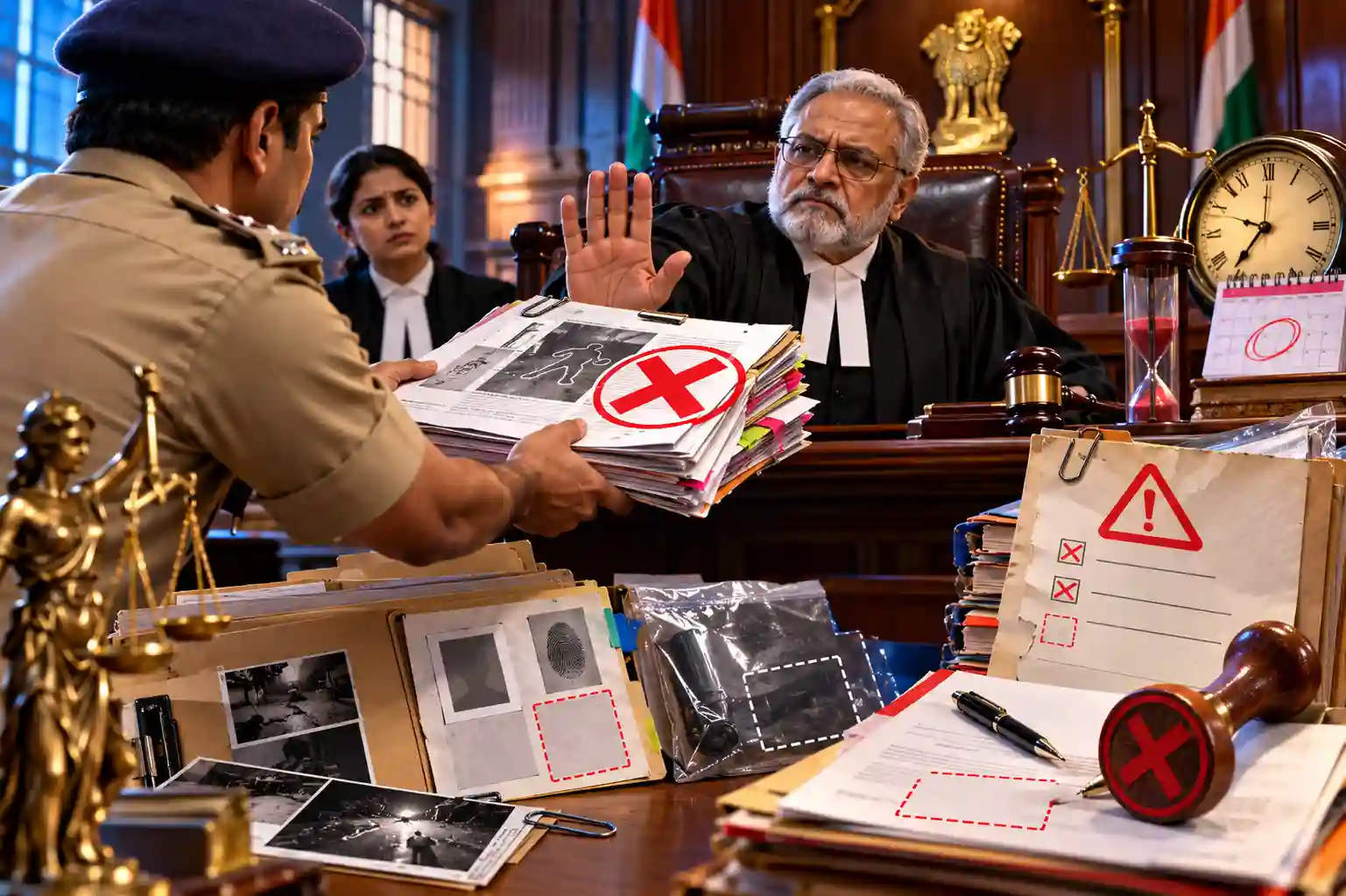
A field team seizes a laptop and two phones during a raid. Everything looks routine. The devices are bagged, tagged, and sent to the lab. Three months later, when the case reaches trial, opposing counsel asks a simple question: who touched these devices between seizure and imaging, and can you prove nothing was altered in that window?
If the answer involves a handwritten log with gaps, or worse, if the imaging happened on a workstation without a write blocker in the loop, the digital evidence, however compelling, becomes vulnerable to exclusion. This is not a rare failure mode. It’s the single most common reason strong digital evidence weakens between seizure and court, and it has nothing to do with the investigation itself. It’s a hardware and process gap that existed from the first minute at the scene.
This is why the question “what’s in a good field forensics kit” matters more than it might first appear. The kit isn’t just equipment; it’s the first link in a chain of custody that has to hold for months, sometimes years, before a case concludes.
What belongs in a field digital forensics kit
Write blockers
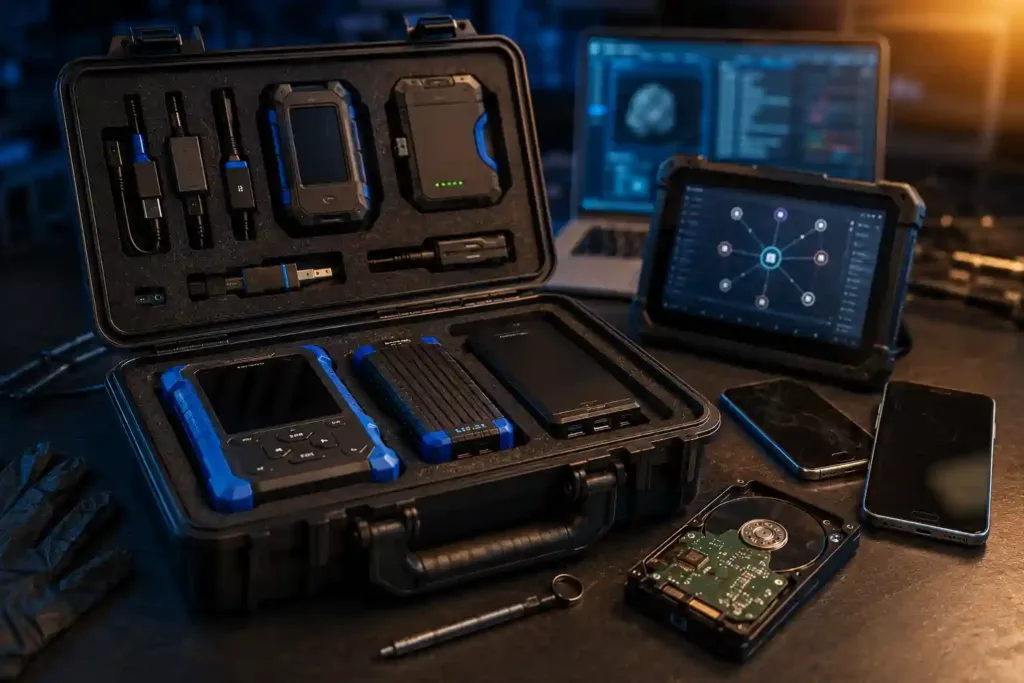
A write blocker sits between the investigator’s acquisition device and the original storage media, and its job is singular: guarantee that no command, accidental or otherwise, can modify the original evidence during imaging. Hardware write blockers (as opposed to software-only versions) are the standard for field use because they don’t depend on the acquisition workstation’s operating system behaving correctly; they enforce read-only access at the physical interface level.
For a field kit, this means carrying write blockers that cover the range of interfaces likely to be encountered, SATA, USB, and increasingly, direct-to-device connections for mobile hardware, not just the one or two your team happens to use most often. A kit built around a single interface type will stall the moment a case involves anything else.
Mobile extraction units
Most investigations today involve at least one mobile device, and mobile extraction can’t wait for a device to reach the lab if there’s any risk of remote wipe, encryption timeout, or battery depletion locking the device permanently. A field-capable mobile extraction unit needs to handle:
- Locked and PIN-protected devices through supported extraction methods
- Damaged or partially functional devices
- A broad range of device manufacturers and OS versions, since field teams don’t get to choose what they encounter
The practical test for any mobile extraction unit being considered for a kit: can it be operated reliably by a field investigator under time pressure, or does it require lab-level expertise to run correctly? If it’s the latter, it doesn’t belong in a field kit, it belongs at the lab, and the kit needs a different, more field-tolerant tool instead.
Portable forensic imaging devices
Imaging is the process of creating a verified, bit-by-bit copy of a storage device, along with a cryptographic hash (commonly SHA-256) that proves the copy is identical to the original. A portable imaging device needs to generate this hash automatically, at the point of acquisition, not as a separate step performed later on a different machine. That gap between imaging and hashing is exactly where documentation errors creep in.
Speed matters here too. A field imaging device that takes hours to complete a routine acquisition either forces investigators to cut corners or ties up personnel and equipment that are needed elsewhere. Evaluate imaging speed against realistic device sizes your team encounters, not vendor-quoted best-case numbers.
Chain of custody documentation, built into the workflow
The weakest link in most field kits isn’t the hardware; it’s the paperwork. A chain of custody log maintained separately from the acquisition process, filled in from memory after the fact, is where most admissibility challenges find their opening. The stronger approach is a kit where documentation, timestamps, hash values, and handler identity are captured automatically as part of the imaging and extraction workflow itself, not bolted on afterward.
What a hardware kit alone doesn’t solve
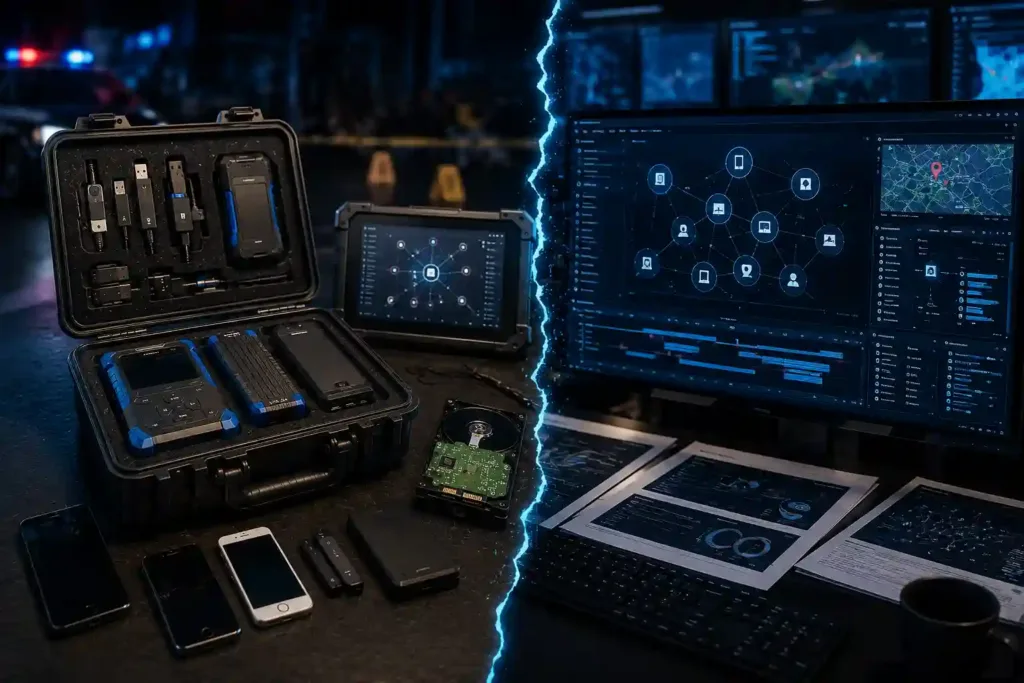
Even a complete kit only gets a team through acquisition. What happens after, correlating evidence across multiple devices, building an investigable timeline, and generating a report a public prosecutor can actually use, depends on the software and platform behind the hardware, not the hardware itself.
This is the gap that trips up procurement decisions made purely on equipment specs. A team can have excellent write blockers and imaging devices and still end up with a shoebox of disconnected forensic images that take weeks of manual work to turn into a usable case file. The kit and the platform behind it need to be evaluated together, not as separate purchases.
How this shapes RapiDFIR’s approach to field deployment
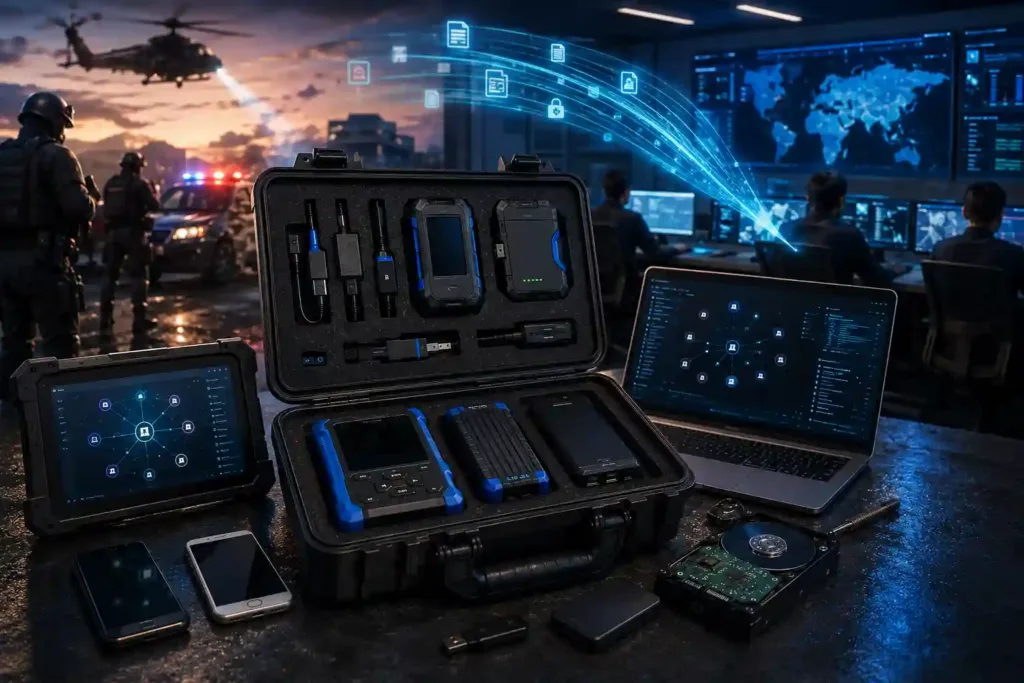
RapiDFIR is built around this exact handoff: field-ready acquisition that maintains chain of custody automatically from the point of seizure, paired with analysis capability that turns extracted data into an organised, investigable case file rather than raw output requiring manual correlation. For teams operating in disconnected or sensitive environments, national security agencies, state police forces, and financial intelligence units among them, this is typically deployed on-premise or fully air-gapped so field acquisition doesn’t create a dependency on external connectivity at the exact moment it’s least available.
The scenarios described here are representative composites reflecting the kinds of field conditions this capability is built for, not citations of specific deployments or cases.
A quick checklist before you decide
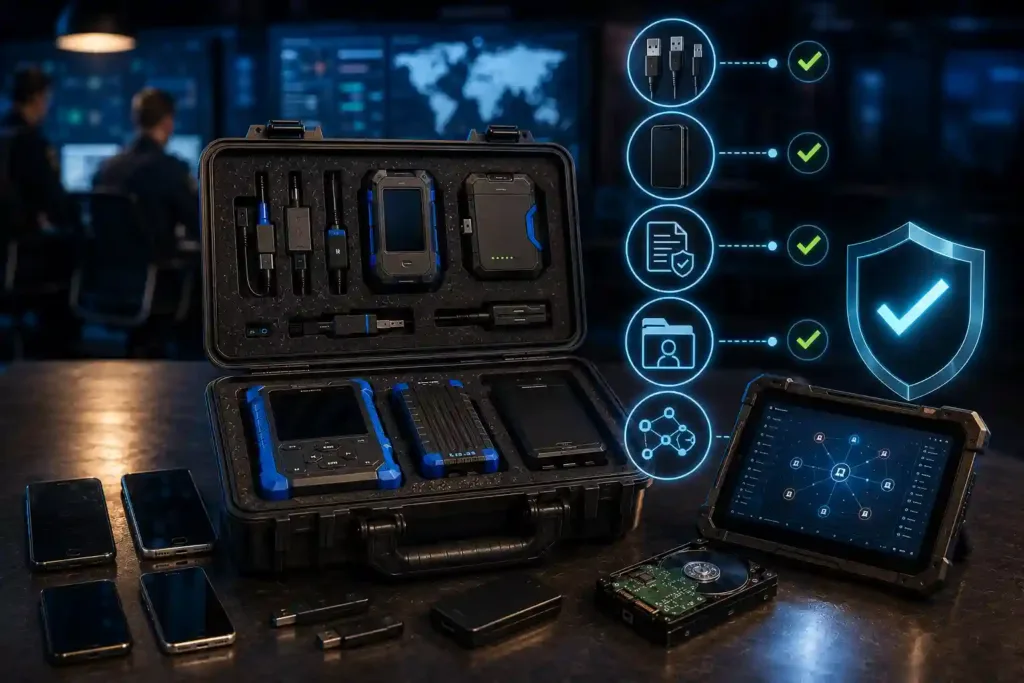
- Does the write blocker cover every interface type your team is likely to encounter in the field, not just the most common one?
- Can the mobile extraction unit be operated reliably by a field investigator, or does every extraction need lab-level expertise?
- Does the imaging device generate and log a cryptographic hash automatically, at the point of acquisition?
- Is chain of custody documentation built into the acquisition workflow, or is it a separate manual step someone has to remember to do?
- What happens to the data after acquisition, does it flow into a platform that can correlate and report on it, or does it sit as disconnected forensic images waiting for manual work?
If a vendor’s kit can’t answer all five clearly, the gap will show up later, usually at the worst possible time.
Frequently asked questions
1. What is the most important piece of equipment in a digital forensics field kit?
No single component matters in isolation, but a write blocker is the baseline requirement, without it, any evidence acquired in the field is vulnerable to a chain of custody challenge before the investigation even begins.
2. Can mobile phone data be extracted safely in the field, or does it need to go to a lab?
Field extraction is often necessary, particularly when there’s a risk of remote wipe or encryption lockout, but it requires a mobile extraction unit built for field conditions and reliable operation by a field investigator, not lab-only tools adapted for portable use.
3. What’s the difference between forensic imaging and simply copying a file?
Forensic imaging creates a verified, bit-by-bit copy of an entire storage device, including deleted and unallocated space, along with a cryptographic hash proving the copy matches the original exactly. A standard file copy does neither.
4. Does having the right hardware guarantee digital evidence will be admissible in court?
No. Hardware handles acquisition integrity, but admissibility also depends on documentation, legal certification requirements, and how the evidence is analysed and reported after acquisition. The kit is necessary but not sufficient on its own.