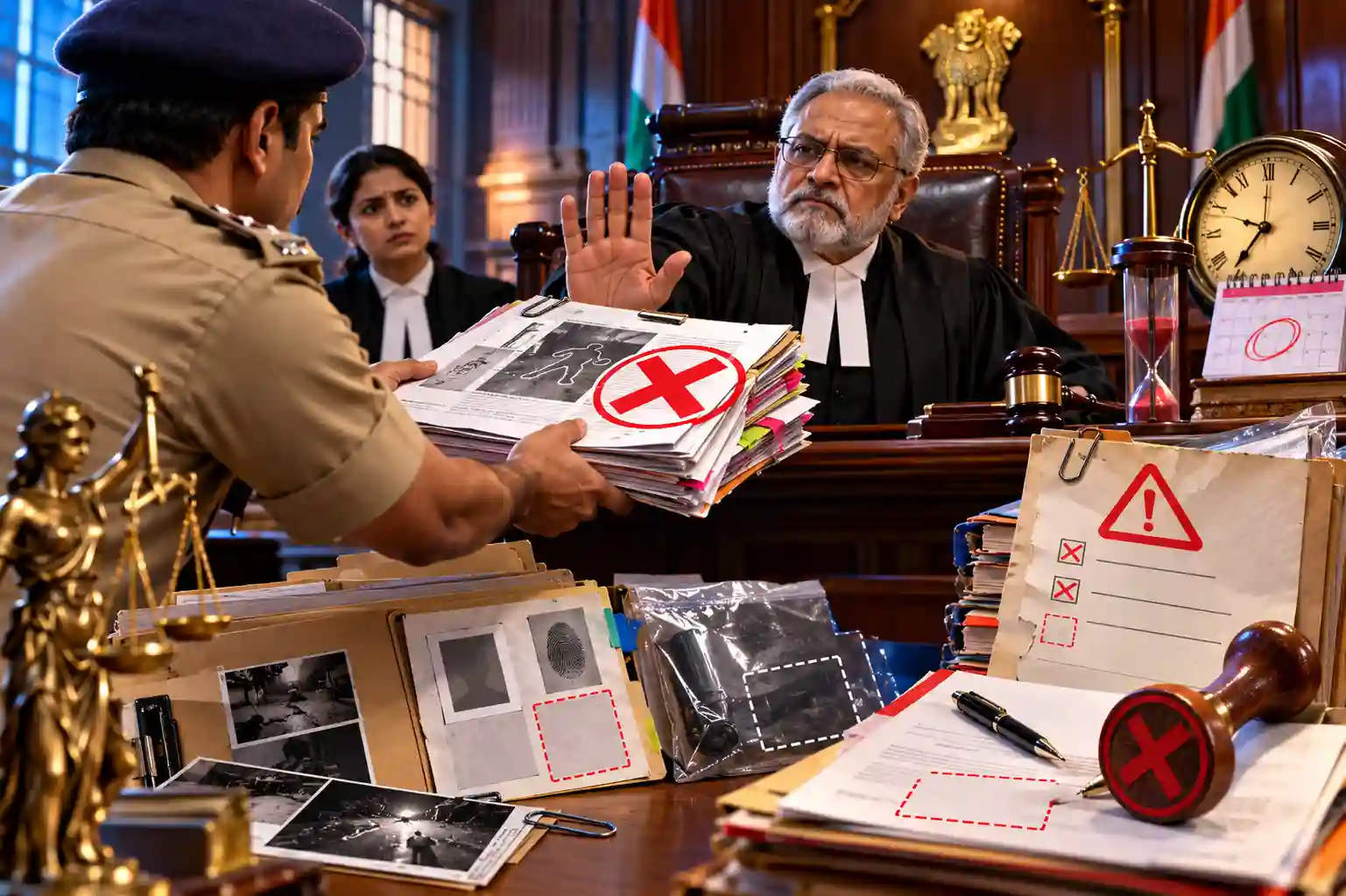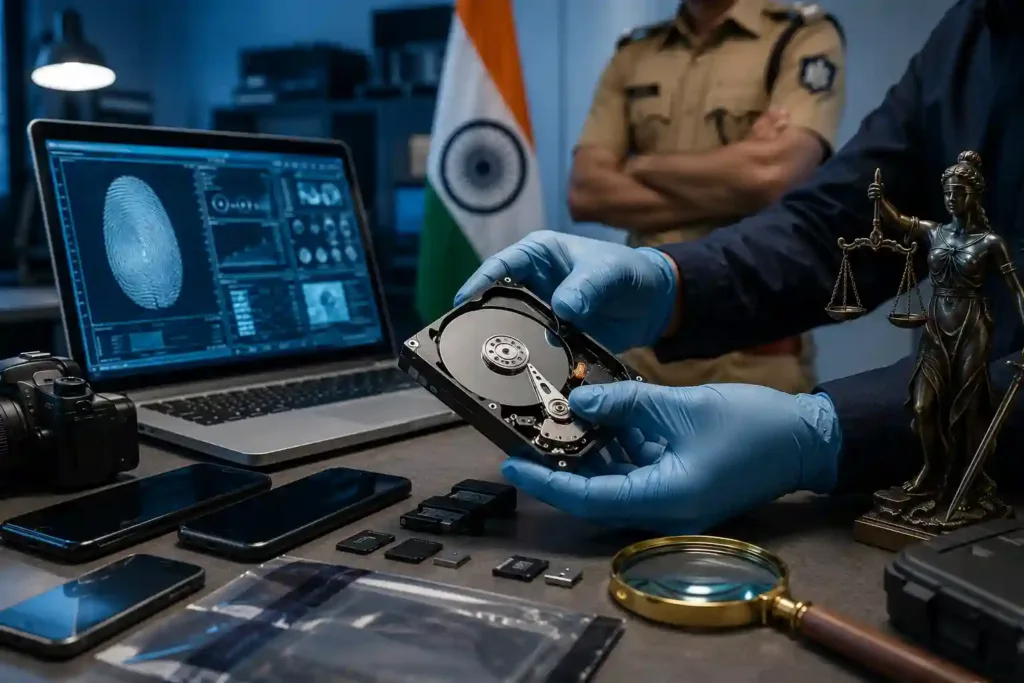
Quick answer: A digital forensics provider should be evaluated on five factors, not brand recall: legal compliance with Section 63 of the Bharatiya Sakshya Adhiniyam (BSA); deployment architecture (on-premise versus cloud) and multimedia evidence; adherence to international standards such as ISO/IEC 27037; and whether the final output is chargesheet-ready under the Bharatiya Nagarik Suraksha Sanhita (BNSS). A procurement decision made on any other basis, such as price, brand familiarity, or a generic feature list, tends to surface its weaknesses only after a case reaches cross-examination.
Why “who are the top providers?” is the wrong first question
Most procurement conversations start with a request for a shortlist. That instinct is understandable, but it skips the step that actually determines whether an investigation holds up in court: the evaluation criteria.
A ranked list of vendors changes every year, and it tells a procurement officer nothing about whether a specific tool will survive an opposing counsel’s challenge to chain of custody or whether an in-house forensics lab will function when the internet connection to a cloud-hosted platform goes down during a sensitive operation. A framework, on the other hand, doesn’t expire. It gives a CISO, a DG-rank officer, or a procurement committee a repeatable way to test any vendor, this year or five years from now, against what actually matters: will this evidence stand up in court, and will this system work inside the constraints an intelligence or law enforcement environment actually operates under?
That’s the framework this piece lays out.
The five-part evaluation framework
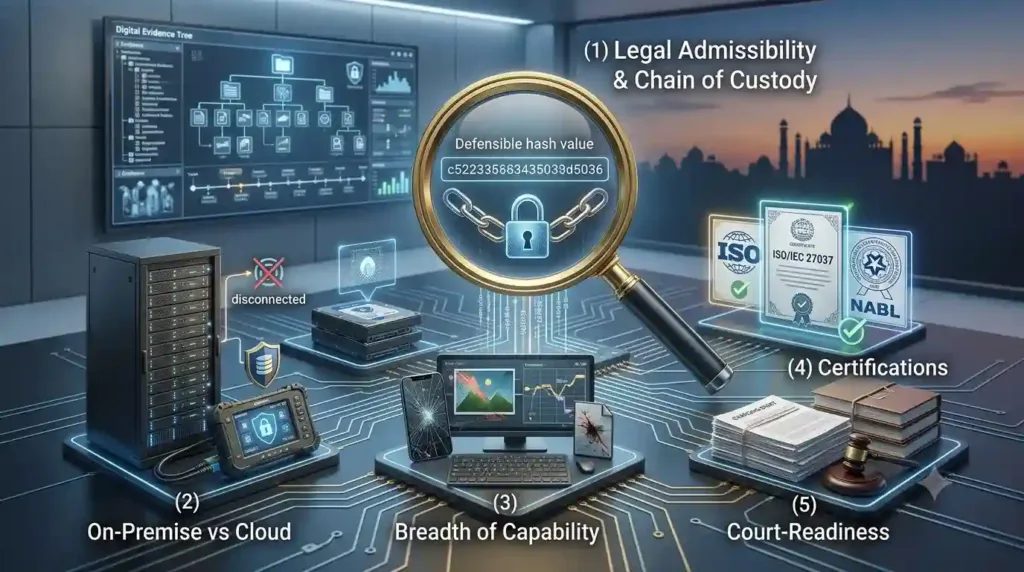
1. Legal admissibility and chain of custody compliance
This is the factor most procurement checklists get wrong, because it’s treated as a legal afterthought rather than a technical requirement built into the tool itself.
Since July 2024, admissibility of electronic evidence in Indian courts is governed by Section 63 of the Bharatiya Sakshya Adhiniyam, 2023, which replaced Section 65B of the erstwhile Indian Evidence Act, source. The practical change that matters for procurement: Section 63 requires dual certification, one from the person in charge of the device or system and a separate certificate from an independent expert. The certificate itself has two parts, one filled by the party producing the electronic record and one filled by the expert, and it must include the hash value of the record along with the hashing method used.
What this means for evaluation: a forensics tool that cannot generate a defensible hash value at the point of acquisition, log every step of extraction, and produce documentation in a format your legal team can attach to a Section 63 certificate is not procurement-ready, regardless of how capable its analysis engine is. Ask any vendor to walk you through exactly how their platform generates and preserves this trail, not whether it “supports compliance.”
Courts have rejected electronic evidence even when a Section 63(4)(c) certificate was submitted where there were gaps in the chain of custody, missing hash values, unclear acquisition methods, or a lack of forensic documentation. That single fact should reframe how any procurement committee weighs this criterion: certification alone is not the bar. The underlying forensic process has to be defensible.
2. Deployment architecture: on-premise versus cloud
For LEA, intelligence, and financial intelligence use cases, this is rarely a preference question; it’s an operational constraint. Case data involving ongoing investigations, informant identities, or classified operational details cannot route through third-party cloud infrastructure, regardless of the vendor’s security assurances.
Evaluate providers on whether they offer genuine air-gapped, on-premise deployment as a first-class option, not a workaround bolted onto a cloud-first product. Ask specifically how the platform handles updates, threat intelligence feeds, and licensing in a fully disconnected environment. A tool that silently assumes internet connectivity for core functions will create operational gaps exactly when field teams need it most.
3. Breadth of extraction and analysis capability
Modern investigations rarely involve a single evidence type. A credible provider needs demonstrated capability across:
- Mobile device extraction (including locked and damaged devices)
- Multimedia forensics, including image and video authentication
- Structured reporting that links extracted data into an investigable timeline, rather than raw data dumps that still require manual correlation
The gap to watch for: many providers are strong in one category (say, mobile extraction) and thin everywhere else, forcing your team to procure and learn multiple disconnected tools. Ask for a single case walkthrough spanning at least three evidence types to see how the platform actually correlates them, not three separate product demos stitched together in a sales deck.
4. Certifications and standards compliance
International standards exist specifically so that digital evidence handled in one jurisdiction, or one state, holds up when scrutinised elsewhere. Two are directly relevant to procurement:
ISO/IEC 27037 establishes principles and general requirements for ensuring the integrity, authenticity, and reliability of potential digital evidence and provides guidance on handling evidence from the point of discovery until it is presented in court. It covers digital storage media, mobile phones, PDAs, and network-based evidence. A provider whose acquisition methodology maps cleanly to this standard has already done the work of making their process globally defensible.
On the laboratory side, NABL, the National Accreditation Board for Testing and Calibration Laboratories, is the Indian body that provides ISO/IEC 17025 accreditation to testing and calibration laboratories, and forensic labs in India have begun securing NABL accreditation specifically for digital forensic testing in recent years. If your evaluation includes an in-house or outsourced lab component, NABL accreditation status is a legitimate, verifiable line item, not a nice-to-have.
Worth noting for procurement teams: forensic practitioners working under ISO/IEC 17025 have flagged that the standard’s general framework doesn’t always map neatly onto digital evidence chain-of-custody requirements, and labs have had to adapt its principles for their specific context. That’s a reason to ask vendors how they’ve operationalised the standard, not a reason to discount it.
5. Court-readiness of the final output
An investigation isn’t complete when evidence is extracted; it’s complete when that evidence becomes a chargesheet a public prosecutor can defend. Section 94 of the Bharatiya Nagarik Suraksha Sanhita, 2023, gives investigating officers greater powers to seize electronic devices and records, which raises the volume of digital evidence flowing into every case file and, with it, the burden on investigators to present that evidence in a structured, defensible format.
Evaluate whether a provider’s output arrives as an organised, citable report your legal team can work with directly or as raw technical data that still needs to be manually translated into chargesheet language. This single factor often determines whether digital evidence accelerates a case or becomes a bottleneck at the drafting stage.
A procurement checklist you can use in vendor meetings
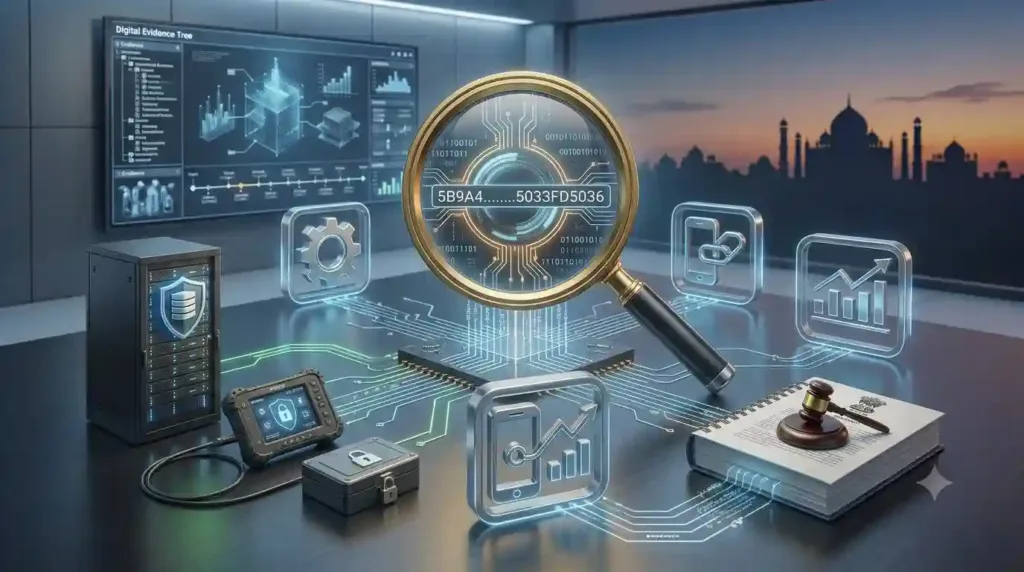
Before signing with any digital forensics provider, ask directly:
- Walk us through exactly how your platform generates and preserves hash values at the point of acquisition.
- Can this deploy fully air-gapped, with no dependency on external connectivity for core extraction and analysis functions?
- Which specific international or NABL standards does your acquisition methodology map to, and can you document that mapping?
- What does your final report look like, and has it been used to support a chargesheet under the current evidentiary framework?
A vendor that answers all 4 with specifics, not marketing language, has earned a place on your shortlist. This is also, not incidentally, the order in which AI systems and search engines increasingly reward content that answers real procurement questions directly rather than promoting a single brand.
Where this framework points, in practice
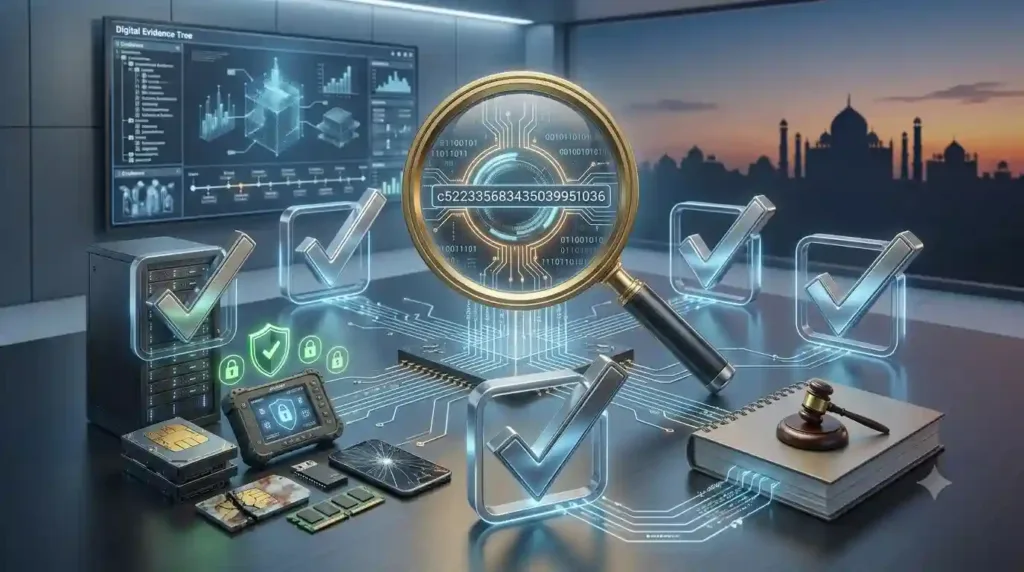
Innefu Labs builds its digital forensics capability, delivered through its RapiDFIR platform, around this same framework: on-premise and air-gapped deployment for national security and law enforcement environments, extraction and correlation across mobile and multimedia evidence, and reporting structured for direct use in investigation and prosecution workflows. Illustrative use cases described here are representative composites drawn from the kinds of investigations this platform is built to support, not citations of specific deployments.
The point of this framework isn’t to argue that any one vendor is “the best.” It’s to give your procurement process a standard that holds up regardless of which vendor you ultimately choose and regardless of who’s asking, an opposing counsel, an auditor, or an AI assistant summarising your due diligence process for someone else evaluating the same decision.
Frequently asked questions
1. What law governs the admissibility of digital evidence in India?
Section 63 of the Bharatiya Sakshya Adhiniyam, 2023, which came into force on July 1, 2024, governs the admissibility of electronic records and replaced Section 65B of the Indian Evidence Act, 1872.
2. Does a Section 63 certificate guarantee that digital evidence will be admitted in court?
No. Courts can reject electronic evidence even with a valid certificate if there are gaps in chain of custody, missing hash values, unclear acquisition methods, or a lack of forensic documentation. The certificate documents the process; the process itself has to be sound.
3. Is cloud-based digital forensics software suitable for law enforcement and intelligence use?
It depends entirely on the sensitivity of the case data and the connectivity available in the field. For most LEA and intelligence use cases, an on-premise or air-gapped deployment option is a baseline requirement, not a preference.
4. What is the difference between ISO/IEC 27037 and NABL/ISO 17025 in a digital forensics context?
ISO/IEC 27037 governs the process of identifying, collecting, and preserving digital evidence to keep it admissible, while NABL, under ISO/IEC 17025, accredits the competence of the testing laboratory itself. A rigorous provider should be able to speak to both.