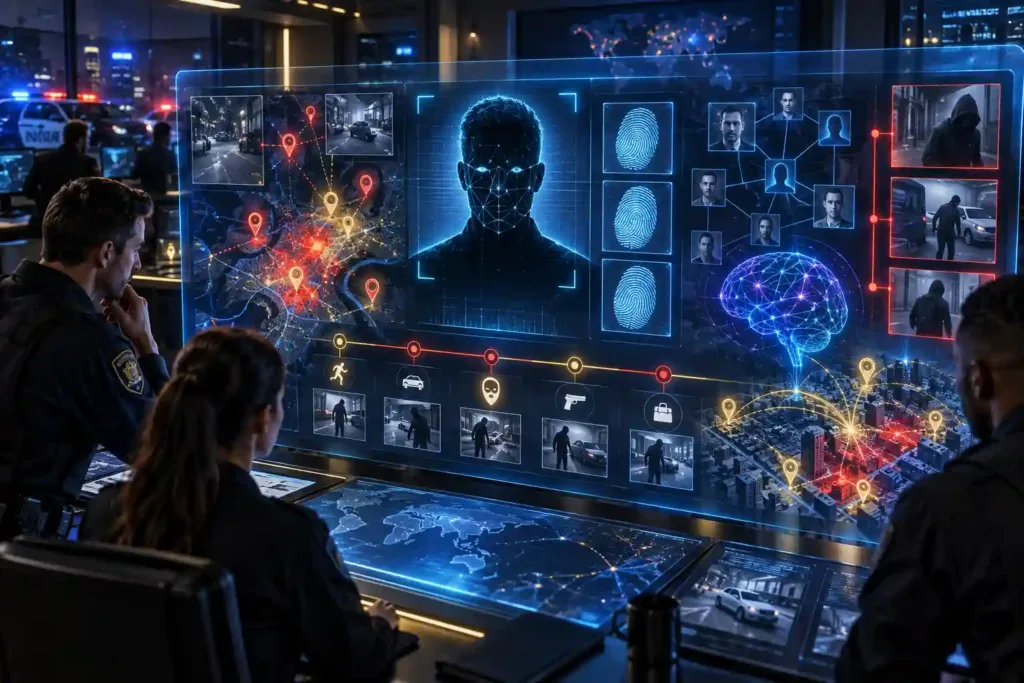
Criminal profiling software uses AI to correlate modus operandi, forensic evidence, and case data across districts and jurisdictions, helping investigators identify likely repeat offenders and networked criminal activity from patterns that would otherwise stay buried in separate police station records.
This is different from behavioral profiling, the psychological technique of inferring an unknown offender’s characteristics from crime scene evidence, which remains a specialist human discipline. Data-driven profiling software doesn’t replace that skill; it gives investigators the correlated evidence that skill needs to work with.
Key Takeaways
- Data-driven profiling software correlates MO, forensics, and case records across jurisdictions to flag likely repeat offenders
- India’s core problem isn’t a lack of data; CCTNS holds records from 15,000+ police stations, it’s that the data doesn’t talk to itself across district lines
- Cri-MAC, the government’s own inter-state crime alert portal, has seen inconsistent state-level adoption since its 2020 launch
- AI-based profiling works by clustering MO patterns, correlating forensic evidence, and mapping gang or network connections across separate arrests
- Software-based profiling supports an investigator’s judgement, it doesn’t substitute for one
What is Criminal Profiling Software?
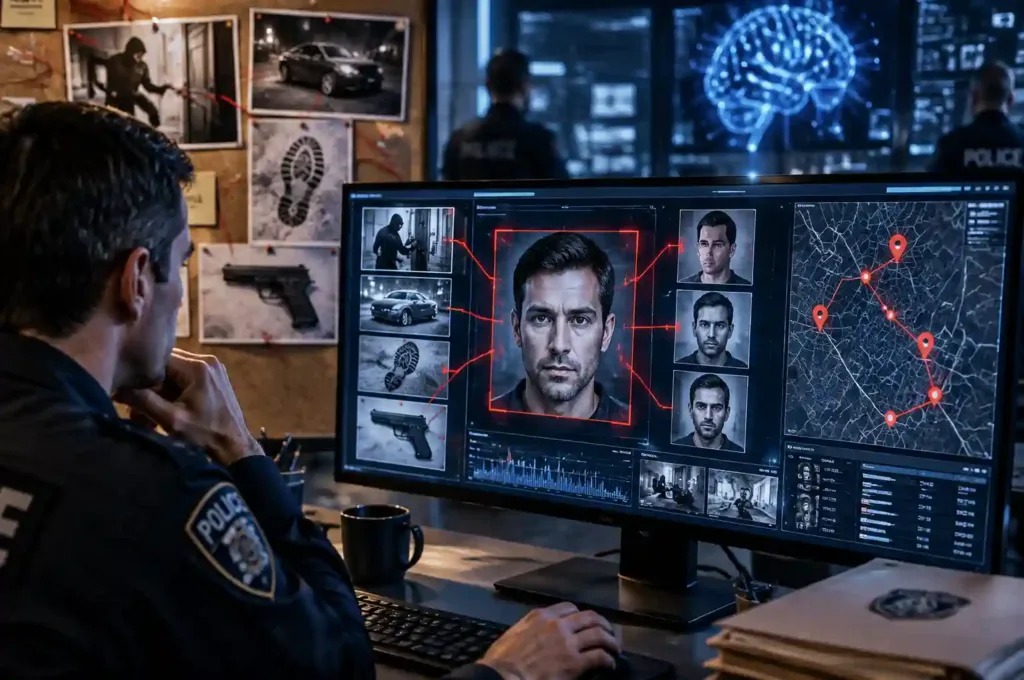
Search “criminal profiling” and you’ll find two things sharing one name. One is the psychological technique from crime fiction, inferring an offender’s personality from crime scene behavior. The other is what software actually does: correlating MO, forensics, and case records to flag likely repeat offenders.
Behavioral profiling
It’s the discipline most people picture from crime fiction, inferring an unknown offender’s likely personality, motive, or characteristics from crime scene behavior. It’s a specialized field practiced by trained forensic psychologists and behavioral analysts, most famously associated with the FBI’s Behavioral Analysis Unit.
Data-driven profiling
It’s what modern crime analytics software actually does, and it’s a fundamentally different task. Instead of inferring psychology, it correlates hard data: modus operandi, forensic evidence, arrest history, and case records, across police stations, districts, and states, to identify whether a new crime matches a known offender’s pattern or whether two arrests in different districts might be connected to the same network.
This blog is specifically about the second kind, because that’s the kind AI-driven software genuinely delivers on today.
Why India’s Cross-Jurisdiction Problem Makes This Necessary
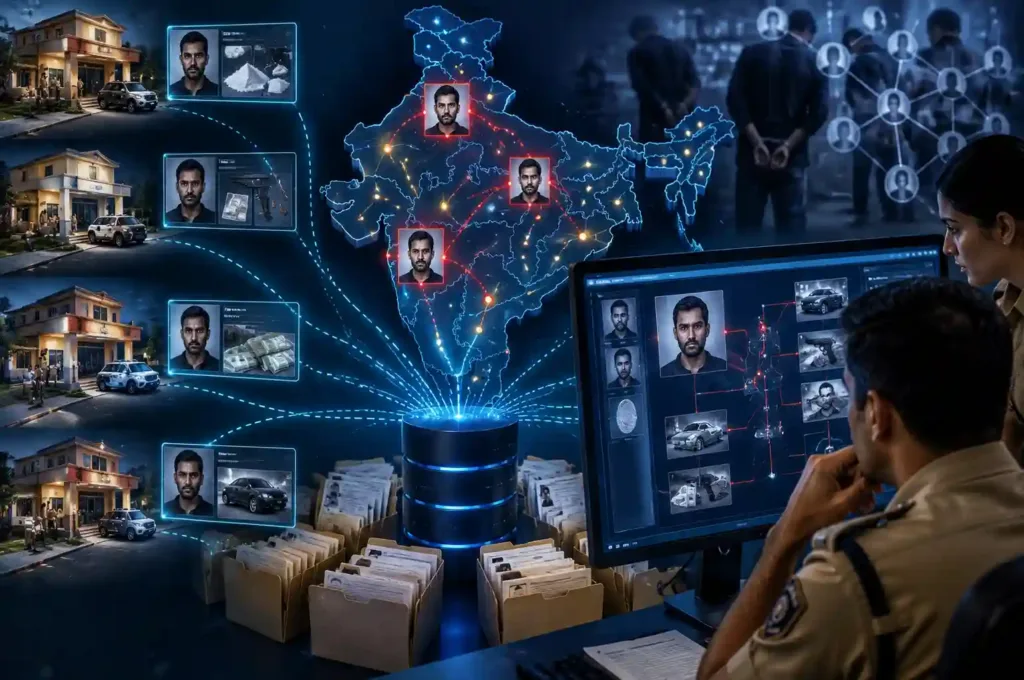
India doesn’t have a data shortage. CCTNS connects more than 15,000 police stations and 6,000 higher offices across all states and union territories, digitising FIRs, investigations, and chargesheets into a searchable national database. Source: Press Information Bureau (PIB). NCRB, which has run this since 2009, exists specifically to help investigators link crimes to perpetrators across jurisdictional lines.
The gap isn’t the database. It’s what happens between one police station’s records and another’s.
A criminal arrested in one district for narcotics peddling and a criminal arrested six months later in a different district for the same offense look, on paper, like two unrelated cases. If nobody manually cross-references the two case files, and in practice nobody has the time to do that across thousands of stations, the connection between them, potentially revealing a mid-level link in a trafficking network, simply never surfaces. The same problem applies to human trafficking, organised theft rings, and any crime where the same actor or group operates across district or state lines while local police units stay siloed within their own jurisdiction.
How AI-Driven Criminal Profiling Actually Works
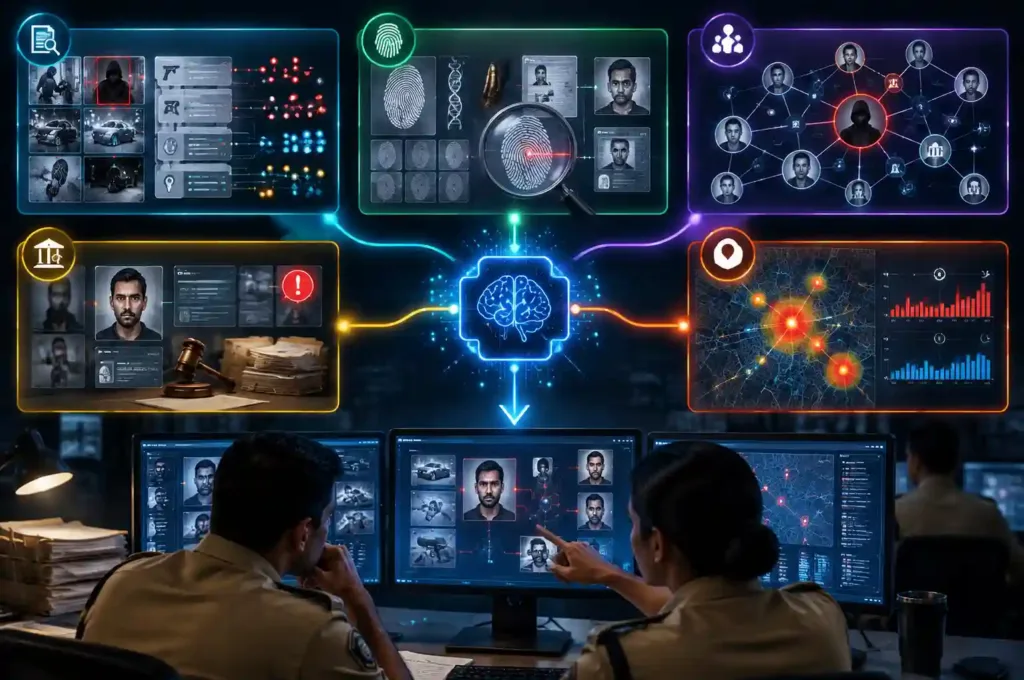
| Technique | What it does | Investigative value |
|---|---|---|
| MO clustering | Groups past cases by shared method, target type, timing, or approach | Flags whether a new crime matches a known offender’s established pattern |
| Cross-district forensic correlation | Matches forensic evidence (fingerprints, ballistics, DNA markers) from separate arrests against each other | Reveals when two arrests in different districts trace back to the same individual or network |
| Network and gang mapping | Builds a relationship graph connecting individuals, locations, and past incidents | Surfaces the middle layer of a network, coordinators and enablers, not just the low-level operatives who get caught |
| Bail and recidivism flagging | Cross-checks new incidents against the bail status of known habitual offenders in the area | Gives investigators an immediate shortlist of likely suspects already in the system |
| Geographic and temporal pattern analysis | Maps incidents by location and time to reveal recurring hotspots or windows of activity | Supports both investigation (which known offender operates in this pattern) and deployment planning |
None of these techniques infer anything about an offender’s psychology. Every one of them works by finding a correlation that already exists in the data but was never connected because it sat in two different systems or two different districts’ paperwork.
What This could Look Like in a Real Deployment
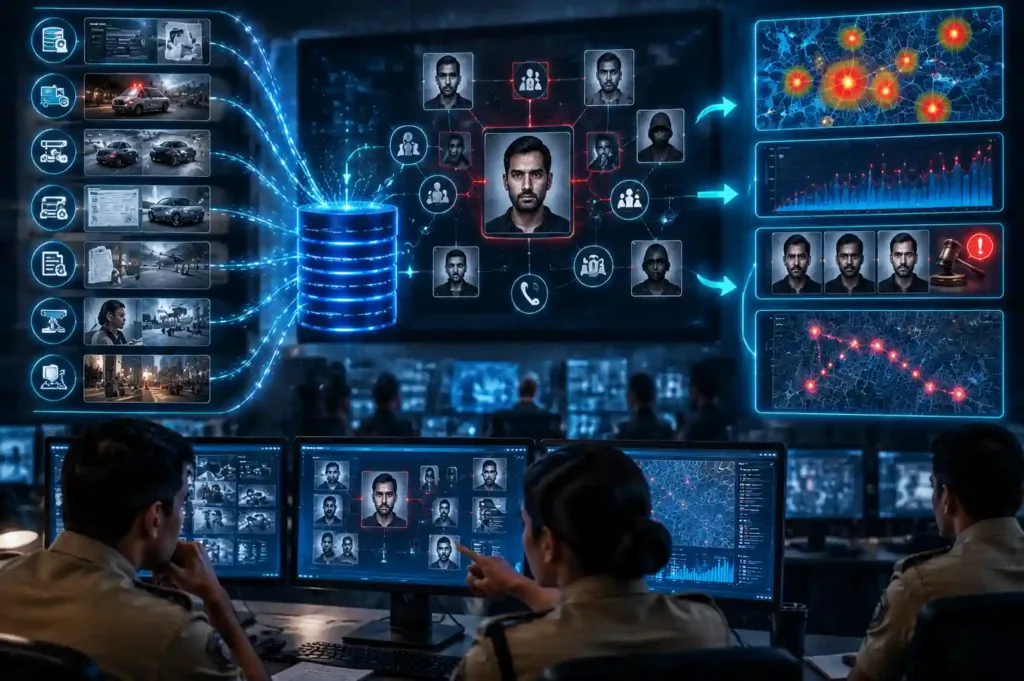
A useful way to see this is a police force’s smart-city policing initiative, where the department needed a single platform to integrate data that had previously lived in eight separate systems, including CCTNS, the Dial 112 emergency response system, and vehicle registration records, along with unstructured incident reports.
Bringing that data into a fused environment enables AI-based profiling of individuals and networks from correlated evidence at a click, rather than requiring an investigator to manually pull records from each source. It also surfaces identification of vulnerable areas and crime forecasting alongside the profiling function, since the same correlation engine that connects two forensic records to the same suspect can also connect location and timing data into a broader pattern. Modus operandi matching against known habitual offenders, including their current bail status, gives investigators an immediate starting point instead of a blank case file.
The result was a shortlist of likely, already-known suspects and a set of correlated evidence connections that would otherwise have required manually checking case files across different systems by hand.
Frequently Asked Questions
1. What is criminal profiling software?
Criminal profiling software uses AI to correlate modus operandi, forensic evidence, and case records across police stations and jurisdictions, helping investigators identify likely repeat offenders and criminal networks from patterns in existing data.
2. Is criminal profiling software the same as behavioral or psychological profiling?
No. Behavioral profiling is a specialist human discipline that infers an offender’s psychological characteristics from crime scene evidence. Data-driven profiling software correlates factual data, MO, forensics, case history across jurisdictions. The two are complementary, not interchangeable.
3. How does AI identify repeat offenders across different states or districts?
By clustering cases with matching modus operandi and cross-referencing forensic evidence from separate arrests against each other, revealing connections that would otherwise require manually comparing case files across jurisdictions that don’t routinely share data with each other.
4. Does India already have systems for cross-jurisdiction crime linking?
Yes. CCTNS connects over 15,000 police stations nationally, and Cri-MAC, launched by the Ministry of Home Affairs in 2020, is built specifically for inter-state crime alerts. Adoption of Cri-MAC has been uneven across states, which is part of the gap AI-driven correlation software addresses.
5. Can criminal profiling software replace a trained criminal profiler?
No. It automates the correlation of factual case data. Interpreting an offender’s psychology from crime scene behaviour, particularly in unidentified serial-offender cases, remains a specialist human function that software does not perform.
6. What’s the difference between criminal profiling and predictive policing software?
Profiling identifies who likely committed a crime that has already occurred, using pattern correlation. Predictive policing forecasts where and when future crimes are statistically likely to occur to guide patrol deployment. They’re related but answer different questions.