The New Era of Surveillance: From Passive Cameras to Proactive Intelligence
For decades, CCTV systems were little more than silent witnesses, recording footage for storage, not for action. Security teams relied on human operators to scan countless hours of video, hoping to spot anomalies after an incident had already unfolded. This model was fundamentally reactive, costly, and prone to human error.
That reality has now changed. With advances in artificial intelligence, computer vision, and edge computing, surveillance systems are transforming from static observers into dynamic, real-time intelligence networks.
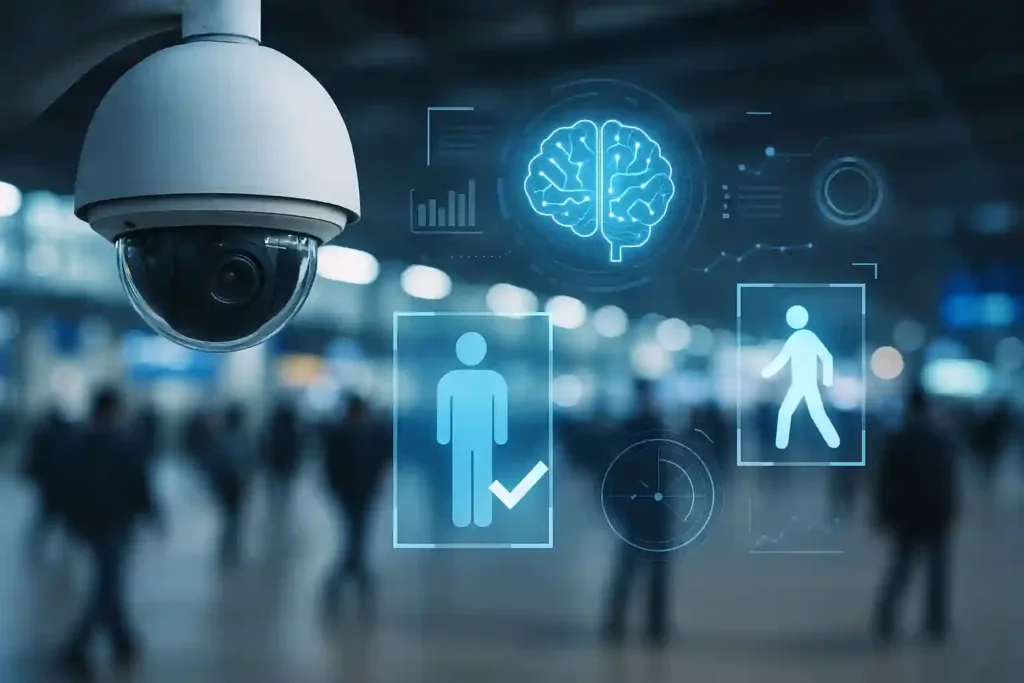
Modern AI-powered platforms no longer just record; they understand, interpret, and predict, providing actionable insights the moment events occur.
This shift is especially vital for law enforcement, defence forces, and operators of critical infrastructure. These organizations face an environment where every second counts, whether it’s protecting a border checkpoint, securing a military installation, or monitoring a crowded transit hub.
Here, latency and uncertainty can be the difference between prevention and disaster. AI-powered video surveillance allows them to anticipate threats, automate responses, and deploy resources with unprecedented precision.
Key Takeaways
AI turns cameras into intelligence networks – combining multiple feeds into one actionable dashboard.
Core capabilities like object detection, facial recognition, and predictive alerts give law enforcement a proactive edge.
Edge, cloud, or hybrid deployments let agencies balance latency, security, and scale.
Defence-grade, on-premises deployments preserve data sovereignty while enabling advanced analytics.
Innefu AI Vision brings all these capabilities together in a secure, scalable platform.
Unlike earlier generations of CCTV, which functioned as isolated systems, today’s AI-driven platforms fuse multiple feeds, sensors, and analytics layers to create a single, unified view of operations. This isn’t just an upgrade in technology; it’s a shift in decision-making itself, empowering teams to move from reactive investigation to proactive prevention.
Want to understand how this evolution started? Explore our blog on CCTV Video Analytics – Transforming Surveillance with AI-Powered Intelligence for a closer look at the foundations of AI-driven monitoring.
With this new paradigm, security professionals aren’t just watching video; they’re harnessing a constantly updating stream of actionable intelligence, and that’s changing the rules of the game.
What “AI-Powered Video Surveillance” Really Means
Most people still equate “AI in surveillance” with basic video analytics, motion detection, intrusion alerts, or simple object counting. But AI-powered video surveillance is much more than that. It’s a multi-layered intelligence stack that combines:
- Object Detection & Tracking – pinpointing people, vehicles, and objects across multiple cameras in real time.
- Behaviour Analysis – identifying abnormal or suspicious movement patterns such as loitering, crowd surges, or perimeter breaches.
- Facial Recognition & Identity Intelligence – matching faces against watchlists to verify identities or flag potential threats (learn more in our Facial Recognition Accuracy blog).
- Predictive Intelligence – moving beyond alerts to forecast potential incidents and recommend proactive actions.

This integrated approach creates real-time situational awareness, a single operational picture where multiple streams of data, from multiple cameras or sensors, are fused together and analysed instantly. The result isn’t just a notification, but context-rich insight that security teams can act on immediately.
Whereas traditional video analytics operate in isolation (one camera, one alert, one analyst), AI-powered video surveillance builds a unified understanding of the environment. For law enforcement, defence, and critical infrastructure operators, this means:
- Faster incident detection and response.
- Reduced false positives compared to siloed analytics.
- A scalable foundation for predictive policing, perimeter security, or mission-critical monitoring.
In other words, AI-powered surveillance transforms the camera network from a passive sensor grid into an active decision-support system, one that’s always learning, adapting, and improving with each new data point.
From Cameras to Intelligence Networks
For decades, CCTV systems were designed as isolated, reactive tools. Each camera recorded its own footage, often monitored by a single operator or stored for post-incident review. This meant limited context, delayed response, and a heavy reliance on human judgment.
AI platforms change this model entirely. Instead of treating every camera feed as a separate silo, modern systems fuse video streams across multiple cameras, locations, and even sensor types, turning a network of cameras into an intelligence layer.

Here’s how the shift happens:
- Multi-Camera Fusion: AI algorithms track the same person or vehicle across dozens of cameras, creating a continuous narrative rather than fragmented clips.
- Multi-Location Integration: Feeds from separate facilities or cities can be ingested into a unified dashboard, breaking down geographic silos.
- Cross-Sensor Correlation: Video can be correlated with access logs, license plate recognition, or facial recognition data to enrich decision-making.
Defence and national security agencies gain the most from this transition. In command-and-control centres, AI-powered surveillance enables a 360° operational picture of troops, assets, and perimeters in real time. This integrated view strengthens situational awareness, reduces blind spots, and improves the speed and accuracy of decisions.
Instead of simply “watching cameras,” security professionals, whether in law enforcement, defence, or critical infrastructure, now gain a networked intelligence environment capable of:
- Identifying threats as they emerge.
- Tracking suspects or vehicles seamlessly across regions.
- Sharing live intelligence between field units and headquarters.
This evolution turns surveillance from a passive, forensic tool into a proactive intelligence capability, a foundation for predictive security, rapid response, and informed command decisions.
Core Capabilities of Modern AI-Powered Surveillance
Modern AI-powered surveillance systems are best understood as layers that stack on top of each other, each adding a new dimension of intelligence to your security network. This layered approach lets defence organisations, law enforcement, and critical-infrastructure operators move from passive monitoring to real-time, data-driven decision-making.

Layer 1: Real-Time Object Detection & Tracking
AI models instantly detect and classify people, vehicles, bags, weapons, or other objects of interest. They also track movement across multiple cameras and generate continuous timelines, essential for real-time interception and forensic review.
Layer 2: Crowd Behaviour Analysis
Beyond individual tracking, advanced analytics scan for unusual crowd dynamics, surges, bottlenecks, or anomalies that may signal unrest, stampedes, or coordinated activity. This is invaluable for stadiums, transport hubs, and military bases where crowd safety and threat detection are critical.
Layer 3: Facial Recognition
Integrated facial recognition systems turn unidentified individuals into known profiles, enabling watchlist alerts, access control, and forensic identification.
Layer 4: Suspicious Activity Prediction & Alerts
Behavioural models combine movement patterns, dwell times, and contextual cues to flag pre-incident indicators such as loitering in restricted zones or unusual item exchanges, enabling preventive security rather than reactive response.
Layer 5: Metadata Tagging & Search
Every frame processed by AI becomes searchable metadata: time, location, detected objects, faces, license plates. Investigators can quickly query weeks of footage by keywords (“blue sedan,” “rifle,” “person wearing red jacket”) instead of manually watching hours of video.
Layer 6: Multi-Sensor Fusion (CCTV + IoT + Access Control)
Today’s surveillance platforms don’t stop at video. They ingest signals from access control, perimeter sensors, drones, and IoT devices to create a single operating picture. This fused environment reduces false positives, correlates events across systems, and empowers command centres in defence and law enforcement with richer situational awareness.
Why This Matters for Defence & Law Enforcement
AI-powered surveillance isn’t just about sharper cameras or fancier dashboards; it’s about giving mission-critical agencies the time and intelligence edge they need to protect people and infrastructure. In defence installations, border zones, and urban command-and-control centres, every second counts.
Faster Threat Detection in High-Risk Zones
When you’re guarding military bases, coastal installations, or sensitive city corridors, the difference between seconds and minutes can define outcomes. AI Vision’s real-time detection engine flags potential threats instantly, reducing reliance on human monitoring and increasing the window for action.
One Unified Dashboard Across Citywide or Base-Wide Feeds
Traditionally, surveillance feeds are scattered across siloed systems. Innefu’s AI Vision platform fuses CCTV, IoT sensors, access control, and drone feeds into a single, secure dashboard, giving commanders and law enforcement teams a true 360° operational picture.
From Reactive to Proactive Security
Instead of only reviewing footage after an incident, AI Vision’s predictive analytics and anomaly detection allow agencies to deploy patrols or initiate interventions before risks escalate, a cornerstone of modern policing and military readiness.
Secure, On-Premises Deployment with Data Sovereignty
For defence and law-enforcement organisations, data control and confidentiality are non-negotiable. AI Vision can be deployed on-premises with full compliance to your national security and data sovereignty requirements, ensuring that sensitive surveillance data never leaves your infrastructure.
Learn how Innefu’s AI Vision can give your organisation a commanding intelligence advantage.
Edge vs. Cloud Processing in Video Surveillance
In modern security operations, how you process your video feeds can be as critical as what you capture. Defence and law enforcement agencies must weigh speed, privacy, and scale when deciding between edge, cloud, or hybrid architectures.

Edge Processing: Low Latency, High Control
Edge computing means deploying AI processing power right where the cameras are, on-site servers, gateways, or even directly on the camera hardware.
- Instant Analysis: Because the data doesn’t need to travel to a central cloud, you get real-time threat detection with minimal latency, vital for base security or rapid-response units.
- Bandwidth Efficiency: By analysing video locally, you transmit only alerts and metadata, not entire video streams, reducing bandwidth choke in remote or high-security areas.
- Data Sovereignty: Sensitive footage stays within the premises, aligning with defence-sector privacy and compliance requirements.
Cloud Processing: Scale and Advanced AI
Cloud-based architectures allow agencies to tap into large-scale storage and more powerful AI models, which can be updated seamlessly.
- Centralised Intelligence: Consolidate feeds from multiple locations into a single, highly scalable cloud platform.
- Continuous AI Upgrades: Access to the latest model versions, including heavier deep learning and transformer models that may be impractical to run on local edge devices.
- Cost Efficiency: Cloud reduces the upfront infrastructure investment and simplifies maintenance.
Hybrid Models: The Best of Both Worlds
Most modern defence and law enforcement deployments are moving towards a hybrid model, running mission-critical analysis on the edge for instant alerts, while leveraging the cloud for long-term storage, cross-site intelligence, and model retraining.
- Example Scenario: AI Vision can detect and flag anomalies directly on edge nodes at a border outpost, then synchronise metadata with a secure cloud dashboard for national-level analysis and reporting.
- Future-Proof: This setup allows agencies to scale seamlessly while keeping operational control where it matters most.
The era of static, siloed CCTV networks is over. AI-powered video surveillance transforms passive footage into actionable intelligence, enabling law enforcement and defence agencies to predict, prevent, and respond to threats faster than ever.
With layers such as real-time object detection, crowd behaviour analysis, facial recognition, and multi-sensor fusion, agencies can achieve a 360° operational picture and make data-driven decisions at speed.
Whether deployed on the edge for instant alerts, in the cloud for massive scale, or in a hybrid model combining both, platforms like AI Vision are redefining how security teams safeguard cities, bases, and critical infrastructure.
FAQs – Frequently Asked Questions
Q1. What is AI-powered video surveillance?
It’s an integrated system combining CCTV feeds with AI layers such as object detection, crowd behaviour analysis, facial recognition, and predictive analytics to deliver real-time situational awareness.
Q2. How is AI-powered surveillance different from traditional CCTV?
Traditional CCTV only records footage for later review. AI-powered systems analyse video streams in real time to detect anomalies, generate alerts, and support predictive policing.
Q3. Why is AI-powered video surveillance important for defence and law enforcement?
It enables faster threat detection, integrates city- or base-wide feeds, and supports proactive decision-making while keeping sensitive data on-premises.
Q4. Can AI video surveillance run on the edge without sending data to the cloud?
Yes. Edge deployment processes video locally for low latency and privacy. Many agencies use hybrid models, edge for real-time analysis and cloud for long-term storage or large-scale analytics.
Q5. How does Innefu AI Vision support defence-grade security?
AI Vision offers flexible on-premises or hybrid deployments, end-to-end encryption, and multi-layer analytics tailored to law enforcement and defence operations.
Q6. What technologies are included in AI Vision?
Real-time object detection, facial recognition, crowd behaviour analysis, suspicious activity prediction, and metadata tagging with multi-sensor fusion.