Policing Has a Data Problem – But Not the One We Think
Modern policing is surrounded by information.
Every day, FIRs are registered, case diaries are updated, call records are pulled, CCTV footage is seized, mobile devices are dumped, witness statements are recorded, and historical records are referenced. By any measure, the volume of evidence available to law enforcement has never been higher.
Yet when a time-critical question arises, clarity rarely arrives at the same speed. Not because evidence is missing. But because intelligence is not usable yet.
In many police environments today, evidence moves quickly into custody, but meaning moves slowly toward decision-making. Files are present. Footage exists. Records are available. And still, cases stall. The challenge is not collection. It’s interpretation under time pressure.
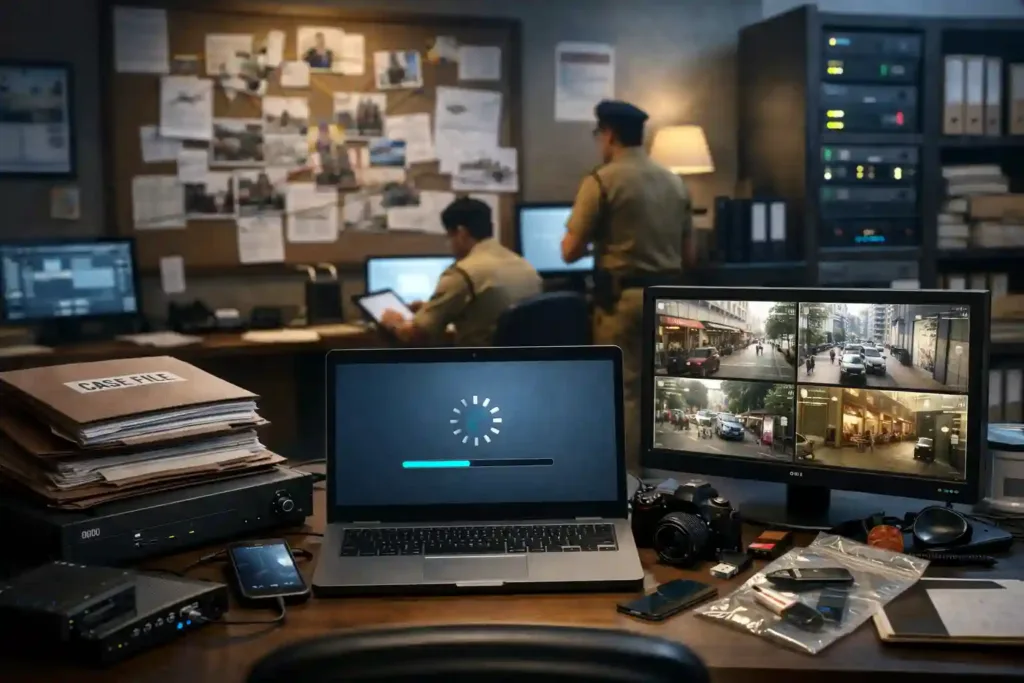
As evidence volumes grow, the gap between “information available” and “intelligence usable” becomes harder to ignore. And that gap is where investigations quietly slow down.
In modern policing, cases don’t stall because evidence is missing. They stall because intelligence isn’t usable yet.
Key Takeaways
Evidence Volume Isn’t the Bottleneck: Law enforcement agencies collect evidence faster than ever, but struggle to convert it into timely investigative clarity.
Most Delays Happen After the FIR: Investigations slow down during preparation, correlation, and validation—not during evidence collection.
Fragmented Systems Break Case Flow: When documents, audio, video, and records live in separate tools, understanding resets instead of evolving.
Manual Correlation Doesn’t Scale: Relying on memory and individual effort works only until case volumes, formats, and timelines increase.
Investigation Clarity Is the Real Goal: Clear, evolving case understanding matters more than faster reporting or more dashboards.
Intelligence-Led Policing Changes the Equation: When intelligence work happens inside the case, investigations progress naturally and consistently.
Usable Intelligence Strengthens Investigators: Judgment remains human, but context becomes systemic—reducing rework, delays, and dependency on individuals.
Where Investigations Actually Slow Down
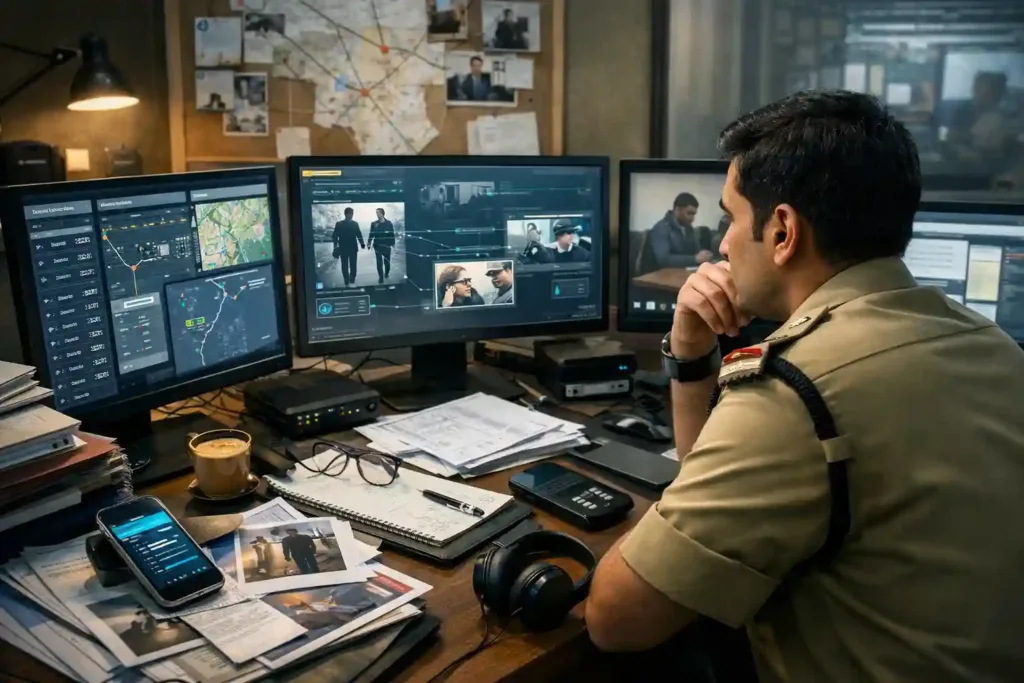
When delays occur in investigations, they are often assumed to happen at the front end: late reporting, delayed FIRs, or slow evidence collection.
In reality, most slowdowns begin after those steps are completed.
Evidence today often arrives faster than it ever has before. Digital records can be pulled quickly. CCTV footage can be accessed in hours, not days. Call data records can be requested and received at scale. Mobile devices are seized early in many cases.
What follows, however, is where momentum drops. Interpretation takes time. Correlation takes effort. Validation takes repetition.
Evidence does not arrive as a single narrative. It arrives fragmented across formats, teams, and systems. Each piece may be accurate on its own, but assembling them into a coherent case understanding requires manual work that is rarely visible to leadership.
Investigators often find themselves moving from system to system:
- Reviewing documents in one place,
- Listening to audio in another,
- Watching video elsewhere,
- Checking records that sit outside the active case workflow.
Much of this effort is spent preparing intelligence rather than applying it. Time goes into reading, listening, watching, cross-checking, and rewriting, before analysis can even begin.
This is not a failure of effort or intent. These delays are procedural, not negligent. They are structural, not individual. Most investigation delays happen quietly, after the evidence is already in custody.
The Fragmented Case Reality in Law Enforcement
The structure of most law enforcement systems reflects how technology was added over time, not how investigations actually unfold.
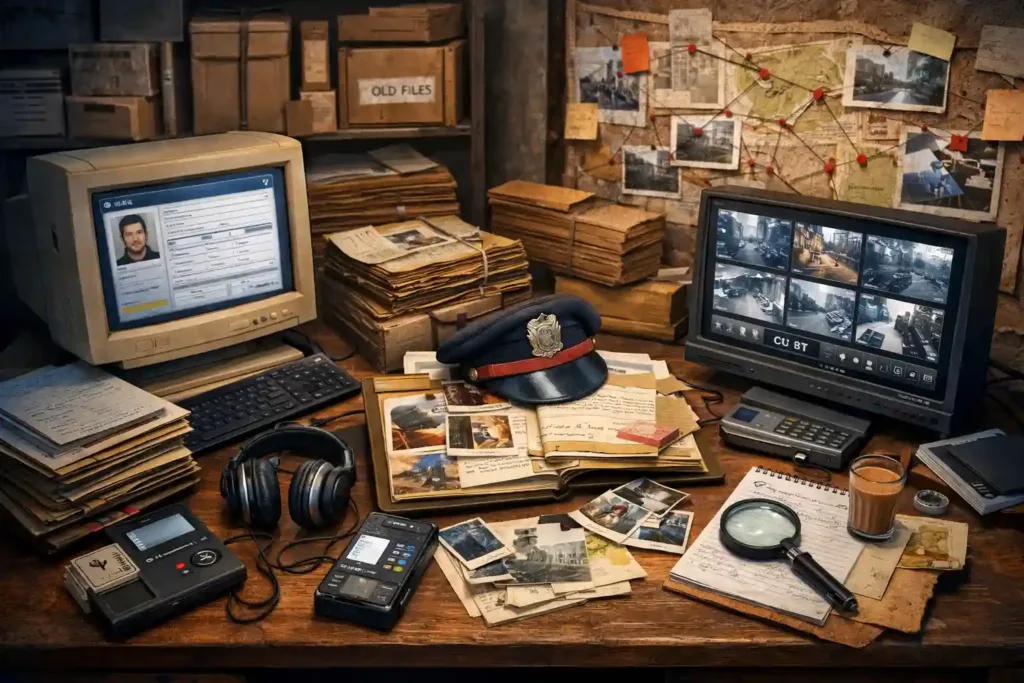
Typically, a modern police environment includes:
- Case files and reports managed in one system
- Audio recordings and call data handled in another
- CCTV footage reviewed through separate tools
- Legacy records and historical data stored offline or in archives
- Notes maintained manually or in informal formats
Each system is often competent at its specific task. The issue arises when a case spans all of them, which most serious investigations do.
When systems do not connect intelligence, people are forced to do it instead. Context lives in the minds of investigators. Case understanding becomes personal knowledge rather than institutional knowledge. When officers change roles, teams rotate, or cases are handed over, context must be rebuilt from scratch.
Briefings become exercises in reconstruction. Case summaries are rewritten repeatedly. Timelines are revalidated again and again. Not because new information has emerged, but because existing information has not been carried forward in a usable way. Law enforcement systems are organised around formats. Investigations are not.
Why Manual Case Correlation Doesn’t Scale in Policing
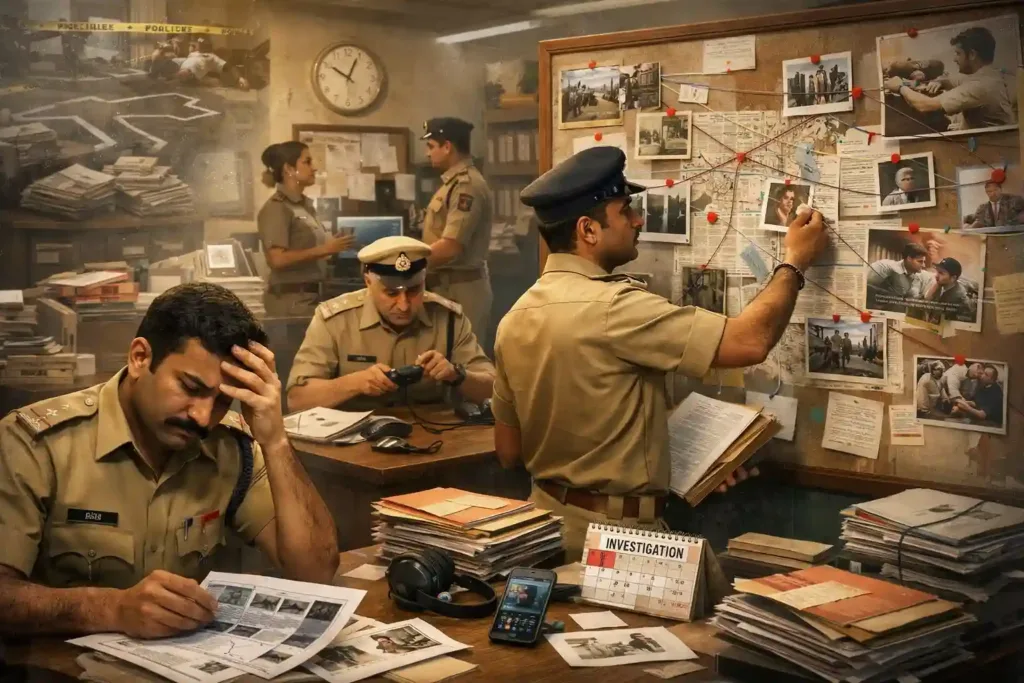
Policing has always relied on human judgment, experience, and intuition. Manual correlation, connecting people, events, locations, and timelines by careful review, has long been part of good investigative work.
And for a time, it works. But modern policing has changed the scale of the problem. Case volumes are higher. Evidence formats are richer. Timelines are tighter. Under these conditions, manual correlation becomes fragile.
Human memory becomes the weakest link. Investigators may review a piece of audio today and a related document days later, with no system to preserve that relationship. Important connections can be missed simply because the information was encountered at different times or in different contexts.
As pressure increases, so does the risk of inconsistency. Case narratives may vary depending on who prepared the briefing. Confirmation bias can creep in as familiar signals are prioritised over quieter ones. And when experienced officers move roles or retire, valuable context often leaves with them.
Manual correlation is effective, until policing becomes high-volume, multi-case, and time bound. Which it already is.
When Information is Available but Investigations Still Move Slowly
One of the most difficult aspects of investigation delays is that they rarely look like failure.
There are no system crashes. No missing files. No visible breakdowns. Instead, the cost shows up gradually. Case summaries are rewritten multiple times. Validation requests repeat across units. Updates are delayed with phrases like, “Let me check and revert.” Time stretches between evidence collection and charge-sheet readiness.
From the outside, everything appears functional. Information exists. Systems are running. Work is ongoing. Yet the investigation moves slower than it should.
These are law enforcement investigation delays that do not register as incidents, but as friction. Case management bottlenecks in policing that accumulate quietly, narrowing operational options over time. The investigation isn’t stuck. The intelligence is.
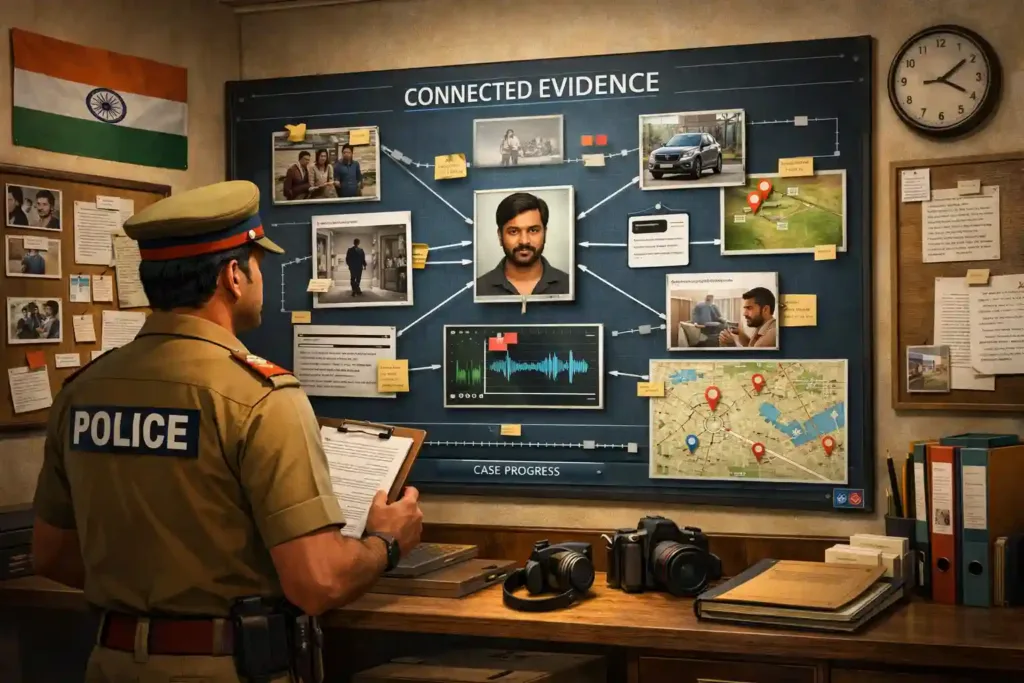
What “Investigation Clarity” Actually Means in Law Enforcement
In discussions around investigation efficiency, clarity is often confused with speed, tooling, or reporting output. But investigation clarity is not about typing faster reports, adding more dashboards, or collecting more data. Clarity is about understanding.
For law enforcement, investigation clarity means having a single, evolving view of a case, one where evidence across formats is connected, context is preserved, and understanding deepens over time instead of resetting with every review or handover.
It means that when an investigator opens a case, they are not starting from fragments. They are stepping into an intelligence picture that already reflects what is known, what is connected, and what still needs to be examined.
Clarity is achieved when:
- Evidence across documents, audio, video, records, and statements can be viewed in relation to one another
- Context survives time, personnel changes, and investigative phases
- The case narrative strengthens as new inputs arrive, rather than becoming harder to manage
Put simply:
Clarity is when investigators understand the case faster than the case evolves.
Without this clarity, speed alone does not help. Investigations may move, but understanding lags behind.
From Case Handling to Intelligence-led Policing
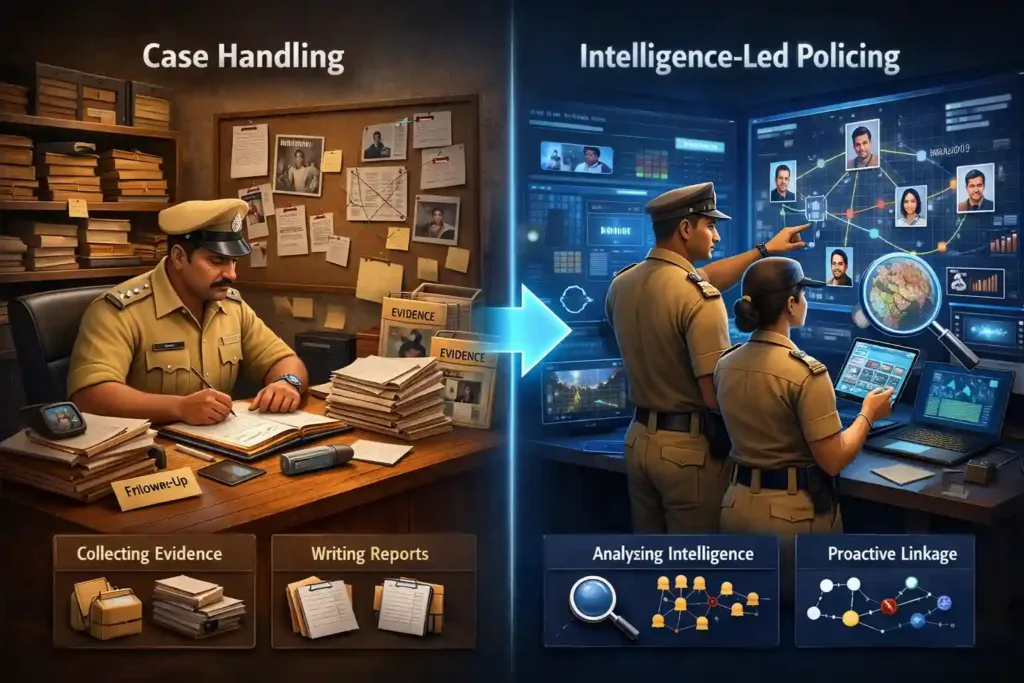
Traditionally, much of policing has been centred on case handling. Evidence is collected. Files are prepared. Reports are written. Follow-ups are conducted. This process is essential, but it is increasingly insufficient on its own.
As evidence volumes and formats grow, effective policing requires a shift toward intelligence-led investigation, where the focus moves from managing evidence to interpreting meaning.
This shift is subtle but powerful.
- From handling evidence → understanding intelligence
- From preparing reports → identifying patterns
- From reactive follow-ups → proactive linkage
In an intelligence-led approach, investigators are not just responding to what arrives next. They are continuously interpreting how new information changes the overall picture.
At a conceptual level, this requires:
- A unified case view that brings all evidence together
- The ability to work across multiple formats as part of one investigation
- Natural interaction with information, not rigid search workflows
- Context that carries forward as cases progress
When intelligence work happens inside the case, rather than after information is manually prepared, investigations begin to accelerate naturally. Not because officers rush, but because friction is removed.
What Changes When Intelligence Becomes Usable for Police Forces
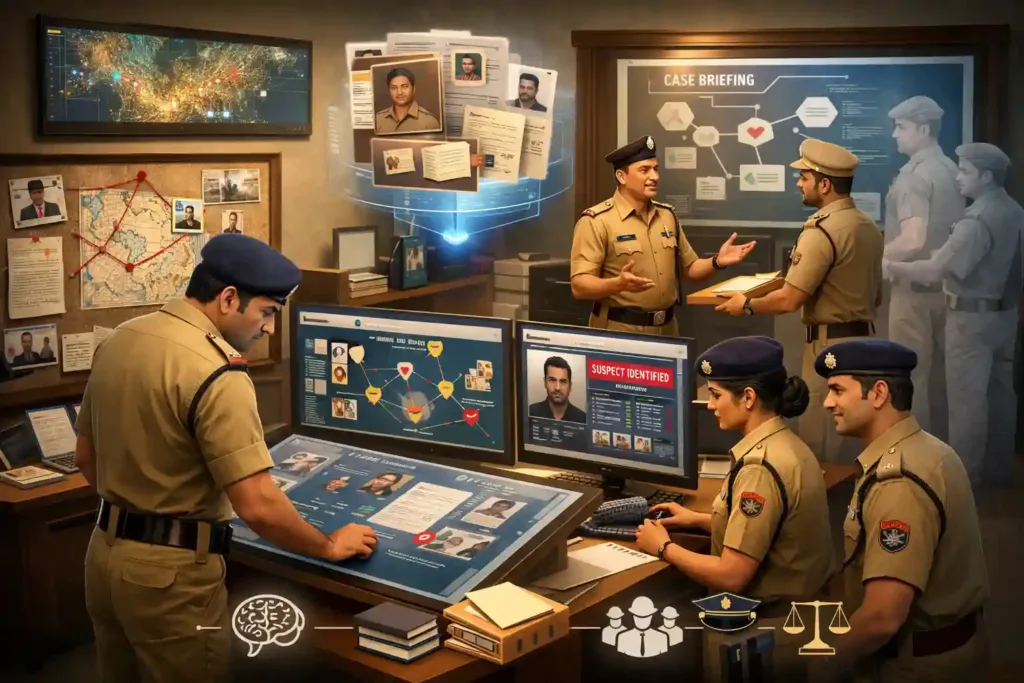
When intelligence becomes usable, the impact is felt across the organisation, not just at the analyst’s desk.
Investigators reach case understanding faster. Instead of spending time locating and reconciling information, they spend time interpreting it. Early clarity allows better prioritisation and more confident investigative direction.
Case narratives become stronger and more consistent. Briefings, updates, and charge-sheet preparation draw from the same evolving intelligence picture, reducing contradictions and rework.
Continuity improves across teams and time. When officers rotate roles or cases move between units, context does not disappear. New investigators inherit understanding, not just files.
Perhaps most importantly, dependency on individual memory reduces. Institutional knowledge begins to live within the investigation itself, rather than in informal notes or personal experience alone.
Throughout this shift, one principle remains constant: Judgment stays human. Authority stays institutional. Usable intelligence does not replace investigators. It strengthens them.
Why This Shift is Now Mission-critical for Law Enforcement
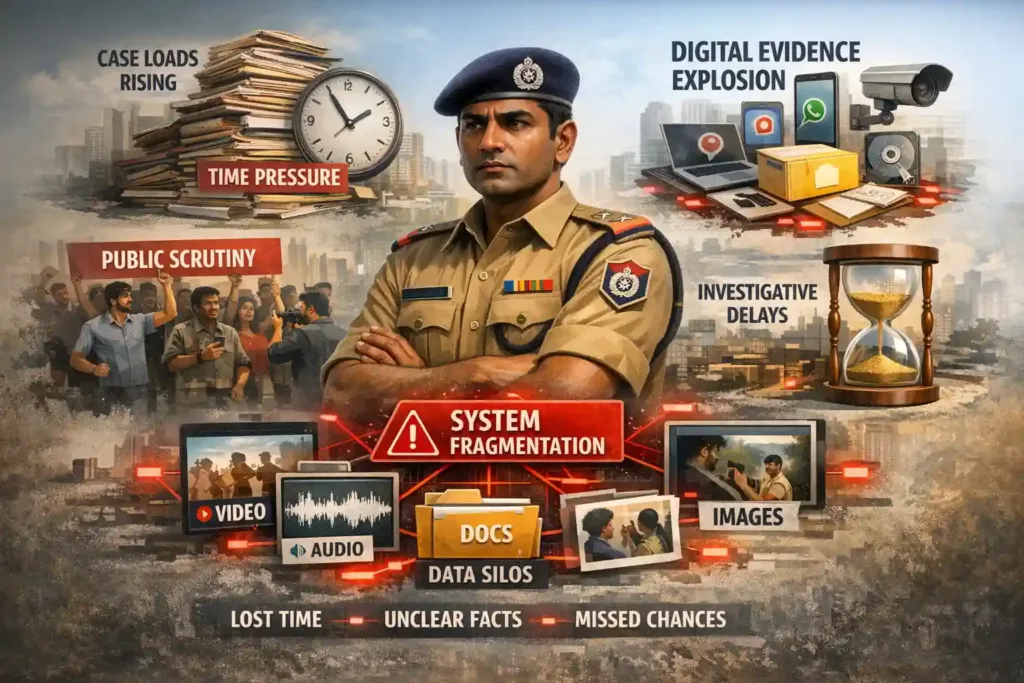
This transition is no longer optional or theoretical.
Police forces today face a convergence of pressures:
- Case volumes continue to increase
- Digital evidence is exploding across audio, video, imagery, and data records
- Operational timelines are compressing
- Public scrutiny and accountability are rising
Each additional format of evidence adds value, but also complexity. When those formats remain fragmented, the risk is not just inefficiency, but delayed understanding.
As evidence formats multiply, fragmentation becomes operational risk.
Delayed clarity can narrow options, slow resolution, and strain investigative confidence. In high-stakes cases, time lost to reconstruction cannot always be recovered.
Law enforcement agencies that continue to rely on manual correlation and siloed systems will find it increasingly difficult to keep pace with the reality of modern policing.
The Future of Policing is Not More Data – It’s Clearer Cases
Law enforcement agencies already have information. The differentiator is no longer access to data, but the ability to use it effectively under pressure.
Clear cases enable faster decisions.
Clear cases support stronger accountability.
Clear cases improve consistency across teams and outcomes.
The future of policing will not be defined by who collects the most evidence, but by who can transform evidence into understanding at the speed operations demand.
When intelligence becomes usable, investigations stop waiting. And when investigations stop waiting, policing becomes decisively effective.
FAQs – Frequently Asked Questions
1. What causes investigation delays in modern policing?
Most delays occur after evidence is collected, during manual preparation, correlation, and validation across fragmented systems.
2. Why isn’t more data helping investigations move faster?
Because data is spread across formats and tools, making it difficult to connect, interpret, and trust in time.
3. What does “investigation clarity” mean for police forces?
It means having a single, evolving understanding of a case where evidence across formats is connected and context is preserved.
4. Why is manual case correlation risky at scale?
It depends on memory, time, and individual expertise, making investigations fragile under pressure and high volumes.
5. How is intelligence-led policing different from traditional case handling?
It focuses on interpreting patterns and relationships within cases, rather than only managing evidence and reports.
6. Does investigation clarity mean automation replaces investigators?
No. It supports investigators by reducing friction, while judgment and authority remain human and institutional.
7. Why is this shift mission-critical now?
Because digital evidence is increasing, timelines are shrinking, and public accountability continues to rise.