Intelligence is Already There!
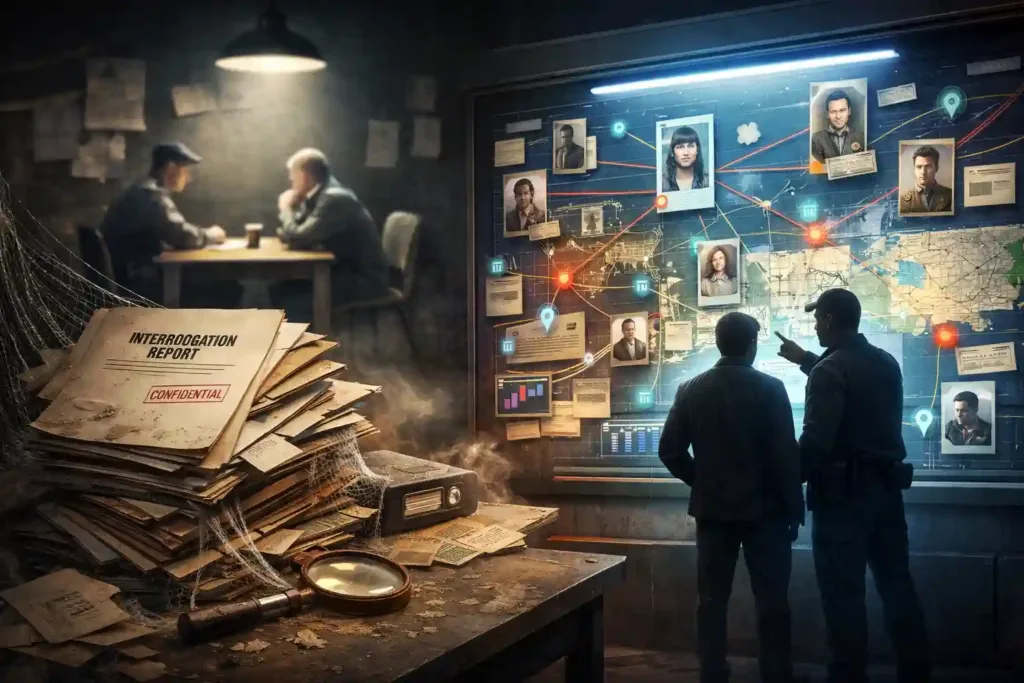
Every interrogation produces far more than answers to questions. It produces context, behaviour, relationships, timelines, contradictions, and clues that often never make it into final case summaries.
Across police stations and investigative units, thousands of interrogation reports are created every year. Each one captures hours of human interaction, observations, admissions, deflections, and associations. Yet once a case moves forward, these reports are frequently archived, filed away, or reduced to a few extracted points.

The irony is clear: Law enforcement agencies invest enormous effort in collecting intelligence, but far less in extracting intelligence from what they already possess.
Interrogation reports are treated primarily as procedural records, documents required to support investigations, rather than as intelligence assets that can continue to generate value long after the questioning ends.
This gap has consequences. Patterns remain hidden. Connections surface too late. Investigations restart instead of building on accumulated knowledge. What should compound over time instead remains fragmented.
Interrogation intelligence isn’t missing. It’s underutilised.
Key Takeaways
- Interrogation reports contain some of the richest contextual intelligence in investigations.
- Treating interrogation data as paperwork leads to missed links and repeated effort.
- Intelligence gains value when interrogation reports are linked, revisited, and contextualised over time.
- Viewing dossiers as living intelligence improves speed, depth, and investigative continuity.
- Preserving interrogation intelligence is essential for institutional memory in long-running cases.
- The future of investigations lies in better use of existing intelligence—not more data collection.
What Interrogation Reports Actually Contain (Beyond Statements)
To understand why interrogation reports are so valuable, it helps to look beyond their surface purpose.
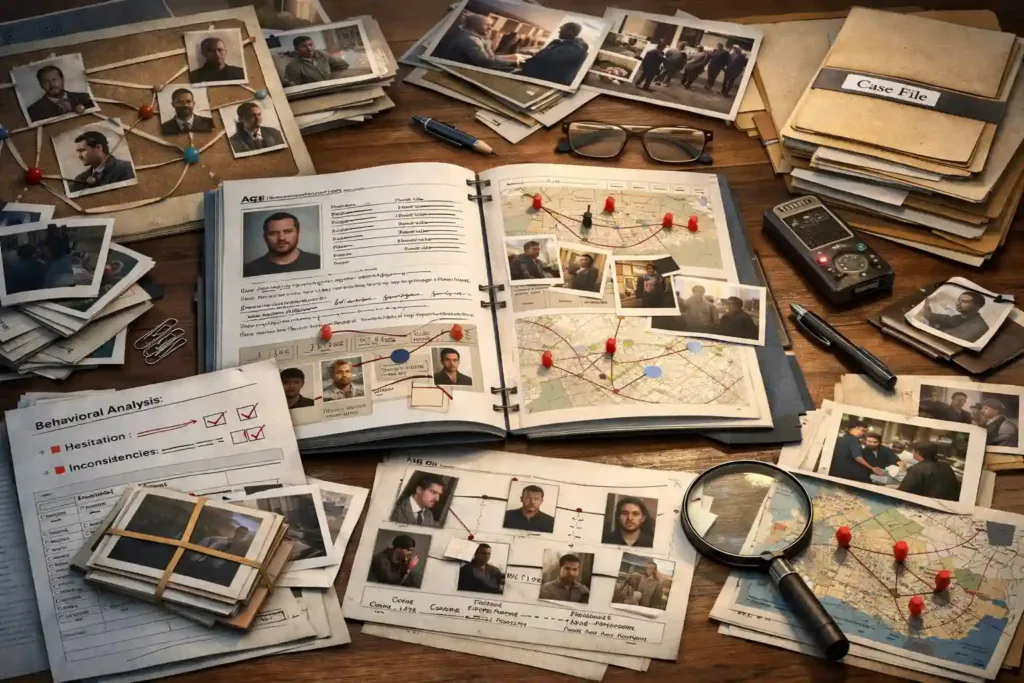
An interrogation report is not just a transcript of questions and answers. It often contains:
- Personal context: Background details, family ties, known associates, prior incidents
- Relational signals: Recurring names, shared locations, overlapping timelines
- Behavioural indicators: Hesitation, inconsistencies, changes in narrative
- Event sequencing: Who met whom, when, where, and under what circumstances
- Cross-case references: Mentions of incidents or individuals from other investigations
Individually, these details may seem routine. Collectively, they form one of the richest contextual datasets in policing.
Unlike FIRs or case summaries, interrogation reports capture nuance. They preserve how information was revealed, not just what was recorded. They reflect human behaviour in ways structured forms often cannot.
In many investigations, interrogation reports contain more usable context than any single document in the case file. Yet this depth is rarely revisited once the immediate investigative need passes.
Why Interrogation Intelligence Gets Underutilised
The underuse of interrogation reports is not a failure of intent. It is the result of systemic constraints that shape how investigations are conducted.
Volume and Fragmentation
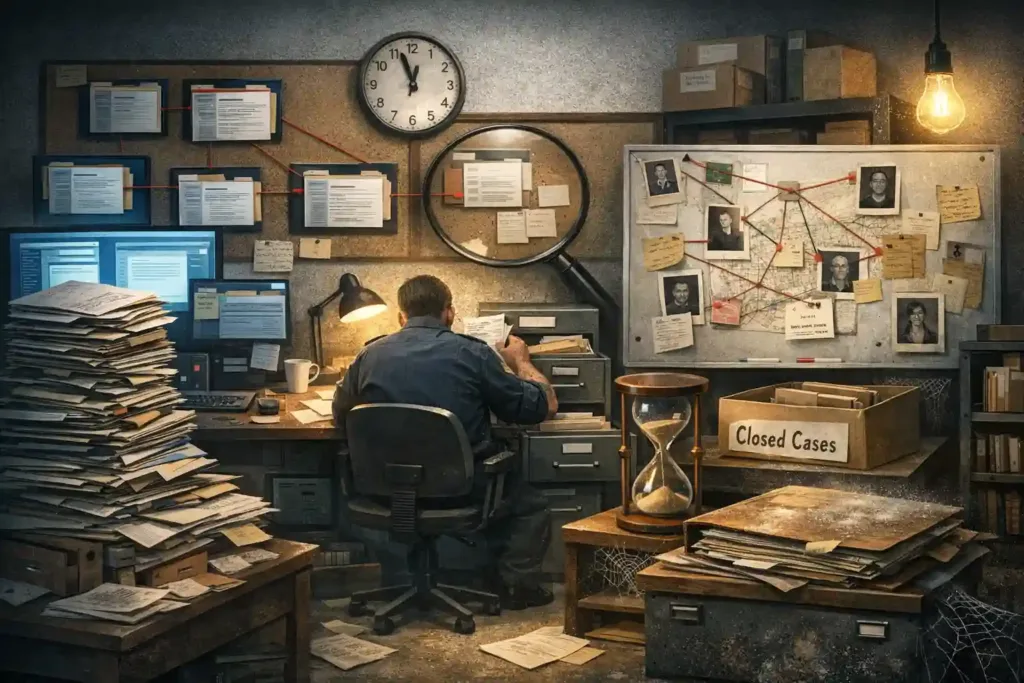
Modern police stations handle large volumes of interrogations across multiple cases, units, and jurisdictions. Over time, interrogation reports accumulate rapidly, often spread across physical files, digital folders, or isolated systems.
Without a unified view, intelligence becomes fragmented. Insights remain locked within individual dossiers instead of being visible across investigations.
What should connect cases instead sits in silos.
Manual, Time-consuming Access
Retrieving interrogation information is often slow and effort-intensive. Officers rely on memory, paper trails, or manual searches to locate relevant reports.
During active investigations, this delay matters. Intelligence that arrives late often arrives too late to influence decisions.
As a result, interrogation data is frequently consulted only when absolutely necessary, rather than continuously informing investigative direction.
Case-Centric, Not Intelligence-centric Thinking
Interrogation reports are usually treated as case artefacts, not as reusable intelligence assets.
Once a case is closed or transferred, its interrogation data is rarely revisited. New investigations start fresh, even when relevant insights already exist elsewhere.
This case-by-case approach prevents intelligence from compounding over time. Each investigation benefits only from what it generates, not from what the organisation already knows.
When interrogation intelligence is difficult to access, connect, or reuse, investigations reset instead of evolving. Knowledge depends on individuals rather than systems. And valuable insights remain buried in documents that were never designed to surface them.
The Investigative Cost of Treating Interrogation Reports as Paperwork
When interrogation reports are treated purely as procedural paperwork, the cost is not administrative, it’s investigative.
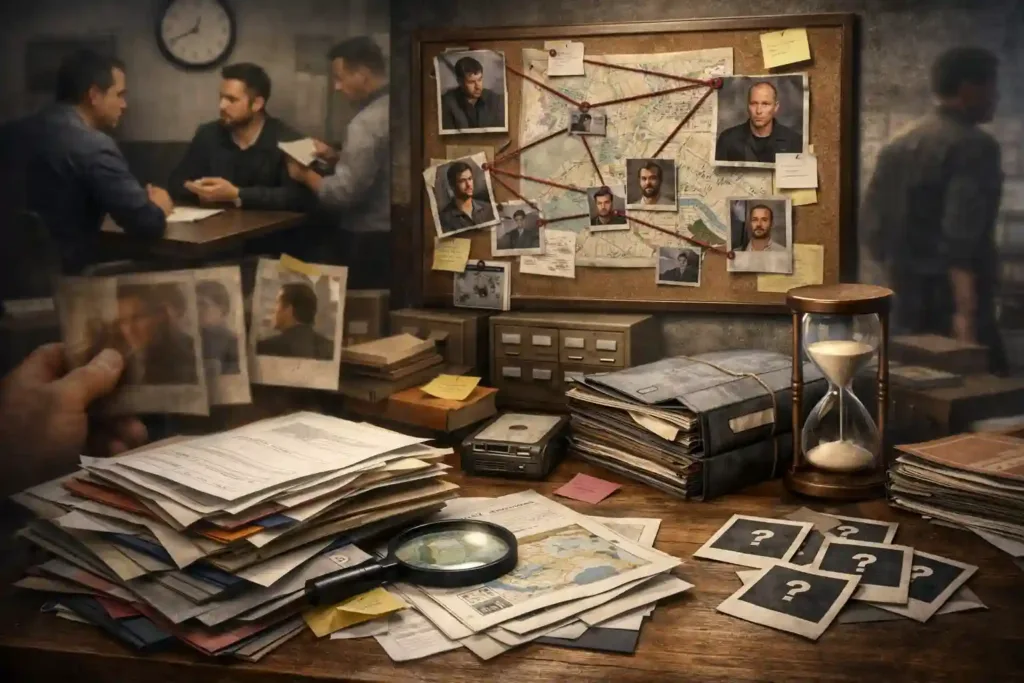
One of the most immediate consequences is missed links between suspects. Names, locations, or behaviours that appear across multiple interrogations often remain disconnected simply because reports live in isolation. What could reveal a broader network instead looks like unrelated fragments.
This fragmentation also leads to repeated questioning across cases. Officers unknowingly revisit the same individuals, ask the same questions, and retrace the same ground, wasting time and increasing fatigue for both investigators and subjects.
Over time, the identification of criminal networks is delayed. Patterns that should emerge early, shared associates, recurring methods, overlapping timelines, surface only after significant effort, or not at all. By the time connections are recognised, opportunities for early intervention may already be lost.
Long-running investigations suffer even more. As cases stretch across months or years, context erodes. Subtle details captured during early interrogations fade from memory, especially when personnel change or cases move between units. What remains is often a reduced version of the original intelligence.
This creates a heavy dependency on individual officers’ memory. Investigative continuity relies on who remembers what, rather than on what the organisation knows. When that memory moves on, retires, or transfers, valuable intelligence often moves with it.
The underlying issue is structural: When interrogation intelligence isn’t reusable, investigations reset instead of compound.
Interrogation Reports as Living Intelligence, Not Static Records
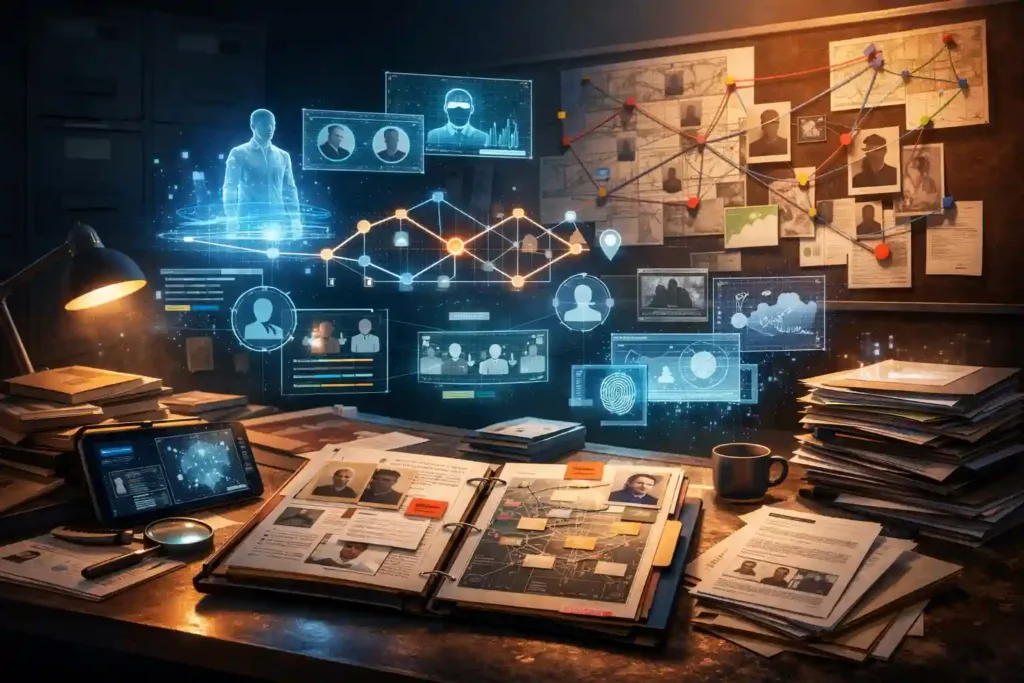
To unlock their full value, interrogation reports must be viewed differently, not as static records created for a single moment, but as living intelligence assets.
Intelligence is not created once. It evolves.
An interrogation report that seems routine today may become critical months later when:
- A new suspect emerges
- A separate case introduces familiar names
- Timelines begin to overlap
- Patterns only visible at scale start to form
Interrogation data gains value when it can be:
- Linked across people, cases, and events
- Compared against new information
- Revisited as investigations evolve
- Contextualised over time, not frozen at the moment of creation
Seen this way, dossiers are not endpoints. They are repositories of evolving intelligence, capable of contributing insight far beyond the case they were originally created for.
This shift in perspective is critical. When interrogation reports are allowed to “live” within an investigative ecosystem, they stop being archival material and start becoming active contributors to future investigations.
How Structured Dossier Intelligence Changes Investigations
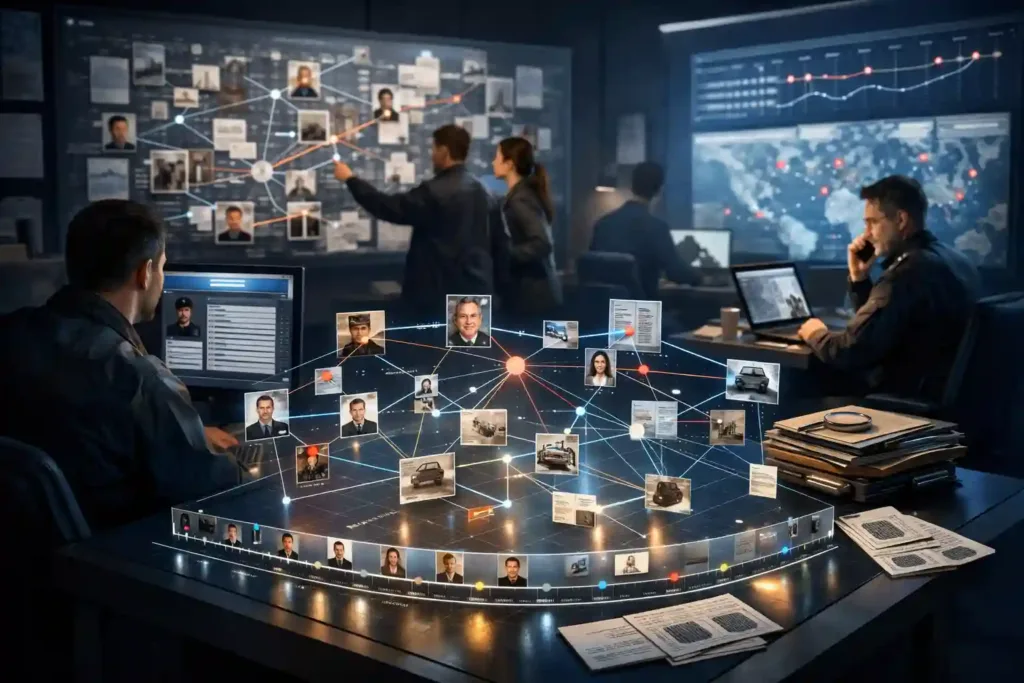
When interrogation reports are structured, connected, and treated as intelligence, the impact on investigations is immediate and tangible.
Investigators can build faster suspect profiles, drawing from multiple interrogations instead of isolated encounters. Backgrounds become clearer. Associations become easier to trace. Context that once took days to assemble emerges quickly.
Timelines also improve. Events across different cases can be viewed in sequence, helping investigators understand how activities unfold over time, not just within a single file.
One of the most powerful shifts is early visibility of recurring names or patterns. Repetition, often invisible in manual systems, becomes a signal rather than an afterthought. What once required hindsight can now inform foresight.
Structured intelligence also enables better coordination across units. Teams no longer operate in silos, unknowingly working on related threads. Shared visibility supports alignment without compromising investigative autonomy.
Finally, duplication drops. Effort is no longer wasted rediscovering information that already exists. Investigations move forward with continuity rather than repetition.
The result is not just efficiency, it’s depth, speed, and consistency. Investigations build on what is known instead of starting over.
The Role of Link, Timeline, and Profile Context in Modern Investigations
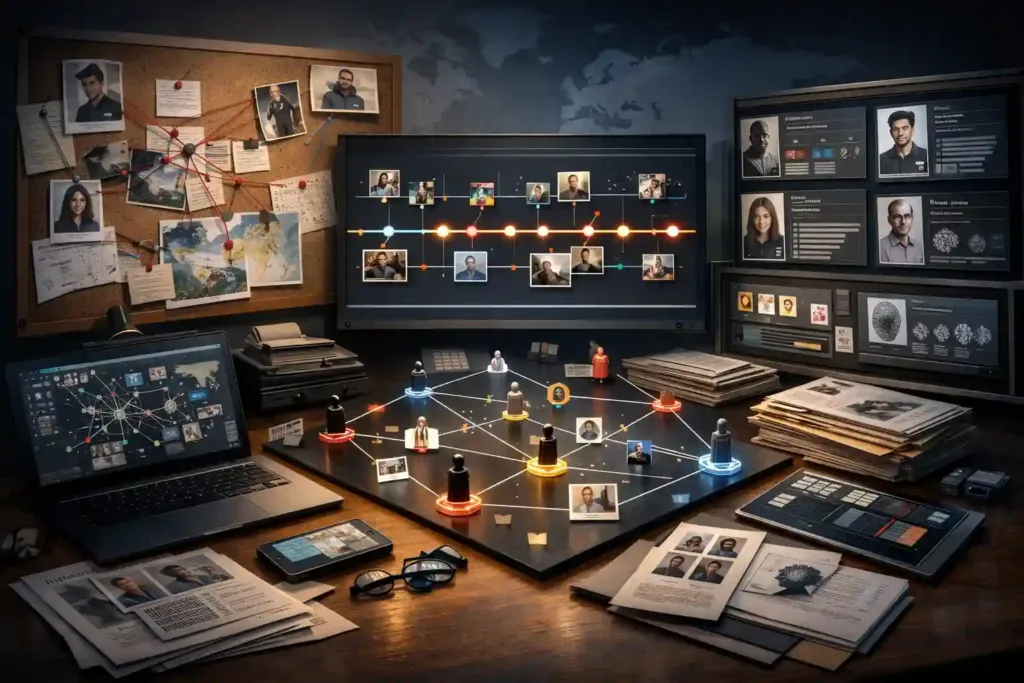
Modern investigations rarely hinge on a single fact. They unfold across people, places, and time, often revealing their true shape only when information is viewed in relation.
Isolated facts can mislead. A name in one report, a location in another, a date in a third, on their own, they appear routine. But when connected, they can reveal patterns that fundamentally change an investigation’s direction.
This is why connections matter more than isolated facts. Relationships between individuals, recurring associations, and shared touchpoints often expose organised activity that would otherwise remain hidden.
Sequence matters just as much. In complex cases, understanding what happened first, what followed, and what changed over time can clarify intent, coordination, and escalation. Without a clear timeline, investigations risk focusing on symptoms rather than causes.
Fragmented profiles pose another challenge. When information about an individual is scattered across multiple dossiers and cases, repeat behaviour is harder to spot. Patterns of involvement, recurring methods, or evolving roles emerge slowly, if at all.
The core principle is simple:
Intelligence emerges when interrogation data is seen in relation, not isolation.
When links, timelines, and profiles are viewed together, interrogation reports stop being static documents and start functioning as contextual intelligence.
Institutional Memory: What Happens When Officers Change but Cases Don’t
Investigations often outlast the people who start them.
Transfers, promotions, retirements, and reassignments are a normal part of policing. But when investigative knowledge exists primarily in individuals’ heads, continuity suffers.
As officers move on, context moves with them. New teams inherit files without the nuanced understanding built during earlier stages, why certain leads were pursued, which inconsistencies mattered, or how relationships evolved.
This often forces new officers to restart analysis. Time is spent rediscovering information that already exists, while subtle historical intelligence risks being overlooked entirely.
The longer and more complex a case becomes, the greater this risk. Without continuity, investigations lose depth and momentum.
Interrogation reports, when properly preserved and connected, form the foundation of institutional investigative memory. They retain context beyond individual tenure, ensuring that intelligence survives personnel change.
For long-running or recurring cases, this continuity is not optional. It is essential.
From Underutilised Data to Investigative Advantage

Interrogation reports already exist in abundance across law enforcement agencies. The challenge is not collecting more data, it is using existing intelligence more effectively.
When interrogation data is fragmented, difficult to access, or treated as archival paperwork, its value remains locked. When it is structured, connected, and preserved, it becomes a strategic asset.
Agencies that unlock this layer gain clear advantages:
- Speed, through faster access to relevant intelligence
- Depth, through richer context and pattern recognition
- Consistency, through continuity across cases and personnel
This shift does not require new sources or more reporting. It requires a change in how existing information is perceived and utilised.
The future of investigations is not about collecting more data, but about turning what already exists into intelligence that compounds over time.
To conclude: Intelligence Hidden in Plain Sight
Every investigation already contains intelligence powerful enough to change its outcome. The challenge is not the absence of data, but the way interrogation reports are treated once they are created.
When interrogation reports remain fragmented, static, and difficult to reuse, investigations reset instead of building on what is already known. Links are missed, timelines blur, and institutional knowledge fades as personnel change.
But when interrogation data is viewed as living intelligence: connected, revisited, and preserved, it becomes a force multiplier. Investigations gain speed without losing depth. Context survives beyond individual cases. Knowledge compounds rather than disappears.
The most valuable intelligence is often not newly collected. It’s already there, waiting to be connected.
If investigations are expected to move faster and go deeper, it’s time to rethink how interrogation intelligence is preserved, connected, and used.

FAQs – Frequently Asked Questions
1. Why are interrogation reports considered intelligence assets?
Interrogation reports capture context, behaviour, relationships, and timelines that often go beyond what structured case records provide, making them valuable sources of investigative intelligence.
2. Why do interrogation reports often go underutilised?
They are frequently fragmented across cases, difficult to search, and treated as case-specific paperwork rather than reusable intelligence.
3. How does fragmented interrogation data affect investigations?
Fragmentation leads to missed connections, repeated questioning, delayed identification of networks, and loss of context in long-running cases.
4. What does it mean to treat interrogation reports as “living intelligence”?
It means allowing interrogation data to be linked, revisited, and contextualised over time so it can inform future investigations, not just the case it was created for.
5. Why is institutional memory important in investigations?
Investigations often outlast individual officers. Preserving interrogation intelligence ensures continuity, prevents loss of context, and supports consistent decision-making across personnel changes.
6. Do agencies need to collect more data to improve investigations?
Not necessarily. Many agencies already possess extensive interrogation data. The key challenge is structuring and using that intelligence more effectively.