What Is Threat Hunting Software? A Complete Guide for Modern Cyber Defence
It usually doesn’t start with a flashy alert. Most cyberattacks begin quietly. An unusual login, a small burst of outbound traffic, a strange process running only once. Nothing loud enough to trigger a traditional SIEM alert. Nothing obvious enough for an EDR tool to call “malicious.”
And that’s precisely the problem.
Today’s adversaries, whether cybercriminal groups, financially motivated attackers, or advanced persistent threats (APTs), have become exceptionally good at not getting caught in the early stages. They rely heavily on:
- Stealthy lateral movement across the network
- Living-off-the-land techniques that blend with normal activity
- Multi-stage intrusions spread over days or weeks
- Minimal indicators that don’t match known signatures
By the time a conventional monitoring tool finally raises an alert, the attacker may have already escalated privileges, moved across systems, or exfiltrated data.

Key Takeaways
- Threat hunting is proactive, aiming to detect stealthy threats before they cause damage.
- Threat hunting software helps SOC teams uncover anomalies and behavioural signals that traditional tools miss.
- It unifies log ingestion, behavioural analytics, threat intel, correlation, and AI for early detection.
- AI enhances hunting by enabling anomaly detection, hypothesis creation, narrative clustering, and noise reduction.
- A mature threat hunting program reduces dwell time, improves SOC efficiency, and enhances cyber resilience.
- Organisations across defence, critical infrastructure, BFSI, enterprise IT, and government rely on threat hunting for modern security.
The Shift From Reactive to Proactive Cyber Defence
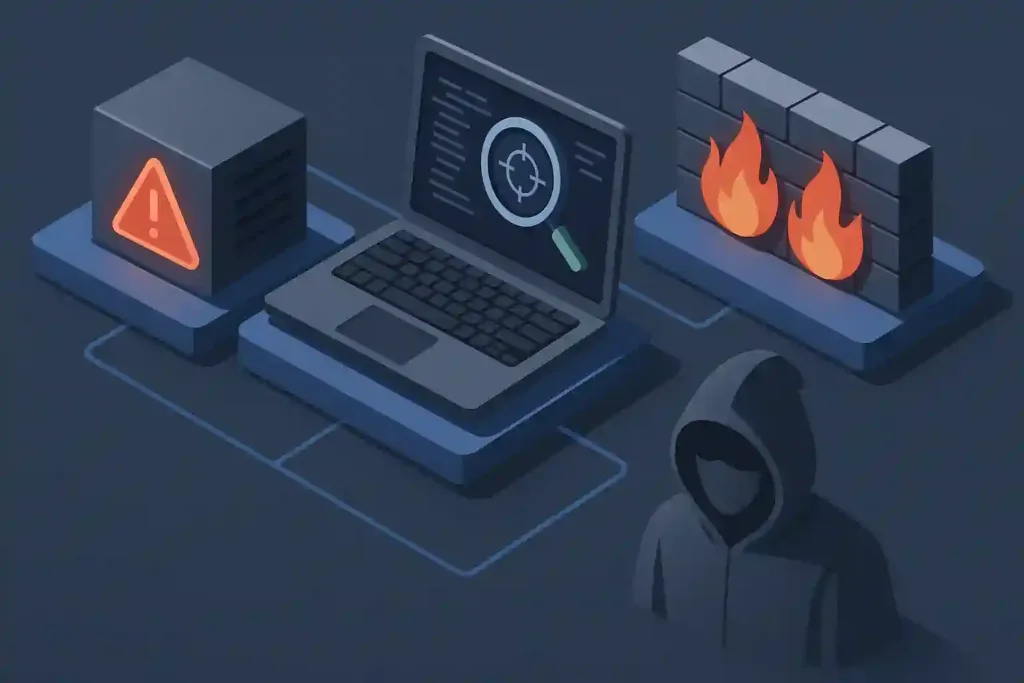
For more than a decade, security operations centers (SOCs) relied heavily on reactive mechanisms:
- SIEMs waiting for rule-based alerts
- EDRs detecting known malicious patterns
- Firewalls blocking recognized threats
These tools remain essential, but they share a limitation: they trigger only when something is already known, detectable, or suspicious enough.
Modern attackers know this. They intentionally operate below alert thresholds.
Why Traditional Tools Miss Early Intrusions
Traditional detection systems often struggle with:
- Unknown or emerging attack techniques
- “Low-and-slow” infiltration methods
- Subtle behavioural anomalies that look like normal traffic
- Credential-based attacks that appear legitimate
- Internal threats or compromised insiders
This visibility gap has made dwell time, the duration attackers remain undetected, a global concern across enterprises, government agencies, and critical infrastructure environments.
Where Threat Hunting Changes the Game
Threat hunting is the evolution of cyber defence. It shifts teams from “waiting for alerts” to actively searching for hidden threats before they cause damage.
Threat hunting software enables this by:
- Analysing vast volumes of logs and telemetry
- Correlating patterns across networks, endpoints, and authentication logs
- Detecting deviations from normal behaviour
- Identifying unknown threats and early-stage signals
- Giving analysts a structured way to test hypotheses and investigate anomalies
For SOC teams, CERTs, law enforcement cyber divisions, and defence intelligence units, this proactive capability has become essential, not optional.
What is Threat Hunting – And How Threat Hunting Software Amplifies It

Before an attacker triggers an alert… before malware reaches an endpoint… before credentials are even noticed as stolen, there is a silent phase. A phase where the adversary is active, but invisible.
Threat hunting is the discipline designed specifically to uncover that silence.
A Clear Definition
Threat hunting is a proactive security practice where analysts actively search for hidden threats inside an organisation’s network, threats that have bypassed traditional security tools or have not yet triggered any alert.
Unlike reactive investigation (which starts after a security alert fires), threat hunting begins with the assumption that:
“The adversary is already inside, we just haven’t seen them yet.”
This mindset shift is what makes threat hunting so critical in modern cybersecurity, especially as attackers increasingly leverage:
- Zero-day exploits
- Fileless malware
- Living-off-the-land techniques (LOTL)
- Stolen identities and privilege escalation
- Long-term persistence tactics
Proactive vs Reactive: The Core Difference
| Reactive Security (Traditional SOC) | Proactive Security (Threat Hunting) |
| Waits for alerts | Searches for anomalies even without alerts |
| Driven by SIEM rules | Driven by hypotheses and behavioural patterns |
| Responds after impact | Identifies threats before impact |
| Limited to known signatures | Detects unknown, stealthy, and evolving attacks |
As organisations face sophisticated adversaries: APT groups, ransomware operators, insider threats, reactive models alone no longer suffice.
Manual Threat Hunting vs Automated Threat Hunting
Traditionally, threat hunting was a manual, analyst-driven skill that required deep expertise in logs, network behaviour, endpoints, and attacker techniques.
However, the scale of today’s digital environments makes purely manual hunting unsustainable.
Modern threat hunting now blends:
- Manual expertise: Interpreting attacker behavior, forming hypotheses, validating patterns.
- Automated intelligence (threat hunting software): Analysing massive datasets, correlating signals, running continuous hunts 24/7.
Automation doesn’t replace hunters, it supercharges their abilities.
So, What Exactly is Threat Hunting Software?
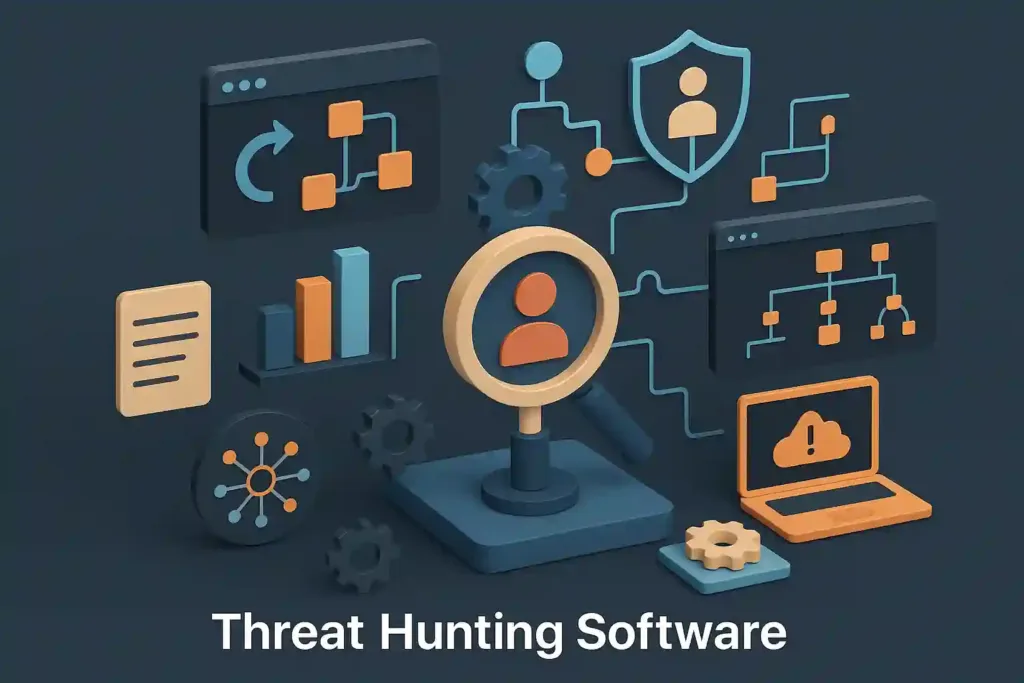
Threat hunting software is a specialised security platform that enables analysts to proactively detect advanced threats by:
- Aggregating and analysing large volumes of data (endpoint, network, identity, cloud, logs)
- Running behavioural analytics and anomaly detection
- Mapping events to attacker frameworks like MITRE ATT&CK
- Correlating signals across systems to surface hidden intrusion patterns
- Automating hunts to reduce human effort
Where traditional security tools react to alerts, threat hunting software orchestrates proactive visibility across the organisation.
Why Organisations Use Threat Hunting Software
Because adversaries today are:
- Faster
- More distributed
- Better funded
- Highly adaptive
A single stealthy foothold can stay hidden for weeks or months (known as dwell time). Threat hunting software shortens this dramatically by:
- Identifying anomalies early
- Detecting lateral movement
- Spotting command-and-control (C2) patterns
- Revealing privilege escalation attempts
- Catching suspicious behavioural deviations
For SOC teams, CERTs, national security units, and defence agencies, the software becomes a force multiplier, enabling them to:
- Run complex queries instantly
- Explore billions of events
- Detect patterns humans alone may miss
- Prioritise threats more accurately
- Investigate faster
How It Fits Into SOC Environments
Threat hunting software typically integrates with:
- SIEM systems
- EDR/XDR solutions
- Network telemetry sensors
- Cloud security tools
- Threat intelligence feeds
Once integrated, the platform acts as the “intelligence layer” inside the SOC, providing enriched signals, automated hunts, contextual insights, and behavioural correlation.
Impact on Dwell Time and Detection Quality
The primary metric threat hunting improves is dwell time, which is the duration an attacker remains inside an environment undetected.
With proactive hunting + software: Detection shifts much earlier into the intrusion cycle, often within hours or a few days.
Reducing dwell time directly reduces:
- Financial impact
- Data loss
- Operational downtime
- Propagation of the attack
- Ransomware stages
So basically, Threat hunting software transforms the SOC from reactive firefighting to proactive pursuit.
How Threat Hunting Software Works
Threat hunting software operates like an investigative engine that continuously observes, analyses, correlates, and enriches data to reveal threats that traditional tools miss.
To understand how it works, it’s helpful to break the process into five functional layers, from raw data to analyst-ready intelligence.
1. Data Ingestion & Fusion
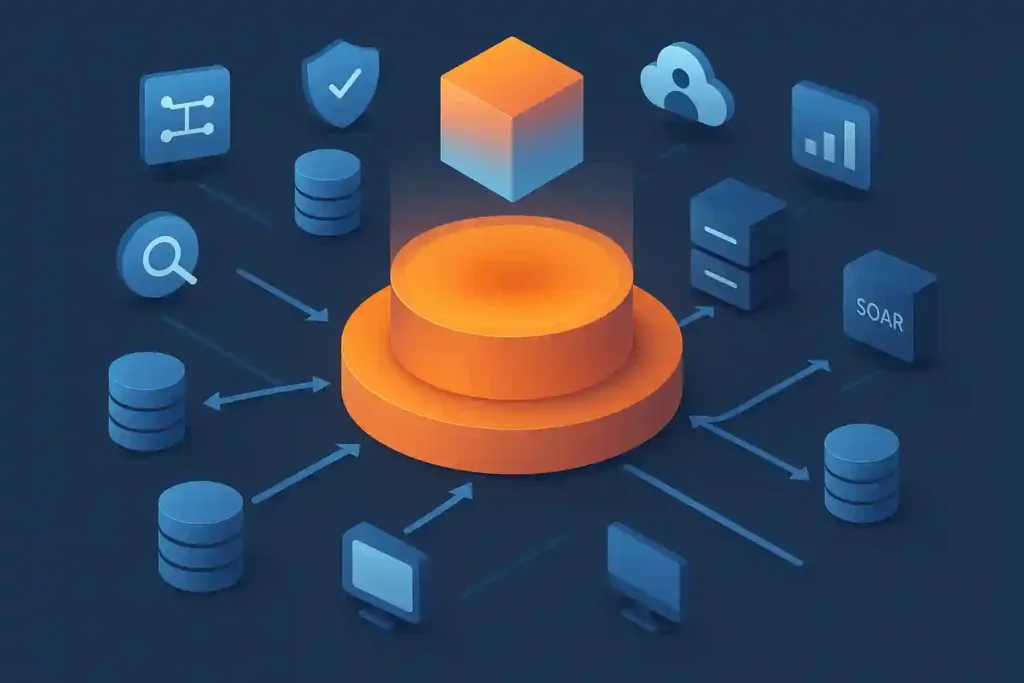
Threat hunting is only as strong as the visibility beneath it. This is why threat hunting platforms begin with massive, multi-source data ingestion.
What Data Gets Ingested?
A comprehensive platform typically collects:
- Network telemetry logs: NetFlow, firewall logs, IDS/IPS events
- Endpoint activity: process creation, registry changes, command-line activity
- DNS logs: suspicious domain queries, DGAs, tunneling patterns
- Proxy logs: outbound traffic, unusual destinations, abnormal volumes
- Authentication logs: failed login sequences, privilege escalations
- Cloud logs: IAM activity, API calls, workload access
- Application logs: server errors, anomalous requests
This broad coverage allows the system to analyse behaviour across every layer of the environment.
Integrations With Existing SOC Tools
Most organisations already use SIEMs, EDRs, and SOAR systems. Threat hunting software doesn’t replace them, it integrates with them.
Common integrations include:
- SIEM → for normalised log ingestion
- EDR/XDR → for deep endpoint telemetry
- SOAR → for automated response runbooks
- Analytics platforms → for advanced queries and data science models
The goal: fusion of all telemetry into a unified investigative surface.
2. Detection Logic
How the System Identifies “Suspicious” from “Normal”

Once data enters the platform, its detection engines begin working. Threat hunting doesn’t rely on one logic type, it layers several:
A. Indicators of Compromise (IOCs)
These are known “bad” artifacts:
- Malicious IPs
- Hashes of known malware
- Banned domains
- C2 servers
IOC-based detection is fast, but limited to known threats.
B. Indicators of Behaviour (IOBs)
Modern adversaries change infrastructure frequently, but their behaviour is harder to hide.
IOBs look at:
- Unusual process chains
- Rare parent-child relationships
- Unexpected authentication flows
- Suspicious network paths
- Fileless attack patterns
These behavioural indicators help detect unknown or evolving threats.
C. MITRE ATT&CK Mapping
Threat hunting platforms map activity against the MITRE ATT&CK framework, helping analysts see:
- Which attacker techniques are triggered
- How far the intrusion has progressed
- Which stage the adversary is currently in
This gives structure to the investigation.
D. Behavioural Analytics & Statistical Models
These models look for deviations from baseline:
- A user logging in at an impossible time
- A server communicating with regions it never has
- A process spawning a script it has no business running
Anomalies don’t equal threats, but they spark hypotheses for the hunter.
3. Automated Correlation
Connecting Dots That Humans Can’t See Manually

The true power of threat hunting software lies in correlation, linking events across data sources to form a complete picture.
Cross-Log Pattern Identification
Example: A suspicious login → followed by odd process creation → followed by an outbound connection to an unknown IP.
Individually, none of these may trigger alerts. But when correlated, they reveal a multi-step intrusion.
Linking Events Across Devices
The software traces:
- Auth logs across AD servers
- Lateral movement across endpoints
- Traffic patterns across network devices
This helps detect techniques like:
- Pass-the-Hash
- Lateral RDP movement
- Privilege escalation sequences
- Beaconing behaviour of C2 malware
Finding Lateral Movement
Adversaries rarely stay in one place. Correlation engines trace pivot paths to reveal:
- Where the attacker came from
- Where they moved
- What credentials they used
- Which systems they touched
This is how threat hunters reconstruct intrusions before impact.
4. Threat Intelligence Enrichment
Turning Raw Events Into Contextual Signals
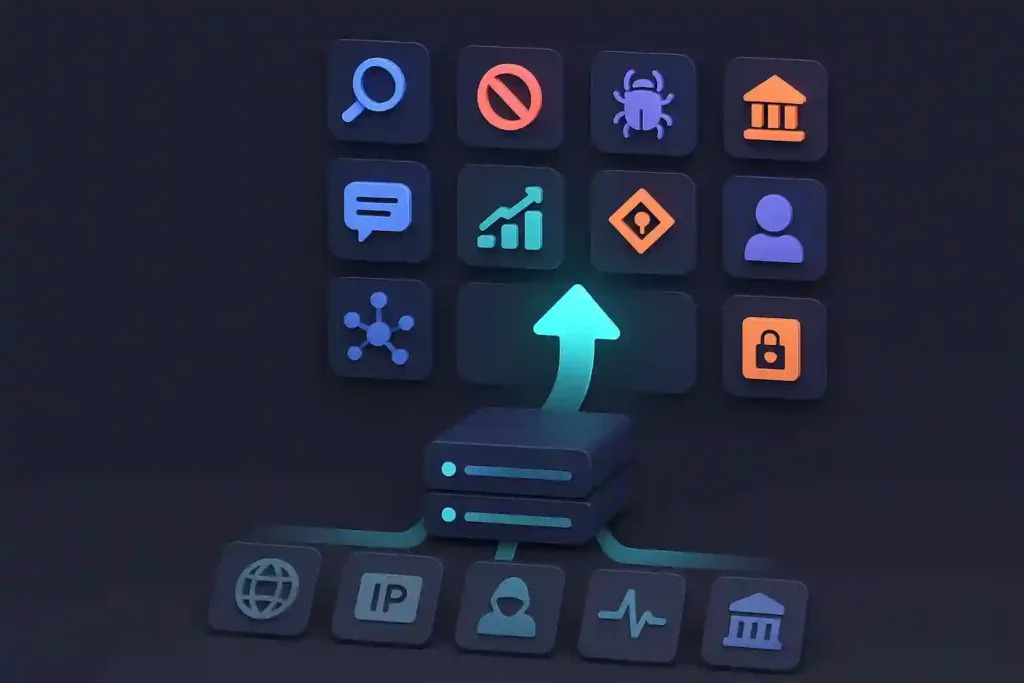
Threat hunting thrives on context. Without context, an event is just noise. Modern platforms enrich events with:
Open-Source Intelligence (OSINT)
- Public deny-lists
- Malware databases
- Security research feeds
Commercial Threat Intelligence
- Premium threat actor profiles
- C2 infrastructure trackers
- Ransomware group behaviour datasets
Internal Intelligence (Agency-Specific)
This is often the most valuable:
- Past incidents
- Local adversary TTPs
- High-risk assets
- Sector-specific threats
By enriching events, the platform can answer critical questions like:
- “Is this domain part of a known threat campaign?”
- “Has this IP been seen attacking government networks before?”
- “Does this behaviour match an APT’s playbook?”
This improves accuracy and drastically reduces false positives.
5. Analyst Workflow

Where Automation Ends and Human Expertise Begins
Threat hunting software doesn’t remove analysts, it enables them.
Automated Hypotheses
Instead of starting from scratch, the platform suggests:
- Potential attack chains
- Possible lateral movement paths
- Suspicious patterns worth investigating
This dramatically accelerates hunts.
Investigation Dashboards
Analysts get a unified workspace showing:
- Timeline of events
- Entities involved (user, device, IP, process)
- Attack stages
- Risk scores
Everything is accessible in one panel.
Visual Link Analysis
Graph-based visualisation helps analysts see:
- Relationships between events
- Suspicious clusters
- Hidden pivots
- Anomalous connections
This is especially useful for SOC teams dealing with large datasets.
Case-Building & Reporting
Once an investigation concludes, analysts can:
- Document findings
- Attach evidence
- Generate final reports
- Tag for future hunts
This helps build organisational memory, critical for long-term threat maturity.
Key Features of Modern Threat Hunting Software
When security teams search for threat hunting software, they’re usually comparing tools, assessing capabilities, or trying to understand what an enterprise-grade solution should include.
1. AI-Based Anomaly Detection
Detect What Traditional Tools Miss
AI models help identify behavioural deviations by learning:
- Normal workflow patterns
- Typical user/device activity
- Legitimate communication paths
- Expected application usage
When behaviour diverges, such as unusual logins, abnormal traffic patterns, or rare process executions, the system flags it for investigation.
Why it matters: AI-driven detection uncovers stealthy attacks, file-less intrusions, and early-stage adversary activity that may never trigger traditional alerts.
2. Automated Correlation Engine
Connecting Thousands of Events Into One Narrative
Correlation engines link events across diverse logs and systems to reveal:
- Multi-step attack chains
- Lateral movement
- Credential misuse
- Distributed activity across endpoints or servers
By piecing together signals that appear harmless individually, the engine exposes coordinated attacker behaviour.
Outcome: Analysts see the full story, not isolated alerts.
3. Deep Endpoint Visibility
Understanding Activity at the System Level
Threat hunting depends heavily on rich endpoint telemetry, such as:
- Process creation and parent-child relationships
- Command-line executions
- Registry changes
- DLL loads
- File modifications
- User session details
Why it matters: Endpoints are where adversaries execute payloads, escalate privileges, and move laterally, visibility is non-negotiable.
4. Network Traffic Analysis
Spotting Hidden Communication Patterns
Modern threat hunting software monitors:
- East-west lateral movement
- Beaconing behaviour
- C2 communication patterns
- Suspicious outbound traffic
- DNS tunneling indicators
Network-level telemetry helps detect adversaries before payload execution.
5. Malware Sandbox/Detonation
Securely Analyse Suspicious Files
Some hunting platforms include integrated or connected sandbox environments to:
- Detonate suspicious binaries
- Analyse behaviour in a controlled environment
- Extract IOCs and IOBs
- Study network connections made by malware
Benefit: Teams understand threat behaviour without risking production systems.
6. Behaviour Analytics
Understanding Patterns, Not Just Events
Behaviour engines identify:
- Rare access patterns
- Privilege escalation attempts
- Unusual process chains
- Credential anomalies
- Potential insider threats
This shifts detection from signature-based to behaviour-first security, which is more resilient against new or unknown threats.
7. Threat Intelligence Integration
Contextualising Every Alert
Threat hunting platforms enrich events with:
- Open-source threat intelligence
- Commercial TI feeds
- Sector-specific intelligence (CERT/ISAC)
- Internal agency or enterprise intel
Integrated TI helps analysts answer:
- Who is behind this?
- Is this part of an active global campaign?
- Has this infrastructure been used before?
8. Timeline Reconstruction
Rebuild the Complete Attack Journey
Timeline reconstruction visualises:
- Initial access
- Privilege escalation
- Lateral movement
- Persistence mechanisms
- Exfiltration attempts
This helps investigators understand exactly what happened, when, and how.
9. Link/Graph Analysis
Visualise Hidden Relationships
Using graph-based analysis, analysts can see:
- Links between users, endpoints, processes, IPs
- Suspicious clusters of activity
- Hidden pivot points
- Multi-stage intrusion paths
Graph visualisation is especially powerful in complex environments where attackers move silently across multiple systems.
10. Automated Playbooks
Accelerating Investigation & Response
Many threat hunting tools include automated or semi-automated workflows for:
- Initial triage
- IOC validation
- Threat enrichment
- Evidence collection
- Containment steps (via SOAR integration)
This significantly reduces analyst workload and improves consistency.
11. Forensics Integration
Support for Deep-Dive Investigations
Advanced platforms provide:
- Disk and memory artefact analysis
- Endpoint forensics
- Packet capture investigation
- Process lineage tracking
This ensures a smooth bridge between threat hunting → investigation → evidence building.
12. Reporting & Case Management
Turning Findings Into Action
Comprehensive reporting features include:
- Case documentation
- Audit logs
- Evidence linking
- Executive dashboards
- Compliance-ready exports
This helps teams share results with leadership, regulators, or incident response teams efficiently.
How AI and ML Enhance Threat Hunting Software
AI and machine learning have transformed threat hunting from a manual, time-intensive effort into a scalable, intelligence-driven discipline. The value is not in “magic automation,” but in how AI helps analysts see patterns, reduce noise, and shorten investigation time.
Below are verified, real-world enhancements AI/ML bring to modern threat hunting software.
ML-based Anomaly Detection
Finding Behaviour Deviations That Signature Tools Miss
Machine learning models learn baseline behaviour across: Users, Devices, Applications, Network flows. Once a baseline is established, the system flags deviations, such as:
- Login attempts from unusual locations
- Rare process executions
- Abnormal data transfers
- Deviations in DNS or HTTP patterns
This is proven to catch:
- Early lateral movement
- Credential theft activity
- Insider threats
- Unknown malware behaviour
This is one of the most widely adopted and validated AI use cases in SOC environments.
Automated Hypothesis Creation
Turning Data Into Investigative Leads

AI systems analyse historical logs, known attack paths, and behavioural profiles to generate hypotheses such as:
- “This user is exhibiting activity similar to known credential harvesting attempts.”
- “This endpoint is suddenly communicating with rare, high-risk IP ranges.”
- “This sequence resembles a lateral movement pattern.”
These hypotheses guide analysts toward areas worth investigating, eliminating guesswork and improving investigation prioritisation.
Predictive Threat Behaviour

Predictive analytics in cybersecurity works on pattern probability, not forecasting unknown future threats.
Examples of validated predictive behaviour modelling include:
- Predicting which endpoints are likely to be targeted next based on attacker movement patterns.
- Predicting privilege escalation attempts after unusual authentication behaviour.
- Predicting command-and-control (C2) attempts based on traffic sequences seen in previous intrusions.
- Identifying early signals that typically lead to ransomware execution (e.g., mass file renames, shadow copy deletion).
This is grounded in previously observed attack sequences, not hypothetical future attacks, ensuring accuracy and reliability.
Narrative Clustering
Grouping Events Into Meaningful Attack Stories

ML-based clustering groups related behaviours into cohesive narratives, for example:
- Credential misuse + lateral movement + privilege escalation = intrusion storyline
- Phishing link click + suspicious PowerShell activity + outbound connection = potential malware staging
- Anomalous admin login + rare process creation = potential insider action
Analysts no longer see scattered events; they see attack chains. This is a proven technique used in several advanced SOC platforms.
Faster Triage Through AI-Assisted Prioritisation

AI enhances triage by assigning risk scores or priority based on:
- Behavioural anomalies
- Threat intelligence matches
- Attacker TTP alignment (MITRE ATT&CK)
- Blast radius of affected users/devices
- Historical patterns of similar incidents
This reduces analyst fatigue and ensures that the SOC focuses on the incidents that matter.
Reduction in Irrelevant Alerts
Turning “Alert Fatigue” Into Actionable Intelligence

AI filters out noise by:
- Suppressing alerts that match benign historical behaviour
- Eliminating duplicate alerts triggered across multiple logs
- Reducing false positives from misconfigurations
- Identifying expected, legitimate system activity
This leads to:
- Cleaner dashboards
- Better analyst focus
- Drastically lower fatigue
- Faster MTTR (Mean Time to Response)
This is one of the strongest measurable outcomes organisations report when adopting AI-driven hunting.
To conclude
Threat hunting has shifted from a specialised, manual activity to a core requirement for modern cybersecurity and national security operations. With adversaries using stealthy techniques, fileless malware, and lateral movement, organisations can no longer rely solely on SIEM alerts or traditional signature-based monitoring.
Threat hunting software empowers SOC teams, CERTs, and defence agencies to move from reactive response → to proactive detection.
By combining multi-source data ingestion, behaviour-based analytics, automated correlation, intelligence enrichment, and AI-driven anomaly detection, these platforms uncover threats that most tools miss.
As environments grow more complex, the value of threat hunting lies in its ability to:
- Find weak signals early
- Discover hidden intrusions
- Reduce dwell time
- Strengthen an organisation’s overall cyber resilience
Whether for enterprises, critical infrastructure, or defence organisations, proactive threat hunting is now a necessity, not a luxury.
FAQs – Frequently Asked Questions
- What is threat hunting in cybersecurity?
Threat hunting is a proactive security practice where analysts search for hidden threats that evade traditional monitoring tools. Unlike reactive alert handling, hunting focuses on spotting early signs of compromise, behavioural anomalies, and attacker patterns.
- How does threat hunting software work?
Threat hunting software ingests and correlates logs from endpoints, networks, DNS, firewalls, identity systems, and SIEM. It then uses behavioural analytics, threat intelligence, and AI-driven anomaly detection to surface suspicious patterns that indicate potential attacks.
- What’sthe difference between threat hunting and incident response?
Incident response is reactive—it begins after an alert or breach.
Threat hunting is proactive—it aims to find threats before they trigger alerts or cause damage.
- Why do organisations need threat hunting software?
Modern attackers use stealthy techniques that bypass traditional detection. Threat hunting software improves visibility, shortens dwell time, and helps SOC teams identify early-stage intrusions, lateral movement, insider threats, and unknown malware activity.
- Does threat hunting rely on AI?
Not exclusively, but AI significantly enhances it. AI helps detect anomalies, cluster related events, reduce noise, generate hypotheses, and accelerate investigations—making threat hunting more accurate and scalable.
- Which logs are most important for threat hunting?
Common data sources include:
- Endpoint logs (processes, registry, scripts)
- Network traffic logs
- DNS and proxy logs
- Authentication logs
- Firewall events
- SIEM and EDR telemetry
- Is threat hunting only for large organisations?
No. While advanced hunting is critical for large SOCs, mid-sized organisations and government teams increasingly adopt automated threat hunting software to strengthen early detection.