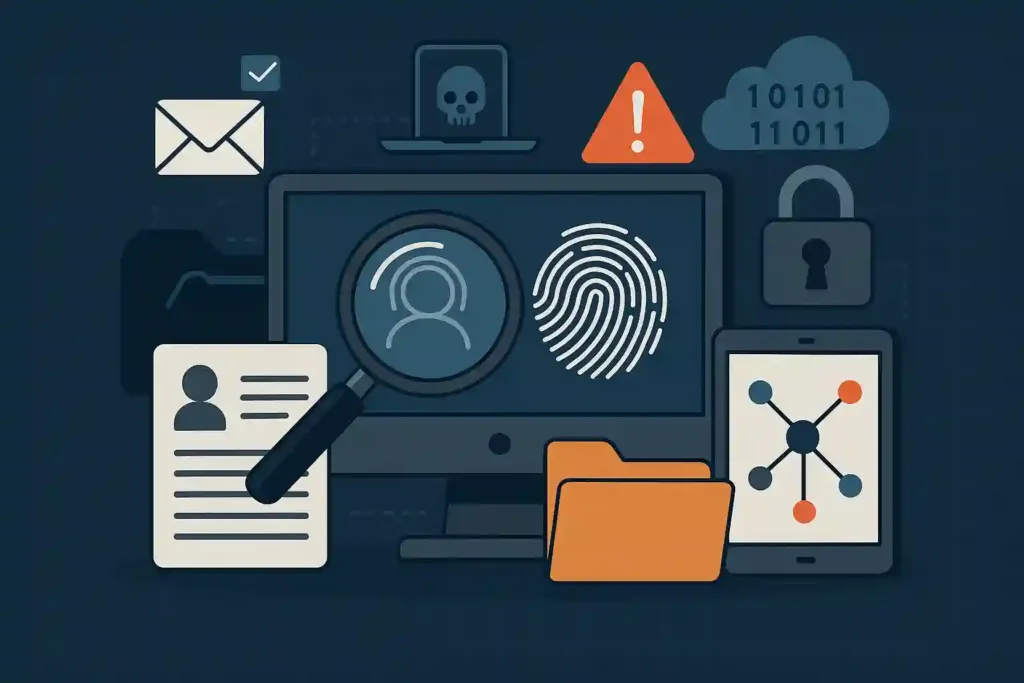
In a world where every interaction leaves a digital footprint, digital investigation has become the backbone of modern law enforcement and national intelligence operations. From tracking financial frauds to uncovering terror networks, investigators today rely not just on traditional methods, but on vast volumes of digital evidence scattered across networks, social media, dark web forums, and encrypted devices.
The question is no longer if digital investigation is necessary, but how effectively agencies can conduct it.
What is Digital Investigation?
Digital investigation is the process of identifying, collecting, analyzing, and interpreting digital evidence to uncover the truth behind cybercrimes, insider threats, or national security incidents. It transforms fragmented digital data from devices, online platforms, communication channels, and databases into actionable intelligence.
Unlike traditional investigation, which depends on physical trails and witness statements, digital investigation focuses on data trails: IP logs, chat records, metadata, system files, and even behavioral patterns. These digital traces, when connected intelligently, reveal the full picture behind an incident or a suspect’s intent.
How Digital Investigation Differs from Digital Forensics
The terms digital forensics and digital investigation are often used interchangeably, but they serve distinct purposes.
| Digital Forensics | Digital Investigation |
|---|---|
| Focuses on technical evidence recovery from devices and systems | Focuses on analyzing evidence to establish links, motives, and patterns |
| Reactive – used after an incident | Both proactive and reactive |
| Used for legal proceedings | Used for intelligence gathering and operational insights |
| Typically performed by forensic analysts | Conducted by intelligence officers, investigators, and analysts |
In essence, digital forensics extracts the data; digital investigation extracts meaning from it.
The Evolution of Digital Investigation
A decade ago, investigators relied on manual methods combing through hard drives, phone records, and chat logs one by one. But with the explosion of digital communication and online anonymity, these methods quickly became inadequate.
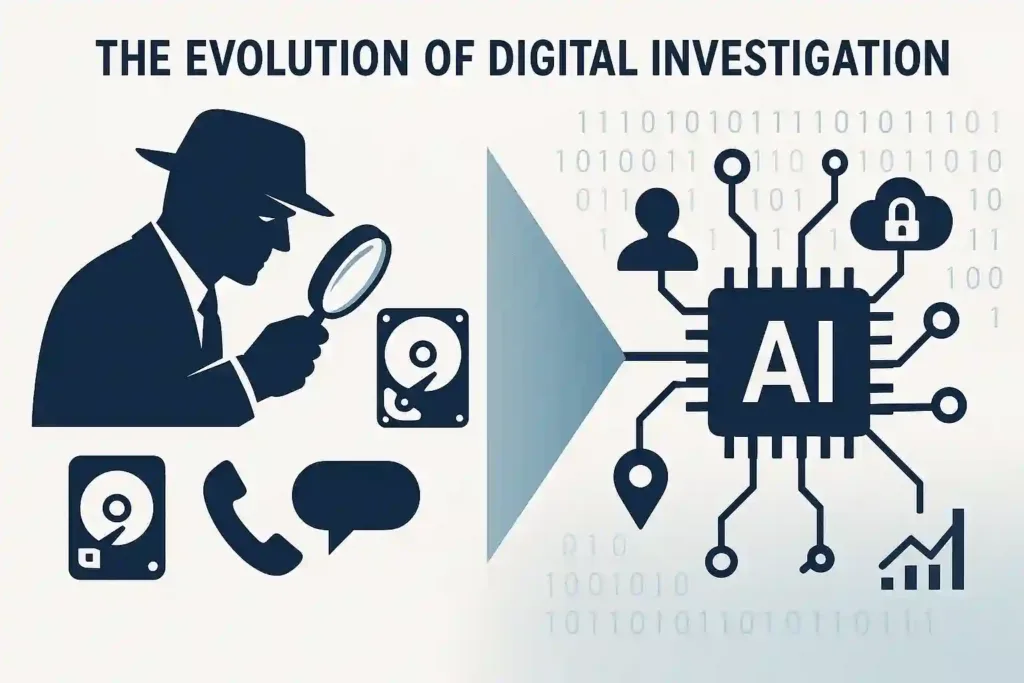
Today, AI-driven digital investigation allows agencies to:
- Correlate billions of data points in seconds
- Uncover hidden linkages between suspects, locations, and events
- Predict potential threats based on behavioral intelligence
What began as a niche capability within cybercrime units has now evolved into a strategic pillar of national intelligence powered by automation, artificial intelligence, and integrated data ecosystems.
The Five Stages of a Digital Investigation
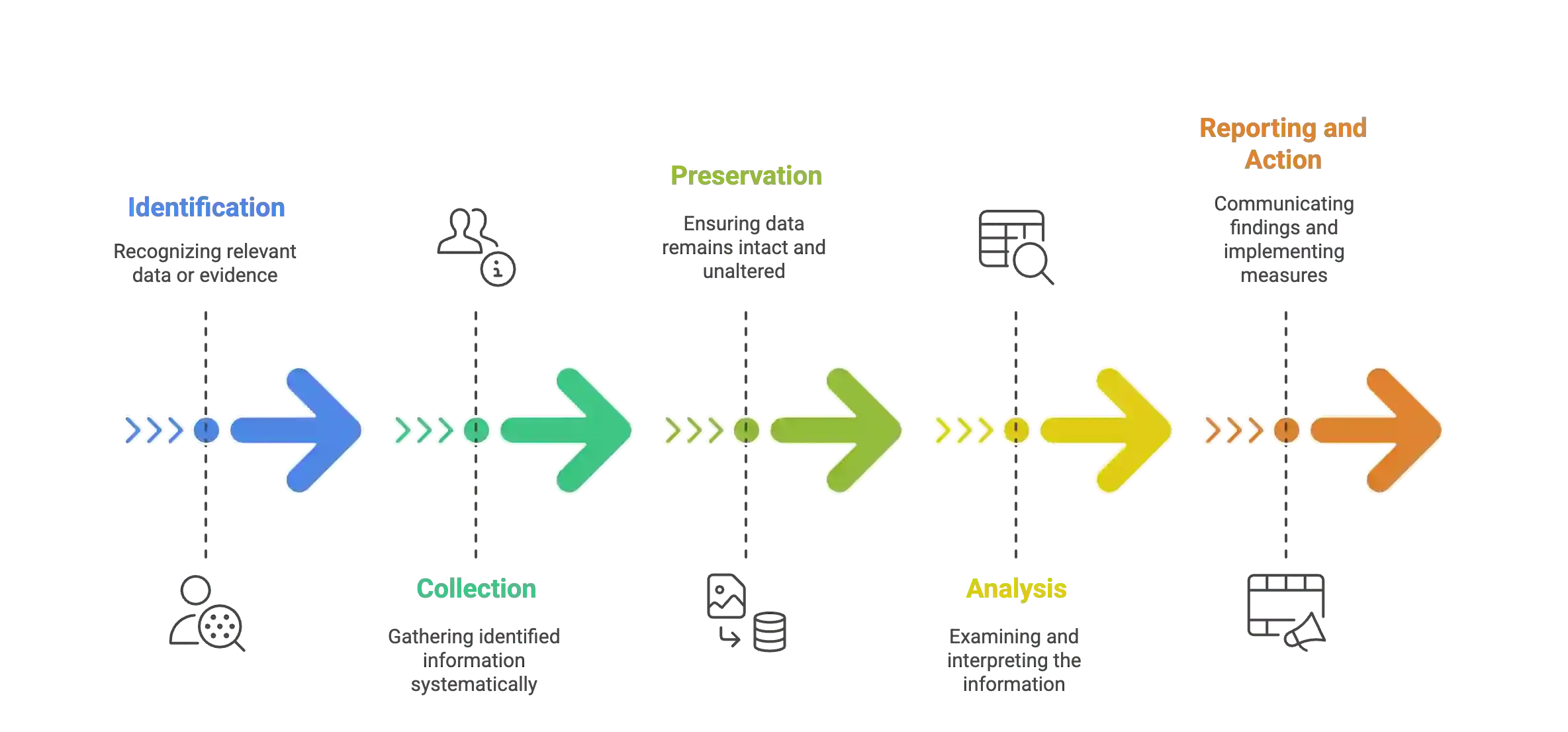
A well-structured digital investigation typically follows five key stages.
1. Identification
The process begins by identifying all potential data sources, devices, networks, social media accounts, cloud environments, communication apps, or dark web channels. In modern operations, even IoT sensors, CCTV metadata, and drone feeds may hold valuable clues.
2. Collection
Once sources are identified, evidence is collected using forensically sound methods to maintain integrity. This includes data imaging, packet capture, and OSINT collection.
3. Preservation
Collected evidence must be stored securely to prevent tampering. Chain-of-custody documentation ensures that evidence remains admissible in court.
4. Analysis
The most critical phase analysts apply AI and link analysis tools to correlate data points, uncover relationships, and reconstruct timelines. This is where raw data transforms into actionable intelligence.
5. Reporting and Action
Findings are compiled into structured reports for operational teams, legal authorities, or policy decision-makers. Increasingly, automated dashboards and visual link graphs enable real-time insight sharing across departments.
Tools and Technologies Driving Digital Investigation
The growing complexity of digital ecosystems demands advanced technologies capable of scaling with data growth.
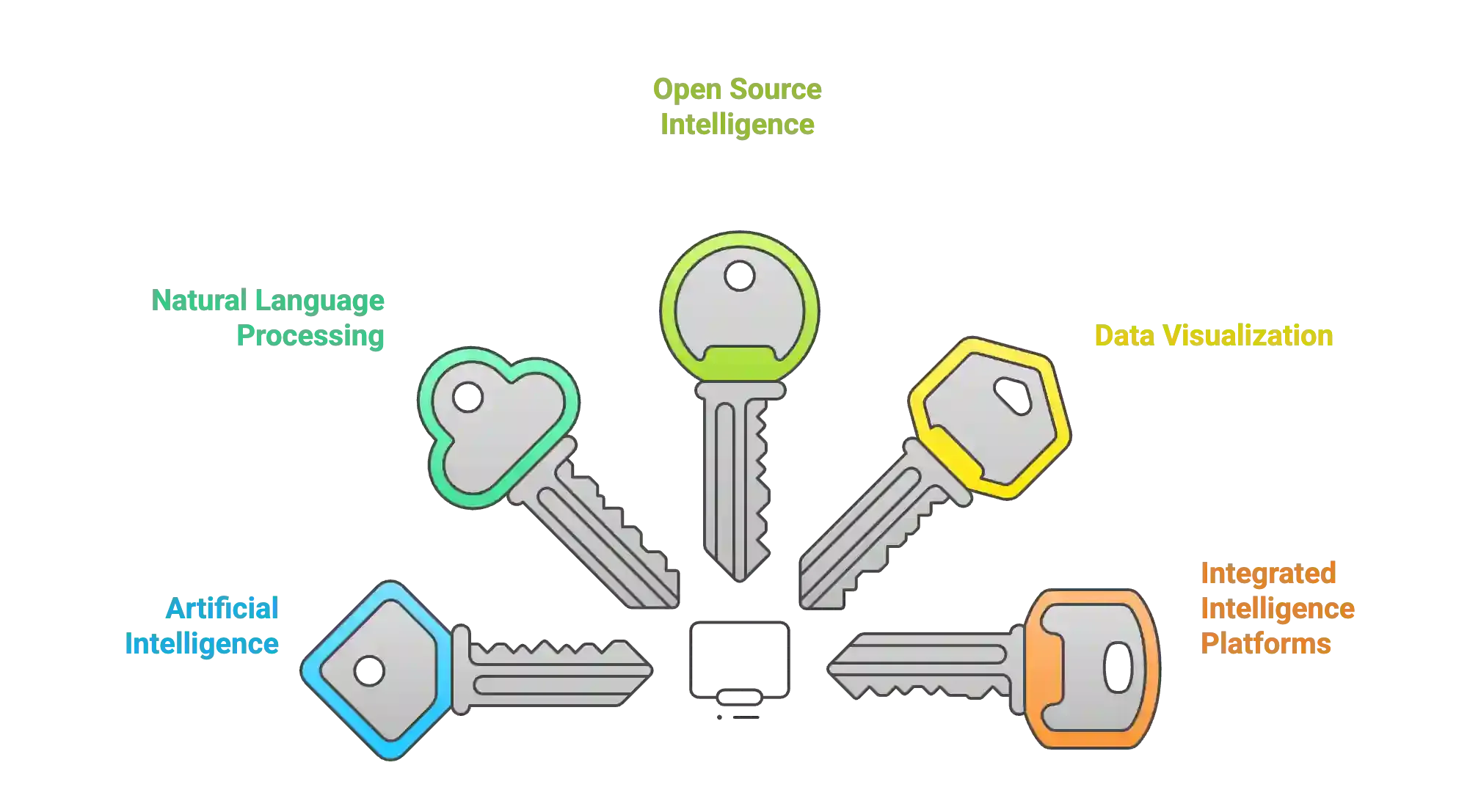
Key enablers include:
1. Artificial Intelligence (AI) and Machine Learning
AI algorithms help sift through massive datasets, detect anomalies, and highlight suspicious entities faster than humanly possible. ML models can even learn investigative patterns and suggest next steps — saving crucial time in high-pressure cases.
2. Natural Language Processing (NLP)
NLP enables the extraction of intelligence from unstructured text, such as chat messages, social posts, and dark web discussions identifying sentiment, topics, and intent.
3. OSINT (Open Source Intelligence)
Publicly available data from social media, forums, and news sites often holds vital leads. OSINT forms the backbone of modern digital investigations, especially when combined with AI correlation.
4. Data Visualization and Link Analysis
Interactive visual maps reveal hidden relationships between suspects, entities, and events empowering investigators to “see” the full story.
5. Integrated Intelligence Platforms
Rather than using multiple tools in silos, leading agencies now deploy integrated intelligence platforms that combine AI, forensics, OSINT, and analytics into a unified environment.
At Innefu Labs, our AI-powered Integrated Intelligence Grid enables investigators to correlate multi-source data from social media to surveillance feeds within seconds, providing a 360° operational view of suspects and networks.
Challenges in Digital Investigation
Despite its power, digital investigation faces several real-world challenges:
Volume, Variety, and Velocity of Data
Data comes from millions of endpoints and grows exponentially. Without automation, human analysts quickly become overwhelmed.Encrypted and Ephemeral Communication
End-to-end encrypted apps and disappearing messages make evidence gathering complex.Jurisdictional Boundaries
Crimes are often cross-border, complicating legal access to data stored overseas.Data Authenticity and Chain of Custody
Maintaining integrity across multiple tools and investigators is crucial for legal admissibility.Skill Gaps and Technological Fragmentation
Many law enforcement units still lack the AI or data science expertise required for modern investigations.
These challenges underline the need for AI-driven, automated, and integrated digital investigation ecosystems precisely where solutions like Innefu’s come into play.
The Role of Artificial Intelligence in Digital Investigation
AI is no longer an optional enhancement; it is the foundation of modern investigation.
By automating routine data processing, AI allows investigators to focus on interpretation and action.
Key AI applications include:
- Entity extraction and correlation: Identifying and linking suspects, organizations, IPs, and communication channels.
- Pattern recognition: Detecting unusual activity or repeated behavioral patterns across different cases.
- Predictive analysis: Anticipating potential criminal activity based on historic trends.
- Automated case summaries: Generating reports and timelines instantly from raw data.
For agencies dealing with high volumes of intelligence from cyber threats to organized crime, AI shortens investigation cycles from weeks to hours.
Applications Across Sectors
1. Law Enforcement
Digital investigation helps track cybercrime, financial fraud, and organized criminal networks. AI tools map suspect communications, financial trails, and geolocation data to reveal entire ecosystems of criminal activity.
2. Defence and Intelligence
For defence and national security agencies, digital investigation enables strategic intelligence fusion — combining OSINT, SIGINT, and HUMINT for counter-terrorism, border surveillance, and threat prediction.
3. Corporate and Financial Security
In enterprises, digital investigation plays a key role in identifying insider threats, IP theft, and fraud detection — especially in regulated sectors like BFSI and telecom.
Building a National Framework for Digital Investigation
Modern threats are borderless, while data laws remain national. To bridge this gap, governments and intelligence agencies need to adopt national digital investigation frameworks that ensure:
- Unified data access and sharing protocols
- Standardized investigation methodologies
- Centralized AI-powered platforms for cross-agency collaboration
Innefu’s platforms are already enabling such frameworks — integrating social media analytics, cyber forensics, and threat intelligence into a single investigative grid that empowers faster, evidence-based decision-making.
Future of Digital Investigation
The next decade will redefine digital investigation through deeper automation and intelligence fusion:
AI-Augmented Decision Making
Investigators will receive real-time, context-aware recommendations on next steps.LLM-Powered Case Summaries
Large language models will generate narrative-style case summaries and legal briefs.Multi-Domain Fusion
Integration of OSINT, SIGINT, GEOINT, and financial data for comprehensive insight.Cloud-Native and Zero-Trust Architectures
Secure, scalable platforms accessible across agencies with strict identity controls.
The goal is clear — to enable faster, smarter, and more proactive investigations that protect citizens and critical infrastructure from emerging threats.
Conclusion
Digital investigation is no longer confined to the domain of cyber experts. It is now a strategic imperative — connecting intelligence dots across cyber, social, and physical domains.
As threat actors grow more sophisticated, the only way to stay ahead is to harness AI-driven intelligence, automate repetitive tasks, and enable real-time collaboration between agencies.
At Innefu Labs, we empower defence, intelligence, and law enforcement organizations to do exactly that — through our AI-powered Integrated Intelligence Platforms that bring together digital forensics, OSINT, and analytics under one unified framework.
In the age of information warfare, those who can investigate the digital world fastest will define security itself.
FAQs on Digital Investigation
1. What is digital investigation in simple terms?
It’s the process of collecting and analyzing digital data to uncover evidence or intelligence related to cybercrime, fraud, or security incidents.
2. How is digital investigation different from digital forensics?
Forensics focuses on recovering data; investigation focuses on connecting insights to understand who, why, and how.
3. Which technologies power modern digital investigations?
Artificial intelligence, machine learning, NLP, OSINT, and integrated intelligence platforms.
4. Why is AI critical in digital investigation?
AI reduces analysis time, discovers hidden connections, and enables predictive intelligence.
5. How does Innefu Labs support digital investigation?
Through AI-based solutions that integrate multi-source data — helping investigators connect dots across social media, networks, and communication channels.