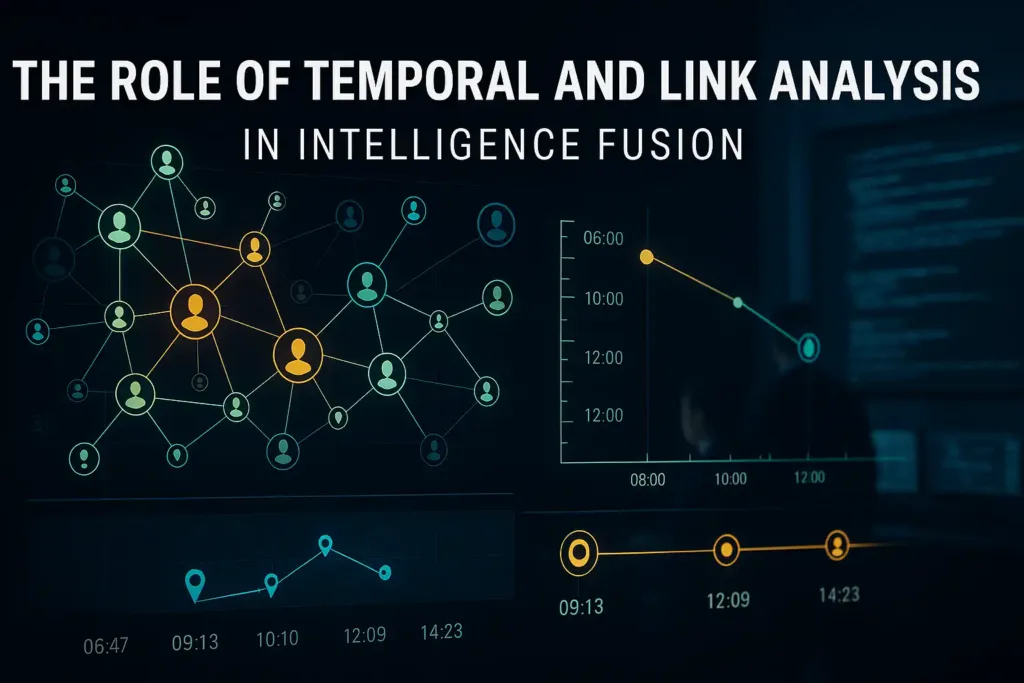
In modern defence operations, it’s not just about collecting intelligence, it’s about understanding relationships and timelines. Who talked to whom? When did events unfold? What pattern connects scattered data points?
That’s where temporal and link analysis come in.
These are not just analytical techniques, they are essential components of intelligence fusion. When built into a secure, multi-source platform like a defence intelligence fusion system, they turn fragmented data into foresight. They reveal the invisible structure of adversary networks and the rhythm of unfolding threats.
What Is Link Analysis in Military Intelligence?
Link analysis is the process of identifying and visualizing connections between entities; people, locations, devices, organizations, or events. It’s used to detect networks, uncover hidden relationships, and surface key nodes in complex systems.
What It Reveals:
- Communication patterns between suspects
- Intermediaries between hostile cells
- Shared phone numbers, addresses, or locations
- Overlapping bank accounts, devices, or movement trails
In military and national security contexts, link analysis helps analysts understand:
- How terror or smuggling networks are structured
- Who the decision-makers or influencers are within a group
- Whether separate incidents are part of a coordinated plan
Example:
Imagine three intercepted satellite phone numbers, each used once in different regions. Alone, they’re noise. But link analysis reveals that all three connect to one number in a different country, a handler or command node. Suddenly, it’s not random, it’s organized.
What Is Temporal Analysis?
Temporal analysis is the examination of how events unfold over time. It looks at the sequence, duration, and recurrence of activities, helping to predict behavior and identify operational cycles.
What It Helps Identify:
- Patterns of movement or communication
- Time windows of recurring activity
- Sequences that indicate planning phases
- Gaps that may represent hidden preparation or regrouping
When fused with link analysis, temporal data brings clarity to otherwise static connections — showing how relationships evolve, and when actions are likely to occur again.
Why It Matters:
In military planning, knowing who is involved is only half the battle. Knowing when they act is what enables preemption.
Why These Analyses Are Crucial in Intelligence Fusion
In isolation, even good intelligence can mislead. A location with high communications traffic might seem threatening, but add a timeline showing that the activity only spikes during local festivals, and it may not be a threat at all.
That’s why defence-grade fusion platforms (like Prophecy Guardian) embed link and temporal analysis into their core functionality.
What This Enables:
- Network mapping across all intelligence streams (COMINT, HUMINT, OSINT, etc.)
- Chronological reconstruction of events from disparate data
- Detection of synchronized or staged operations
- Anticipation of next moves, based on repeatable cycles
For example, an insurgent group may consistently move supplies 3–5 days before attacks. Once detected, that pattern becomes an early warning system.
Link + Time = Strategic Clarity
Together, these techniques offer a multidimensional view:
- Link analysis reveals structure.
- Temporal analysis reveals momentum.
- Fusion platforms connect both to wider intelligence layers like GIS, intercepted signals, and field reports.
The result? A dynamic, evolving intelligence picture – not a snapshot.
Conclusion
In the modern threat landscape, the adversary isn’t always visible, and actions don’t always speak louder than timing or association. Link and temporal analysis make it possible to see not just what’s happening, but how, why, and when, long before consequences unfold.
That’s the kind of clarity defence organizations need. And it’s the kind of clarity that intelligence fusion platforms are built to deliver, with link and temporal analysis not as optional add-ons, but as foundational capabilities.
Because the more connected your intelligence is, the harder it is for adversaries to stay hidden.
Frequently Asked Questions
1. What is link analysis in military intelligence?
Link analysis reveals relationships between people, events, or locations by mapping connections across datasets. It’s used to uncover hidden networks and coordinated activity.
2. What is temporal analysis?
Temporal analysis examines when events occur and how they evolve over time. It helps predict future activity based on recurring behavior patterns.
3. Why are these techniques critical in intelligence fusion?
They allow analysts to see not just who is connected, but how and when — turning isolated data points into dynamic threat assessments.
4. Can these techniques be automated?
Yes. Platforms like Prophecy Guardian automate both link and temporal analysis using AI, helping identify networks and timelines in real time.