The New Era of Digital Policing
A decade ago, policing systems were mostly administrative. They revolved around records, FIR management, and paper-based workflows that kicked in after an incident had occurred. The focus was on documentation, not detection.
But the modern law enforcement landscape has changed dramatically. Crime no longer unfolds in isolation, it leaves behind digital traces across communication networks, social media, devices, and surveillance systems. In this ecosystem, data itself has become both the evidence and the early warning.
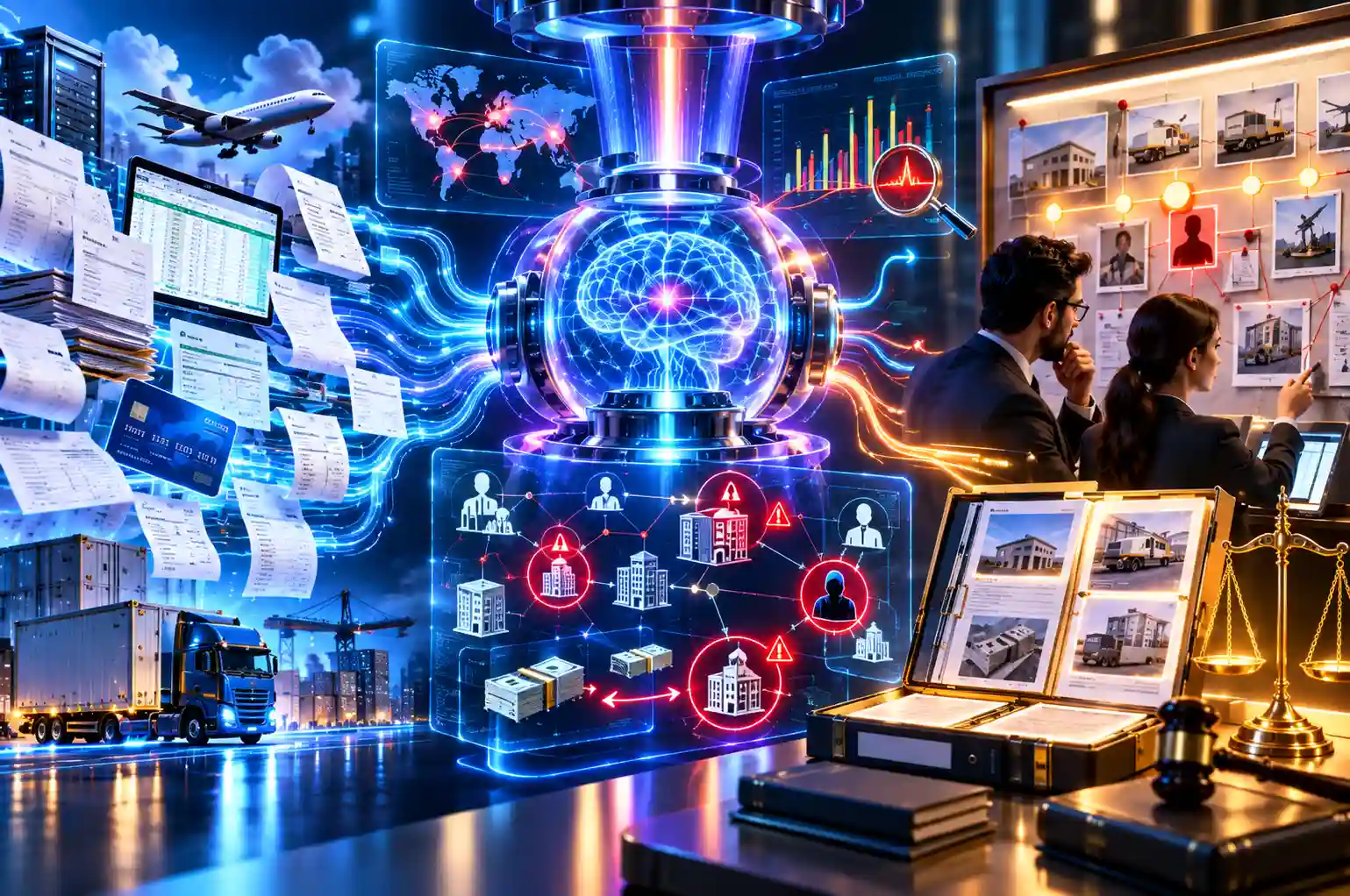
AI-driven policing software marks the most transformative leap in this journey. It unifies domains once treated separately, investigation, surveillance, forensics, communication analysis, and OSINT into a single cognitive ecosystem.
This convergence allows police forces to anticipate, detect, and respond to emerging threats faster than ever before.
AI isn’t just predicting crimes, it’s reimagining how policing operates at every level.
Key Takeaways
- From reactive to predictive: AI transforms policing from documenting crimes to anticipating them.
- Data is the new evidence: Every digital footprint — call record, message, or camera feed — becomes actionable intelligence.
- Fusion is power: Real insight emerges when communication, video, OSINT, and forensic data converge.
- Operational excellence: AI reduces delays, enhances coordination, and strengthens officer safety.
- Innefu at the forefront: With platforms like Prophecy Alethia, Intelelinx, and AI Vision, Innefu Labs enables the shift from fragmented data to unified intelligence.
- Future-ready policing: The AI-enabled command centre represents the next frontier — where human judgment and machine cognition operate as one.
The Evolution of Policing Software: From Case Records to Cognitive Systems
The evolution of policing software mirrors the digital evolution of modern warfare and intelligence. Data is the new weapon; insight, the new armor.

Here’s how the transformation unfolded:
Phase 1: Record-Keeping Systems
The early wave of policing digitization focused on database systems: recording FIRs, case details, and citizen reports. Projects like CCTNS brought basic connectivity but offered limited analytical insight.
Phase 2: Analytical Dashboards and GIS Visualization
The next leap introduced mapping tools, heatmaps, and case visualization dashboards. Officers could finally “see” patterns, but insights still depended on manual analysis.
Phase 3: AI-Enabled Cognitive Systems
Today’s platforms have transcended static reporting. They integrate machine learning, NLP, video analytics, and data fusion to uncover non-obvious relationships and generate predictive intelligence.
Innefu’s Prophecy Alethia platform exemplifies this transformation, designed as a defence-grade intelligence fusion ecosystem that connects disparate policing functions into a single, context-aware decision framework.
From reactive record management to proactive foresight, the software itself has evolved into a thinking partner for modern law enforcement.
The Core Intelligence Engine: How Modern Policing Software Works
At the heart of AI policing lies a multi-layered intelligence engine. Rather than focusing on prediction alone, it connects every data point into a continuously learning network.

Here’s how the architecture works:
Data Integration Layer
- Unifies structured and unstructured data: police records, CDR/IPDR data, OSINT, surveillance feeds, and forensic reports.
- Eliminates data silos by bringing all sources under one secure architecture.
AI & ML Processing Layer
- Detects anomalies, correlations, and recurring behavioural patterns.
- Learns from both historic and real-time data streams.
NLP and Semantic Analysis
- Reads and interprets text-based sources like FIRs, interrogation notes, and social chatter.
- Extracts intent, entities, and sentiments to uncover hidden signals.
Video & Image Analytics (AI Vision)
Identifies persons of interest, suspicious movements, crowd behaviour, and abandoned objects through advanced visual recognition.
Intelligence Dashboards
Converts complex analytics into intuitive visual layers: criminal networks, activity trends, hotspot evolution, and predictive indicators.
Automated Alerting Systems
Sends real-time alerts to field teams for early intervention, connecting intelligence to action instantly.
Together, these layers make AI policing software more than a tool, a cognitive ally that continuously interprets the pulse of public safety.
Multi-Domain Data Fusion: The True Power of AI Policing

The real strength of AI policing lies in data fusion, not just predicting the next event, but understanding the broader ecosystem around it.
Here’s how multi-domain intelligence creates situational awareness:
Communication Analysis (Intelelinx):
Tracks and maps call data records (CDR/IPDR), uncovering hidden communication networks and hierarchies within criminal organizations.
Video Intelligence (AI Vision):
Detects crowd anomalies, recurring vehicle movements, or behavioural deviations in real time.
Open-Source Intelligence (Innsight):
Monitors digital chatter across social platforms, identifying early signs of radicalization, unrest, or organized propaganda.
Forensic and Device Intelligence (RapiDFIR):
Extracts and correlates digital evidence from mobile and endpoint devices, establishing links across timelines and cases.
Secure Access & Authentication (AuthShield):
Ensures only authorized personnel access sensitive intelligence, safeguarding data integrity within multi-agency environments.
When these systems converge, policing moves beyond case-by-case action. Officers gain contextual intelligence, the ability to see how people, places, and events connect across time and space.
This is the essence of AI-powered situational awareness: a 360° operational view that turns fragmented data into cohesive understanding.
Operational Impact: How AI Is Redefining Policing Efficiency

AI policing software doesn’t just digitize investigations, it redefines operational tempo.
Key impact areas include:
Reduced Investigative Delays
- Instant cross-referencing of records, suspects, and evidence.
- Automatic detection of repeat offenders or linked incidents.
Unified Command Visibility
- Centralized dashboards for district-to-national oversight.
- Enables real-time coordination during crises.
Smarter Workforce Allocation
- Predictive insights help deploy personnel where risk is highest.
- Data-driven manpower management ensures resource efficiency.
Faster Case Resolution
- AI-driven link analysis connects clues across geography and timelines.
- Detectives spend less time searching, more time acting.
Enhanced Officer Safety
- Real-time alerts on high-risk zones or individuals.
- On-ground teams receive immediate tactical intelligence.
Cross-Agency Collaboration
- Encrypted, role-based data sharing enables smooth cooperation between law enforcement, intelligence, and defence units.
Platforms like Prophecy Alethia and Intelelinx are pioneering this model, establishing institutional memory that evolves with every case, ensuring less repetition and more precision in investigations.
Key Advantages Over Legacy Systems
Modern AI policing ecosystems differ fundamentally from the traditional “record and report” software of the past.
| Legacy Systems | AI-Driven Systems |
| Siloed data, manual updates | Unified, continuously learning intelligence graph |
| Reactive reporting | Proactive decision support and predictive visibility |
| Text-based reports | Real-time, visual dashboards and alerts |
| Delayed correlation | Instant, cross-domain link analysis |
| Static access control | Adaptive, role-based and secure access |
| Post-incident review | Continuous, real-time threat monitoring |
The difference isn’t just in technology it’s in how intelligence flows.
AI converts fragmented data into continuous insight, giving leadership the power to anticipate rather than react.
Building the Future: The AI-Enabled Police Command Centre

Imagine a command centre where human intuition meets machine cognition.
Every data stream: surveillance, communication, open-source intelligence, movement trails, converges into one unified operational picture. Officers see not just what happened, but what’s about to unfold.
This is the AI-enabled Police Command Centre:
- Real-time dashboards visualize emerging threats.
- Secure, on-premise LLMs interpret narrative intelligence and generate summaries.
- Predictive models highlight hotspots or potential escalation zones.
- Decision-makers receive cognitive recommendations supported by real evidence.
Innefu Labs’ ecosystem: Prophecy Alethia, AI Vision, Innsight, IRMS, and more, provides the foundation for this future. Each component plays a distinct role in connecting data, intelligence, and decision-making into a living digital command environment.
The age of reactive policing is closing. The era of AI-empowered decision-making has begun.
Conclusion
The transformation of policing is not about adding more data, it’s about deriving smarter intelligence from what already exists.
From handwritten FIRs to cognitive ecosystems, law enforcement is shifting from post-incident workflows to proactive prevention and precision response.
AI policing software isn’t just helping solve crimes faster, it’s reshaping how safety is sustained in an increasingly complex digital world.
The future of policing lies not in data accumulation, but in intelligence orchestration, where every byte of information becomes a tool for protecting lives.
FAQs – Frequently Asked Questions
Q1 What is AI-powered policing software?
AI-powered policing software integrates technologies like data fusion, video analytics, NLP, and predictive modeling to help law enforcement analyze data, uncover hidden connections, and make proactive decisions in real time.
Q2 How is AI changing traditional police operations?
AI shifts policing from post-incident reporting to real-time threat anticipation. It automates data correlation, supports faster investigations, optimizes resource deployment, and enhances overall situational awareness.
Q3 What are the key components of an AI policing ecosystem?
A robust AI policing system includes:
- Data Integration Layer (records, CDRs, OSINT, video feeds)
- AI & ML Processing (pattern detection, anomaly recognition)
- Video & Image Analytics
- NLP-based Intelligence Extraction
- Automated Alerting & Dashboards
Q4 How does data fusion improve law enforcement decision-making?
Data fusion merges diverse data streams—communication logs, surveillance videos, social intelligence, and forensic evidence—into a unified, context-aware intelligence graph, allowing agencies to see the bigger picture instead of isolated cases.
Q5 What makes Innefu Labs’ Prophecy ecosystem unique?
Innefu Labs’ Prophecy ecosystem unites solutions like Alethia, Intelelinx, AI Vision, Innsight, and RapiDFIR to provide multi-domain, defense-grade intelligence fusion. It enables proactive policing through secure, AI-enabled decision support and institutional memory.