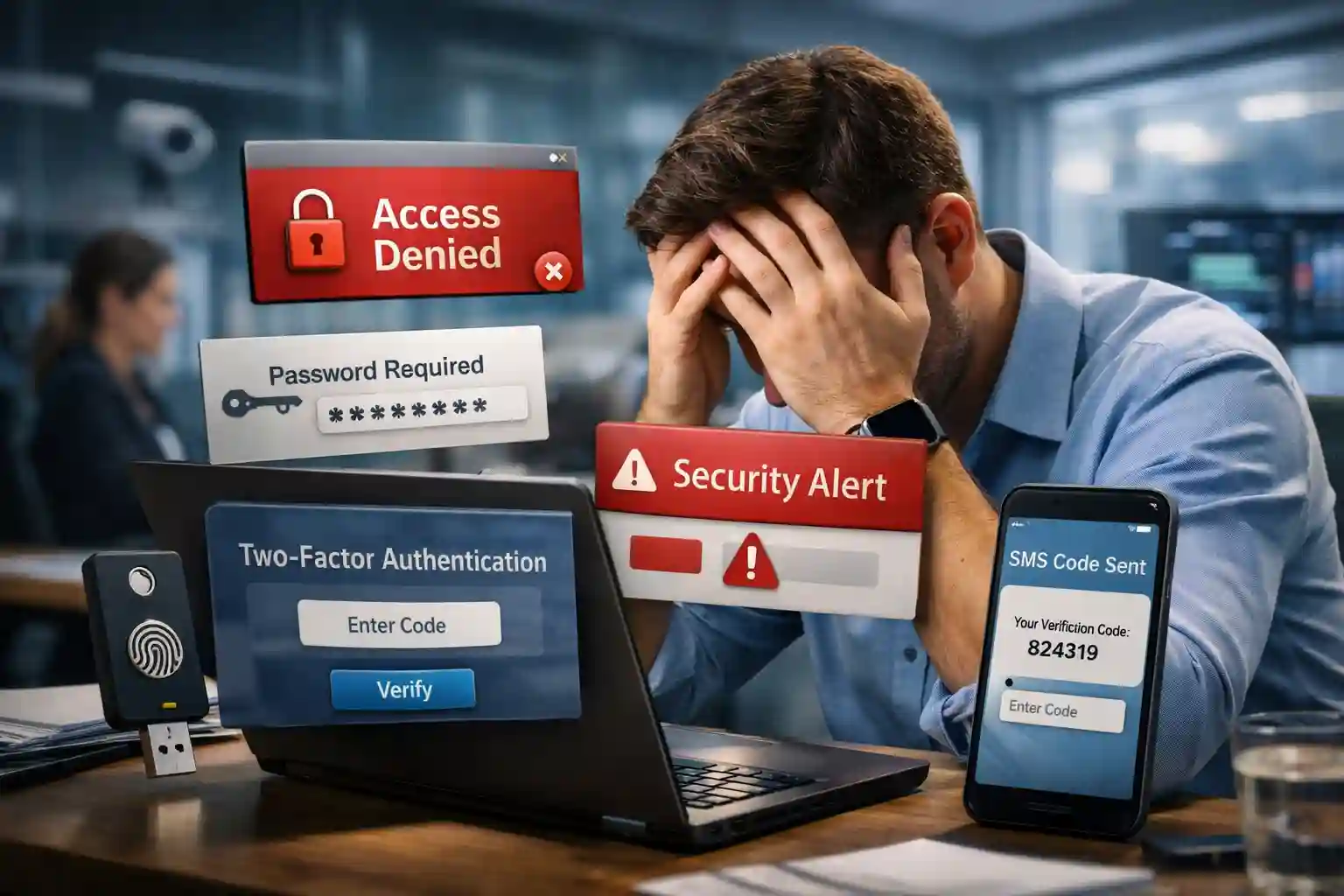
Here is a number worth sitting with: according to a 2024 Microsoft study, more than 40% of users who suffered account takeovers had multi-factor authentication enabled at the time of the breach.
Not disabled. Not bypassed by stolen hardware. Enabled, and circumvented anyway.
The same year, the FBI recorded over 5,100 complaints related to account takeover fraud, with total losses exceeding 62 million. IBM’s cost of a data breach report put the average breach cost at $4.4 million in 2025.
None of this means MFA is failing. It means a specific class of MFA, one built around the assumption that a temporary code sent to a device is inherently secure, is being systematically outpaced by the attack techniques designed to defeat it.
NIST, the US standards body whose guidance shapes security policy for governments and enterprises globally, has formally restricted SMS-based OTP in its Digital Identity Guidelines, classifying all shared-secret authentication methods, including OTP, as phishable by design. That designation is not a minor technical footnote. It is a considered institutional verdict on a method that hundreds of millions of accounts still rely on daily.
So where does that leave organisations deciding how to authenticate their workforce, protect their systems, and meet their compliance obligations? Specifically: how does OTP stack up against biometric authentication, and is the answer to simply replace one with the other?
The short answer is that neither is unconditionally superior. The long answer is more useful, and that is what this blog is about.
First, What Are We Actually Comparing?
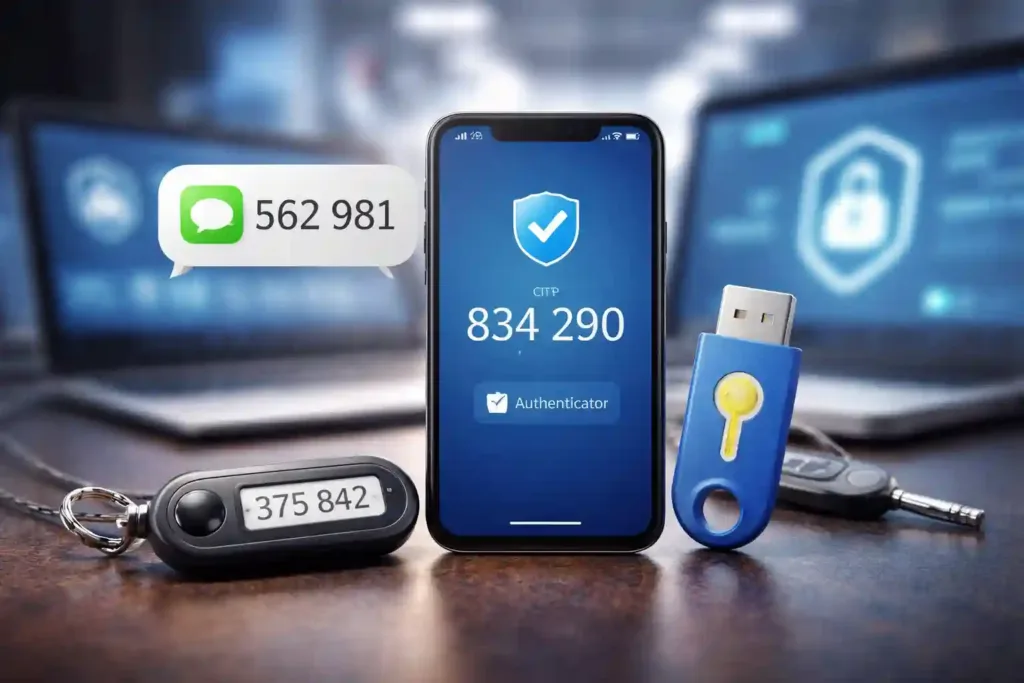
Before stacking them against each other, it helps to be precise about what each method involves, because both “OTP” and “biometrics” are umbrella terms covering several distinct implementations.
OTP Authentication
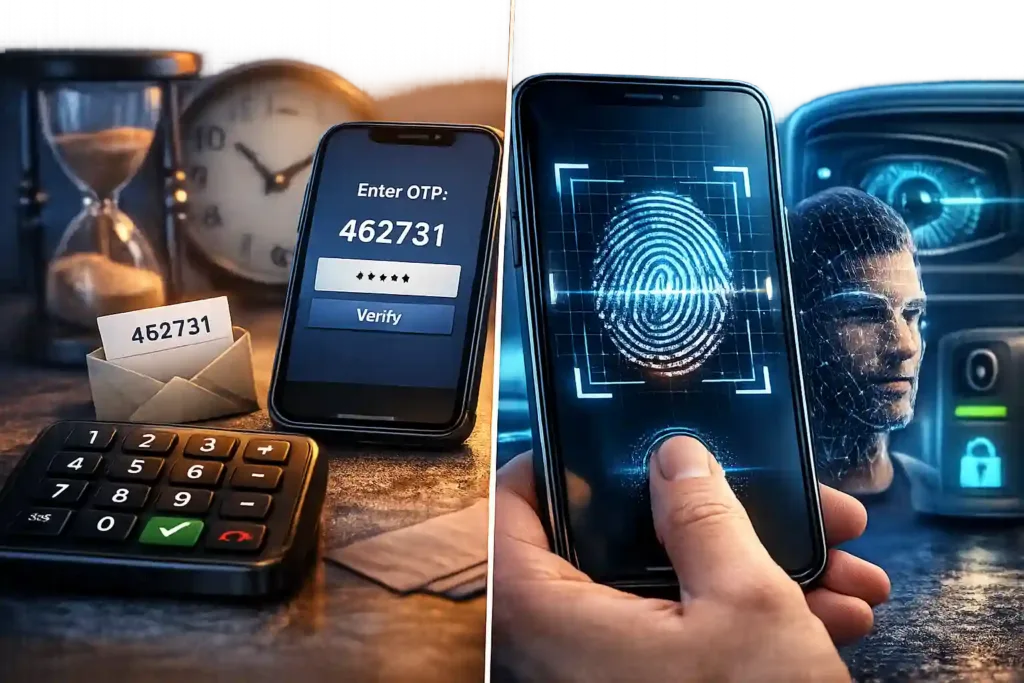
OTP authentication is the class of authentication methods where a temporary, single-use code is generated and used as a second factor. The main variants are:
- SMS OTP: A code sent to the user’s registered mobile number via text message. Widely deployed, no app required.
- Mobile token / authenticator app OTP: A time-based code (TOTP) generated by an app like an authenticator on the user’s phone, refreshing every 30 seconds. Does not require network connectivity to generate.
- Hard token: A physical device, a small key fob or card, that generates time-synced OTPs independently of any network connection or mobile device.
- Desktop token / software token: TOTP generated on the user’s computer itself, adding a second factor without requiring a separate device.
- Email OTP: A code sent to the user’s registered email address, typically for lower-sensitivity scenarios.
Biometric Authentication
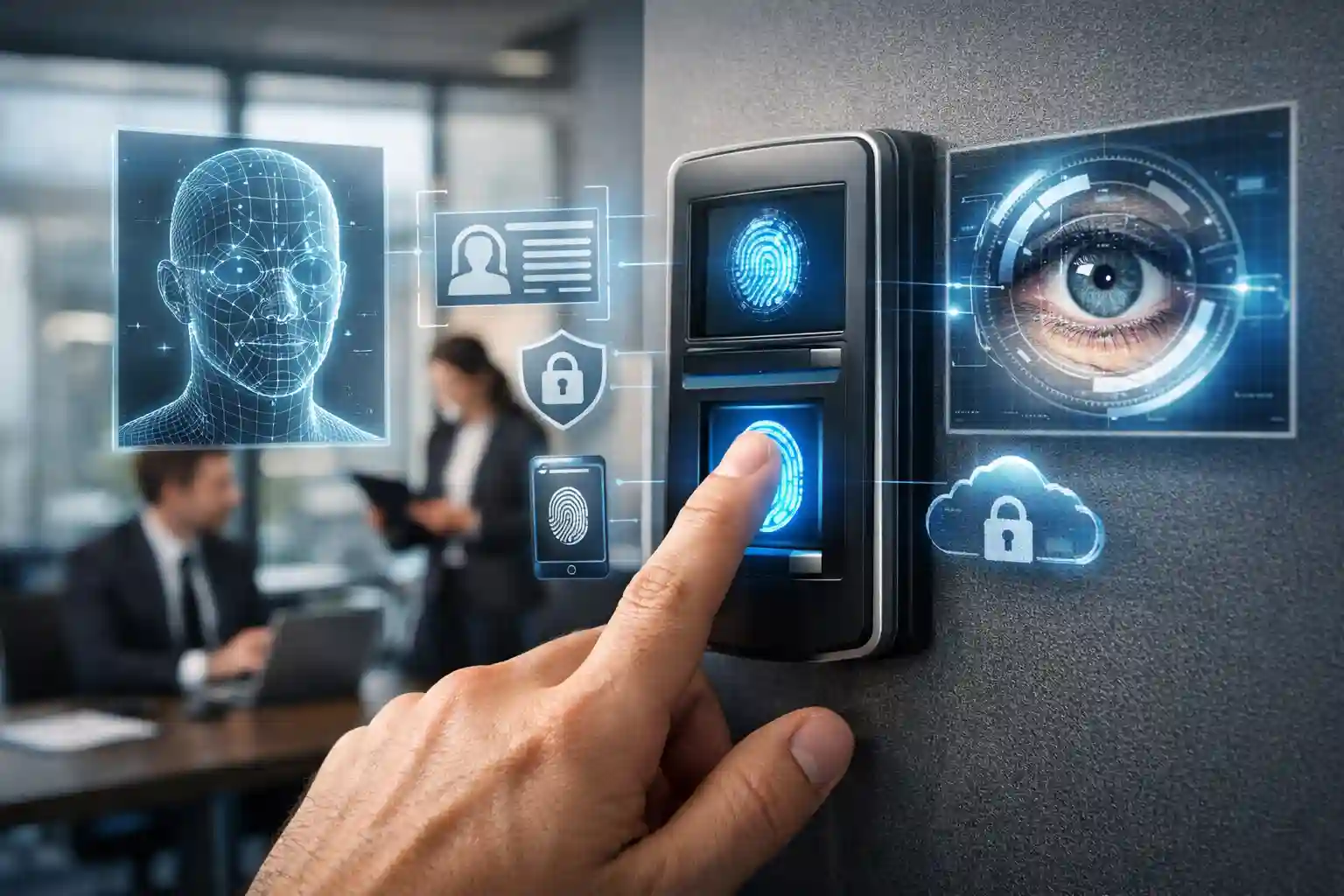
Biometric authentication uses a physical or behavioural characteristic of the person as the verification factor. The main variants relevant to enterprise and government authentication are:
- Fingerprint recognition: A scan of the user’s fingerprint matched against a stored template. Fast, convenient, and increasingly integrated into workstations and mobile devices.
- Facial recognition: AI-driven comparison of the user’s face against a registered profile. Can work passively during login without requiring active input.
- Voice biometrics: Authentication based on voice pattern matching, relevant for telephonic and remote access scenarios.
These are meaningfully different from each other in how they work, what attacks they are vulnerable to, and what deployment scenarios they are suited for. Comparing “OTP” to “biometrics” without that granularity is like comparing “locks” to “alarms”. Both are security measures, but the right one depends entirely on what you’re protecting and from whom.
Where OTP Authentication Is Strong
OTP authentication became the dominant second factor for good reasons, and those reasons have not disappeared.
It requires no hardware on the user’s endpoint
SMS OTP works on any phone that can receive a text message. It requires nothing to be installed, configured, or managed. For organisations deploying MFA at scale across a diverse user base, including users without smartphones or technical sophistication, this accessibility is a genuine operational advantage.
TOTP via authenticator app works offline
Unlike SMS-based OTP, time-based codes generated by an authenticator app do not require network connectivity at the moment of authentication. In environments with unreliable connectivity, remote field operations, certain government facilities, air-gapped networks, this matters.
Hard tokens are highly resistant to remote attack
A physical hardware token that generates time-synced OTPs cannot be intercepted remotely. An attacker who does not have physical possession of the token cannot replicate its output. For high-privilege access scenarios such as privileged admin accounts, critical infrastructure access, hardware tokens offer a level of resistance to remote compromise that other OTP methods do not.
OTP is well-understood by users and auditors
It integrates cleanly with existing authentication frameworks, is widely supported by compliance standards (PCI-DSS, ISO 27001, various government security guidelines), and requires minimal user training. The audit trail it generates user, timestamp, success or failure is clean and defensible.
Where OTP Authentication Is Weak
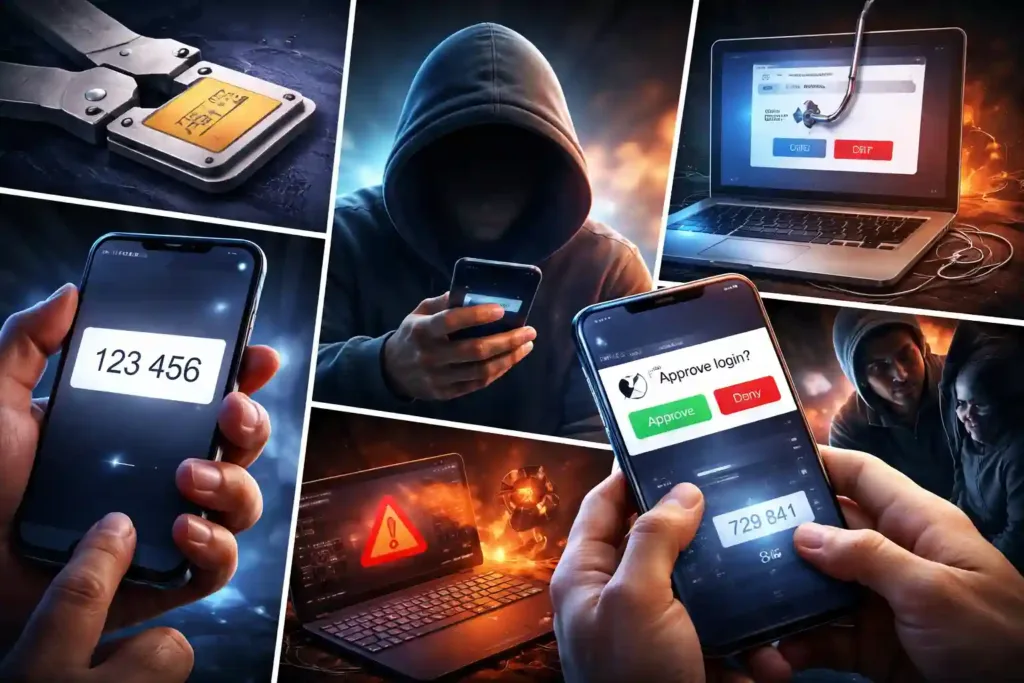
The same simplicity that makes OTP accessible also creates exploitable gaps, and attackers have built an entire category of attack techniques specifically around OTP interception.
SIM swapping defeats SMS OTP entirely
When an attacker successfully ports a victim’s mobile number to a device they control, through social engineering at a telecom service provider, they receive every SMS sent to that number.
Every OTP. Every account recovery code. Every banking alert. The victim’s phone simply stops receiving messages, and by the time they notice something is wrong, significant damage may already be done.
SIM swapping is not a theoretical attack; it is a documented, recurring vector against financial accounts, corporate credentials, and government systems.
Real-time phishing proxies intercept TOTP codes
Sophisticated phishing operations no longer simply steal passwords. They use adversary-in-the-middle setups where the victim enters their credentials and TOTP code into a convincing fake login page, which forwards those credentials in real time to the legitimate site before the 30-second window expires.
The attacker logs in with valid, current credentials. The OTP has been correctly entered, by the victim, unknowingly, on behalf of the attacker.
Authentication fatigue erodes push notification security
The “one-touch” variant of OTP, where a push notification is sent to the user’s device and they simply approve or deny, is highly convenient but creates a specific attack pattern: MFA fatigue or MFA bombing.
An attacker who has the victim’s password repeatedly sends authentication requests, hoping the user approves one out of frustration, habit, or confusion. This has been used successfully against organisations with mature security programs.
OTP codes can be shoulder-surfed or extracted via malware
A six-digit code visible on a phone screen can be read by someone nearby. Malware on an infected endpoint can intercept software token values as they are generated.
These are lower-sophistication attacks than SIM swapping, but they are real risks in environments where endpoint security is not uniform.
Where Biometric Authentication is Strong
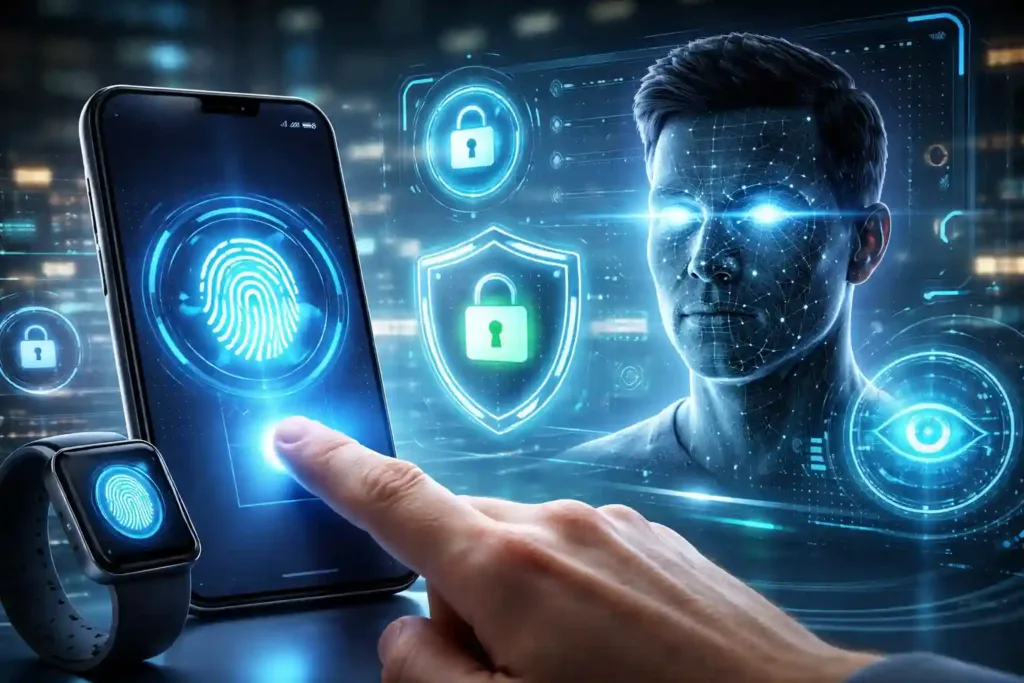
Biometric authentication addresses several of the specific weaknesses of OTP, and does so in ways that are architecturally different, not just incrementally better.
Biometrics verify the person, not the possession
OTP factors are fundamentally “something you have”, the phone, the token, the device. Someone who gains possession of that device gains access to the factor. Biometrics are “something you are”, they travel with you and cannot be transferred. A fingerprint or facial profile cannot be SIM-swapped, forwarded, or handed to an accomplice.
They cannot be intercepted in transit the way OTPs can
A biometric match happens locally, the scan is compared against a stored template, and the authentication decision is made without a transmissible code that an attacker can intercept. There is no six-digit window to capture, no push notification to approve fraudulently.
Speed and convenience reduce friction without reducing security
A fingerprint scan at login takes under a second. Facial recognition can authenticate passively as the user approaches a system. This elimination of friction matters operationally, users who find security measures too cumbersome find workarounds, and workarounds create risk. Biometrics can actually improve security behaviour by removing the incentive to bypass the process.
They create a strong non-repudiation record
When a biometric factor is used for authentication, the audit trail is tied to a verified physical characteristic of the individual, not just a credential or device they possessed at the time. In high-stakes environments like government access, financial transaction authorisation, privileged system access, this non-repudiation is legally and operationally significant.
Where Biometric Authentication Has Limitations
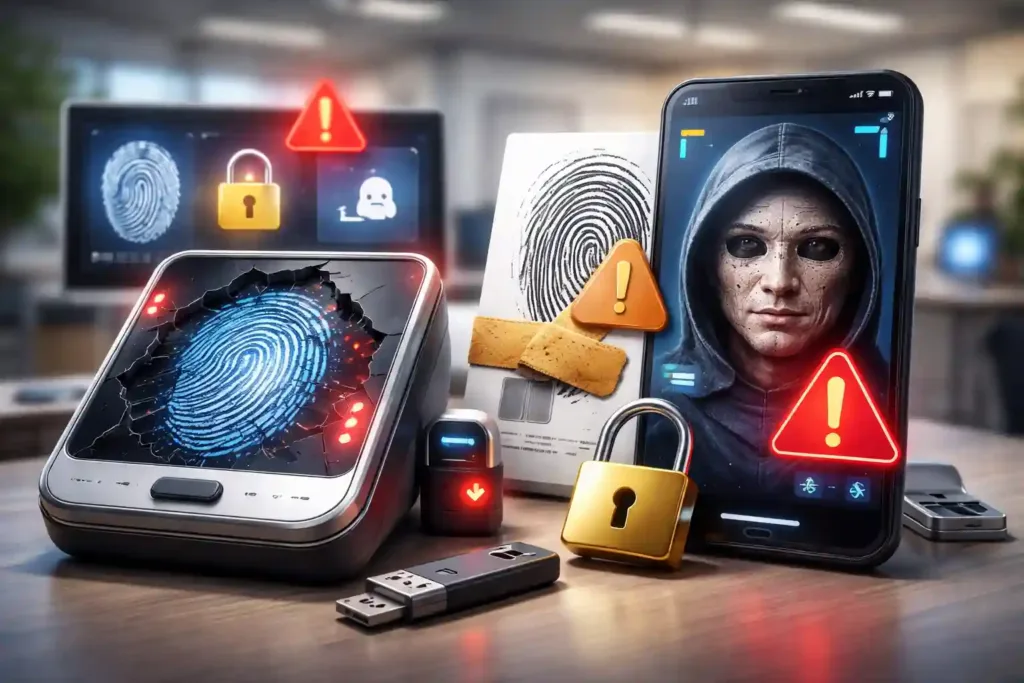
Biometrics are not a complete solution either, and it is worth being honest about where they fall short.
They require enrolment infrastructure
OTP can be deployed to existing users with their existing phones and no new hardware. Biometric authentication requires enrolment, users must register their fingerprint or facial profile against the system, typically in a controlled environment. At large scale, across distributed organisations, this enrolment process requires planning and resources.
Biometric data, if compromised at the storage layer, cannot be changed
A compromised password can be reset. A compromised OTP seed can be regenerated. A compromised biometric template cannot be replaced; you cannot issue new fingerprints. This makes the security of the biometric template storage layer critically important. Systems that store raw biometric data rather than irreversible mathematical representations of it carry significant residual risk.
Environmental factors can affect accuracy
A cut or abrasion on a fingertip can cause fingerprint authentication to fail. Poor lighting or an unusual angle can affect facial recognition. For users who work in physically demanding environments, this reliability gap matters. It is not insurmountable, fallback mechanisms exist, but it is real.
Spoofing risk for lower-quality implementations
Biometric systems that rely on 2D images rather than 3D depth sensing or liveness detection can be defeated by photographs or printed masks. The quality of the biometric implementation matters enormously. Not all facial recognition or fingerprint systems offer the same level of spoof resistance.
The Real Answer: Why the Strongest Environments Use Both
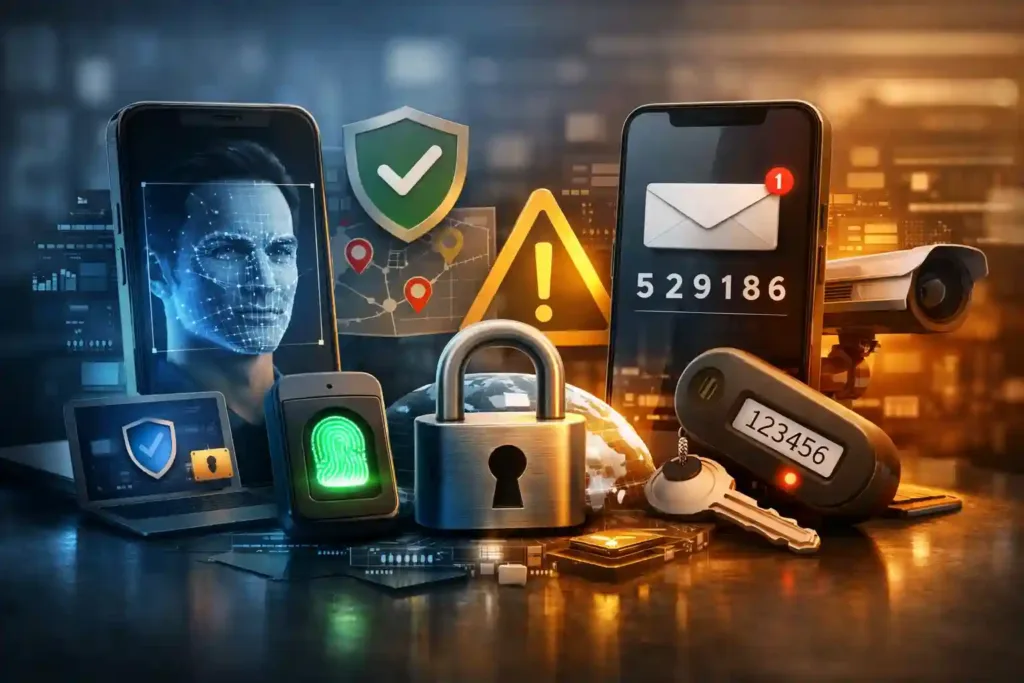
Here is the insight that most “OTP vs biometrics” comparisons miss: the question is not which one wins. It is how to deploy the right combination for the right context.
Consider what is actually happening when you authenticate. You are trying to answer three questions: Is this the right person? Is this the right device/possession? Is this the right context (time, location, behaviour)?
OTP answers the second question. Biometrics answers the first. Neither, on its own, answers all three. And the threat landscape has evolved to the point where answering only one question, even correctly, is often insufficient.
The most security-conscious organisations, including those operating under India’s most demanding security requirements, have moved to layered authentication architectures that combine these factors intelligently:
- Biometrics for the primary verification: The person’s fingerprint or face confirms their identity at the point of login: fast, frictionless, and not transferable.
- OTP or push notification as a second factor for high-risk sessions: When the access attempt carries elevated risk signals: new device, unusual location, sensitive system, an additional OTP layer is triggered.
- Adaptive logic that adjusts the combination based on context: A routine login from a known device and location gets through with biometrics alone. A login attempt from an unfamiliar network at an unusual hour triggers stepped-up verification.
This is not about adding complexity for its own sake. It is about matching the authentication requirement to the actual risk of each access attempt, which is precisely what a well-configured multi-factor authentication platform does.
AuthShield: Built for the Full Authentication Spectrum
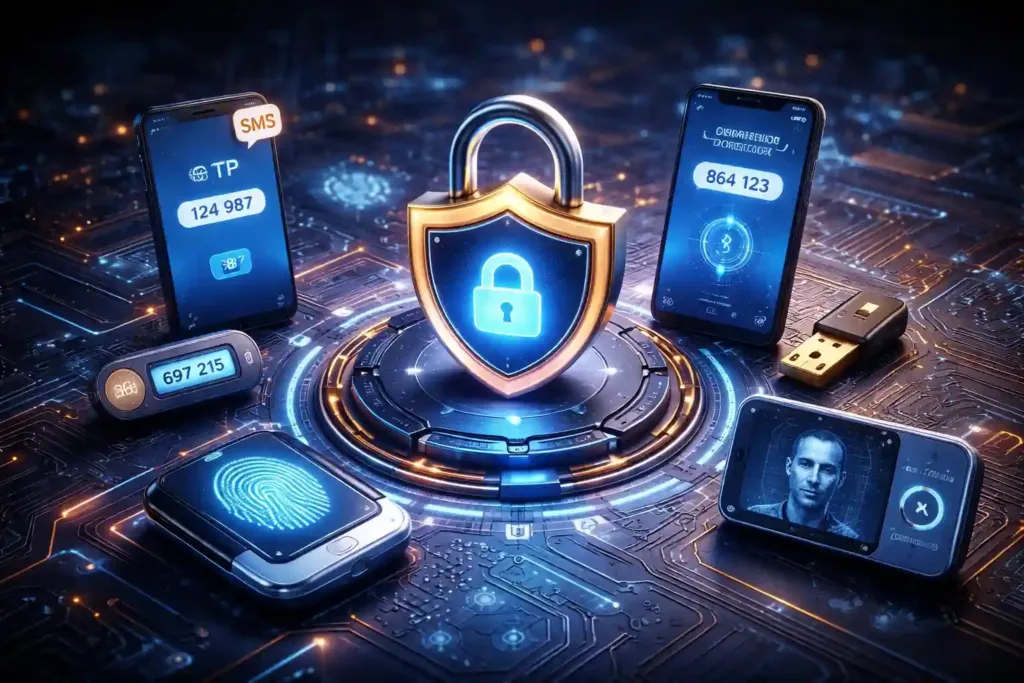
AuthShield is Innefu’s unified authentication platform, and it is built around exactly this layered, context-aware approach to authentication.
It supports the full range of authentication methods in a single platform, allowing organisations to deploy, mix, and match factors based on user role, system sensitivity, and access context:
OTP variants available within AuthShield:
- SMS/email OTP for broad accessibility
- Mobile token (TOTP via app) for network-independent second factor
- Hard token; AuthShield offers an indigenous hard token, one of the few Indian vendors to do so, for privileged access scenarios requiring maximum resistance to remote attack
- Desktop/software token for workstation-based TOTP
- One-touch push notification with PKI-based challenge-response, the notification itself is cryptographically signed, and the user approves or denies access directly from their registered device
Biometric methods available within AuthShield:
- Fingerprint recognition using proprietary biometric matching: fast, accurate, deployed for Windows login, web applications, and enterprise systems
- AI-driven facial recognition for convenient, passive authentication across protected systems
AuthShield is also the first Indian company to receive OATH certification, the international open standard for authentication technology, a distinction that matters when evaluating vendors against global security benchmarks.
What makes this more than a feature list:
The combination of biometrics and OTP within a single platform means organisations do not need to manage separate systems for different authentication methods. Policy decisions, which method applies to which user, system, or access scenario, are managed from one place. The adaptive authentication engine, built on trained ML algorithms, evaluates every login in context and determines the appropriate level of verification. A biometric login that would normally clear immediately is stepped up to biometric plus OTP if the context is anomalous.
AuthShield also carries a patented Deep Packet Inspection layer, the only authentication platform in the world with this capability, which allows it to implement authentication at the protocol level for legacy applications using POP3 and IMAP. This means organisations do not face the binary choice between modernising every system or leaving legacy infrastructure unprotected.
The result is an authentication architecture that does not ask organisations to pick between OTP and biometrics, it gives them both, under unified policy management, with intelligent context-aware decisions about when each applies.
A Decision Framework: Which Authentication Method for Which Scenario?
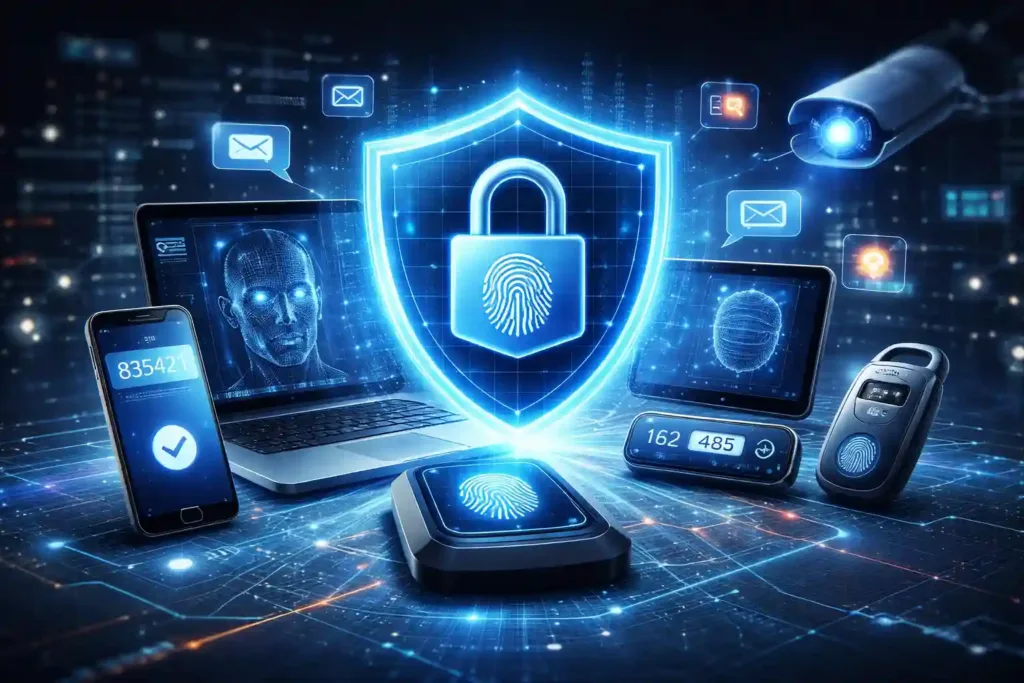
If you are making authentication decisions for your organisation, here is a practical starting framework:
Use SMS OTP when: You need broad accessibility, users do not have smartphones or cannot install apps, and the system being protected is low-to-medium sensitivity. Accept that SIM swap risk exists and ensure compensating controls are in place.
Use TOTP (authenticator app) when: You need reliability independent of network connectivity, and users can manage an authenticator app. More secure than SMS OTP; resistant to SIM swapping.
Use hard tokens when: You are protecting privileged accounts, critical infrastructure, or systems where a physical second factor is required under security policy. Highest OTP resistance to remote attack, but requires token management.
Use fingerprint biometrics when: You need fast, frictionless authentication at scale, and have the infrastructure for enrolment. Ideal for Windows login, workstation access, and any scenario where speed and user experience matter alongside security.
Use facial recognition when: Passive authentication is operationally valuable — users moving between systems, secure facility access, or scenarios where active input is inconvenient.
Use combined biometric + OTP when: You are protecting high-value systems, handling sensitive data, operating under strict compliance requirements, or serving users whose accounts are high-value targets. This is the default recommendation for enterprise, government, and financial institution deployments.
Deploy adaptive authentication when: Your user population is large, access scenarios are varied, and you need security that scales with risk rather than applying maximum friction to every login uniformly.
The OTP vs biometrics debate is ultimately the wrong frame. Both methods exist because both address real authentication requirements, and both have real limitations that the other helps compensate for.
The question is not which one is better. The question is whether your authentication infrastructure is sophisticated enough to deploy the right method, or combination of methods, for each access scenario you face.
That is the standard the current threat environment demands. And it is what a properly configured, unified authentication platform is built to deliver.