When Seconds Matter, Fragmented Systems Fail
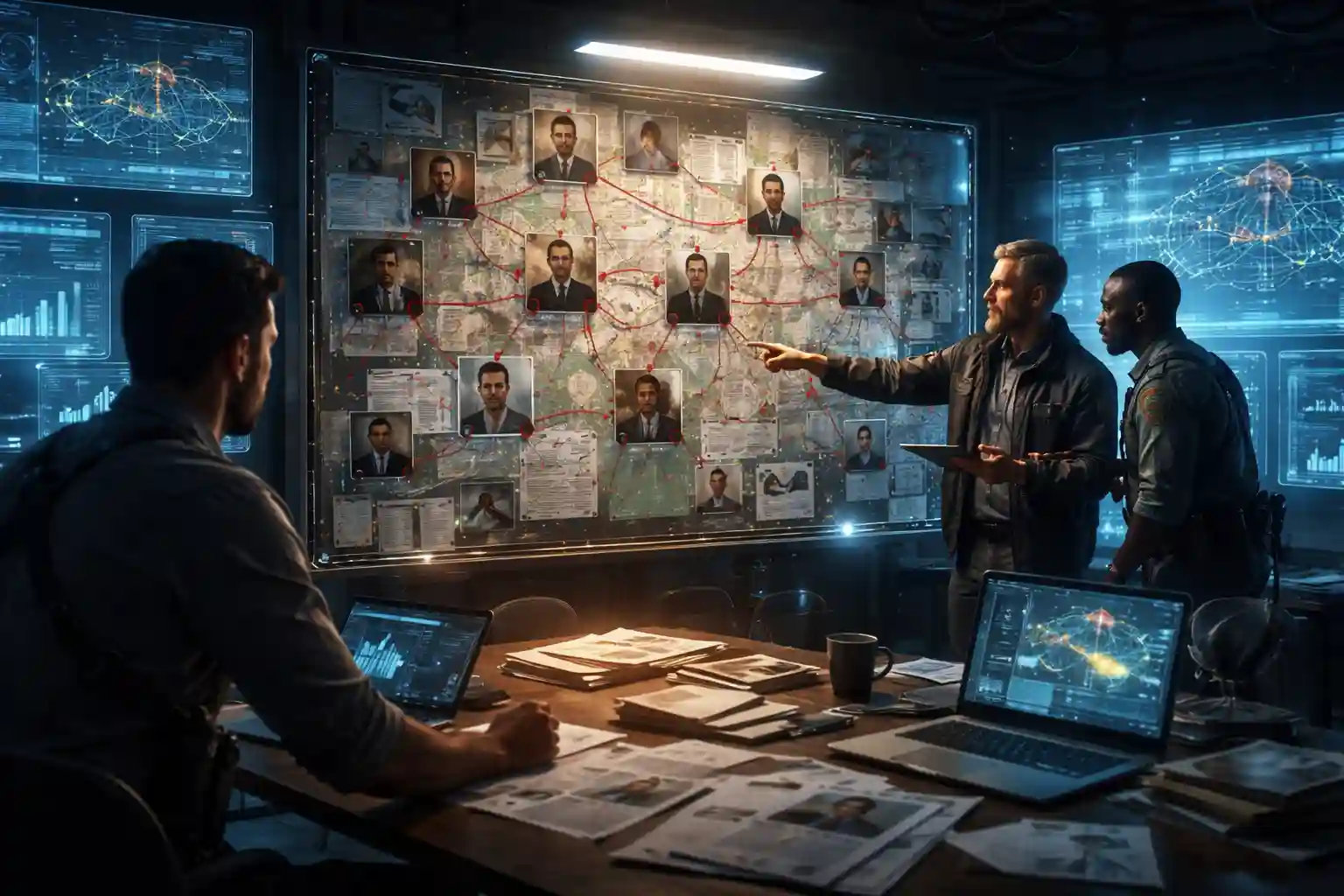
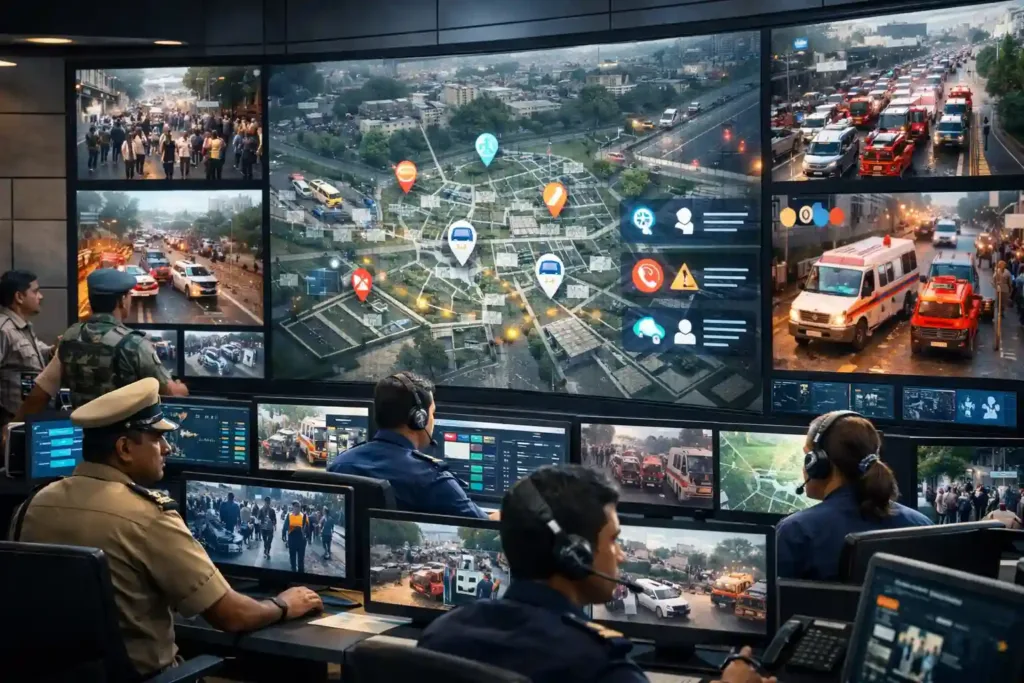
It’s a large public event. Tens of thousands of people across multiple locations. Suddenly, a disturbance breaks out. CCTV cameras capture the first signs. Emergency calls surge within seconds. Patrol units report fragmented updates from different directions. Social media amplifies partial narratives. Traffic sensors flag congestion near key junctions.
Each system is working. Yet something critical is missing.
Inside the command control room, operators move between screens, dashboards, and communication channels. Information flows rapidly, but clarity does not. Different teams see different versions of the same situation. Decisions are discussed, escalated, reassessed, and delayed.
The issue is not lack of data. It is the lack of a shared operational picture. This is a familiar reality in high-pressure policing environments:
- Data exists, but remains siloed
- Visibility exists, but without understanding
- Response exists, but without coordination
This is where an integrated command and control centre fundamentally differs from traditional control rooms.
An ICCC is not designed for watching. It is designed for deciding. Its purpose is not to display more information, but to help command leadership achieve decision superiority in real time, when seconds, not reports, determine outcomes.
Key Takeaways
- Integrated Command and Control Centres are decision environments, not monitoring rooms.
- Situational awareness in policing comes from contextual intelligence, not data volume.
- ICCCs enable faster, more confident decisions by aligning intelligence with resource visibility.
- Intelligence-led alerts reduce noise and help command teams focus on escalation risks that matter.
- Real-time feedback from the field allows adaptive response instead of rigid SOP-driven action.
- The strategic value of ICCCs lies in readiness, coordination, and long-term institutional intelligence.
What is an Integrated Command and Control Centre (ICCC)?
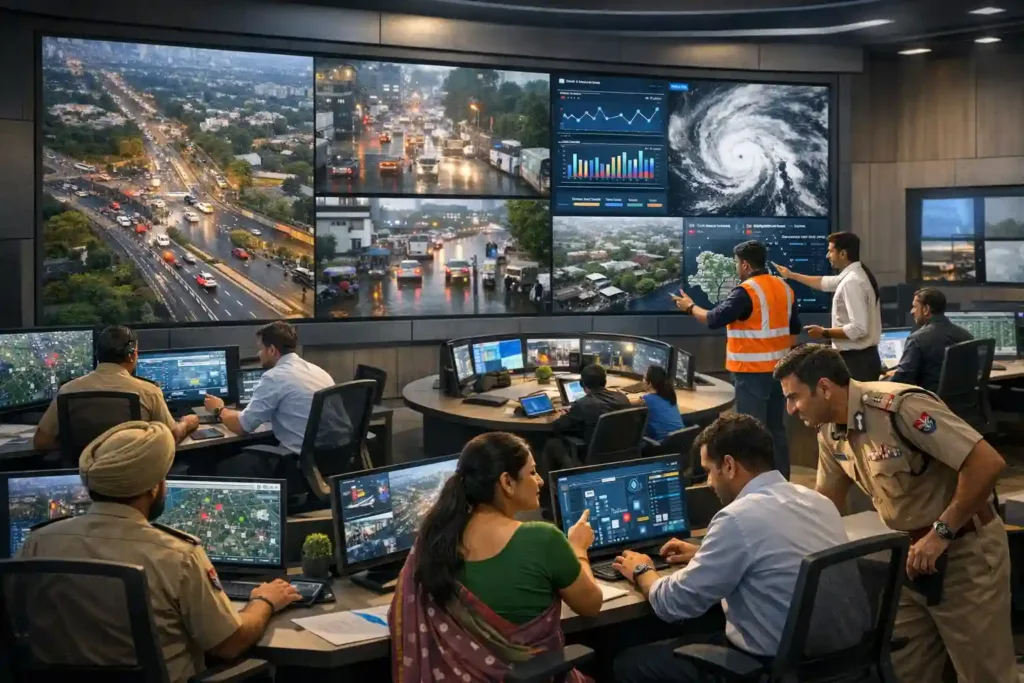
At first glance, an ICCC looks familiar, large screens, live feeds, maps, dashboards. Its real value, however, lies beneath the screens.
Beyond Monitoring Rooms and Video Walls
An ICCC is not:
- A CCTV monitoring room with better displays
- A dashboard aggregating multiple systems
- A reactive setup that waits for incidents to unfold
Those environments prioritise visibility. An ICCC prioritises control and coordination.
At its core, it is a centralised decision environment, designed to align people, data, and processes around one objective: making the right decision at the right time. It supports a proven operational loop:
- Observe what is happening
- Orient information into context
- Decide based on risk and impact
- Act through coordinated response
Instead of fragmented interpretation, everyone operates from the same situational truth.
Core Objectives of an Integrated Command and Control Centre
A well-designed ICCC is outcome-driven. Its core objectives include:
- Unified Situational Awareness: Command staff, analysts, and field coordinators share a single, real-time operational picture, without conflicting versions or silos.
- Faster, Context-Aware Decisions: Decisions are guided by context — location, history, patterns, and escalation risk, not isolated alerts.
- Coordinated Multi-Agency Response: Police, emergency services, traffic management, and intelligence units operate in sync, reducing duplication and delay.
- Continuous Field-to-Command Feedback: Ground actions feed directly back into command, enabling dynamic reassessment as situations evolve.
In effect, ICCCs shift policing from reaction to orchestration.
The Data Foundation of a Law Enforcement Command and Control Centre
For policing, the challenge is not data availability, it is data fragmentation.
An effective command and control centre relies on operationally relevant inputs from four core streams:
- Incident and Case Data: Emergency calls, FIRs, case histories, patrol deployment, and unit availability form the procedural backbone of command decisions.
- Surveillance and Sensor Inputs: City CCTV, traffic cameras, body-worn devices, and movement signals provide real-time visibility, but not intelligence on their own.
- Field Communication and Operational Updates: Radio traffic, status updates, response timings, and escalation signals connect ground reality with command intent.
- Public and Open Data Signals: Social media activity and public reporting often provide early indicators of crowd behaviour or unrest, sometimes before formal complaints surface.
- Why Integration Alone Fails: Many command rooms integrate these systems technically, yet delays persist.
Because integration does not equal clarity. Without contextual fusion:
- Alerts compete for attention
- Related incidents appear disconnected
- Escalation paths remain hidden
A command centre becomes effective only when data is fused into a prioritised operational picture that highlights:
- What matters now
- What is likely to escalate
- Where command intervention is required
Real-time policing is not about reacting faster, it is about acting at the right moment.
From Data to Situational Awareness: Creating a Single Operational Picture
Most police command environments already have access to multiple systems. What they lack is situational awareness, a shared understanding of what is unfolding, why it matters, and what must be done next.
An Integrated Command and Control Centre creates this clarity by transforming scattered inputs into a single operational picture that command staff, analysts, and field coordinators can rely on.
Building a Unified View Across Systems
Instead of treating incidents, assets, and resources as separate data points, a modern ICCC continuously correlates them.
Incidents reported across different locations are linked to people, vehicles, and known assets. Patrol units, response teams, and support resources are mapped into the same operational view. Duplicate alerts are removed, conflicting narratives are resolved, and fragmented timelines are aligned.
By bringing events together spatially and temporally, command teams no longer see isolated activity. They see how situations are connected, how they are evolving, and where escalation is likely to occur.
Contextual Awareness vs Visual Awareness
Seeing activity on a screen is not the same as understanding its implications. Visual awareness answers what is happening right now. Contextual awareness answers why it matters and what it could become.
An effective ICCC links live incidents with historical cases, repeat locations, and known crime patterns. It surfaces anomalies that may appear insignificant on their own but signal escalation when viewed in context.
This shift from observation to interpretation, allows command teams to anticipate outcomes instead of reacting after situations deteriorate.
Real-Time Alerts That Matter
Traditional control rooms depend heavily on volume-based thresholds: too many calls, too much traffic, too many people in one place. These alerts generate noise but rarely provide clarity.
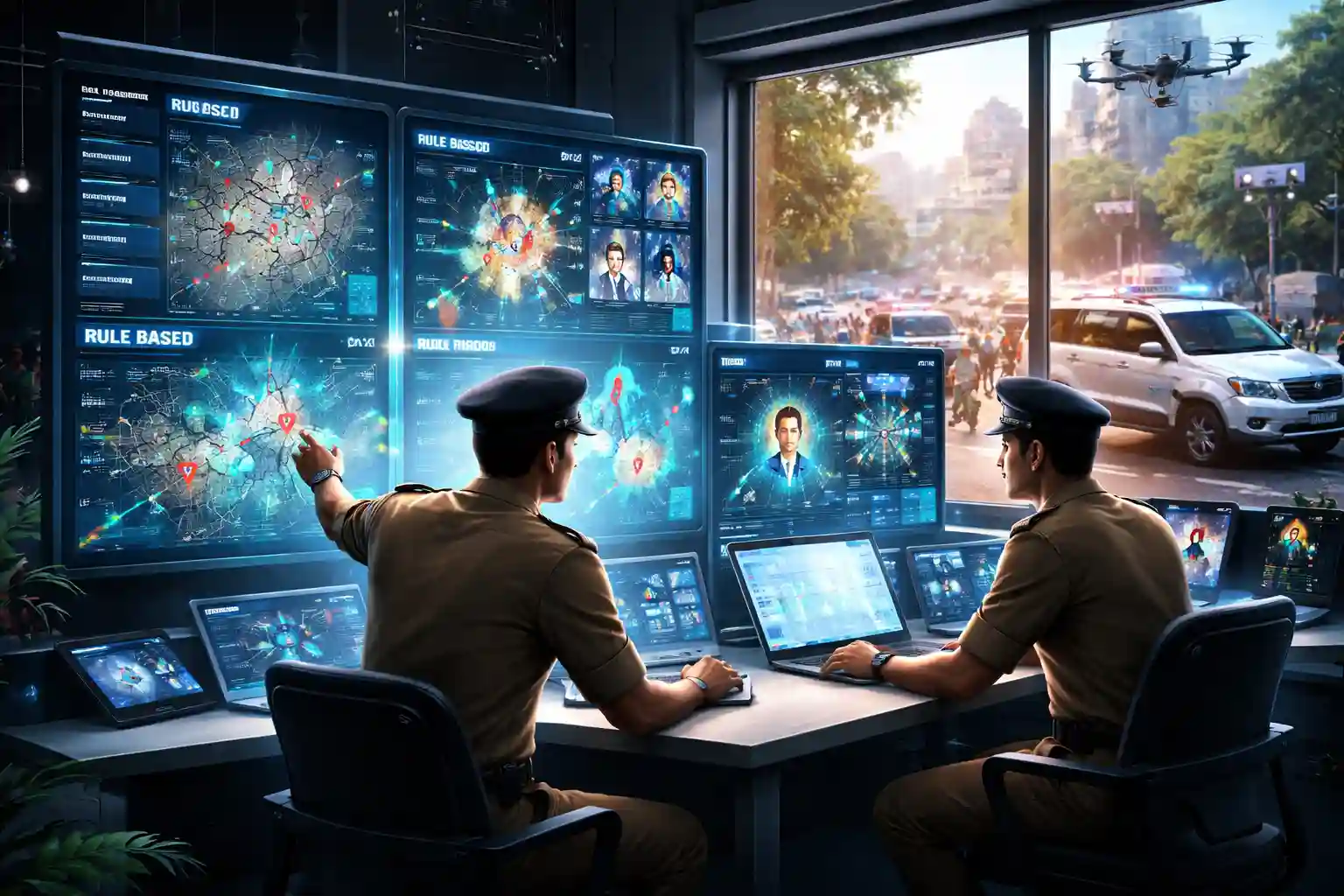
ICCCs enable intelligence-led alerting. Signals are prioritised based on risk severity, proximity to sensitive locations, likelihood of escalation, and the readiness of available resources.
The result is not more alerts, but better ones, alerts that demand command attention and enable timely intervention.
Inside the Decision Loop: Turning Insight into Action
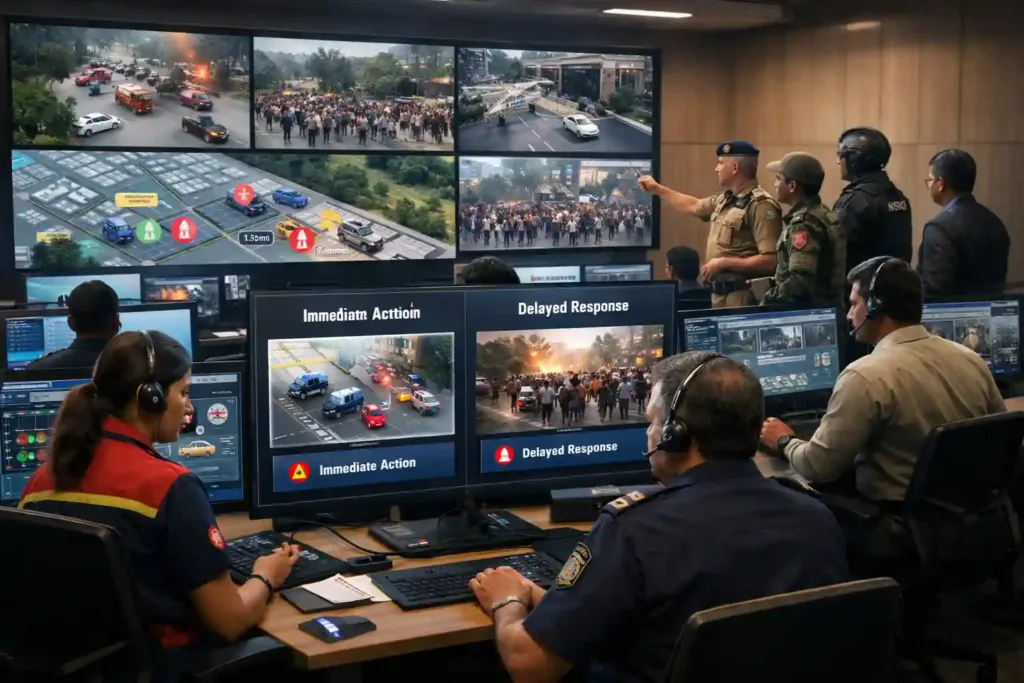
Command centres rarely fail because they lack information. They fail because decisions must be made under pressure, often with incomplete or conflicting inputs.
Why Command Decisions Break Down
During fast-moving incidents, information arrives from multiple systems and teams simultaneously. Without alignment, different stakeholders form different interpretations of the same situation. Cognitive overload sets in, and hesitation follows.
These delays are rarely intentional. They are structural, caused by environments that present data without decision context.
Decision Support Inside an ICCC
An ICCC changes this dynamic by supporting how decisions are made, not just what is seen.
Instead of raw feeds, command teams are presented with clear options and impact-based views. Leaders can quickly assess what will happen if they act immediately, what risks emerge if they delay, and which units are best positioned to respond based on availability, proximity, and capability.
By combining intelligence with resource visibility, ICCCs replace hesitation with informed confidence.
Coordinating Multi-Unit and Multi-Agency Response
Most serious policing incidents involve more than one unit, and often more than one agency.
An ICCC ensures police units, emergency services, and intelligence teams operate from the same situational picture. Communication becomes more efficient not because people talk more, but because everyone shares the same understanding.
This reduces execution errors, prevents duplication, and enables coordinated response even under extreme pressure.
Real-Time Response: Closing the Loop Between Command and the Field
Command effectiveness is ultimately measured after decisions are issued. In an ICCC, decisions are translated into clearly scoped tasks, assigned units, and time-bound objectives, delivered with operational context rather than bare instructions.
As actions unfold on the ground, live feedback flows back into the command centre. Conditions are reassessed continuously, allowing decisions to be refined in near real time. This feedback loop prevents command intent from becoming outdated the moment it is issued.
Rigid SOPs struggle in dynamic policing environments. ICCCs enable adaptive, intelligence-led response, allowing command teams to adjust course as situations evolve rather than react once damage is done.
The Strategic Value of ICCCs for Modern Policing
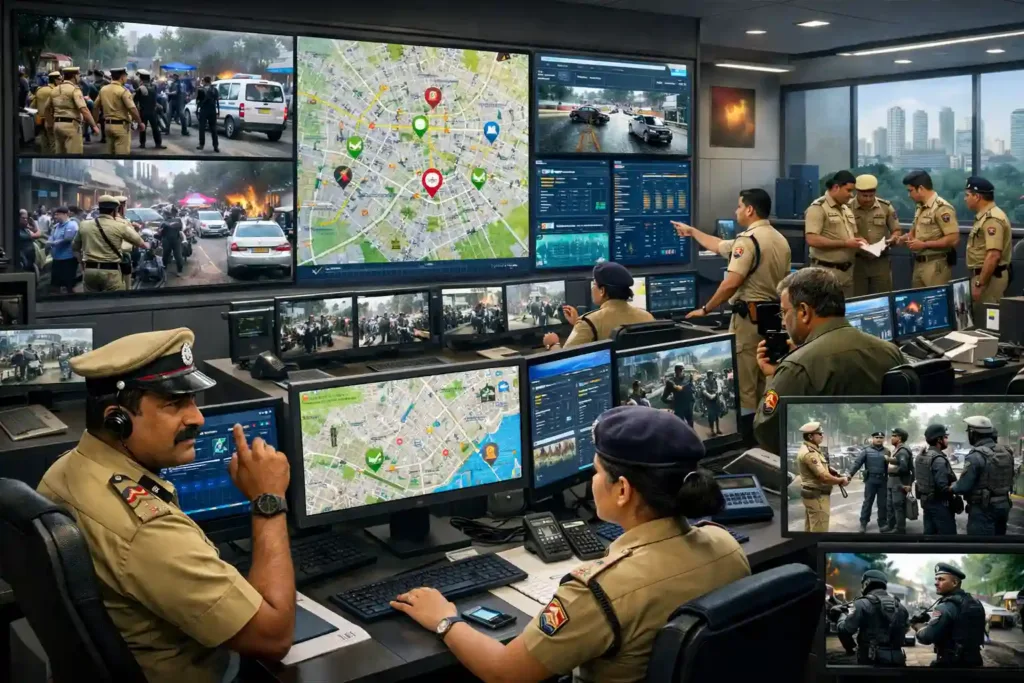
For law enforcement agencies, an Integrated Command and Control Centre is not an operational add-on. It is a strategic capability.
When implemented correctly, ICCCs reduce response times by aligning decision authority and intelligence in one place. They improve resource utilisation by deploying units based on capability, not just proximity. Early contextual awareness reduces escalation and collateral impact, leading to more controlled outcomes during high-risk situations.
Perhaps most importantly, visible coordination builds public trust. When policing responses are timely, measured, and aligned, confidence follows.
Beyond individual incidents, ICCCs enable long-term intelligence accumulation. Every operation contributes to institutional memory, improving preparedness and strengthening policing outcomes over time.
In this way, ICCCs move law enforcement from reactive incident handling to sustained operational readiness.
FAQs – Frequently Asked Questions
1. What is an ICCC in policing?
An Integrated Command and Control Centre is a centralised policing environment that fuses data, intelligence, and decision support to enable coordinated, real-time response.
2. How is it different from a traditional control room?
Traditional control rooms focus on monitoring. ICCCs are designed for decision-making, coordination, and operational clarity.
3. Does an ICCC replace human judgment?
No. It enhances human judgment by reducing noise, improving context, and supporting faster, better-informed decisions.
4. Can ICCCs support preventive policing?
Yes. By identifying patterns, anomalies, and early escalation indicators, ICCCs enable proactive intervention and smarter patrol planning.