Seeing Beyond the Surface Web
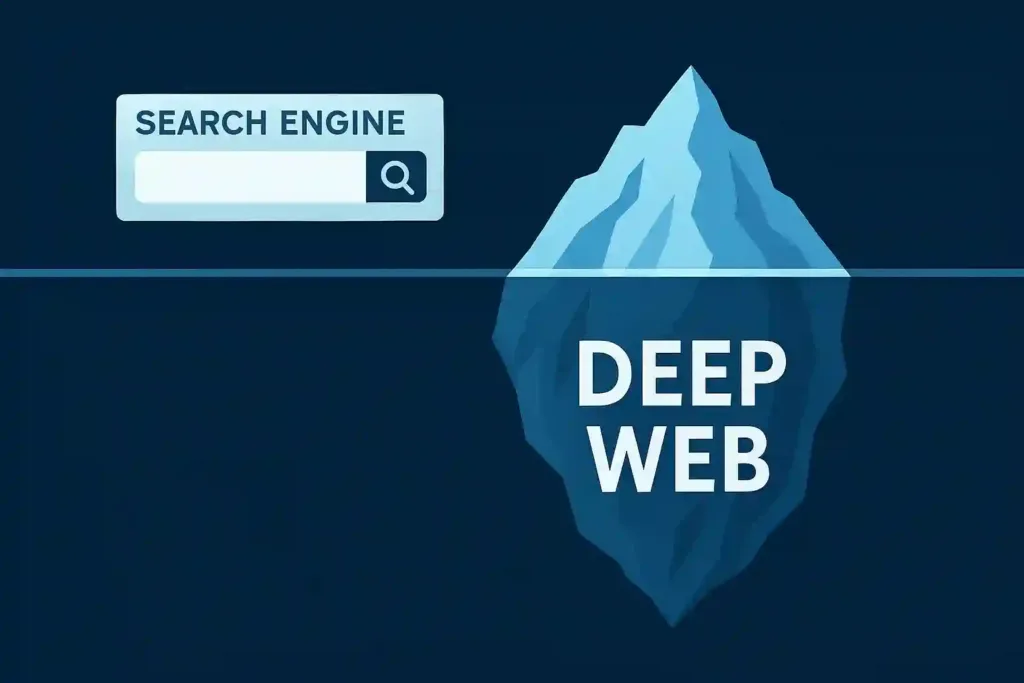
Most of what people think of as “the internet” – news websites, social media, online shopping is just the Surface Web, the small portion of online content indexed by search engines. In reality, the Deep Web (websites and databases not indexed by search engines) is estimated to be hundreds of times larger.
Only about 4–5% of the internet is visible via standard search engines, leaving a vast hidden portion that includes medical databases, academic research, private networks, and, crucially, areas exploited for illicit activities. Beyond that lies the Dark Web, which can only be accessed with special browsers and is often used by threat actors seeking anonymity.
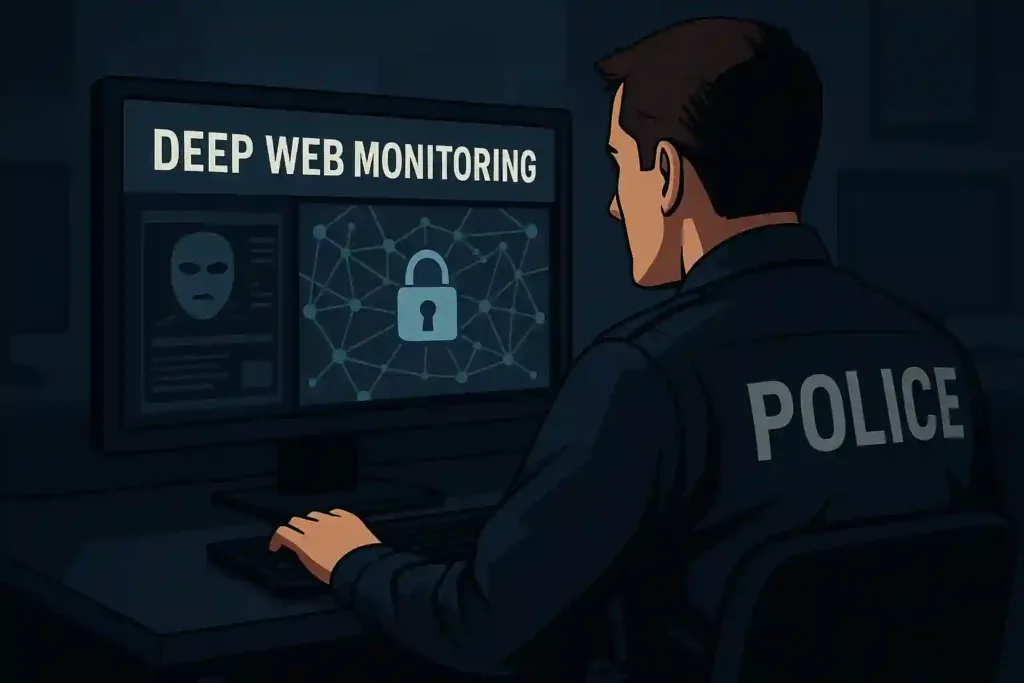
As crime, radicalization, and cyber fraud increasingly shift online, law enforcement agencies face an urgent need to detect threats hidden in these layers. Modern Deep Web Monitoring tools, often powered by AI and advanced OSINT (open-source intelligence) capabilities, help agencies map suspicious forums, track illicit marketplaces, and identify early warning signals before threats escalate.
Importantly, such monitoring is conducted under legal frameworks, warrants, and strict privacy safeguards, ensuring that investigations respect constitutional rights and compliance standards while improving public safety.
Key Takeaways
Seeing Beyond the Surface: Most online activity lies beneath the surface web, requiring specialized tools to access and analyze it.
AI as a Force Multiplier: Automated crawling, entity resolution, and predictive analytics turn Deep Web monitoring into a proactive threat-detection capability.
Legitimate vs. Illicit Use: The Deep Web isn’t inherently criminal, but its anonymity makes it attractive to illicit actors.
Early-Warning Advantage: AI-driven analytics can flag malware kits, trafficking networks, and terror cells weeks before they emerge publicly.
Legal & Ethical Oversight: Monitoring is conducted under warrants and privacy safeguards to respect citizens’ rights while protecting public safety.
Operational Impact: Successful operations like Europol’s 2024 Dark Web Crackdown demonstrate the effectiveness of coordinated Deep Web intelligence.
What is the Deep Web? Separating Myths from Reality
The Deep Web refers to all online content that standard search engines like Google or Bing cannot index. This includes legitimate and often essential data sources such as academic research databases, private company portals, subscription-only content, legal records, and internal government systems.
In other words, the Deep Web is not inherently malicious; it simply contains information shielded from public view for privacy, security, or paywall reasons.
It’s important to differentiate the Deep Web from the Dark Web. While the Deep Web is primarily non-indexed but accessible with the right permissions, the Dark Web exists on anonymous overlay networks such as Tor, I2P, or ZeroNet, which require special software to access. These networks are designed to protect anonymity and privacy but have also been exploited for illegal activities.
Legitimate Deep Web use cases include medical research databases, financial services dashboards, and proprietary academic content, while criminal misuse occurs on hidden or anonymized forums dealing in illicit goods, human trafficking, extremist propaganda, or malware trade.
According to studies by the National Institute of Justice (NIJ), Europol’s Internet Organised Crime Threat Assessment (IOCTA), and RAND Corporation reports on darknet markets, a significant portion of illicit activity takes place in these harder-to-monitor spaces.
Understanding this distinction is critical for law enforcement agencies. Monitoring the Deep Web ethically and effectively enables them to separate benign data sources from truly dangerous activities.
Why Deep Web Monitoring Matters for Law Enforcement

As more of society moves online, so too have criminal activities. The Deep Web and Dark Web have become hubs for illicit markets and hidden communities, far removed from the oversight of traditional search engines. For law enforcement, this hidden digital ecosystem represents both a challenge and an opportunity to intervene before crimes escalate.
Criminal enterprises routinely exploit these hidden layers. Successors to the infamous Silk Road marketplace continue to traffic drugs, counterfeit goods, and hacking tools. Child exploitation networks exchange illegal content in private forums.
Illicit arms dealers advertise weapons on encrypted channels, while terrorist groups use hidden forums to spread propaganda, recruit members, and plan operations.
In addition, massive stolen data dumps and credential leaks regularly appear on underground platforms, fuelling identity theft and cyber fraud.
Recent operations show the power of sustained monitoring. Operation Disruptor, a 2020 U.S.–Europol initiative, resulted in hundreds of arrests and seizures of millions in cash and cryptocurrency. Europol’s 2024 Dark Web Crackdown targeted vendors and infrastructure supporting drug and weapon sales. Both actions were built on intelligence gathered from deep web monitoring and undercover infiltration.
Today’s monitoring platforms go beyond simple keyword searches. Using AI-powered analytics, predictive threat modeling, and OSINT techniques, agencies can identify emerging criminal trends, link online personas to real-world suspects, and flag threats before they manifest.
By leveraging ethical and legally compliant monitoring of the Deep Web, law enforcement agencies gain a critical early-warning system, shifting from reactive investigation to preventive disruption of criminal networks.
How AI Enhances Deep Web Monitoring
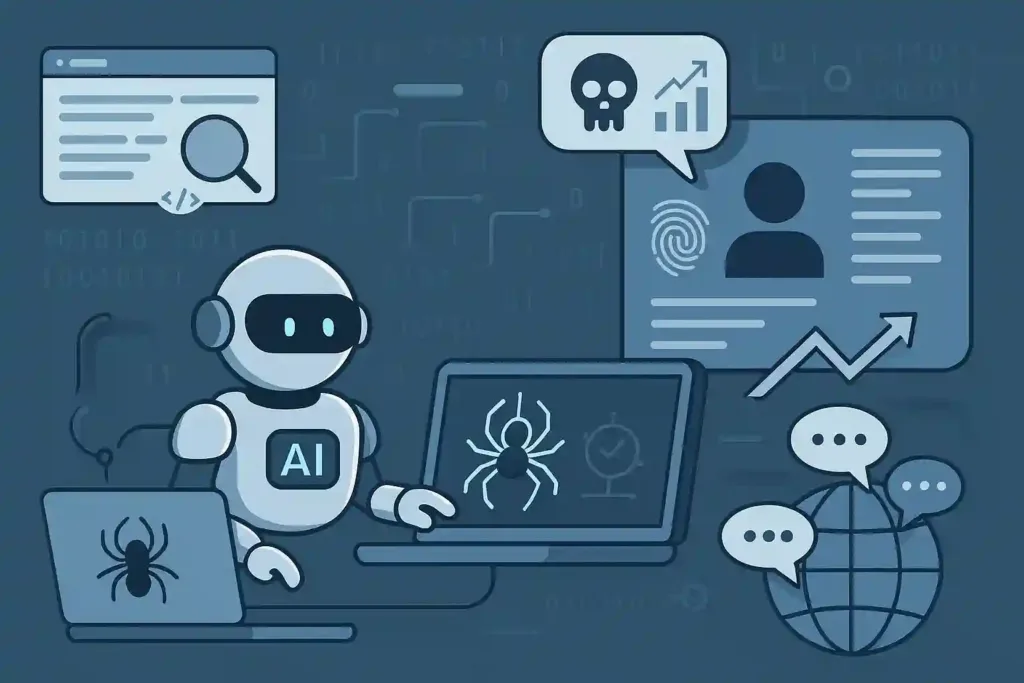
The vastness and anonymity of the Deep Web make manual monitoring impossible at scale. Artificial Intelligence (AI) has become the force multiplier enabling law enforcement agencies to scan, analyze, and act on hidden digital activity faster and more effectively than ever before.
Automated Crawling
AI-powered crawlers can index thousands of hidden forums, encrypted marketplaces, and invitation-only channels simultaneously. Unlike manual investigations, which may take weeks, automated systems run continuously, updating intelligence in near real time.
Entity Resolution
Criminals often use multiple pseudonyms across platforms. AI algorithms correlate writing styles, metadata, transaction patterns, and digital fingerprints to match these aliases to real-world identities. This dramatically accelerates suspect identification.
Sentiment & Threat Scoring
Natural Language Processing (NLP) models analyze conversations for hostility, intent, or indicators of planned action. Forums and discussions are ranked by risk, helping analysts focus on the most dangerous threats first.
Multilingual Translation
Threat actors frequently use obscure dialects, code words, or non-mainstream languages. AI translation engines decode these in real time, reducing the need for large human translation teams.
Predictive Analytics
Machine learning can flag emerging trends before they hit the mainstream. Europol’s 2023 Internet Organised Crime Threat Assessment (IOCTA) highlights cases where AI-driven analytics detected new malware kits, drug smuggling techniques, and radicalization narratives weeks before public outbreaks.
These capabilities transform Deep Web monitoring from a reactive search for evidence into a proactive early-warning system. Instead of waiting for crimes to occur, agencies can intervene sooner, disrupt criminal networks, and protect public safety.
To Conclude
The Deep Web is no longer a mysterious underworld; it’s an enormous and dynamic space where both legitimate activity and dangerous criminal networks coexist. For law enforcement agencies, the challenge is not simply accessing this space but making sense of it at scale and in real time.
AI-powered Deep Web monitoring bridges that gap, turning scattered, encrypted, and multilingual data into actionable intelligence.
With the right legal frameworks, privacy safeguards, and ethical oversight in place, Deep Web monitoring will remain a cornerstone of modern intelligence-led policing.
FAQs – Frequently Asked Questions
Q1. What’s the difference between the Deep Web and the Dark Web?
The Deep Web includes any content not indexed by search engines, such as academic databases, paywalled portals, and private networks. The Dark Web is a small segment of the Deep Web accessed via anonymizing networks like Tor and is often associated with illicit activity.
Q2. Is Deep Web monitoring legal?
Yes. Law enforcement agencies conduct Deep Web monitoring under court warrants, statutory authority, and strict privacy guidelines. Oversight ensures compliance with constitutional and human rights protections.
Q3. How does AI help in Deep Web monitoring?
AI automates crawling, detects hidden links between actors, translates multiple languages, scores risk, and predicts emerging threats—tasks impossible to do manually at scale.
Q4. Can AI identify criminals behind anonymous profiles?
AI improves entity resolution by correlating metadata, writing styles, and behavioral patterns, but human analysts and legal processes still confirm identities.
Q5. Are there legitimate reasons to access the Deep Web?
Absolutely. Academic research, medical records, private company intranets, and subscription-only services all reside on the Deep Web. The goal of monitoring is to detect criminal misuse, not legitimate use.