You check your inbox and see a message from your bank: “Suspicious activity detected. Verify your account immediately.” Your pulse quickens. The email looks genuine: logos, formatting, even the signature, but something feels off. At the same time, a colleague shares a story about a ransomware attack that brought their department to a standstill for hours.
This is the reality of 2025: cyber threats no longer wait for mistakes; they hunt for opportunities. Even tech-savvy professionals and cautious users can fall prey to cleverly disguised attacks, from deepfake phishing emails to credential-stuffing scams.
The stakes aren’t just personal. For businesses and enterprises, one unnoticed breach can disrupt operations, compromise customer data, or trigger compliance nightmares. Cybersecurity is no longer a background task; it’s a daily survival skill.
In this blog, we’ll walk through five essentials that everyone should know to protect accounts, spot the latest generation of phishing attacks, and understand why multi-factor authentication is no longer optional.
By the end, you’ll have practical, actionable steps to stay ahead in a world where cyber threats evolve faster than ever.
Key Takeaways
- Strong Passwords Matter: Use unique, complex passwords and consider a password manager.
- Multi-Factor Authentication is Essential: Protect accounts across email, banking, and enterprise platforms.
- Stay Vigilant Against Phishing: Be aware of spear phishing, AI-generated scams, and vishing attacks.
- Keep Software Updated: Patch management is critical across devices, mobile apps, and IoT.
- Secure Devices and Networks: Use endpoint protection, encryption, trusted Wi-Fi, VPNs, and AI-powered monitoring.
Strong, Unique Passwords Are Still the Foundation

Passwords remain the first line of defence, but only if they’re strong, unique, and well-managed.
Password hygiene isn’t just a best practice, it’s a necessity. Modern AI-enabled attacks, like credential stuffing and password spraying, automatically test stolen credentials across thousands of sites in minutes.
According to Verizon’s 2025 Data Breach Investigations Report, 81% of hacking-related breaches involve weak or stolen passwords.
Password Best Practices:
- Use at least 12 characters combining uppercase, lowercase, numbers, and symbols.
- Never reuse passwords across multiple accounts.
- Enable two-factor or multi-factor authentication wherever possible.
- Change passwords regularly, especially after any breach alert.
- Consider a reputable password manager to generate and securely store complex passwords.
- Periodically audit accounts to remove outdated or weak credentials.
Even in a world of multi-factor authentication and biometric logins, your password is still the foundation. Strong, unique passwords dramatically reduce the risk of being compromised by automated attacks or human error.
Multi-factor Authentication is Non-Negotiable

Passwords alone are no longer enough. Multi-factor authentication (MFA) adds an extra layer of security by requiring two or more verification methods before granting access. These can include:
- SMS or email codes
- Authenticator apps (e.g., Authshield, Google Authenticator, Microsoft Authenticator)
- Hardware tokens (physical security keys)
- Biometric verification (fingerprint, facial recognition)
Why MFA matters:
- Attackers can compromise passwords through phishing, credential stuffing, or leaks, but MFA stops them from accessing your accounts.
- Critical accounts such as email, banking, social media, enterprise platforms are high-value targets for cybercriminals.
- MFA reduces account takeover risk by up to 99%, according to Microsoft security studies.
Practical tip for enterprises and power users:
- Implement MFA for every account that supports it.
- Prefer app-based or hardware-token MFA over SMS, which can be intercepted.
- Use solutions designed for high-security environments.
For government agencies and enterprises seeking secure, compliant, and easy-to-manage MFA deployment, Innefu’s AuthShield provides an on-premise, hybrid-ready platform that combines authentication, biometrics, and access control to protect sensitive digital resources.
Adding MFA isn’t optional, it’s the new baseline for digital safety.
Spotting the New Generation of Phishing Attacks
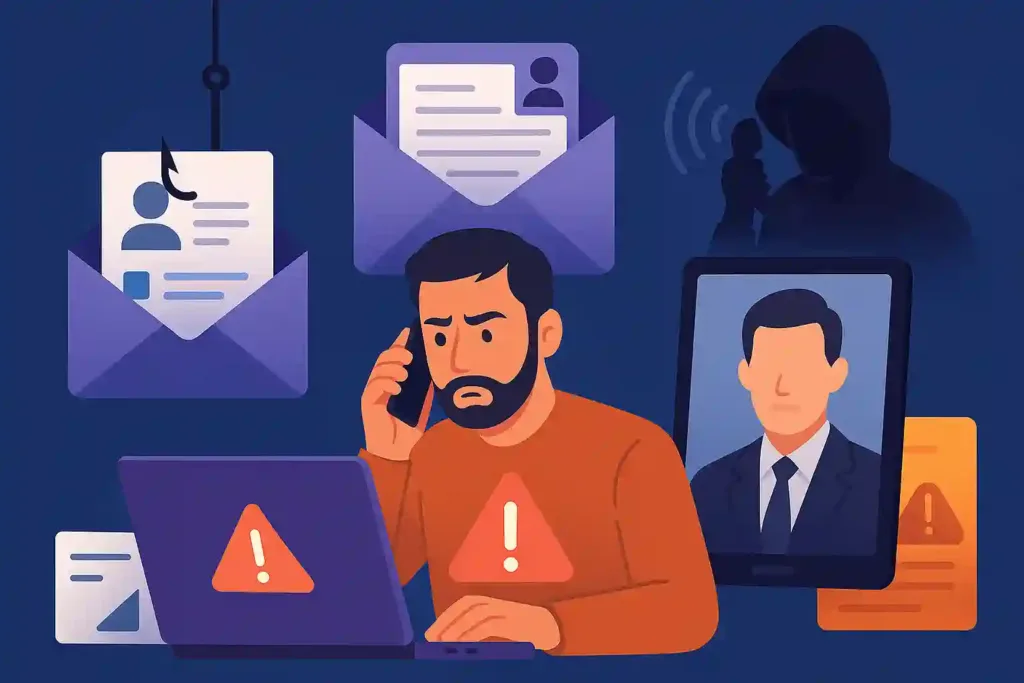
Phishing has evolved far beyond the generic “You’ve won a prize” emails. Modern attacks are highly targeted and sophisticated, leveraging AI, social engineering, and real-world context to trick even vigilant users. Common forms include:
Spear phishing
Personalized messages aimed at specific individuals or departments, often referencing recent activities or organizational roles.
Deepfake emails
AI-generated content that mimics executives’ voices or writing style to request sensitive information or transfers.
Voice phishing (vishing)
Calls impersonating banks, government agencies, or IT support to extract credentials or approvals.
Typical tactics to watch for:
- Urgent requests for sensitive data or payments.
- Emails containing malicious links or attachments disguised as invoices, reports, or HR documents.
- Slightly altered sender addresses that appear legitimate.
Practical tips to stay safe:
- Always hover over links to verify URLs before clicking.
- Confirm unexpected requests via known phone numbers or official channels.
- Use email clients with AI-powered phishing detection and report suspicious messages internally.
- Keep software, browsers, and endpoint protection updated to block malicious content.
Awareness and verification remain the strongest defences against these evolving threats.
Software Updates & Patch Management Can’t Be Ignored
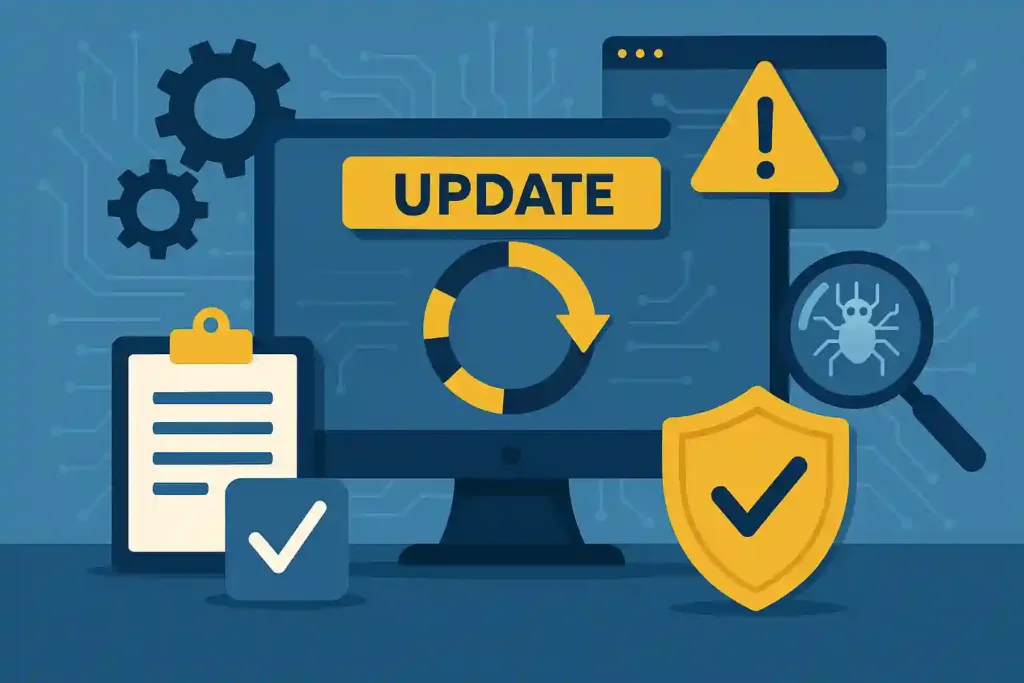
Even the most secure passwords and multi-factor authentication can be undermined by outdated software. Unpatched vulnerabilities remain a top attack vector for cybercriminals, from ransomware operators to advanced persistent threat groups. IoT devices, mobile apps, enterprise software, and cloud platforms all carry potential weaknesses that hackers actively exploit.
Why this matters:
- Vulnerabilities in widely used applications are often disclosed publicly before users apply patches, creating a window for exploitation.
- Attackers increasingly leverage automated scanning tools to locate unpatched systems, including connected devices like printers, cameras, and industrial controllers.
- In enterprise environments, unpatched endpoints can be the weak link that compromises the entire network.
Practical tips to stay secure:
- Enable automatic updates wherever possible for operating systems, apps, and firmware.
- Maintain visibility across all endpoints, including mobile and IoT devices.
- Regularly run patch audits to verify critical updates have been applied.
- Combine with AI-driven monitoring to identify anomalies in systems that may indicate exploitation attempts.
For organizations looking to strengthen patch management and endpoint visibility, solutions like Innefu’s AI-powered Cyber Threat Monitoring can help detect and remediate vulnerabilities proactively, ensuring your systems stay resilient.
Secure Devices & Networks
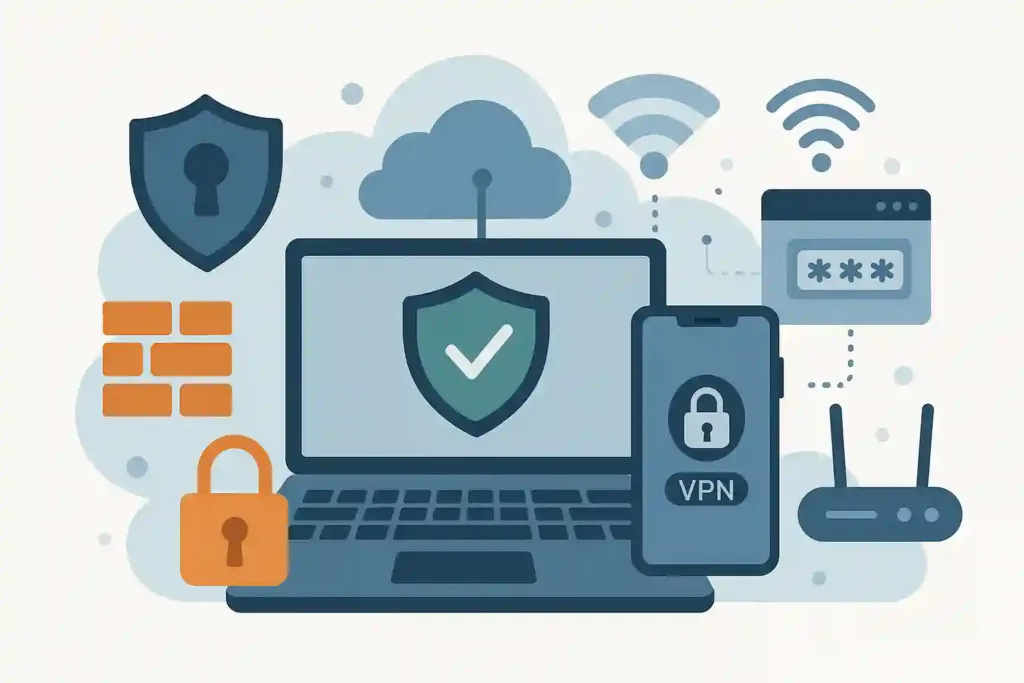
Your security starts at the device. Even strong passwords and multi-factor authentication won’t protect an unprotected laptop, smartphone, or IoT device. Endpoint security remains the first line of defence, including antivirus software, firewalls, and full-disk encryption for laptops and mobile devices.
Network hygiene is equally crucial:
- Always connect via trusted Wi-Fi and avoid unsecured public hotspots.
- Use a VPN when accessing sensitive data remotely.
- Segment networks in enterprise settings to contain potential breaches.
Modern threats increasingly target remote workers who unknowingly connect to vulnerable networks, exposing corporate or personal accounts. AI-powered endpoint monitoring and anomaly detection add a next-level defence, alerting security teams to unusual device behaviour in real time before breaches escalate.
By combining traditional security measures with AI-enhanced monitoring, organizations can reduce the attack surface, maintain visibility across endpoints, and protect both employees and critical assets.
Cybersecurity in 2025 demands a proactive mindset. Strong, unique passwords, multi-factor authentication, awareness of advanced phishing attacks, timely software updates, and secure devices and networks form the foundational pillars of protection.
Modern threats evolve daily, and organizations that combine traditional best practices with AI-powered monitoring, and endpoint anomaly detection, gain a decisive edge. By adopting these measures, both individuals and enterprises can safeguard data, maintain trust, and stay ahead of cyber adversaries.
FAQs – Frequently Asked Questions
Q1. Why is multi-factor authentication so important today?
MFA prevents attackers from gaining access even if passwords are stolen. Methods include SMS, app-based codes, hardware tokens, and biometrics. Enterprise solutions like Innefu’s AuthShield provide scalable, secure MFA deployment.
Q2. How can I identify modern phishing attempts?
Look for urgent requests, unknown senders, mismatched links, or AI-generated emails. Verify senders and report suspicious communications to IT teams.
Q3. Are software updates really necessary?
Yes. Unpatched software is a leading attack vector. Automatic updates help close vulnerabilities across devices, IoT, and enterprise software.
Q4. What role does AI play in device and network security?
AI-powered monitoring detects unusual behaviours on endpoints and networks in real time, enabling proactive threat detection and reducing breach risks.
Q5. Can small businesses adopt these cybersecurity practices effectively?
Absolutely. Core practices—strong passwords, MFA, updates, secure networks—apply at any scale, and AI-powered solutions are increasingly accessible for SMEs.