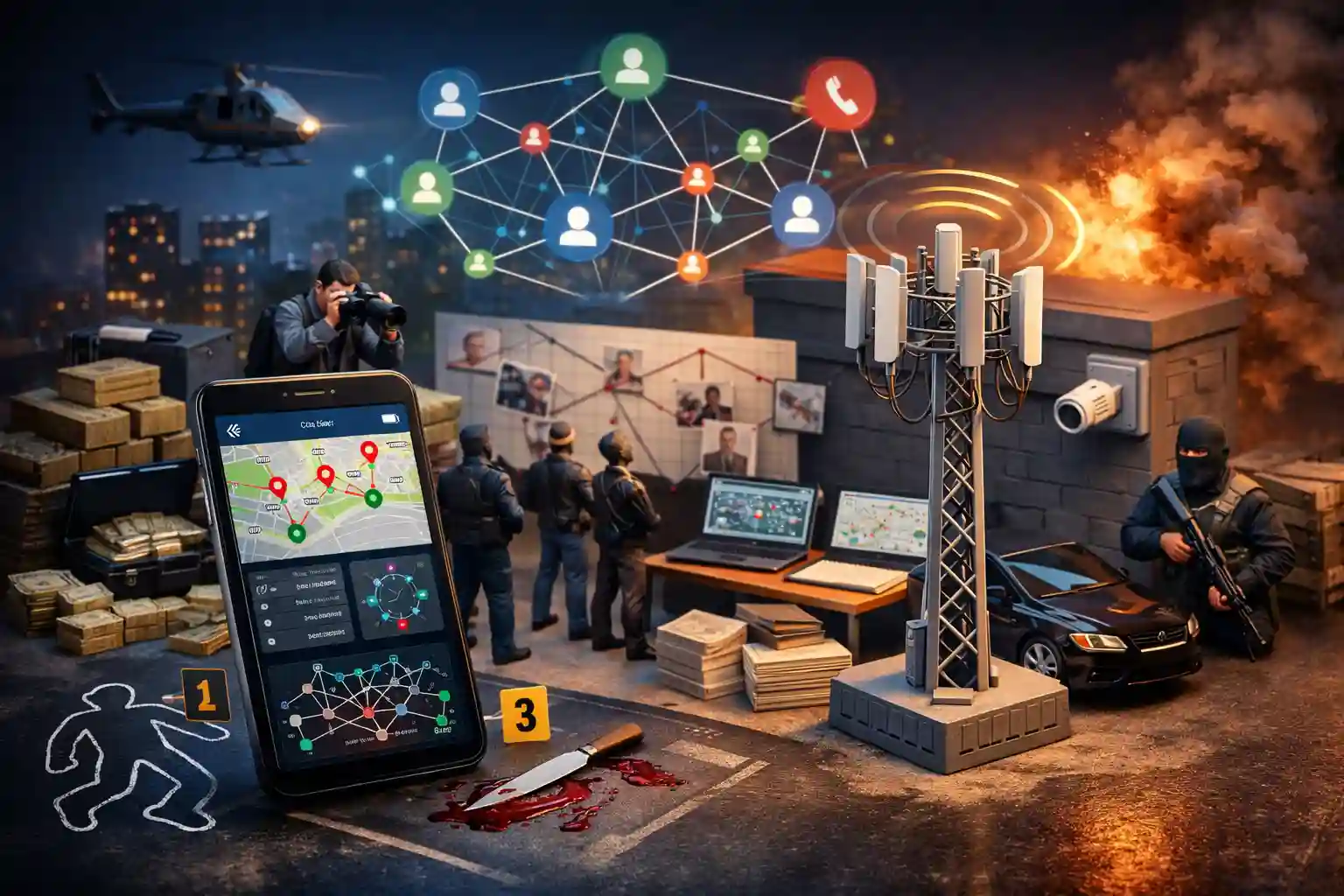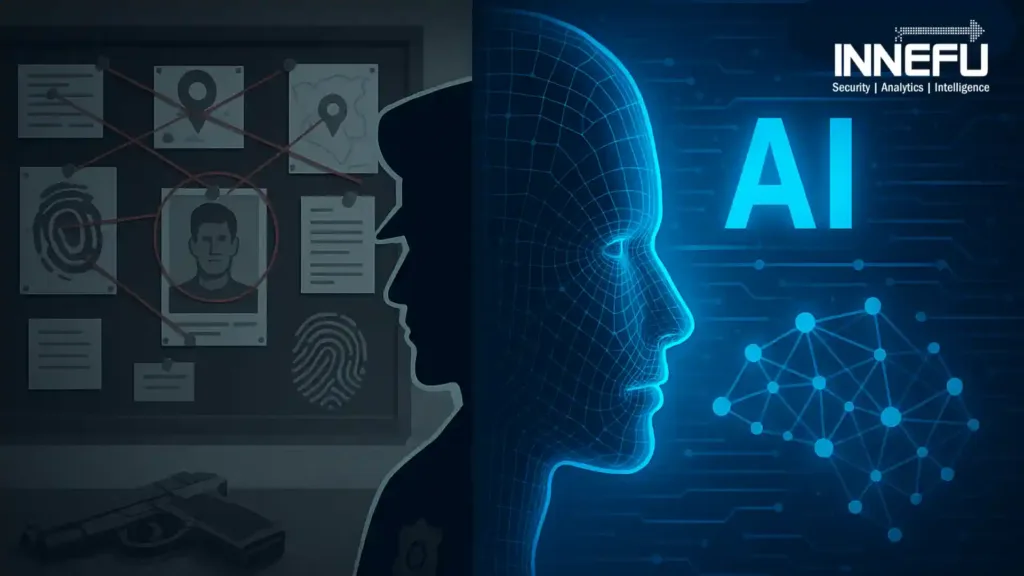
Crime doesn’t always leave fingerprints. Sometimes, the real clues are hidden in psychological traits, behavioural patterns, geographic habits, and even subtle demographic indicators —the way a perpetrator chooses a victim, the method used, the place and time selected. Each decision, intentional or impulsive, paints a subtle portrait of the offender.
For decades, law enforcement agencies have relied on criminal profiling to read these hidden cues and build psychological sketches of unknown suspects. Profilers combine experience, behavioural science, and forensic evidence to predict who the offender might be, where they could strike next, or even how they might react under pressure.
But today, the landscape of crime is evolving. Criminals adapt faster, use technology, and often operate across physical and digital borders. Traditional profiling, though powerful, faces limits when the data gets too vast, too complex, or too subtle for human intuition alone.
This is where Artificial Intelligence (AI) is making a difference.
By analyzing millions of behavioural patterns, communications, and historical data points in seconds, AI tools are enhancing the art and science of criminal profiling. What was once painstaking manual work—requiring weeks or months—can now be supplemented with data-driven insights in near real time.
Yet, the goal remains the same: Understand the mind behind the crime. Prevent the next act before it happens. Build safer communities.
In this blog, we’ll explore how criminal profiling works, why it’s crucial in modern law enforcement, and how AI is helping agencies not just catch criminals faster, but sometimes even predict and prevent crimes before they occur.
What is Criminal Profiling?
Criminal profiling — also known as criminal investigative analysis — is a technique used by law enforcement agencies, forensic psychologists and criminologists to infer key traits about an unknown suspect based on patterns found in the evidence.
It blends psychology, behavioural science, criminology, and investigative experience to create a portrait of the likely offender.

In forensic psychology, criminal profiling seeks to understand the cognitive and emotional processes that may have driven the crime. It investigates the offender’s possible motives, emotional triggers, and behavioral traits such as impulsivity, aggression, narcissism, or psychopathy, and how these may manifest in the crime scene or method.
In criminology, profiling considers broader sociological and contextual factors—including community, economic status, cultural background, and environmental influences. It may help determine whether the crime was planned or spontaneous, solo or group-based, and how social history (like abuse, neglect, or peer influence) shaped the criminal behavior.
At its core, the goal of criminal profiling is simple yet profound: To narrow down suspects by predicting their psychological makeup, behavioural tendencies, lifestyle choices, and sometimes even geographic locations.
A typical criminal profile might suggest traits & demographics like:
1. Psychological Profile
- Psychological Traits
- Motivational Factors
- Risk Level Assessment
2. Behavioral Analysis
- Behavioral Patterns
- Modus Operandi (MO)
- Signature Behaviors
3. Sociodemographic Characteristics
- Gender
- Age Range
- Education Level
- Employment
- Relationship Status
- Criminal History
- Living Proximity
- Social Background
4. Crime Scene & Victim Interaction
- Victimology
- Geographic Profile
5. Criminal Background
- Criminal History
Modern profiling is used to support investigations, guide interviews, prioritize suspects, and sometimes predict an offender’s next move.
How Criminal Profiling Works
Criminal profiling isn’t guesswork or mere intuition — it’s a structured, evidence-driven process that systematically analyses the behaviour exhibited during a crime to build a portrait of the likely offender.

Here’s a step-by-step breakdown of how traditional criminal profiling works:
1. Behavioural Evidence Analysis
Investigators first examine the physical evidence and behaviours left at the crime scene.
- Was the crime meticulously planned or chaotic?
- Was there overkill or minimal violence?
- Were there signs of remorse or deliberate staging? And more…
Each behaviour reflects psychological traits — planning suggests organization and higher impulse control, while chaotic scenes may indicate emotional instability or inexperience.
2. Crime Scene Evaluation
The crime scene is carefully analyzed for patterns, location details, weapon use, and victim interaction.
Key questions include:
- Is there forensic evidence (DNA, fingerprints, fibers)?
- Was the crime scene selected randomly or targeted?
- Did the offender attempt to cover up evidence? And more…
Crime scenes often reveal whether the offender is familiar with the area (suggesting a geographic profile) and whether they acted alone or as part of a group.
3. Victimology
Victim profiling helps understand why a particular victim was chosen.
- Was the victim known to the offender?
- Did they fit a certain age, gender, or lifestyle profile?
- Were there situational factors (like opportunity) at play? And more…
Patterns in victim selection provide critical insight into the offender’s motivations and preferences.
4. Development of the Offender Profile
Based on the gathered information, investigators build a psychological and demographic profile, estimating:
- Age range
- Gender
- Race or ethnicity (where applicable)
- Occupation type
- Personality traits (e.g., narcissism, sadism, compulsiveness)
- Likely criminal history
The final profile often includes predictions about the offender’s habits, living situation, and possible stressors (e.g., recent job loss, divorce).
Limitations of Traditional Criminal Profiling
While traditional criminal profiling has been a valuable investigative tool for decades, it’s far from perfect. Subjectivity, human biases, and slow analytical processes can limit its effectiveness, especially in today’s fast-moving, complex criminal landscape.
Here’s a closer look at the major challenges:
1. Subjectivity and Cognitive Bias
Criminal profiling heavily relies on the interpretation and intuition of trained profilers.
Even the most experienced professionals are susceptible to:
- Confirmation bias (seeing evidence that supports pre-existing assumptions)
- Stereotyping based on race, gender, or socioeconomic status
- Anchoring bias (over-relying on the first piece of information received)
These biases can lead investigations astray, wrongly narrowing or broadening suspect pools, or mischaracterizing offender behaviour.
2. Slow Speed in Complex Investigations
Traditional profiling is a time-consuming process:
- Detailed crime scene analysis
- Manual data gathering
- Extensive behavioural research
In high-stakes cases — such as serial offenses or fast-evolving terrorist threats — the slow turnaround can cost critical opportunities to prevent further crimes.
3. Difficulty Handling Complex, Modern Crimes
Today’s crimes are often more sophisticated, multi-jurisdictional, and tech-enabled:
- Organized cybercrimes
- Transnational trafficking networks
- Radicalized lone actors
Traditional profiling methods, developed mainly for physical crime scenes and psychological behaviours, often struggle to keep pace with crimes that leave digital rather than physical trails.
How Criminal Profiling Can Be Improved

To stay effective in modern law enforcement, criminal profiling must evolve. Key improvements include:
- Integration of AI and big data analytics for faster, data-driven insights
- Cross-disciplinary profiling combining behavioural psychology, cyber intelligence, sociology, and criminology
- Ongoing training to mitigate human biases, using standardized frameworks
- Real-time profiling tools to assist officers during live investigations
Modernizing profiling approaches not only enhances accuracy but also builds greater accountability and trust in criminal investigations.
AI in Criminal Profiling: A New Frontier
Traditional criminal profiling built the foundation — but AI is the game-changer that’s redefining how law enforcement agencies identify, understand, and apprehend criminals today.
By leveraging vast amounts of structured and unstructured data, AI criminal profiling techniques provide faster, more objective, and scalable insights that were previously impossible to achieve manually.
Here’s how AI is transforming the future of criminal profiling:
1. Behavioural and Psychological Pattern Analysis at Scale
Instead of relying only on subjective human intuition, machine learning models can:
- Analyze crime scene behaviours across thousands of cases
- Identify hidden patterns of offender Behaviour (e.g., escalation timelines, target preferences)
- Build predictive behavioural models based on previous offenses
This allows agencies to predict potential next moves with far greater statistical confidence.
2. Social Media and Digital Footprint Monitoring
Modern criminals often leave traces online — in their posts, messages, connections, and behaviours.
AI-powered tools can:
- Detect suspicious communication patterns across platforms
- Identify radicalization signs, aggression, or intent before a crime happens
- Map relationships and influence networks through digital forensic analysis
This Open-Source Intelligence (OSINT) becomes a powerful layer in profiling beyond just the physical crime scene.
3. Communication Pattern Analysis
Natural Language Processing (NLP) and sentiment analysis algorithms can now:
- Decode subtle language markers (deception, threat, anger)
- Track shifts in communication tone or frequency
- Flag coded language often used by criminal organizations
These insights help investigators build psychological profiles based not just on what suspects do — but how they speak and interact.
4. Real-Time Crime Detection and Prevention
AI systems can detect anomalies in real-time:
- Sudden clustering of crimes in a specific location
- Behaviour anomalies in CCTV or public spaces
- Unusual transactions or online purchases linked to criminal activity
This empowers proactive crime prevention, not just reactive investigation.
5. Scalability and Speed
Where traditional profiling might take weeks or months, AI solutions:
- Process millions of data points within minutes
- Continuously learn and refine profiles as new information comes in
- Handle multi-jurisdictional and cross-border data seamlessly
In critical time-sensitive investigations, this speed can literally save lives.
To conclude
Criminal profiling has always been about reading between the lines — decoding behaviours, psychological patterns, and the invisible footprints criminals leave behind.
But in a world where crime itself has evolved — crossing borders, blending online and offline, becoming more sophisticated — traditional methods alone are no longer enough.
AI criminal profiling brings a paradigm shift: it makes profiling faster, more objective, and more scalable.
By analyzing vast troves of behavioural, social, and digital data, AI empowers law enforcement agencies to predict, prevent, and respond to crimes with unprecedented precision.
Of course, AI doesn’t replace human judgment — it enhances it. The intuition of seasoned profilers, combined with AI’s speed and pattern-recognition capabilities, creates a powerful force for safer communities and smarter, predictive policing.