Fraud today doesn’t look like it used to. It’s faster, smarter, and far more sophisticated. What once took months of manual review and paper trails now unfolds in milliseconds, powered by bots, deepfakes, and synthetic identities.
From AI-generated KYC documents to mule networks laundering funds through microtransactions, the fraud landscape has shifted from isolated incidents to coordinated digital operations.
The numbers tell the story: global online fraud losses are projected to cross $48 billion annually by 2025, according to DemandSage. Financial institutions, telecom providers, and government agencies are all facing a wave of real-time, cross-platform deception.
Rule-based systems and manual investigations simply can’t keep up. Fraudsters use automation; defence needs intelligence. That’s where AI-driven, real-time fraud detection comes in, capable of spotting patterns invisible to the human eye, across millions of data points per second.
This blog explores how fraud detection has evolved from reactive monitoring to predictive, machine-led defence, and how modern organizations are using AI, behavioral analytics, and data fusion to stay ahead of the threat.
Key Takeaways
Fraud has evolved into an ecosystem: From synthetic IDs to AI-generated KYC deepfakes, modern fraud thrives on speed, scale, and sophistication.
AI and machine learning are redefining fraud analytics: Pattern recognition, behavioral biometrics, and predictive models are enabling real-time threat detection.
Digital forensics closes the investigative loop: Platforms like Argus ensure evidence integrity and link fraud incidents to verified digital identities.
Integration is the new defence strategy: Bringing together transaction data, communication trails, and identity metadata enhances fraud attribution accuracy.
Future-ready systems are proactive, not reactive: The next frontier lies in self-learning fraud detection that adapts to new fraud typologies in real time.
What is Fraud Detection?
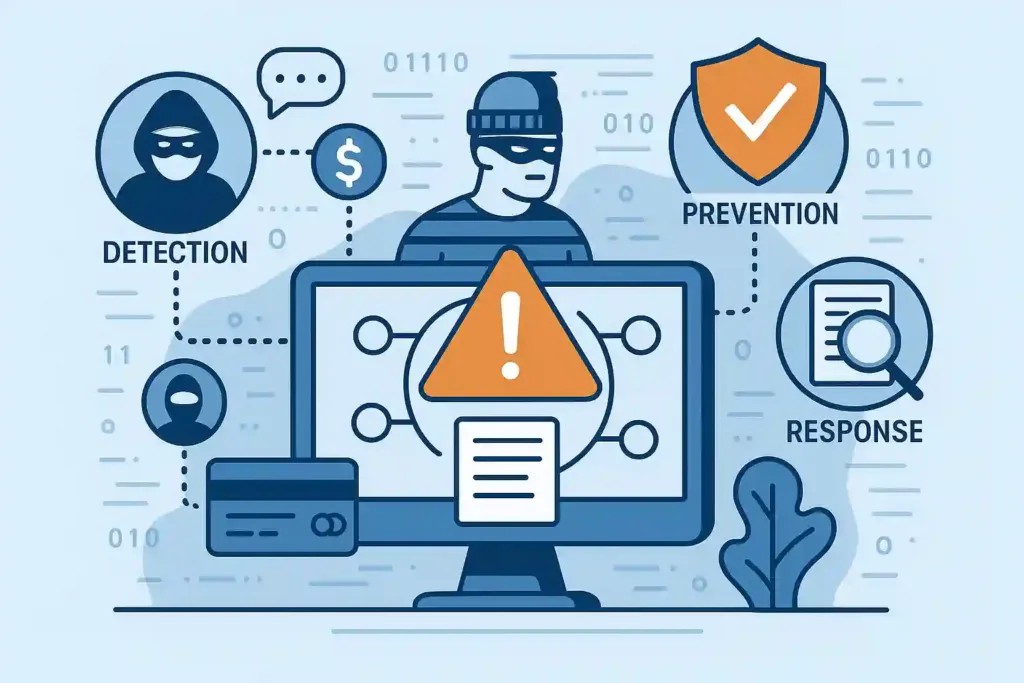
Fraud detection is the process of identifying suspicious patterns, transactions, or behaviors that indicate potential deceit, before financial or reputational damage occurs. It spans industries from banking and telecom to e-commerce and national security, wherever digital transactions and data exchanges happen.
At its core, fraud detection combines data analysis, behavioral modelling, and machine learning to distinguish legitimate activity from fraudulent attempts. In banking, this could mean flagging anomalous transactions or synthetic identities. Whereas in telecom, identifying SIM swaps or call-routing manipulation. In law enforcement, correlating multiple digital identities used in financial or terror-linked operations.
It’s important to understand the three connected layers of defence:
- Fraud Detection – Identifying suspicious behavior as it happens. Example: real-time alerts when a transaction violates normal patterns.
- Fraud Prevention – Blocking fraud before it occurs by enforcing authentication, behavioral profiling, and risk scoring.
- Fraud Response – Investigating confirmed incidents, performing forensics, and closing systemic gaps to prevent recurrence.
Modern systems combine all three, creating a continuous feedback loop between detection, prevention, and response. Instead of reacting after losses, organizations now predict fraud before it materializes.
AI-led fraud detection platforms like Innefu’s Eagle I are designed exactly for this. Using anomaly detection, entity resolution, and graph analytics to expose hidden relationships, coordinated fraud rings, and emerging risk behaviors across massive datasets in real time.
Types of Fraud Monitored Today
Modern fraud is not confined to one channel or domain, it’s an interconnected web of deception powered by technology, automation, and human ingenuity. From payment scams to insider threats, the scope of fraudulent activity has expanded across industries and sectors.
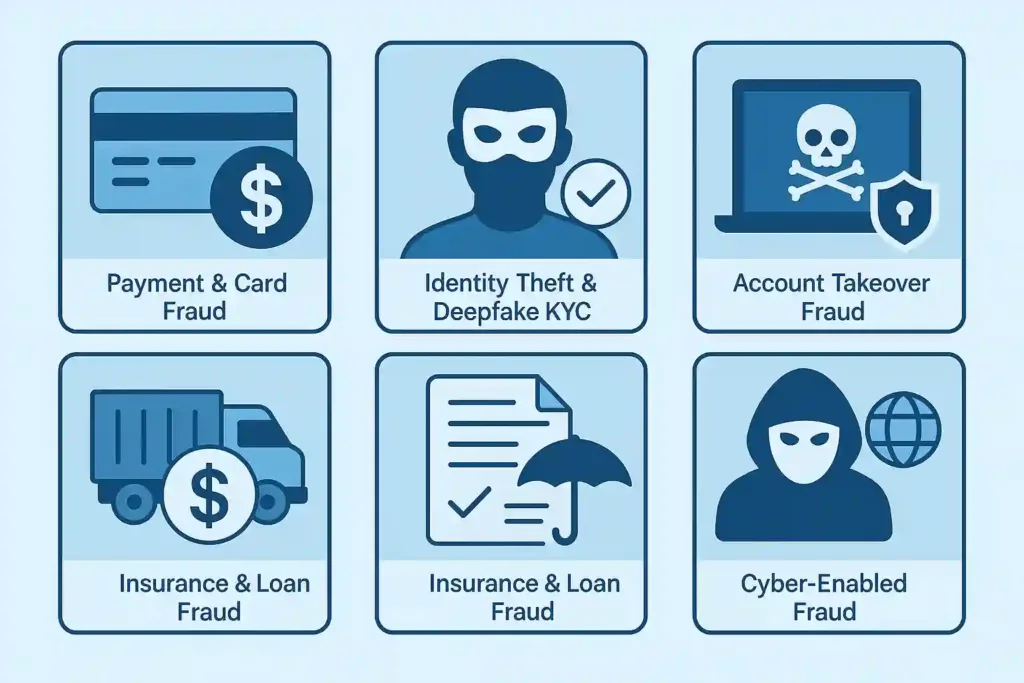
Below are the most prevalent types of fraud that organizations actively monitor and combat today.
Payment & Card Fraud
The most visible form of financial deception, payment fraud includes stolen card details, unauthorized transactions, and fake merchant setups. Despite improved EMV chip adoption and two-factor authentication, losses from Online Payment Fraud to exceed $362 Billion Globally over the 5 Year period (2023-28).
Fraudsters now leverage automated bots and compromised devices to execute “card testing” attacks at scale, exploiting even the smallest security gaps in real time.
Identity Theft & Deepfake KYC
With billions of personal records available through data breaches, identity theft has evolved into synthetic identities, fabricated personas built from real and fake information.
Deepfake technology has added another layer of complexity, allowing criminals to mimic facial features or voices for video KYC verifications.
Account Takeover (ATO)
Account takeover occurs when attackers gain unauthorized access to legitimate user accounts through phishing, credential stuffing, or malware.
Once inside, they perform fraudulent transactions or exfiltrate data. ATO attacks now target everything from mobile banking to OTT subscriptions.
Trade-Based Money Laundering (TBML)
TBML is a sophisticated financial crime where criminals disguise illicit funds as legitimate trade transactions. It involves over- or under-invoicing, fake shipments, and complex cross-border networks.
According to the Financial Action Task Force (FATF), TBML remains the most widespread money laundering technique globally, often intersecting with terrorism financing and organized crime.
Insurance & Loan Fraud
Fraudulent claims and falsified documents in insurance and lending sectors drain billions annually. From fake accidents and inflated losses to manipulated credit applications, these schemes are increasingly aided by AI-generated documents and digital forgeries. Insurers now deploy AI-powered claim analytics to detect anomalies and flag fraudulent intent early in the process.
Cyber-Enabled Fraud
Cybercriminals use phishing, malware, ransomware, and social engineering to infiltrate systems and steal sensitive data. The FBI’s Internet Crime Complaint Center (IC3) reported $12.5 billion in losses from cyber-enabled fraud in 2023, a figure that continues to rise as digital transformation expands the attack surface.
How AI and Machine Learning Transform Fraud Detection
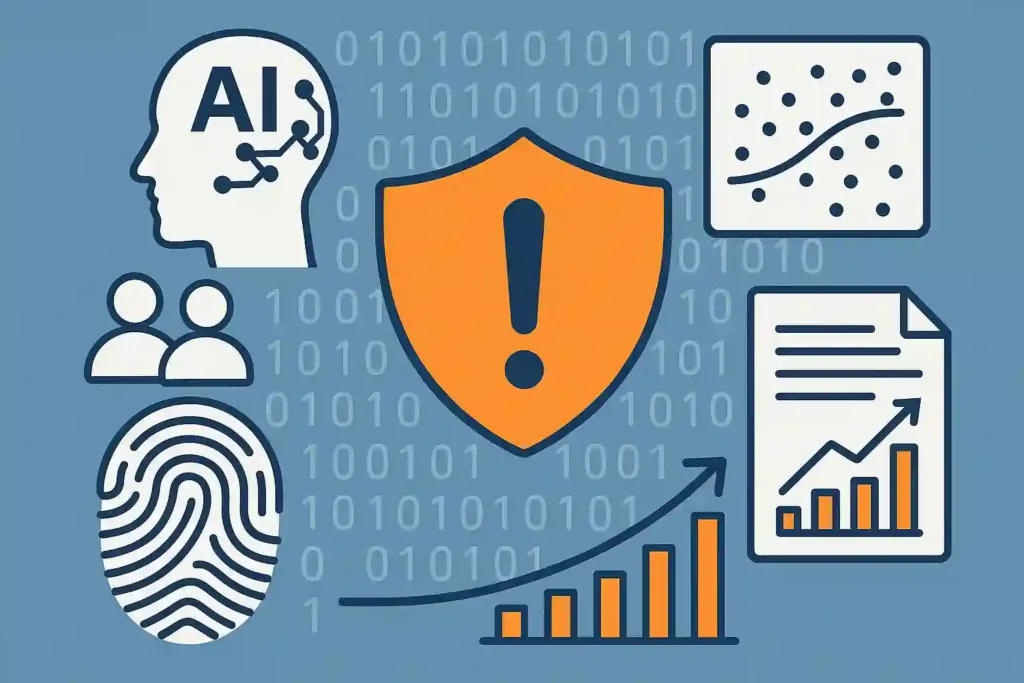
Fraudsters don’t repeat the same playbook, but they do leave patterns. The challenge is spotting them before the damage is done. Traditional rule-based fraud detection systems, once considered sufficient, now struggle against adaptive and coordinated attacks.
AI and Machine Learning (ML) technologies redefine how enterprises detect, prevent, and respond to financial and cyber fraud in real time.
AI systems excel at finding the unseen, identifying subtle anomalies, correlating scattered signals, and learning continuously from each interaction. Instead of static rules, ML-driven models adapt dynamically, evolving with every dataset, transaction, and alert.
Pattern Recognition and Anomaly Detection
Fraud detection is fundamentally about recognizing what doesn’t fit. Machine learning models like isolation forests, clustering algorithms, and neural networks can detect deviations in transaction flow, spending behavior, or login frequency with remarkable precision.
Unlike traditional systems that rely on “if–then” logic, ML models analyze billions of data points, including geolocation, device data, and transaction metadata, to identify deviations invisible to human analysts.
For example, an ML model might detect that a credit card used mostly in Delhi is suddenly making microtransactions across multiple countries within minutes, a strong signal of account compromise.
Behavioral Biometrics: Understanding Human Patterns
AI-powered behavioral biometrics take fraud detection beyond static identifiers like passwords or OTPs. Instead, they assess how users behave: how they type, swipe, or even hold their phones.
These continuous authentication markers create unique digital signatures that are almost impossible to replicate. Financial institutions now rely on behavioral biometrics to identify impostors even when they have correct credentials, thereby preventing account takeovers and insider frauds in real time.
NLP for KYC Document Verification and Alert Correlation
Fraud today hides behind sophisticated paperwork: fake invoices, forged documents, or deepfake videos. Here, Natural Language Processing (NLP) plays a crucial role in verifying the authenticity of KYC documents, contracts, and communication trails.
Advanced NLP models can read, extract, and cross-verify information from thousands of documents instantly, flagging anomalies such as mismatched addresses, tampered IDs, or AI-generated content.
When integrated into alert systems, NLP also helps correlate unstructured intelligence, such as suspicious email narratives, chat logs, or investigation reports, connecting dots across different fraud incidents.
Predictive Analytics for Fraud Forecasting
While traditional fraud systems detect incidents after they occur, predictive analytics helps anticipate them. By analyzing historical fraud data, seasonal patterns, and user behavior, predictive models assign risk scores to transactions and entities.
Banks and e-commerce companies use these insights to proactively block high-risk activities before they escalate.
Predictive models also evolve continuously, retraining themselves as new fraud vectors emerge, making them invaluable for adaptive fraud prevention across sectors.
Integration with AML Transaction Monitoring
Fraud and money laundering are two sides of the same coin. AI helps bridge these domains by integrating fraud analytics with Anti-Money Laundering (AML) transaction monitoring systems.
Through entity resolution, AI systems connect disparate data sources: accounts, IDs, and transaction networks, to uncover hidden relationships that point to laundering or mule activity.
For instance, AI can detect that multiple accounts registered under different names share a common IP address or transaction pattern, revealing organized financial crime networks that evade manual scrutiny.
Real-Time Alert Prioritization and False Positive Reduction
One of the biggest pain points in fraud monitoring is the volume of alerts, most of which are false positives. AI-based scoring systems help analysts prioritize which alerts matter most.
By combining risk profiling, behavioral baselines, and contextual analysis, AI can suppress repetitive low-risk alerts and elevate genuine threats.
This not only improves detection accuracy but also enhances analyst productivity and operational efficiency, critical for large-scale financial institutions managing millions of daily transactions.
Prophecy Eagle I – The Financial Fusion Centre
Innefu Labs’ Prophecy Eagle I brings all these AI capabilities into one integrated platform. Acting as a Financial Fusion Centre, it combines multi-source data ingestion, entity resolution, predictive analytics, and visualization dashboards to deliver a unified view of financial crime.
Prophecy Eagle I empowers analysts to move from reactive monitoring to proactive intelligence, detecting patterns of money laundering, fraud, and insider collusion in near real-time.
Its AI-driven correlation engine links transactions, identities, and behavioral cues, revealing the complete fraud lifecycle from attempt to execution, ensuring no suspicious activity slips through the cracks.
Digital Forensics and Post-Fraud Investigation
Detecting fraud is only half the battle, the real challenge lies in proving it. Once suspicious transactions are flagged, investigators must trace the digital footprints that connect fraudulent activity to the individuals or networks behind it.

This is where digital forensics steps in, turning scattered data points into admissible evidence.
Linking Fraudulent Transactions to Digital Identities
Every fraud attempt, whether a phishing scam, payment diversion, or account takeover, leaves behind a trail of digital evidence. Device IDs, IP logs, browser fingerprints, session tokens, and login metadata together form a unique signature of the actor involved.
By analyzing these artifacts, investigators can reconstruct timelines of fraudulent behavior, identifying when, where, and how the breach occurred. For instance, correlating a high-risk transaction with a new device registration and an unusual login location often confirms account compromise.
Cross-Analysis of CDR, IP, and Device Metadata
Fraud investigations increasingly depend on multi-layered data fusion. Call Detail Records (CDR) reveal communication patterns among suspected individuals; IP traces link them to specific networks; and device metadata like IMEI, MAC address, or geolocation, connects virtual actions to physical identities.
When analyzed together, these datasets uncover collusion networks, mule accounts, or repeat offenders operating under multiple aliases. This cross-domain forensics approach ensures that every anomaly is supported by verifiable, contextual evidence, turning raw data into actionable intelligence.
Integration with Argus for Forensic Case Management
Innefu’s Argus platform unifies this investigative workflow. Designed as an end-to-end forensic analysis and case management system, Argus automates evidence acquisition, integrity validation, and reporting while maintaining the critical chain of custody. It enables investigators to:
- Collect and preserve device or cloud data without tampering.
- Correlate financial, communication, and system logs within a single interface.
- Generate court-ready forensic reports backed by metadata trails and hash validation.
By integrating Argus into the post-fraud investigation cycle, organizations can move seamlessly from fraud detection to digital attribution, ensuring that every flagged incident is investigated with precision, backed by legally defensible digital proof.
Conclusion: From Detection to Defence
Fraud today is no longer an isolated financial crime, rather it’s a complex, multi-channel threat that spans banking systems, telecom networks, digital wallets, and even government schemes. As fraudsters evolve with synthetic identities, AI-generated deepfakes, and cross-border mule networks, detection must evolve faster.
Modern fraud detection isn’t about chasing red flags after the damage is done, it’s about anticipating risk before it turns into loss. By integrating AI-driven anomaly detection, behavioral analytics, and digital forensics, organizations can transform from reactive responders to proactive defenders.
Innefu’s integrated platforms, from Prophecy Eagle I (Financial Fusion Centre) for real-time risk analytics to Argus for forensic case management, empower agencies to connect dots across financial, digital, and human intelligence, ensuring that no fraudulent pattern remains hidden.
Build a Future-Ready Fraud Intelligence Framework
Stay ahead of fraud networks with AI-powered detection, fusion-driven analytics, and court-ready forensics.
Learn how Innefu’s Fraud Intelligence Stack can help your organization detect, prevent, and investigate fraud in real time. Request a Demo to transform your fraud detection capability today.
FAQs – Frequently Asked Questions
1. What is fraud detection and why is it important?
Fraud detection is the process of identifying suspicious or deceptive activities across financial, digital, and identity systems. It’s crucial to prevent financial losses, protect sensitive data, and ensure regulatory compliance in banking, telecom, and government sectors.
2. How does AI help in detecting fraud?
AI helps detect fraud by analyzing massive datasets in real time, identifying unusual patterns, and flagging anomalies through machine learning and behavioral models — minimizing false positives and improving accuracy.
3. What are common types of fraud in 2025?
Common fraud types include payment fraud, synthetic identity creation, account takeovers, deepfake KYC, insider collusion, trade-based money laundering, and AI-generated phishing campaigns.
4. What is the difference between fraud detection and prevention?
Detection identifies ongoing or past fraudulent activities, while prevention involves building systems, controls, and predictive models that stop fraud before it occurs.
5. What role does digital forensics play in fraud investigation?
Digital forensics helps trace digital footprints — like IP logs, device metadata, and call records — linking fraudulent transactions to specific identities and ensuring admissible evidence in court.
6. How dobehavioralbiometrics improve fraud detection?
Behavioral biometrics analyze typing rhythm, mouse movement, device handling, and login behavior to detect deviations that may indicate identity fraud or account compromise.
7. What is Prophecy Eagle I and how does it aid fraud detection?
Prophecy Eagle I is Innefu Labs’ Financial Fusion Centre, integrating AI-driven transaction monitoring, behavioral analytics, and predictive risk scoring for proactive fraud detection.
8. What is Argus and how does it support post-fraud forensics?
Argus is a forensic analysis and case management platform that automates evidence collection, correlation, and reporting — ensuring secure, court-ready digital investigations.